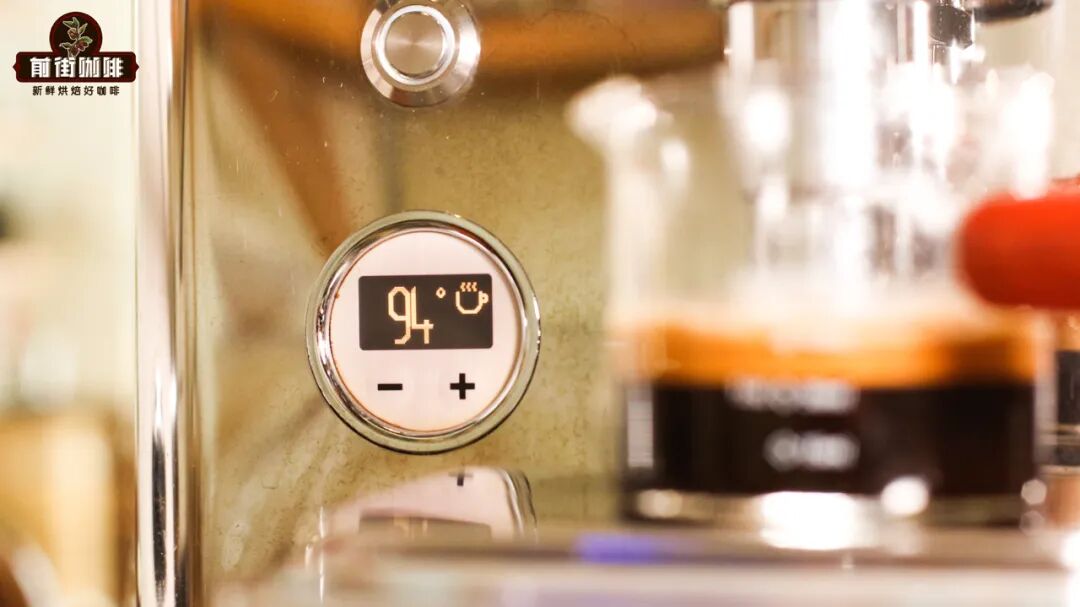
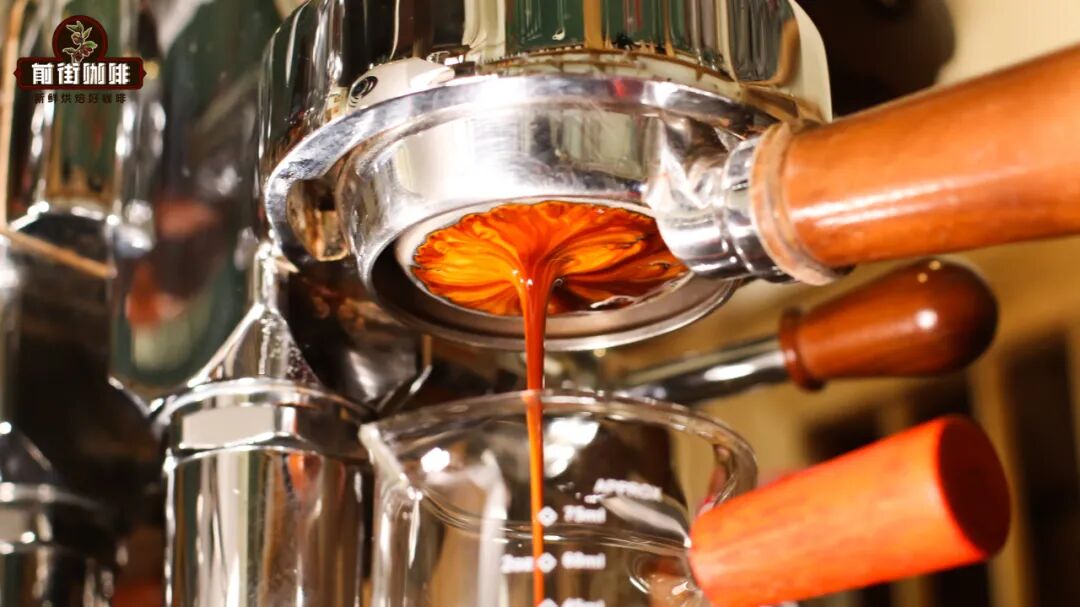
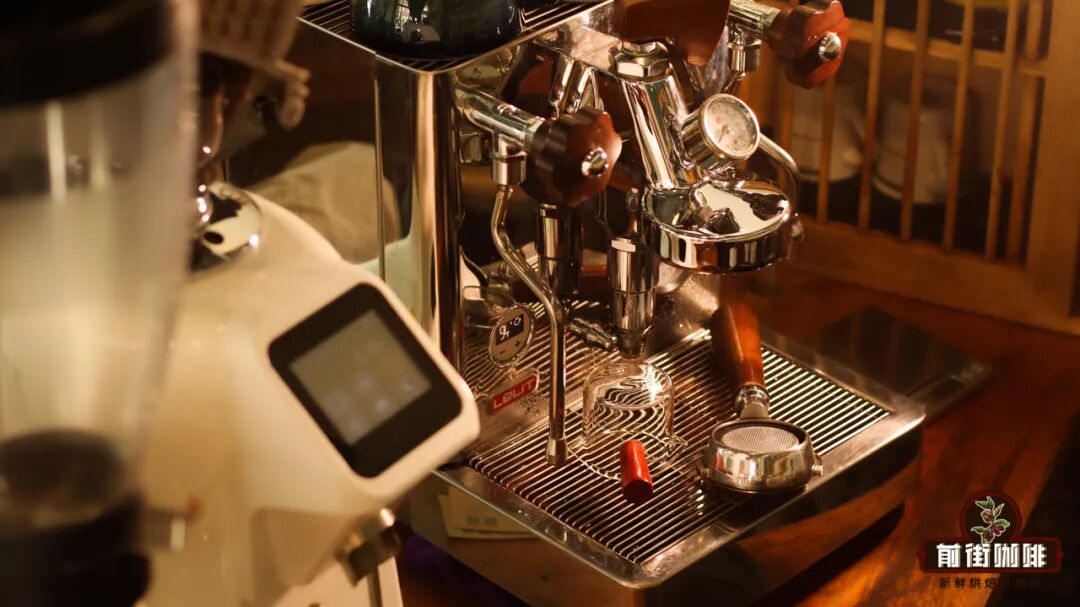
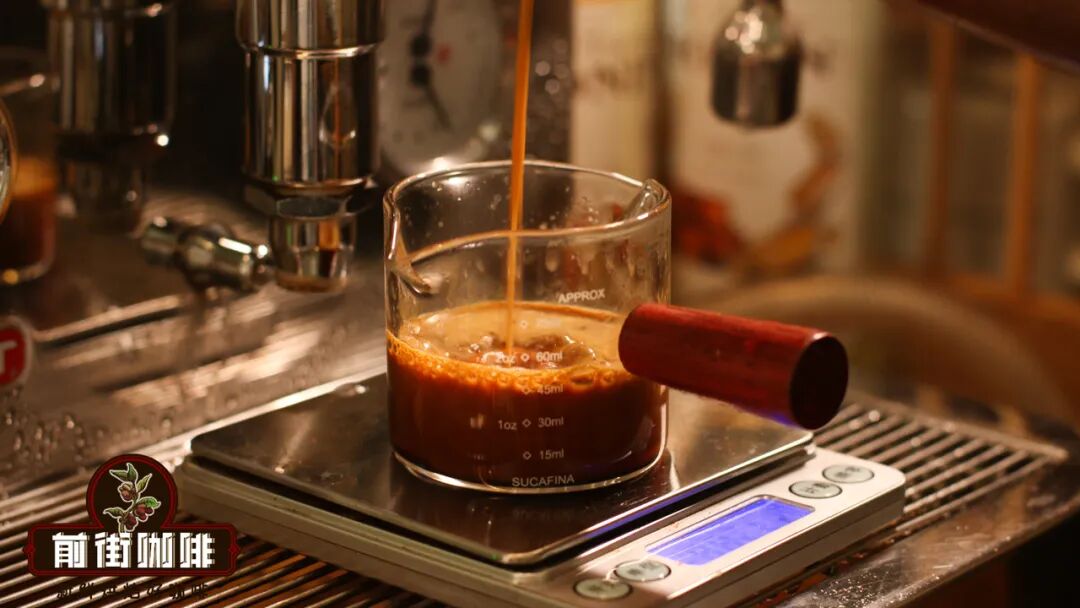
Previously, when Front Street shared knowledge related to espresso extraction, it would focus on the effects of parameters such as dose, ratio, grind, time, and pressure on extraction. In addition, it also emphasized the key operational points in steps such as receiving the grounds, distributing the grounds, tamping, and locking the portafilter. The only thing Front Street always briefly glossed over was water temperature.This does not mean that water temperature is unimportant; it is just that adjusting the water temperature on many coffee machines is rather troublesome, so Front Street simply set it as a fixed value and then adjusted other parameters to work with the fixed water temperature to extract delicious espresso.With the popularity in recent years of various complex operations such as pressure-profiling extraction, the water temperature of coffee machines has also become a frequently changing parameter. But what everyone needs to know is that, unlike pour-over coffee brewing, changes in the extraction water temperature of a coffee machine can bring about many effects.What does the water temperature of a coffee machine affect?As everyone knows, the biggest effect of water temperature on extraction is efficiency. When the water temperature used is higher, the extraction efficiency is higher, and the flavor substances in the coffee are quickly dissolved out; when the water temperature used is lower, the extraction efficiency also decreases accordingly, and the dissolution rate of flavor substances slows down.In addition to extraction efficiency, the water temperature of a coffee machine also affects the flow rate of the coffee liquid, or in other words, the speed of water flow. Under otherwise identical parameters, the higher the extraction water temperature, the relatively slower the flow rate of the coffee liquid; conversely, the lower the extraction water temperature, the relatively faster the flow rate of the coffee liquid.If you have read Front Street's previous article, you will know that this is because the water temperature determines the speed at which the puck expands and releases gas. Higher water temperature can make the puck expand faster and release various substances hidden in the coffee grounds. The expanded puck reduces the gaps between coffee particles, while the released gas is wrapped by the lipids in the coffee beans to form bubbles, creating resistance to the water flow. So under the combination of the two, the flow rate of the coffee is thereby changed.If everyone still does not understand the principle here, then why not experience it through actual operation~ When we turn on the machine every morning, the coffee machine needs nearly 20 minutes to heat the boiler and form steam. During this period, the extraction function of the coffee machine can operate, but the water temperature is relatively low, generally around 60°C.Therefore, we can try at that time what it is like to extract espresso at a lower water temperature. Then we will find that the flow rate of the coffee liquid can be said to be quite fast. And this is because the carbon dioxide is not released sufficiently, the expansion rate of the puck is not enough, so the flow rate is relatively slow.The last factor that can be affected by water temperature is the richness of the crema. Earlier, Front Street mentioned that the water temperature affects the speed of carbon dioxide release, and carbon dioxide is a major component of crema, so under otherwise unchanged parameters, the higher the water temperature used, the richer the extracted crema, and vice versa.The above are the effects that different water temperatures can bring in espresso extraction. Then the question comes: what water temperature should we use to extract espresso most appropriately?What water temperature is most suitable?In fact, just like what Front Street shared in"What Water Temperature Makes the Best Coffee"this article, besides water temperature, grind, ratio, and time are all major parameters that affect the extraction of a cup of coffee, so the specific water temperature to use still needs to be matched according to them.In the book The Extraction Science of Espresso, there is such a hypothetical experiment: Italian baristas like to use 85~91°C water to extract espresso, while American baristas like to use 92~96°C water to extract espresso.The reason for this difference mainly lies in their different ratios. The Italian standard is to use 7 grams of coffee grounds and then extract 1 ounce of espresso, while the United States uses 18~21 grams of coffee grounds to extract 1 ounce of espresso. In this, the ratio, time, and grind are all different, so the water temperatures they use are also different.But conversely, as Front Street mentioned at the beginning, the water temperature can also be set as a fixed value, and then other parameters can be adjusted to match the fixed water temperature.Generally, the initial water temperature of a coffee machine at the factory is set withinthe range of 92°C~96°C. This range is a very suitable temperature range, neither too low nor too high. As long as the initial water temperature of the coffee machine is within this range, unless you have some special extraction needs, we can almost avoid changing it.Then, by applying the golden extraction formula for espresso(1:2 coffee-to-liquid ratio, 25~35s extraction time)to lock in the liquid weight and time, we can quickly extract delicious espresso by adjusting the grind and slightly fine-tuning the liquid weight.It is worth mentioning that...Just like with pour-over coffee, what we can set now is the water temperature inside the boiler rather than the actual water temperature during extraction. Because the water passes through various pipes from the boiler to the dispersion screen, the final actual extraction water temperature will differ by a few degrees from the set temperature due to heat absorption.Especially when espresso has not been extracted for a long time, the gap between the water temperature and the set value will be even greater. So when the interval between coffee extractions is too long, it is best to flush hot water once before locking on the portafilter. This can not only help us calibrate the water temperature, but also give the dispersion screen a cleaning, sweeping away the "residue and grime"(that is, coffee grounds)attached to the dispersion screen. The above content is compiled by CoffeeHunters, a coffee news website.