







How Does Cupping Measure Coffee Quality?
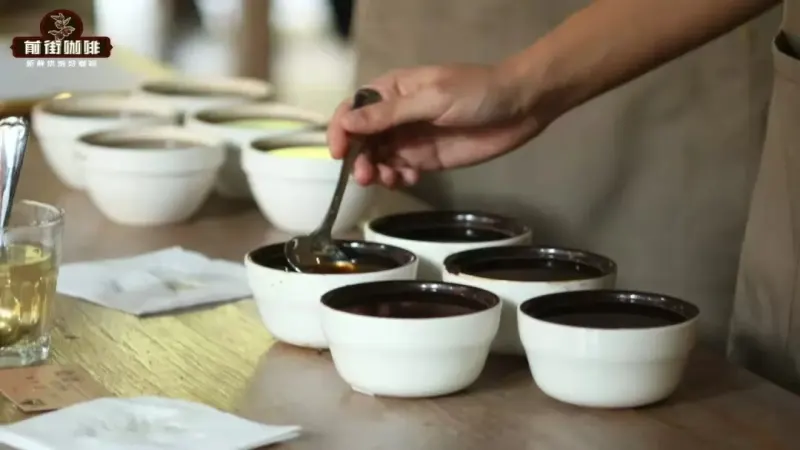
Specialty coffee cupping judges coffee quality through four stages: inspecting the appearance of the roasted beans, smelling the dry aroma of the ground coffee, sensing the wet aroma once hot water is poured, and finally tasting the liquid. The setup is simple and limits human interference, so tasters can read a bean's overall character more completely. Green bean traders, roasters, and coffee shops rely on this routine to check quality and flavor across batches.
A cupping form splits scoring into two parts. The first third covers observational items such as roast level, dry aroma, and wet aroma, while the remaining two thirds judge the liquid itself: cleanliness, sweetness, acidity, body, flavor, aftertaste, balance, and an overall score. A demonstration using two Geisha beans shows how these specialty coffee scoring points work in practice, along with tips for handling olfactory fatigue.
For friends who are just getting into specialty coffee, the term "cupping" may feel both familiar and unfamiliar. Although people often mention it, when it comes to actually attending a cupping session, many are unsure what exactly to do and which details to pay attention to. This article starts from practical operation and provides a complete breakdown of the four major stages of cupping—observing the bean appearance, appreciating the dry aroma, sensing the wet aroma, and tasting the coffee—and uses on-site demonstrations of two Front Street Geisha beans to dissect the scoring items and sensory key points on the cupping form one by one. It will also share how to deal with common issues such as olfactory fatigue and being unable to taste the flavors, helping beginners capture the full picture of the coffee more confidently during cupping.
However, for many friends who have just stepped into the world of coffee, the way these stages work may still be rather unclear. Just yesterday, for example, a customer at the Front Street store asked Front Street about the specific steps of cupping while selecting coffee beans: what exactly is done in a cupping event, and how should it be done?
So today Front Street is taking this opportunity to talk with everyone about which steps you will go through when attending a cupping session, and what we should do in each step.
What is cupping?
Not long ago, Front Street talked with everyone about how cupping is a routine method used to evaluate the quality of coffee beans. It is usually adopted by green bean traders, roasters, or coffee shops when checking the quality and flavor performance of coffee beans in batches. It is simple to perform and can minimize interference from human factors as much as possible, allowing us to perceive the overall character of a bean more completely.
Below is the cupping form used by Front Street during cupping. Although when attending offline cupping sessions people generally do not actually take a form and score, through this form we can clearly see the cupping process and the various contents that need to be evaluated.
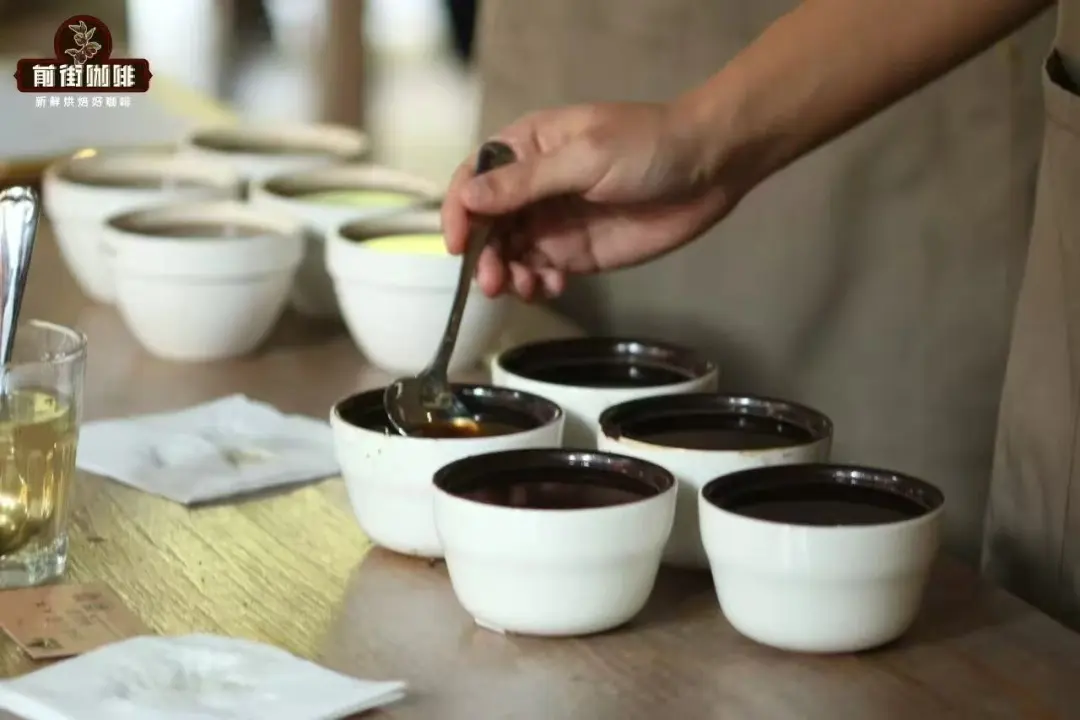
The first third of the cupping form consists of observational items completed by looking and smelling, including the roast level of the coffee beans, the dry aroma of the coffee grounds, and the wet aroma released after pouring water; the latter two thirds are the dimensions we need to evaluate from the coffee liquid, covering cleanliness, sweetness, acidity, body, flavor, aftertaste, and balance, with a final item for overall evaluation.
But as Front Street mentioned earlier, offline cupping sessions are mostly for communication and sharing, so there is no need to take a cupping form and score item by item; it is enough to have a general understanding of which aspects need to be judged.
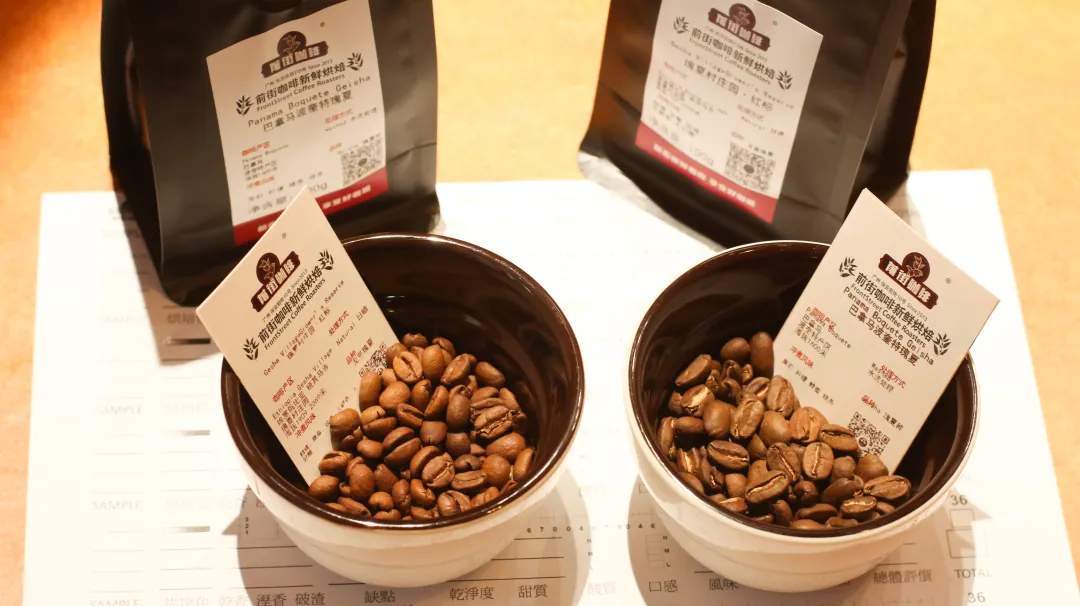
To make it easier for everyone to understand, next Front Street will use two different coffee beans to demonstrate the specific cupping process and the contents that need to be evaluated. They are the Front Street Panama Boquete Geisha and the Front Street Ethiopia Gesha Village Red Label Geisha from the Front Street bean list. The cupping parameters are as follows: 12 grams of grounds, 1:16 coffee-to-water ratio, 94°C water temperature, and a 4-minute steep time.
The cupping process is divided into four parts. The first part is observing the appearance of the beans, including bean size, roast level, and varietal characteristics, which is equivalent to first getting to know the general look of the bean. Although both beans used by Front Street are Geisha, the former is the classic Panama Geisha and the latter is the Ethiopian heirloom Geisha, so there will be certain differences in their appearance. This is what can be observed in the first part of cupping.
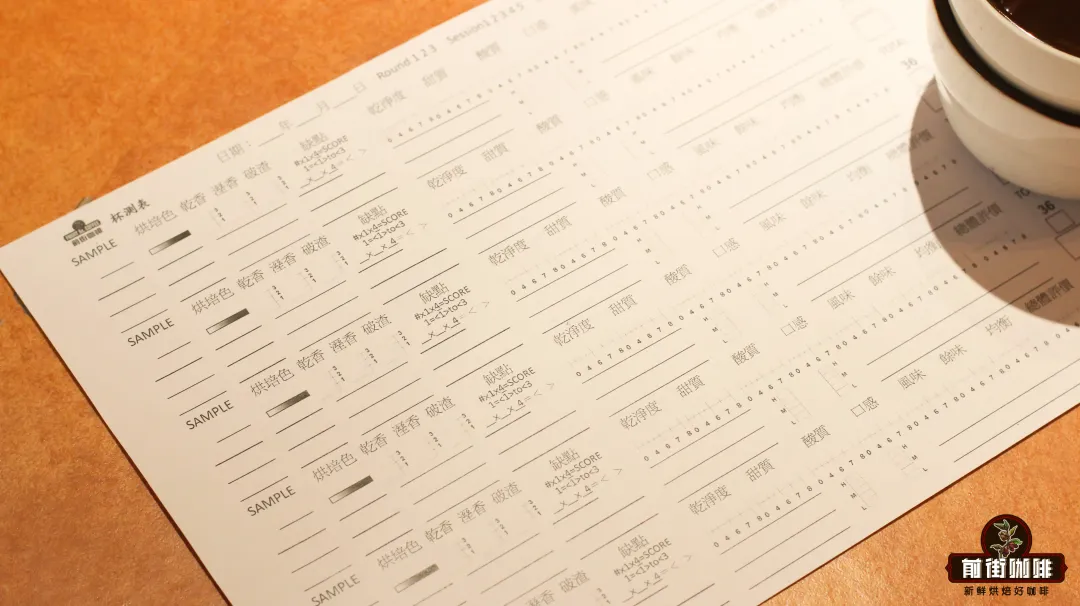
The second part of cupping is appreciating the dry aroma. In this stage, the coffee beans are ground into powder, and we need to lean in and sniff the dry aroma given off by the coffee grounds, and identify the general flavor characteristics.
In the dry aroma stage, from the Front Street Boquete Geisha, Front Street smelled intense white floral notes, accompanied by berry-like acidity, apricot sweetness, and a clean tea aroma; while in the Front Street Gesha Village Red Label Geisha, citrus and pineapple fruit acidity were smelled, also with berry aroma, as well as a oolong tea-like tea aroma.
The third part of cupping is appreciating the wet aroma. In this stage, we need to pour an appropriate amount of 94°C hot water into the cup to begin extraction, and at this point we can sniff the wet aroma released after the coffee contacts the hot water.
Compared with the dry aroma, the wet aroma of coffee is less obvious, so when sniffing you may need to lean closer and inhale more forcefully.
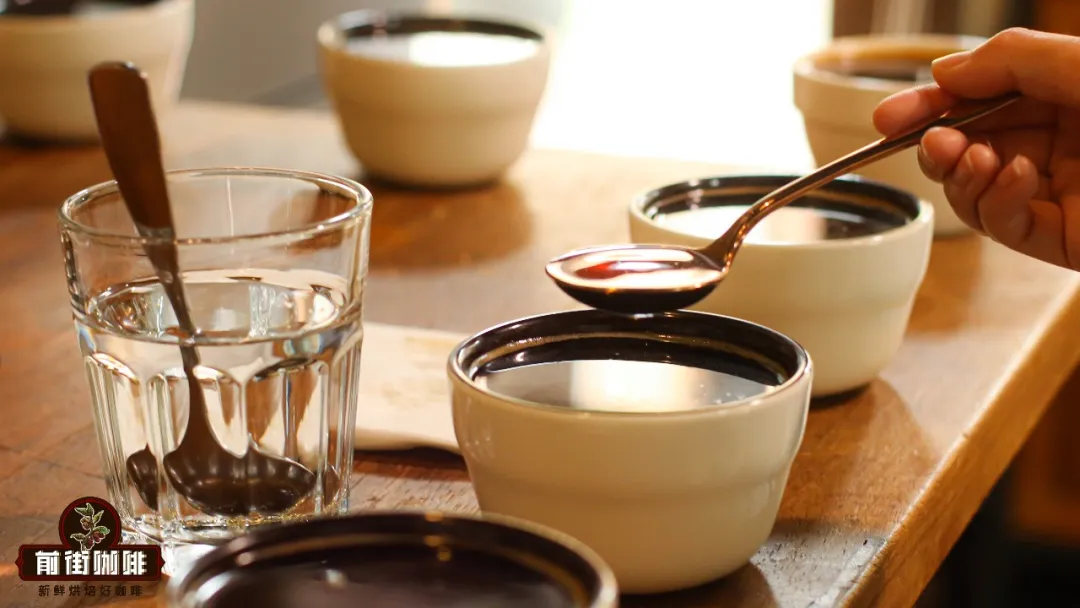
Finally comes the tasting stage. After the full 4-minute steep, we can break the crust and begin tasting the coffee. The contents to be evaluated are the items shown on the cupping form—the coffee's sweetness, acidity, body, and so on...
Taking Front Street as an example: in this round of cupping, the Front Street Boquete Geisha showed relatively high cleanliness, with balanced acidity and sweetness on the palate, high sweetness, and excellent acidity. Citrus, jasmine, apricot, honey, and green tea flavors could be clearly tasted, the body was full and smooth, the aftertaste was long and lasting, and the overall evaluation was quite good;
while the Front Street Gesha Village Red Label Geisha also had very high cleanliness, with acidity and sweetness as the main palate impression, excellent acidity, and similarly high sweetness. Pineapple, citrus, strawberry, and rose flavors could be clearly tasted, the overall body was smooth and light, the aftertaste was lasting, and the overall evaluation was also very good.
The above is the complete set of steps experienced at a cupping session and the contents that need to be evaluated. To put it simply, it is these three things: look, smell, and drink.
But everyone should note that if there are many coffee beans in the cupping, it is easy to experience olfactory fatigue during the process, or to find it hard to taste the coffee flavors. So once olfactory fatigue occurs, you can smell your own body scent before smelling the coffee beans, thereby refreshing your sense of smell; if you cannot taste the flavors, you can take a sip of water before tasting the coffee to "refresh" your palate, and combine this with slurping to amplify your capture of the flavors. In this way, you can better evaluate the coffee.
- END -
The above content is compiled by CoffeeHunters, a coffee news website.


