







Why your coffee water temperature falls short
Water set to 92°C in a temperature-controlled kettle arrives at the coffee bed several degrees cooler. Heat escapes through the kettle neck, the air gap during the pour, and the dripper, so the grounds never see the number on the display. That shortfall is a common cause of under-extraction, producing cups that taste thin or sour even when the recipe stays the same.
The size of the drop depends on pouring height, kettle neck width, and dripper material, since unheated ceramic absorbs more heat than thin plastic or metal. Preheating the dripper and server, pouring from a lower height, and setting the kettle slightly above the target narrow the gap, which answers how hot should water be for coffee in a given room.
Many coffee enthusiasts set the water temperature at 92°C when brewing, yet often encounter under-extraction. The reason is that as hot water is poured from the kettle and travels to contact the coffee grounds, heat is continuously lost, so the actual temperature is often lower than the set value. This article will analyze the major causes of water temperature loss, including the effects of the kettle neck, air, and dripper material, and provide practical countermeasures such as preheating equipment, lowering the pouring height, and adjusting water temperature to help you brew a good cup consistently in different environments. The article also uses Front Street Grana Geisha as an example to explain how to flexibly adjust parameters according to ambient temperature, making extraction more reliable.
However, have you ever thought about this: the temperature we set before brewing is not necessarily equal to the temperature of the water that actually meets the coffee grounds and participates in extraction? What exactly does this mean? For example, suppose that when brewing coffee, the temperature-controlled kettle shows 92°C, meaning we intend to brew with 92°C water. But in fact, the hot water poured from the kettle that finally touches the coffee grounds, in most cases, does not reach 92°C, and is always a bit lower than the preset value. Even in some more extreme situations, the gap between the water temperature inside the kettle and the water temperature actually contacting the coffee grounds can be astonishingly large!
If you often brew coffee yourself, you have probably also encountered this: even with the same water temperature, sometimes the coffee you brew is under-extracted. This is precisely the result of the water temperature inside the kettle differing too much from the actual water temperature contacting the coffee grounds in extreme conditions. So here is the question — why is the 92°C hot water we use for brewing not actually 92°C when it is brewed? The reason is actually not complicated. When hot water is poured from the kettle, before it contacts the coffee grounds, it passes through a gap, and along this path it encounters various factors that cause cooling, such as the kettle neck and air, all of which take away heat from the hot water and make the temperature drop. If the dripper you use is made of a material with relatively high specific heat capacity, such as ceramic, and has not been preheated in advance, then the water temperature will also have part of its heat absorbed by the dripper, lowering it further.
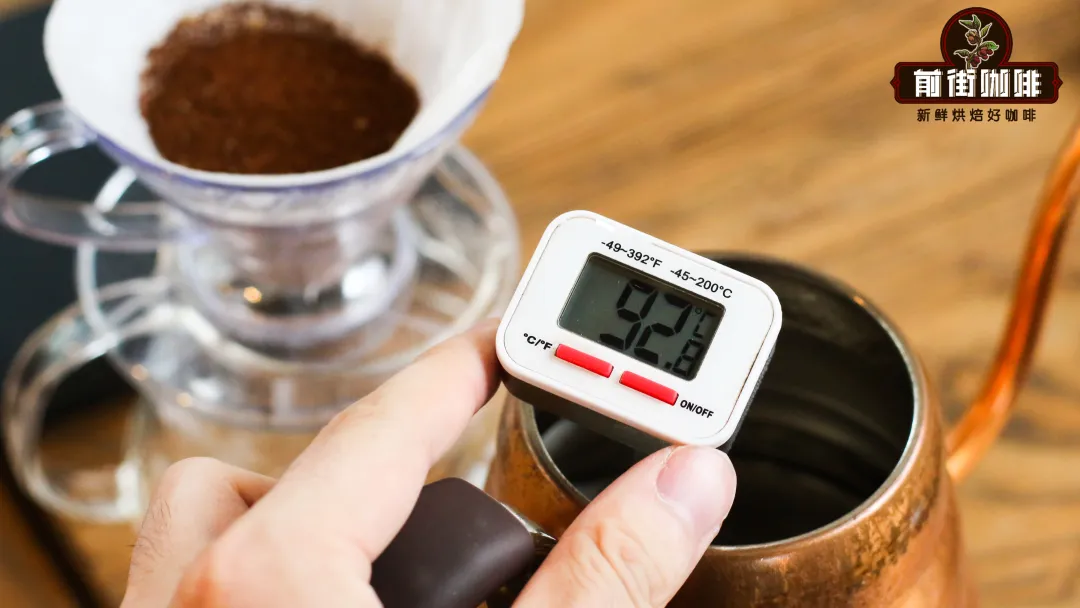
The greater the temperature difference between the hot water and the utensils and environment it contacts, or the more air it contacts, the more heat is taken from the hot water, and the greater the temperature drop. A moderate temperature drop will not interfere too much with extraction, but once the drop reaches a certain degree, brewing stability will worsen. Especially when the extraction efficiency of other parameters is already not high enough, it is very easy to brew under-extracted coffee — because water temperature directly determines extraction efficiency: the higher the water temperature, the higher the extraction efficiency; conversely, the lower it is.
Therefore, in addition to controlling the parameters well before brewing, trying to keep the water temperature stable during brewing, or reducing the range of water temperature change, can also help us brew a good cup consistently. So how exactly should we do this?
The following directions can be used as references! The first is preheating. Before formal brewing, you can first pour out some hot water from the kettle to preheat the kettle neck and spout; if you use a dripper with relatively high specific heat capacity such as ceramic, you can also use this portion of hot water to preheat it. In this way, the utensils that the hot water will contact can be warmed up in advance, reducing the temperature difference, and during brewing the hot water will not lose too much heat and drop in temperature because of these factors. Another direction is to reduce the air the hot water contacts, which mainly depends on the pouring height during brewing. The higher the pouring height, the longer the distance from the kettle spout to the coffee grounds, the more air it contacts, and the more heat is taken away; the opposite is also true. Therefore, appropriately lowering the pouring height can reduce the loss of heat from the hot water.
Usually, Front Street’s pouring height is one fist’s distance from the coffee bed. This distance can both ensure that the hot water has enough penetrative force to stir the coffee grounds and reduce contact between the hot water and air, lowering the degree of heat loss, thereby steadily brewing a good pot of coffee. But if the ambient temperature is low, such as in winter, or when brewing pour-over in an air-conditioned room with the cooling on, then in addition to the above operations, we may also need to raise the water temperature.
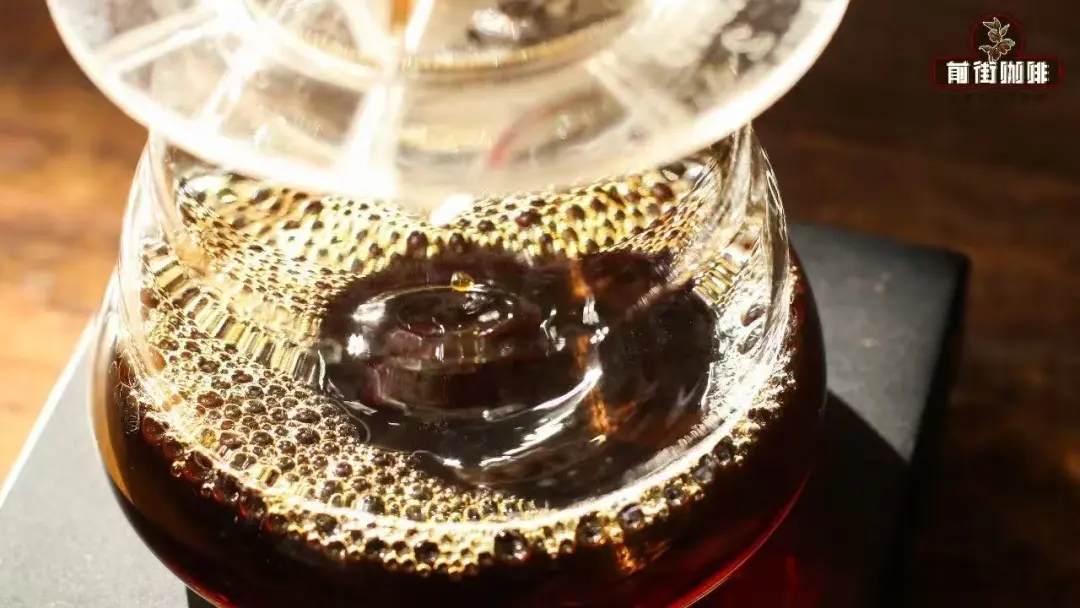
Because in such an environment, the rate of temperature loss will be very fast. Not only the hot water poured out, but even the water temperature inside the kettle will drop rapidly, equivalent to having a negative cooling effect attached to it. Therefore, Front Street would relatively recommend everyone adjust parameters according to the current brewing environment, not only water temperature, but grinding and time can also be changed. Take Front Street Grana Geisha from Front Street’s bean list as an example! Front Street Grana Geisha is a medium-light roasted natural Ethiopian bean. The coffee brewed with it has flavor notes of apricot, berries, citrus, and green tea, with a balanced sweet-and-sour taste, a light and smooth mouthfeel, and a long finish. It is very good.
When brewing it, under suitable ambient temperature conditions, Front Street usually uses a water temperature of 92°C. But if the ambient temperature is low, Front Street will raise the water temperature to 93–94°C, keeping other parameters unchanged. This can offset the effects of too-rapid temperature drop!

Of course, if you use a pour-over kettle with a heating module, you can also put the kettle back on the base to keep it warm after pouring, which is also a good method. So that is all for this Front Street sharing! I believe everyone now fully understands the impact of water temperature on extraction and the factors that affect it, so when you find that the coffee you brew suddenly does not taste as good, water temperature may be a parameter worth focusing on~
- END -
The above content is compiled by CoffeeHunters, a coffee news website.


