








How Does Coffee Classification and Grading Define Hard Beans?
Hard bean and soft bean are grading terms tied to altitude, not variety. In Central American growing regions, coffee classification and grading sorts beans by the density that comes with elevation: hard beans grow higher, where cooler nights slow cherry maturation and build denser, more flavorful seeds, while soft beans grow lower. Higher altitude means a higher grade.
Grading also covers appearance, splitting beans into flat and round types. Because hardness affects roasting and extraction, high-hardness beans suit light roasts and low-hardness beans suit darker ones, so water temperature and grind settings need adjusting. Central American coffee labels often carry these terms, which is why the wording is worth reading before choosing a bean or a brewing plan.
Beyond differences in variety, coffee beans also have multiple classification dimensions, which has given rise to many alternative names. This article starts with the appearance-based classification of flat beans and round beans, and focuses on answering the question coffee lovers often ask: what exactly does "hard bean" mean? It originates from the grading system in Central American growing regions that divides bean hardness by cultivation altitude—the higher the altitude, the greater the density and the higher the grade. The article also shares how to judge bean hardness by feel, the roasting and brewing strategies corresponding to coffee beans of different hardness, and uses actual brewing parameters as examples to illustrate the extraction differences between high-hardness light-roasted beans and low-hardness dark-roasted beans, helping readers find a suitable brewing plan.

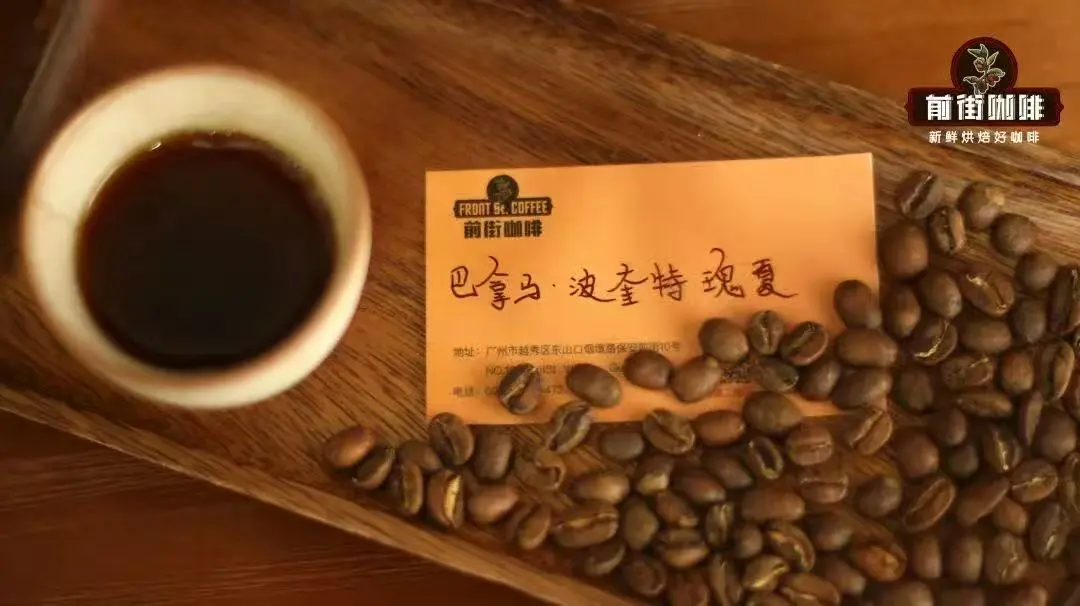

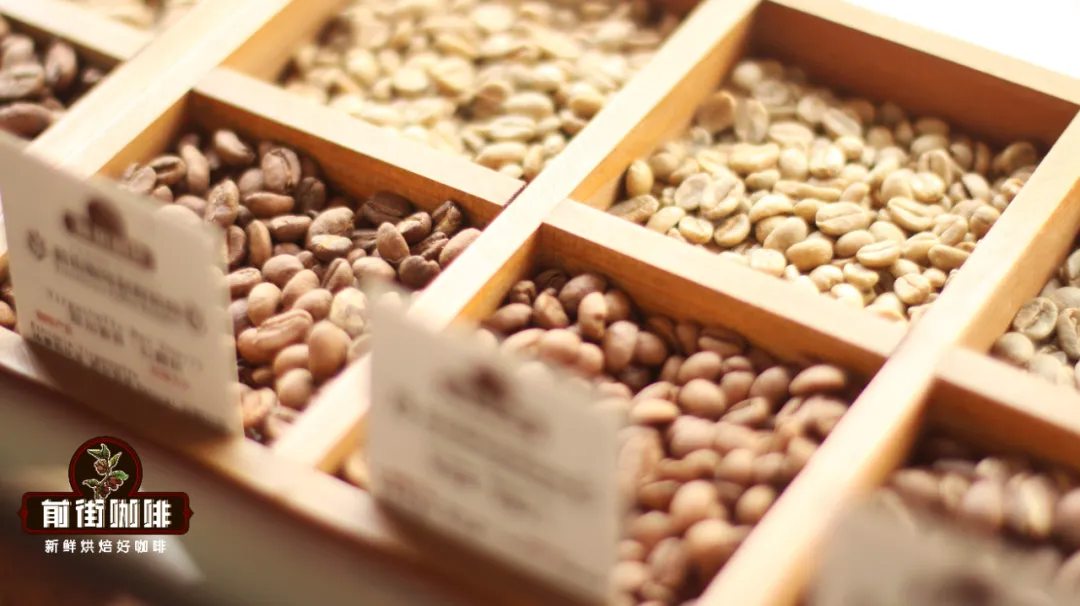

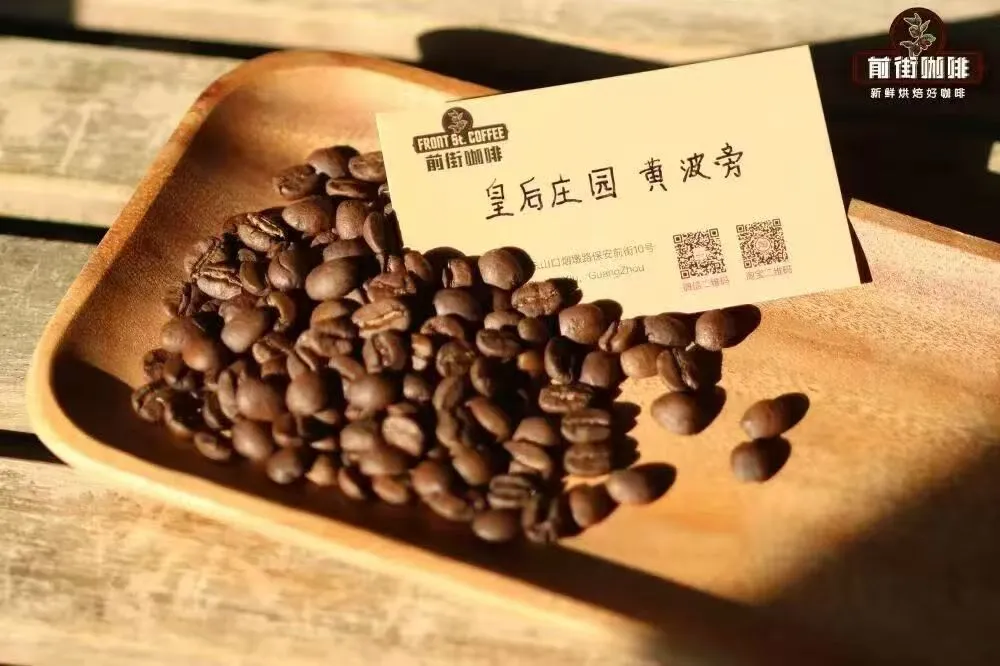
As everyone knows, coffee beans can be classified in far more ways than just by variety, and that is precisely why they end up with all kinds of alternative names. Take the flat beans and round beans that Front Street Coffee often mentions—these two names are distinguished by the appearance characteristics of the coffee beans.
There are actually many similar alternative names. If you like browsing coffee-related discussions online, you have probably come across special terms like "hard bean" and "soft bean" to some degree. Yesterday, a customer at the Front Street Coffee store raised a question while selecting coffee beans: what exactly does "hard bean" in coffee refer to?
What does "hard bean" mean in coffee?
Actually, Front Street Coffee thinks that when people see the term "hard bean," most of them already have a preliminary judgment in mind—yes, it refers to coffee beans with relatively high density.
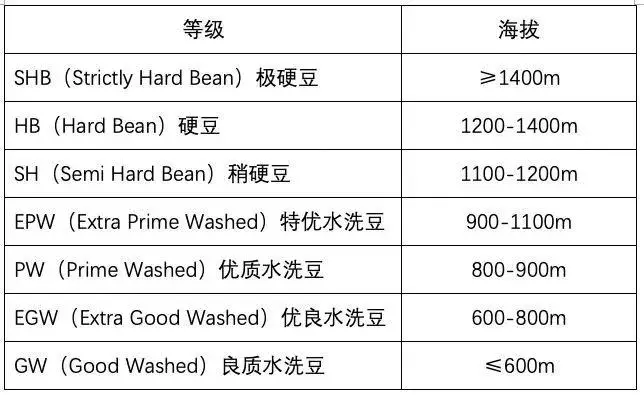
The origin of the term "hard bean" can be traced back to the grading tradition of Central American coffee-producing regions. Locally, the hardness of coffee beans is determined by the altitude at which they are grown, and grades are divided accordingly. The higher the altitude at which coffee beans grow, the higher the corresponding grade.
Front Street Coffee often shares that growing altitude is one of the key factors affecting coffee bean quality. The higher the altitude, the greater the temperature difference between day and night, and the longer the coffee fruit takes to mature. A longer maturation period allows the coffee beans to accumulate more substances, thereby developing a more layered flavor performance.
Therefore, these Central American regions did not follow the traditional old method of "grading by size," but instead graded coffee beans intended for export according to growing altitude. The higher the altitude, the more substances accumulated, and naturally the greater the density. Thus, different tiers such as strictly hard bean, hard bean, and semi-hard bean appeared in the altitude grading system.
When it comes to roasting and brewing, the simplest way to identify the hardness of coffee beans is to rub, pinch, and press them with your hands. Of course, friends with good teeth can also bite them directly. But it must be made clear that judging density during roasting and brewing is not for evaluating whether coffee beans are good or bad in quality—this has nothing to do with quality. The real purpose of distinguishing hardness is to find suitable roasting or brewing parameters so as to "cook" an ideal cup of coffee.
Considering that most people are more familiar with the brewing stage, Front Street Coffee will share in detail here the brewing parameters corresponding to coffee beans of different hardness.
As Front Street Coffee mentioned in yesterday's sharing, the density of coffee beans is affected by many factors, one of which is the degree of roasting. The darker the roast, the more the bean body expands and the density relatively decreases. Low-density coffee beans are easier to extract, and vice versa. So when brewing, what we need to judge is the roast level of the coffee beans, and then choose the corresponding brewing parameters according to the roast level to ensure the extraction yield is just right and ultimately brew a delicious cup of coffee.
Darker-roasted coffee beans are more brittle and lower in density, so they are easier to break apart and grind into powder, and the extraction process is also easier. When dealing with coffee beans that are not so hard, we can brew with parameters that have slightly lower extraction efficiency;
Conversely, the lighter the roast, the higher the density of the coffee beans and the harder the texture, making grinding more laborious. When brewing this type of coffee bean, you need to use parameters with higher extraction efficiency to ensure they are fully extracted.
Take Front Street Coffee as an example. The Front Street Yirgacheffe Gutingding on the Front Street bean list is a high-hardness coffee bean grown in a high-altitude region and roasted to a medium-light level. The coffee brewed with it has elegant aromas of white flowers, lemon, green tea, and berries, with a light yet full body and a long finish—very nice indeed.
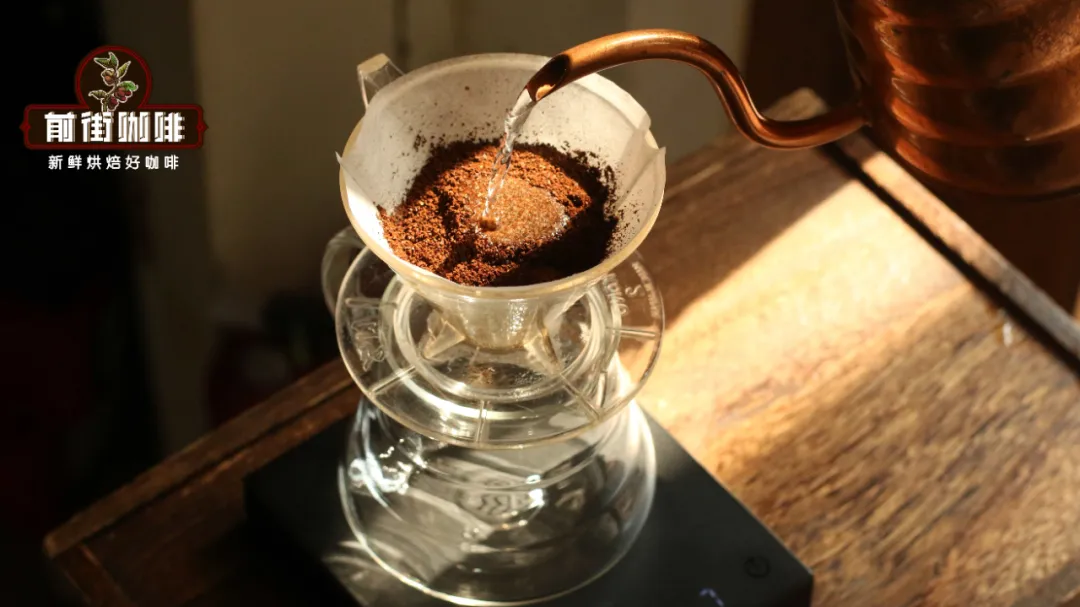
If we want to brew out the characteristics mentioned above, then as Front Street Coffee says, we need to use parameters with higher extraction efficiency! The parameters used by Front Street Coffee are as follows: 15g dose, 1:15 coffee-to-water ratio, grind size of 75%~80% passing a No. 20 sieve, brewing water temperature of 92°C, and extraction time of 2 minutes.
If the coffee beans are easier to grind and extract because they are darker-roasted, such as the dark-roasted Front Street Brazil Queen Estate Yellow Bourbon on the Front Street bean list, then when brewing, Front Street Coffee will use parameters with relatively lower extraction efficiency to prevent over-extraction! The parameters used by Front Street Coffee are as follows: 15g dose, 1:15 coffee-to-water ratio, grind size of 70%~75% passing a No. 20 sieve, brewing water temperature of 88°C, and extraction time of 2 minutes.
The Front Street Brazil Queen Estate Yellow Bourbon brewed this way has an extremely rich body and a balanced taste with almost no acidity. Drinking it, we can clearly perceive flavor notes of nuts, cream, chocolate, and caramel—very good indeed.
That is all for this sharing from Front Street Coffee! So here is the question: besides the classification methods mentioned above by Front Street Coffee, do you know any other ways of classifying coffee beans?
- END -
The above content is compiled by CoffeeHunters, a coffee news website.


