







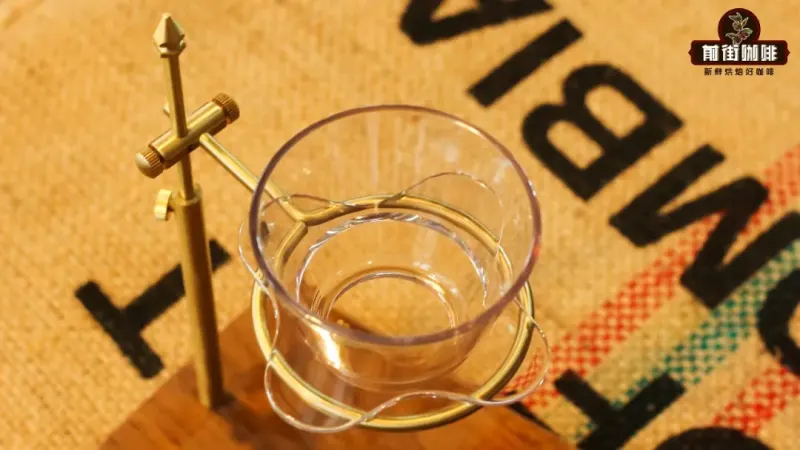
How Does Dripper Shape Affect Hand Brewing Coffee?
Dripper shape changes how the coffee bed sits and how water moves through it, which shows up in flavor balance and repeatability. A flat-bottom dripper holds a thin, evenly spread bed, so water covers the grounds consistently even when pouring is uneven, and many models drain slowly, raising the share of immersion. A V60 cone piles grounds deeper in the center and drains faster, favoring percolation and putting more weight on pour technique.
The practical difference is contact time. Slower flat-bed draining extends it and tends to even out extraction, while the conical bed rewards steady, controlled pouring. Tuning a large-hole flat-bottom dripper for a washed Yirgacheffe lot such as Gotiti means adjusting grind, pour count, and total brew time so the cup stays sweet and clear rather than bitter or hollow. The same logic applies to choosing coffee beans for hand brew.
In the world of pour-over coffee, the shape of the dripper often determines the structure of the coffee bed and the direction of extraction. Flat-bottom drippers and V60 conical drippers each have their followers, and the large-hole flat-bottom drippers that have emerged in recent years have attracted considerable attention for their combination of immersion and drip filtration. This article will compare the differences between the two types of drippers from the perspectives of coffee bed distribution, flow rate, and extraction balance, and, using Front Street Yirgacheffe · Gotiti as an example, share in detail the thought process for adjusting brewing parameters and practical techniques for the large-hole flat-bottom dripper, to help you find a brewing solution that suits you better.
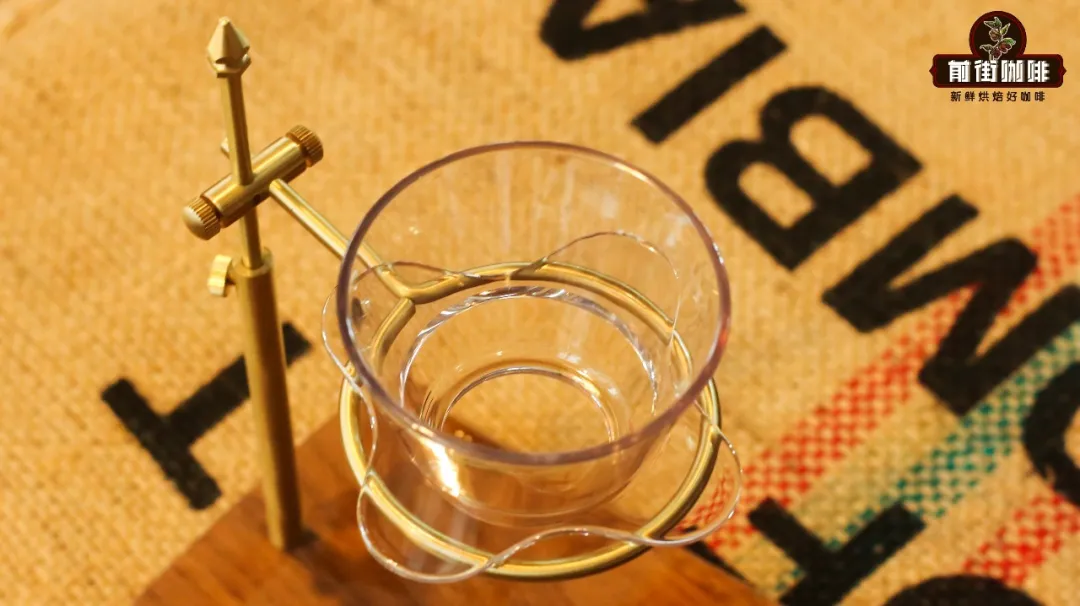
What advantages do large-hole flat-bottom drippers have
To understand the characteristics of flat-bottom drippers, we must first start with how the dripper shape affects the coffee bed. Front Street has also mentioned many times before that different dripper shapes essentially change the way coffee grounds accumulate inside the dripper.
The bottom of a flat-bottom dripper is flat, and the difference between the upper and lower cross-sectional areas is not large, so the coffee bed formed by piled coffee grounds is usually thinner than in a conical dripper and more evenly distributed—the amount of coffee in the central area and the edge area is basically the same, and it will not be thick in the middle and thin around the edges as with a conical dripper.
In the article "Why Flat-Bottom Drippers Are Beginner-Friendly Drippers," Front Street once analyzed that this kind of coffee bed structure helps achieve relatively uniform extraction. The coffee layer is thin and spread evenly, so when hot water is poured in, it can cover the entire surface of the coffee bed relatively consistently. Even if the pouring technique is not stable enough, the coffee grounds can still achieve a relatively balanced extraction result.
In addition, the flow rate of flat-bottom drippers is usually slower. Many flat-bottom drippers do not have complex flow-guiding structures, especially when the bottom lacks flow-guiding ribs, hot water spreads evenly across the flat surface, and the seepage speed is naturally slowed down.
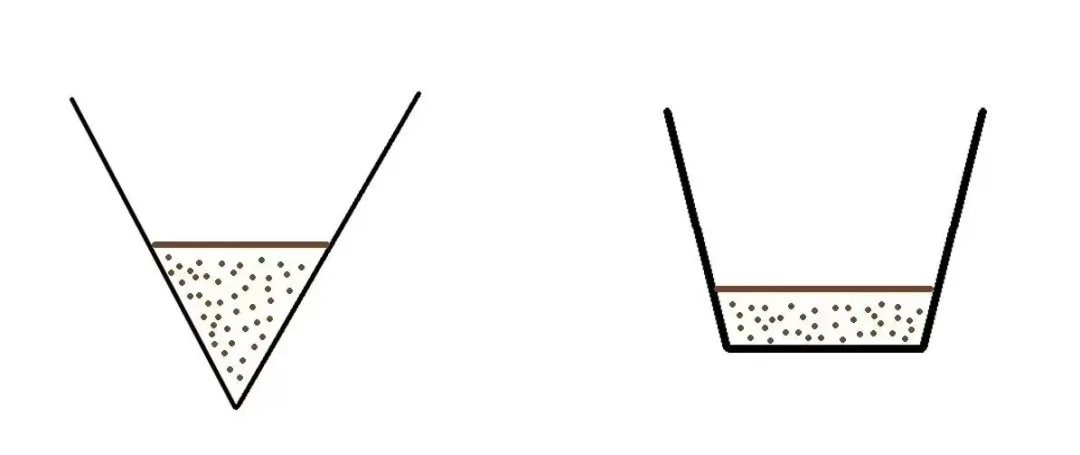
A slow flow rate means the contact time between hot water and coffee grounds is extended, and the proportion of immersion extraction rises accordingly. When coffee grounds are soaked in hot water for a long time, the extraction uniformity is higher, and the final flavor in the cup also tends to be more balanced, with greater tolerance for error. This is precisely the core advantage of flat-bottom drippers.
The so-called large bottom hole can be compared to the idea of a bottomless portafilter—no extra design at the bottom, just a single large hole opened directly. One benefit of doing this is the slower flow rate that Front Street mentioned earlier. But beyond that, the new-style drippers adopting a large-hole design have another consideration: increasing the ways to brew and the variability of extraction. Users can place various accessories on the specially designed bottom to change the direction of extraction.
For example, placing a bottom plate with multiple flow-guiding structures to speed up the flow, or inserting a small tool like a LilyDrip that can change the shape of the coffee bed to adjust the distribution of coffee grounds. In short, it is more playable, and the possibilities for extraction are richer.
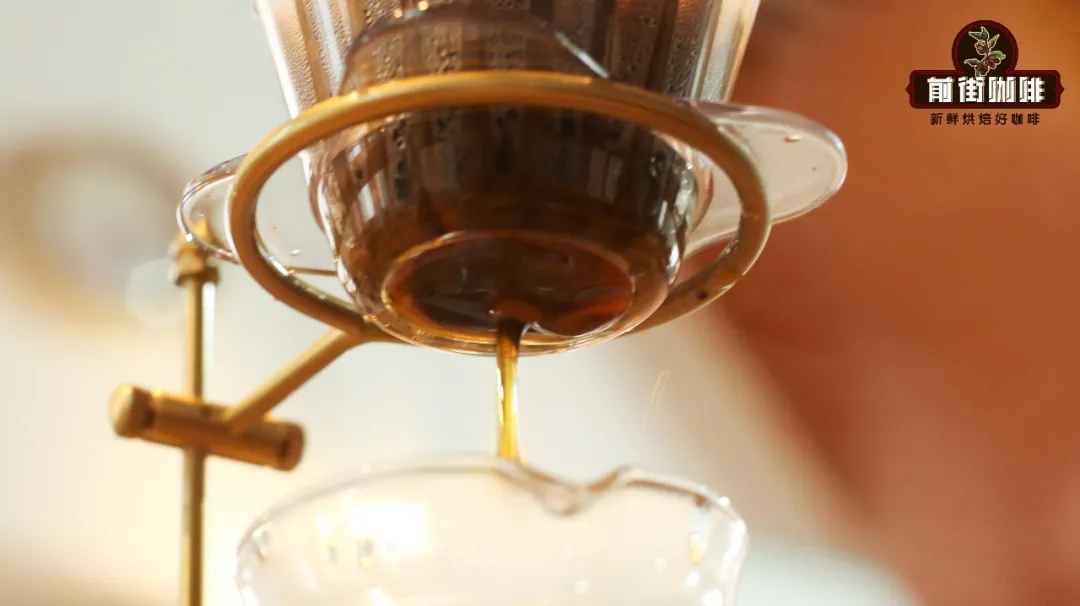
From this it can be seen that combining a large bottom hole with a flat bottom not only lowers the entry threshold for coffee extraction, but also retains ample room for experimentation.
If you have purchased a flat-bottom dripper of this design, there is one point to note: when using it without changing the coffee bed structure, it is best to adjust the extraction parameters accordingly. Because it is a hybrid mode of immersion and drip filtration, an overly long extraction time can still easily lead to over-extraction.
Take the BABYO dripper that Front Street has on hand as an example. When brewing the same amount of coffee in the same way, its extraction time will be about 30 seconds longer than that of a V60 dripper. To reduce the risk of over-extraction, when using this type of dripper you can appropriately lower the water temperature or adjust the grind size coarser.
Here, let's use Front Street Yirgacheffe · Gotiti from Front Street's Taobao Tmall flagship store as a demonstration. This coffee comes from the well-known Gotiti Cooperative in the Yirgacheffe region. Grown at high altitude, washed processed, and medium-light roasted, it presents a very typical and distinctive "Yirgacheffe flavor," and is a choice many friends repurchase repeatedly. However, its beans have relatively high density, and the flow rate is on the slow side during brewing, which makes it just right for use as an example.
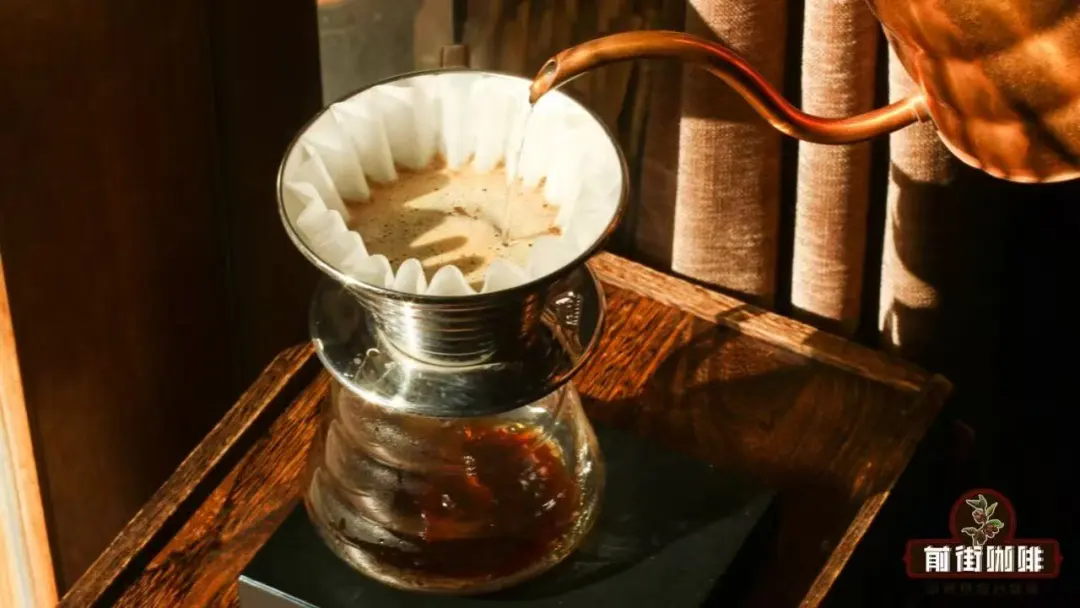
When brewing Front Street Yirgacheffe Gotiti with a V60, the parameters Front Street uses are: 15g coffee, coffee-to-water ratio 1:15, No. 20 sieve pass rate 75%~80%, water temperature 92°C, and brewing time controlled at 2 minutes to 2 minutes 30 seconds. Gotiti brewed this way has a main profile of sweetness and acidity, a light mouthfeel, and a fresh flavor, with notes of white florals, lemon, green tea, and a little berry.
When switching to a large-hole flat-bottom dripper, on this basis, adjust the grind one step coarser, that is, from a No. 20 sieve pass rate of 75%~80% to a pass rate of 70%~75%, while keeping the other parameters unchanged and using multi-stage pouring. The specific method is: first bloom with water equal to twice the coffee dose, then divide the remaining hot water into 2 to 4 pours. The number of pours depends on the flow rate—the slower the flow, the more pours.
It should be noted that if there are many pours, the later pours, such as the third or fourth pour, do not need to be poured in circles and can be poured directly at a single center point. The purpose is to reduce extraction efficiency and avoid over-extraction.
Front Street divided it into three pours, with the final pour using a single-point pour. The total brewing time this way was 2 minutes 41 seconds. The flavor performance was very balanced, with prominent sweetness, a solid and full mouthfeel, and equally distinct aroma. The flavors of white flowers, lemon, and berries were clearly distinguishable. By comparison, the layering may not be as rich as with a V60, but each has its own strengths.
- END -
The above content is compiled by CoffeeHunters, a coffee news website.


