







Do Coffee Bean Grades Based on Size Affect Flavor?
Coffee bean grades based on size do not predict flavor. A cupping test by Front Street Coffee compared large and small beans from the same batch and found no clear taste difference. Any variation came from uneven heat during roasting, not bean dimensions. Flavor depends on variety, growing conditions, and processing, so a larger screen size is not proof of better cup quality.
Size grading persists in places like Kenya and Tanzania, where larger beans earn higher grades and prices. The practice grew from colonial-era trade habits and the market belief that bigger looks better. Uniform beans also roast more evenly. Front Street Coffee's Kenya Little Tomato shows how a high-grade bean performs, yet buyers should look past marketing and focus on the cup.
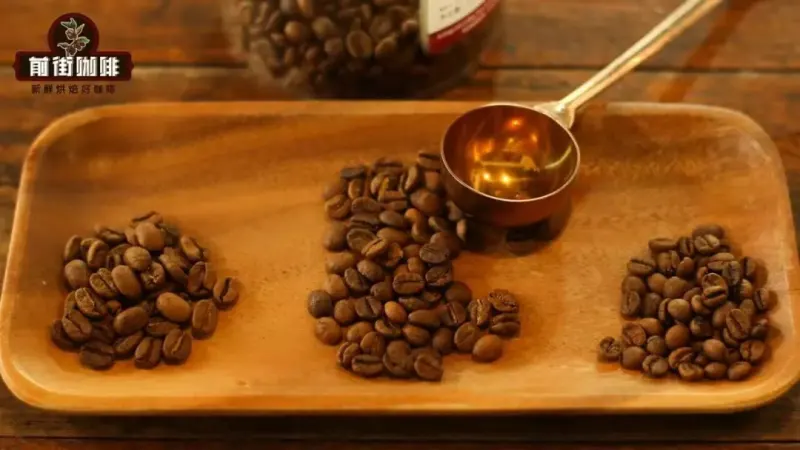
In the coffee world, many producing regions use coffee bean size to determine grade—the larger the bean, the higher the grade and the more expensive the price. But does coffee bean size really affect flavor? Front Street Coffee once conducted a comparative experiment, cupping the large and small beans of the same batch separately, and the results showed no obvious difference in taste between the two. So why do producing regions like Kenya and Tanzania still use size grading today? Behind this are both historical colonial factors and practical considerations of roasting uniformity. This article starts from Front Street Coffee's experiment, sorts out the pros and cons of size grading, and explains the core factors that truly determine coffee flavor, as well as the flavor performance of Front Street Coffee Kenya·Little Tomato, a high-grade bean.
If you know something about coffee bean grading, you've probably noticed that many producing regions are accustomed to using "bean size" to define coffee bean grades. The larger the bean, the higher the grade, and the price rises accordingly. This inevitably makes one curious: why do these producing regions use size as the basis for grading? Can coffee bean size really influence flavor?
Does coffee bean size affect flavor?
In fact, Front Street Coffee conducted a related test earlier, selecting the large and small beans from the same batch of coffee and then comparing the flavors of the two through cupping.
The conclusion is that there is no significant difference in taste between the two. Although some difference can be perceived, this difference mainly comes from uneven heating during roasting, so the overall distinction can be said to be quite limited. So the question is: since there is no obvious difference in flavor, why does the practice of grading coffee beans by size still exist?
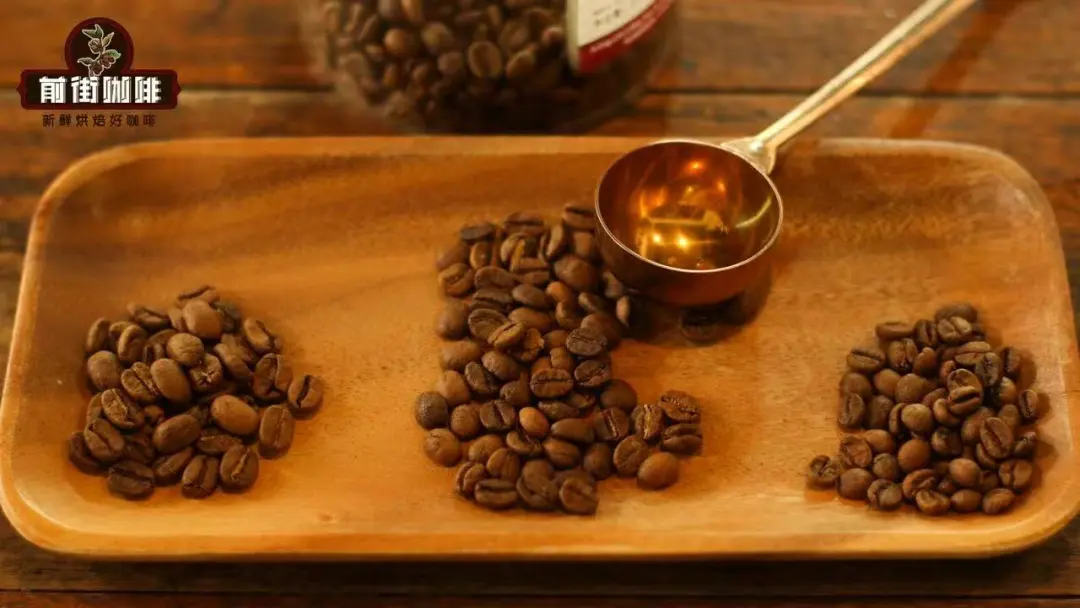
The reason is actually not hard to understand. Whether in the past or now, there is a widespread consumer belief in the market that "big is good." Just like choosing fruit, the larger and plumper it is, the more appealing it looks; at the time, people also believed that the larger the fruit produced by the same tree, the more nutrients it had absorbed, and naturally the better it tasted; in addition, everyone also thought that beans of uniform size helped achieve more even heating during roasting, so the method of grading by size came into being.
But as Front Street Coffee's previous experimental results showed, coffee bean size actually does not bring much difference in flavor. What truly creates obvious differences in coffee taste are mainly the several factors that Front Street Coffee repeatedly mentions in daily content: coffee bean variety, growing altitude, microclimate and other environmental conditions, processing method, and degree of roasting. The quality of these links is what has a substantial impact on coffee bean flavor.
As for other factors, they may also play a role, but far from a very obvious degree. So only some "old established" coffee producing regions rely purely on size for grading. For example, producing regions such as Kenya and Tanzania were once British colonies, and therefore continued the grading system promoted by Britain during the colonial period. AA, AB, and so on are grade identifiers used in the British size grading system.

However, it should be understood that size grading is not entirely a drawback; it also has its own advantages. As Front Street Coffee said at the beginning, size grading allows the coffee beans we receive to be roughly consistent in size, so that during roasting the heating is more even and the differences between beans are not too great. Therefore, this grading method has continued to this day.
Front Street Coffee Kenya·Little Tomato in Front Street Coffee's bean list is the highest-grade bean among Kenyan coffee beans. Because the beans are round and plump, the roasted coffee beans have a uniform color, and it is also easy to show excellent flavor when brewed, with clearly noticeable flavor notes of little tomato and smoked plum.
However, due to certain limitations, in order to better classify coffee bean quality, some producing regions that originally used only size grading began to add more evaluation items. Of course, this is not only true for regions using size grading; some producing regions or emerging producing regions that initially graded only by defect rate are the same. They combine evaluation items such as coffee bean screen size, defect rate, and cupping score to distinguish different qualities of coffee beans in a more detailed way.
- END -
The above content is compiled by CoffeeHunters, a coffee news website.


