








How does Yirgacheffe differ from the Geisha variety?
Yirgacheffe is a coffee-producing region in Ethiopia, while Geisha is a coffee variety with Ethiopian roots that became famous in Panama. They are not the same thing, and Geisha is not an upgraded Yirgacheffe. The confusion comes from shared flavor traits: white floral notes, citrus, and a clean, tea-like cup that both often show.
The distinction matters for anyone buying specialty coffee. Yirgacheffe describes where beans were grown, so its profile reflects that region's environment and processing. Geisha describes genetics; a lot from Hacienda La Esmeralda won the 2004 reliable of Panama competition and spread the variety worldwide. Origin and variety shape price, traceability, and flavor in different ways.
Many friends who are just getting into specialty coffee easily confuse Geisha with Yirgacheffe, and some even think Geisha is merely an upgraded version of Yirgacheffe. In fact, the former is a coffee variety, while the latter is the name of a production region—the two are fundamentally different concepts from the very root. The reason they are often mentioned together is that they share many similarities in flavor—white floral notes, citrus tones, and a clean tea-like quality. These signature flavors frequently link the two in people's minds. This article will sort out the true differences between Geisha and Yirgacheffe from multiple angles, including variety origin, dissemination history, production region environment, and processing methods. It will also share classic selections from the Front Street Coffee bean list that are worth trying, helping everyone more clearly understand the unique charm of each of these two coffees.

Many friends who have just stepped into the coffee world often fall into a cognitive misconception, thinking that Geisha and Yirgacheffe are the same thing. But in fact, the two cannot be equated at all. The reason people always like to call Geisha an advanced version of Yirgacheffe is that the two do indeed share a fairly high degree of similarity in flavor.
Therefore, today Front Street Coffee will have a good chat about what differences actually exist between Geisha and Yirgacheffe, and what similarities they share in flavor characteristics.
What is Geisha?
Regarding Geisha, Front Street Coffee thinks everyone should already be very familiar with it. Even if you are not a deeply devoted player in the coffee circle, you have most likely been drawn in by those online reports about sky-high-priced coffee, and thereby learned the name Geisha. Indeed, Geisha can now be said to be a variety with the highest popularity, the greatest fame, and one regarded as synonymous with good coffee.
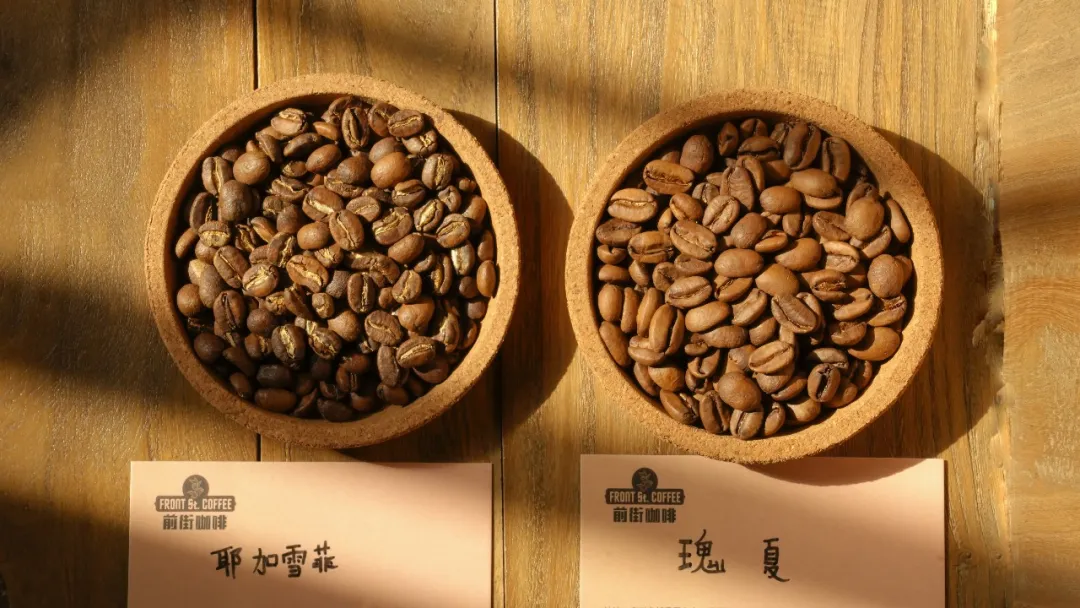
The Geisha variety became famous in Panama. At the 2004 Best of Panama green bean competition, Hacienda La Esmeralda relied on Geisha to defeat one opponent after another and take the championship. Geisha also won over a large number of followers with its outstanding flavor, and later some people even specifically went to Ethiopia, Geisha's place of origin, to look for this variety. That's right, like many Arabica coffees, Geisha's roots are in Ethiopia.
In 1931, a British expedition went deep into Ethiopia, this genetic treasure trove of Arabica, with the goal of finding coffee varieties with disease resistance. They collected coffee samples along the way and named the coffees after the places where they were collected. Geisha was one of the many varieties discovered in Ethiopia's Geisha forest.
Later, Geisha was brought from Ethiopia to a coffee research institute in Kenya, then in 1936 it made its way to Uganda and Tanzania, and in 1953 it was introduced to Costa Rica, where it was entered into Costa Rica's CATIE coffee archive under the number "T2722."
However, Geisha does not have the characteristic of high yield. On the contrary, its yield is only about half that of conventional Arabica varieties, which ran counter to the mainstream mindset of coffee farmers at the time, who pursued yield. So for quite a long period after Geisha was discovered, it was not planted on a large scale.
It was not until Geisha was introduced from Costa Rica to Panama that its fate finally took a turn. As everyone knows, Geisha wrote a legend with its outstanding flavor.

White floral notes, citrus fruit charm, and a fresh sensation like honey green tea—these were the flavors that stunned everyone on the competition stage back then, and they also became Geisha's signature flavors. Although Geisha later developed all kinds of wonderful flavors because of differences in origin and processing methods, whenever people mention Geisha, the first thing they think of is still the classic combination of white flowers and citrus.
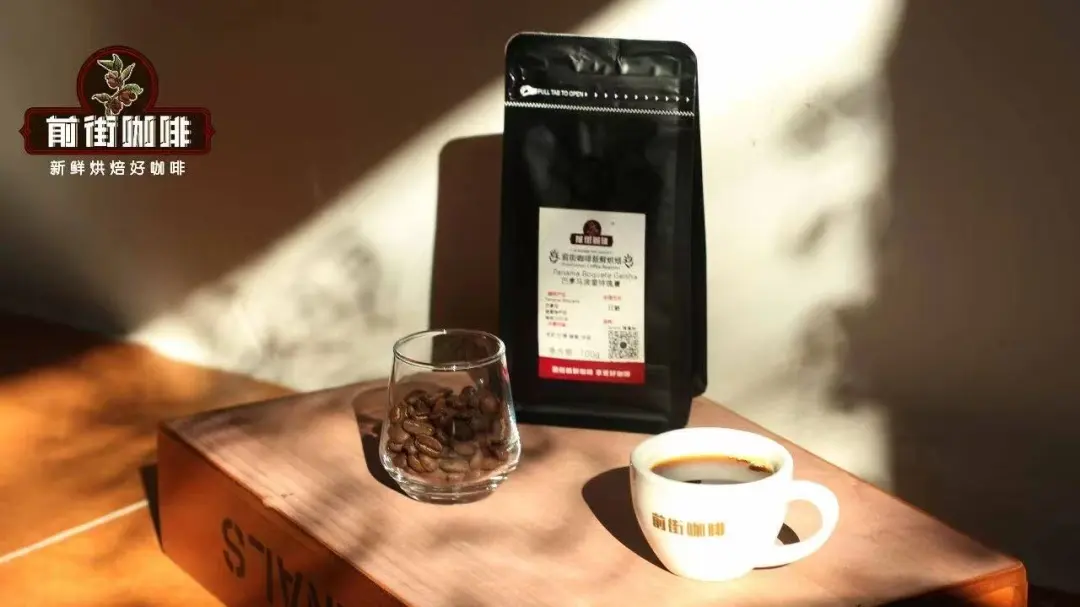
If you want to experience very classic Geisha flavors, Front Street Panama · Boquete Geisha and Front Street Hacienda La Esmeralda · Green Label Geisha from the Front Street Coffee bean list are both quite worthwhile recommendations.
What is Yirgacheffe?
Although Yirgacheffe coffee is equally well known to everyone, it has a fundamental difference from Geisha—Yirgacheffe is not a variety name, but a production region name. What we call Yirgacheffe coffee refers to coffee produced in the Yirgacheffe production region.
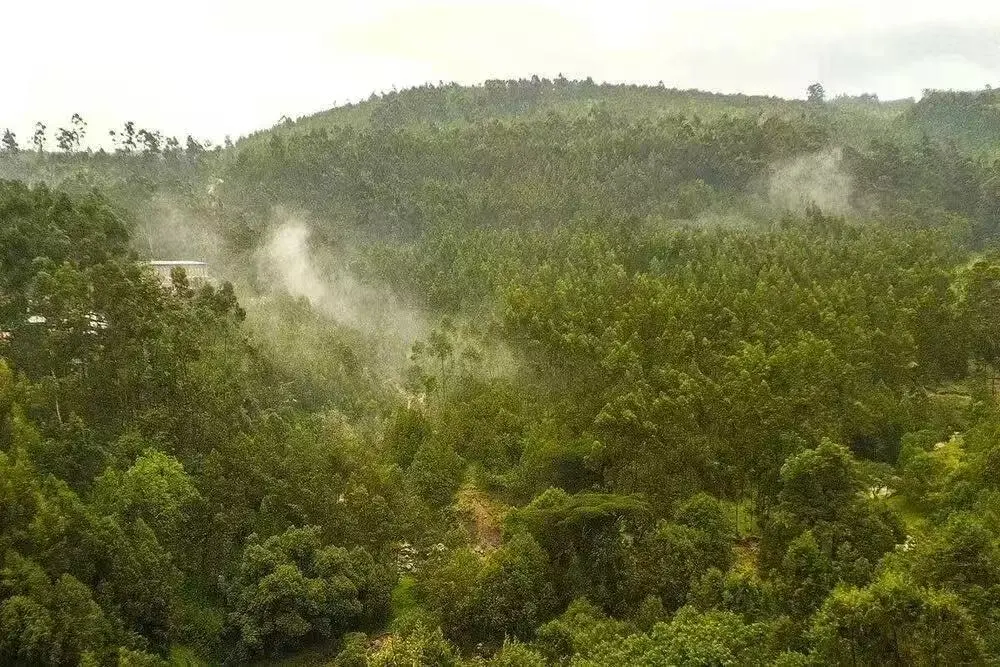
Yirgacheffe is located in southern Ethiopia. It was originally just a sub-region under the Sidama production region, and only later, because Yirgacheffe coffee's flavor was so unique, was the entire production region separated out on its own. The average altitude of this production region is quite high, between 1,700 and 2,200 meters, making it one of the highest-altitude production regions in Ethiopia.
Lower temperatures combined with high altitude lengthen the ripening cycle of the coffee fruit, giving the coffee more ample time to accumulate sugar. More sugar means more abundant flavor compounds can be transformed, and the unique terrain conditions and planting system further improve coffee quality, so the coffee produced here is not only outstanding in flavor but also especially rich in mouthfeel. Saying that Yirgacheffe is an excellent treasure land for coffee cultivation is not an exaggeration at all.
As Front Street Coffee often shares, among Yirgacheffe coffees, washed Yirgacheffe is especially renowned. In the early days, Yirgacheffe, like other production regions in Ethiopia, processed coffee by the natural method. But in order to further improve coffee quality, the government introduced the washed processing method from Jamaica in 1972.
Washed processing first removes the coffee's skin, pulp, and mucilage, and then the coffee beans are sun-dried, which greatly shortens the drying time and reduces the risk of spoilage. At the same time, because the degree of fermentation is relatively shallow, the resulting coffee presents a cleaner flavor, showing more of the taste of the origin and variety itself. This reform instantly created a significant gap between Yirgacheffe coffee and coffee from other production regions.

Yirgacheffe coffee is so classic that its presence is certainly not missing from the Front Street Coffee bean list. On Front Street Coffee's bean list there are two Yirgacheffe coffees: one is naturally processed Front Street Yirgacheffe · Red Cherry, and the other is washed Front Street Yirgacheffe · Gutingting. If you want to experience the most classic Yirgacheffe flavor, Front Street Coffee recommends that both are worth trying, especially the washed Front Street Yirgacheffe · Gutingting.
Front Street Coffee mentioned earlier that washed processing allows coffee beans to better present the flavor of the origin and variety itself, so in Front Street Yirgacheffe · Gutingting, we can taste the purest Yirgacheffe flavor. So what exactly is Yirgacheffe flavor?
It is elegant white floral notes, refreshing lemon aroma, and a clean green tea texture. This is what everyone calls "Yirgacheffe flavor." So, does it sound especially familiar?
That's right, this is largely the same as the Geisha flavor Front Street Coffee mentioned earlier, both carrying floral notes, citrus-like acidity, and clean tea aroma, so people often compare the later-famous Geisha to Yirgacheffe Plus. But there are still certain differences between the two!
Compared with Yirgacheffe, Geisha's overall mouthfeel is more rounded and fuller. This is because Geisha beans are larger, and during roasting, in order to allow the center of the bean to fully develop, most roasters conservatively roast them a little darker. This not only makes the coffee's mouthfeel fuller, but also brings out better sweetness.
Yirgacheffe coffee's flavor, by contrast, is relatively fresher, because mainstream Yirgacheffe roasting levels tend to be lighter, so it does not carry too many caramel-like roasting aromas. What we taste is more of the elegant fresh fragrance of lemon and green tea.
The above is all the content Front Street Coffee is sharing this time. Everyone should now understand why Geisha is often jokingly called Yirgacheffe Plus. Finally, Front Street Coffee still wants to say simply that each has its own strengths, and there is no distinction of good or bad, so there is no need to compare them to see which is better or worse. What you like yourself is the best~
- END -
The above content is compiled by CoffeeHunters, a coffee news website.


