








How Does Circling Direction Affect Coffee Brewing?
The direction of the circling pour in pour-over coffee brewing changes how the coffee bed is disturbed and how evenly water moves through the grounds. A comparison by Front Street Coffee, using the same beans, grind, and water, found inside-out pouring pushes grounds outward and flattens the bed, which can slow flow and raise extraction, while outside-in pouring pulls grounds toward the center and often speeds drainage.
Tasters used a V60 brewing cup and a concentration meter to compare the two paths. The inside-out method produced a fuller body, while the outside-in method gave a lighter, brighter cup with more clarity in aroma. The difference shows up in extraction and mouthfeel, not just in the shape of the bed after brewing.
When pouring water in circles for pour-over coffee, should you go from the inside out or the outside in? This seemingly trivial question actually directly relates to the disturbance of the coffee bed, extraction uniformity, and the final flavor expression in the cup. Front Street Coffee once had a customer raise this question, and specifically conducted a set of comparative experiments for it: under the premise that all other parameters were exactly the same, only the circling direction was changed, using Front Street Kafa Forest coffee beans for separate brews, and with the help of a concentration meter and tasting comparison, observing the differences brought by the two methods. This article will fully present the experimental process and results, analyze which circling path under a conical dripper can better bring a thick and full mouthfeel, and give practical advice for daily brewing.

Yesterday, when a customer was selecting coffee beans at a Front Street store, they raised a rather tricky question: when pouring water in circles for pour-over coffee, should the water flow expand from the center outward, or contract from the outer ring toward the center? Would these two different paths cause a difference in the coffee's taste?
Perhaps many people think, why be so particular when brewing coffee? Just pouring water casually can also make a good cup. That is true, and Front Street also does not advocate being overly obsessed with details, but for people who want to improve their brewing technique, understanding these influencing factors is clearly beneficial and harmless. For example, when coffee shows an especially sharp sourness or bitterness, or when the shape of the coffee bed after brewing is obviously abnormal, we can quickly judge the root cause based on water-pouring patterns and find the corresponding solution.
Pour-over coffee has many ways to play, and circling pouring alone can be broken down into different dimensions, such as the size of the circle, the height of the water flow, clockwise or counterclockwise, fast swirling agitation or calm and even slow circling... There is no unified standard answer for these, only methods built on extraction principles that can brew delicious coffee. Front Street has previously tested their effects on extraction and how to apply them in actual brewing (everyone can look up the relevant articles on their own).
During the pouring stage, Front Street has consistently recommended a relatively conservative and gentle circling method, whose advantage is that it is more stable and easier to control. The purpose of circling is twofold: first, to use the water flow to agitate the coffee bed and create turbulence, speeding up the release of soluble substances from the coffee; second, to use the circular structure of the dripper to achieve even extraction during circling while reducing variables.
Circling pouring needs to achieve two things: first, the water flow trajectory must be round enough. If the circling is not round, the impact force of the hot water will fluctuate, causing the coffee bed thickness to become uneven, and ultimately the coffee will show uneven extraction. Second, always circle in the same direction. If you choose clockwise, then the entire pouring process should proceed along a clockwise path to help the vortex form one-way movement. Therefore, whether the circling flow is from the inside out or from the outside in, its extraction logic cannot escape the above two points.
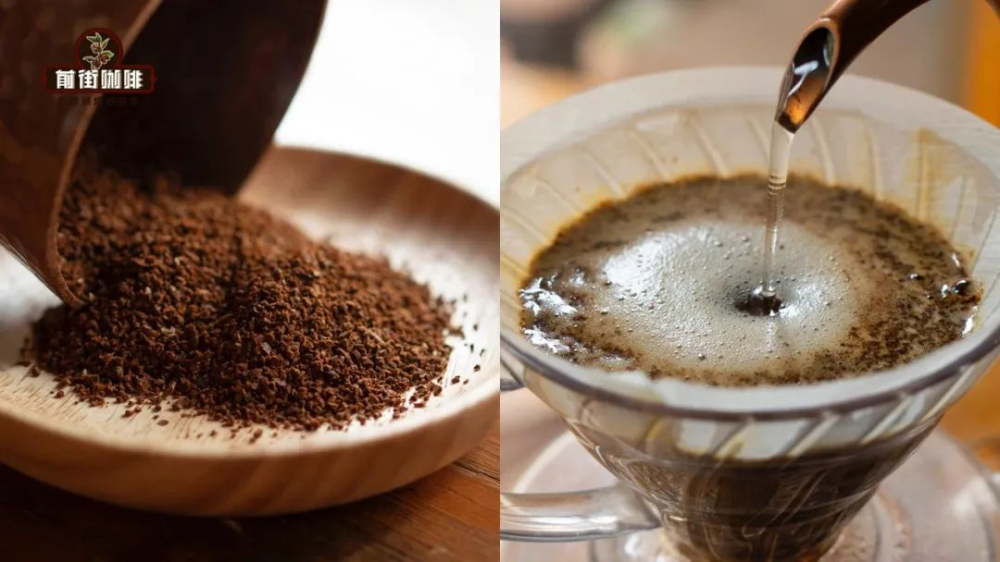
So, when other conditions remain unchanged, how big is the difference between water flow from the inside out and from the outside in?
Coffee brewing comparison experiment
In order to find out the difference between the two, this time Front Street Kafa Forest, which has a balanced flavor, was selected. Although this Ethiopian coffee bean is also a medium-light roast, in addition to the white floral aroma and bright citrus acidity and sweetness iconic to African beans, it also has a milky aroma like roasted melon seeds, with moderate body while still retaining a fresh and light tone. When a certain brewing parameter is changed, the flavor changes can be captured more clearly.
This comparative experiment only adjusted the circling direction of pouring, and the parameters were kept consistent with Front Street's daily brewing recommendations to reduce variables that interfere with extraction.
Coffee beans: Front Street Kafa Forest
Coffee grounds: 15g
Coffee-to-water ratio: 1:15
Grind size: EK43s setting 10 (fine granulated sugar, 80% passing rate with China No. 20 sieve)
Water temperature: 93°C
Dripper: V60
Pouring method: circling from the inside out
According to our brewing habits, circling from the inside out means that in each pour, the hot water first lands on the center point of the coffee grounds, then continuously expands outward clockwise along an "aroma-oriented" path.

For the first pour, use a small stream of water to pour 30g, twice the amount of the coffee grounds, and bloom for 30 seconds. After the bloom is complete, also use a vertical water stream to pour the second stage of 90g from the center point outward in circles, with the electronic scale showing 120g;
When the hot water has drained until the bottom coffee bed is visible, continue to pour the final stage of 105g of hot water using the same method, stopping at about 1 minute 25~35 seconds, and the coffee liquid finishes draining completely at 1 minute 55 seconds.
Pouring method: circling from the outside in
As a control, circling from the outside in means that each pour starts from the edge of the coffee grounds in a large circle, continuously shrinking the circle clockwise until reaching the center point.
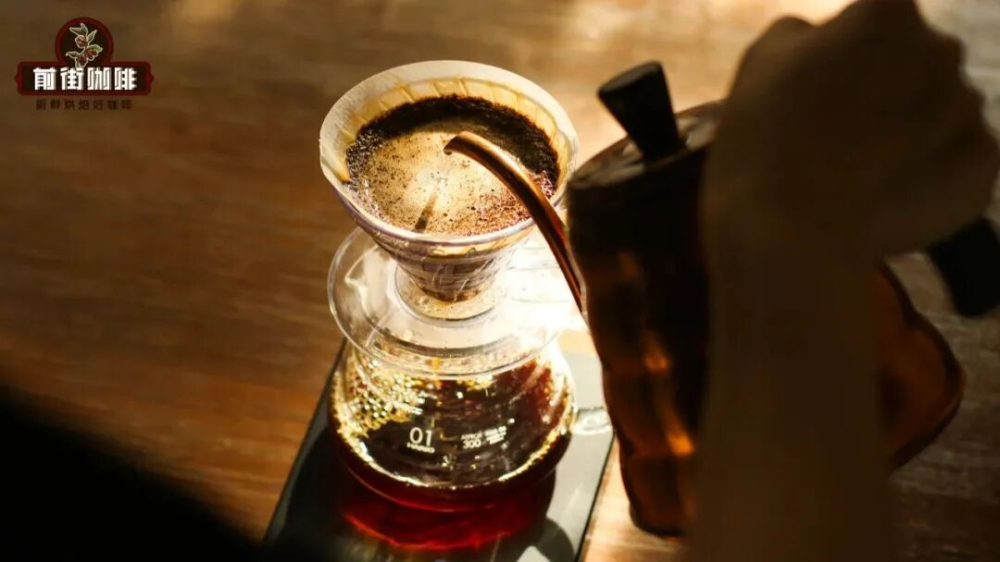
For the first stage, pour 30g and bloom for 30 seconds. For the second stage, start from the outside of the "dome" and pour 90g in circles with a small stream. After reaching the center point, immediately return to the outside and continue circling inward clockwise until the electronic scale shows 120g, taking about 1 minute to 1 minute 5 seconds;
When the coffee bed is exposed, continue circling from the outside in to pour the remaining third stage of 105g of hot water, finishing extraction at around 2 minutes 10 seconds.
Brewing results
Through comparison, it was found that after brewing with inside-to-outside circling, the coffee bed formed a neat "bowl shape," the coffee wall was even in thickness, and the drainage speed was stable; while for the coffee brewed with outside-to-inside circling, because the landing point of each pour was on the outer side, the coffee grounds were washed to the bottom and accumulated, so the overall flow rate was first fast and then slow. After brewing, only scattered foam remained on the cup wall, and fine particles appeared at the bottom.
(Lower left ↙ is inside-to-outside circling, upper right ↗ is outside-to-inside circling)
According to the concentration meter test, the concentration of the coffee brewed with inside-to-outside circling was 1.42%, and the result for outside-to-inside circling was 1.39%. That is to say, when other conditions remain unchanged, inside-to-outside circling gives a slightly higher concentration.
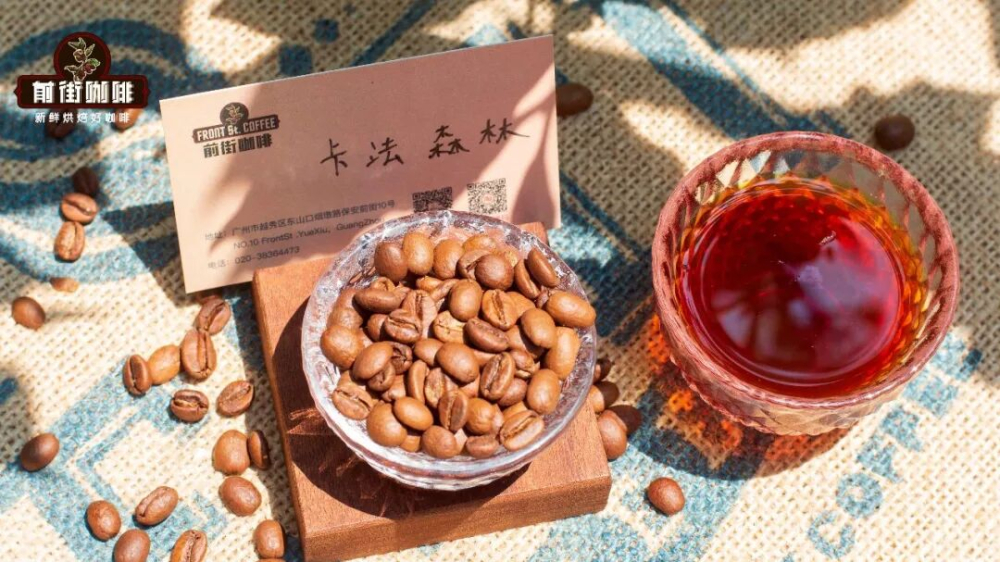
In terms of flavor, the tone of the two pots of Front Street Kafa Forest was actually largely the same, both having citrus, nut, and orange flavors, but Front Street found during repeated tasting comparisons that there were still some differences between them. The Front Street Kafa Forest brewed with inside-to-outside circling had higher flavor intensity and a thicker mouthfeel, and throughout the cup one could taste the fresh aroma of sweet apricot, with neither domineering bitterness nor sharp acidity; by contrast, the coffee brewed with outside-to-inside circling had a lighter charm, the aroma was not lasting and quickly dissipated upon entering the mouth, the layering was weaker, and after cooling, the acidity and bitterness became more pronounced.
From the above experiment, it can be seen that because a V60 conical dripper is used, the coffee grounds naturally fall to the bottom, and the coffee bed accumulated in the center is the thickest, gradually becoming thinner toward the surrounding edges. Pouring water in circles from the outside in causes the extraction rate of the surrounding coffee grounds to be too high, while the center is instead under-extracted. In addition, because the edge of the dripper lacks support from a coffee wall, in the later stage the hot water will also slip away from the edges.
By contrast, with inside-to-outside circling, the thickest coffee bed in the center is fully extracted, and at the same time the water flow spreads the coffee grounds to form a thin wall, so less water secretly escapes and more coffee substances are dissolved. Therefore, if you usually use a conical dripper and want to brew a thick and rich coffee mouthfeel, it is recommended that you also use this inside-to-outside "mosquito coil" method of circling pouring.
The above content is compiled by CoffeeHunters, a coffee news website.


