







How does coffee bed depth change coffee extraction?
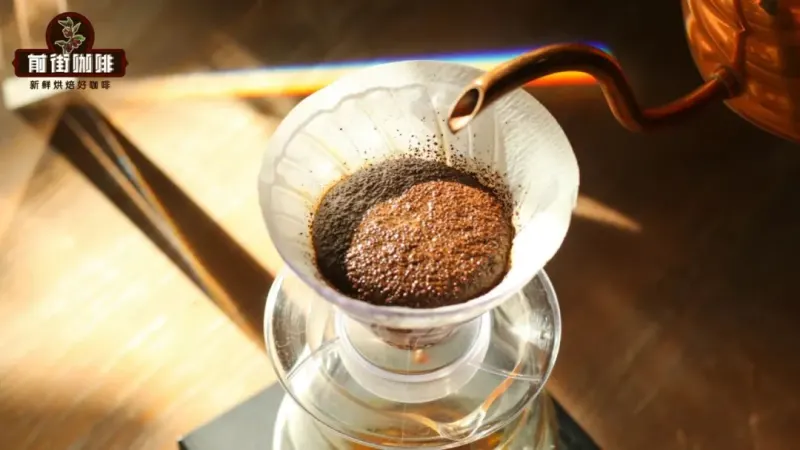
Coffee bed depth and shape control how hot water moves through the grounds, so they directly change coffee extraction. A thicker bed pushes water through more coffee, lengthening contact time and dissolving more flavor compounds, while a thinner bed shortens that path and yields less. Bed form also sets stability, because thin beds channel more easily.
Front Street Coffee has covered this before, and its comparison brews of Front Street Ethiopia Huakui show how clearly conical and flat-bottom drippers split flavor. Because each dripper geometry produces its own bed state, it also carries a recommended dose. Matching dose to bed depth keeps flow even and extraction results repeatable from one brew to the next.
In the world of pour-over coffee, the shape of the coffee bed is often overlooked, yet it profoundly influences the final flavor expression. This article, starting from cases previously shared by Front Street Coffee, systematically sorts out the specific effects of coffee bed thickness and shape on extraction efficiency, stability, and coffee taste. You will understand why the same beans present completely different layers or balance in different drippers, and also understand why each dripper has a recommended coffee dose. Through a comparative brewing example of Front Street Ethiopia Huakui, we will intuitively see the flavor differences brought by conical drippers and flat-bottom drippers, helping you more thoroughly understand the logic behind dripper selection, so you can more calmly brew a good cup of coffee.
The above content is actually topics that Front Street Coffee has discussed in previous articles. They may seem to address different things, but ultimately they all point to the same core—different coffee bed states naturally lead to different coffee extraction results.
If you are just getting into pour-over, Front Street Coffee highly recommends that you spend some time understanding how coffee bed form affects extraction. This will not only make it easier for you to brew a delicious cup of coffee, but also help you more clearly see the essential differences between different drippers and filters. So today, Front Street Coffee will expand on this topic and talk about what changes different forms of coffee beds bring to the brewing process and coffee flavor.
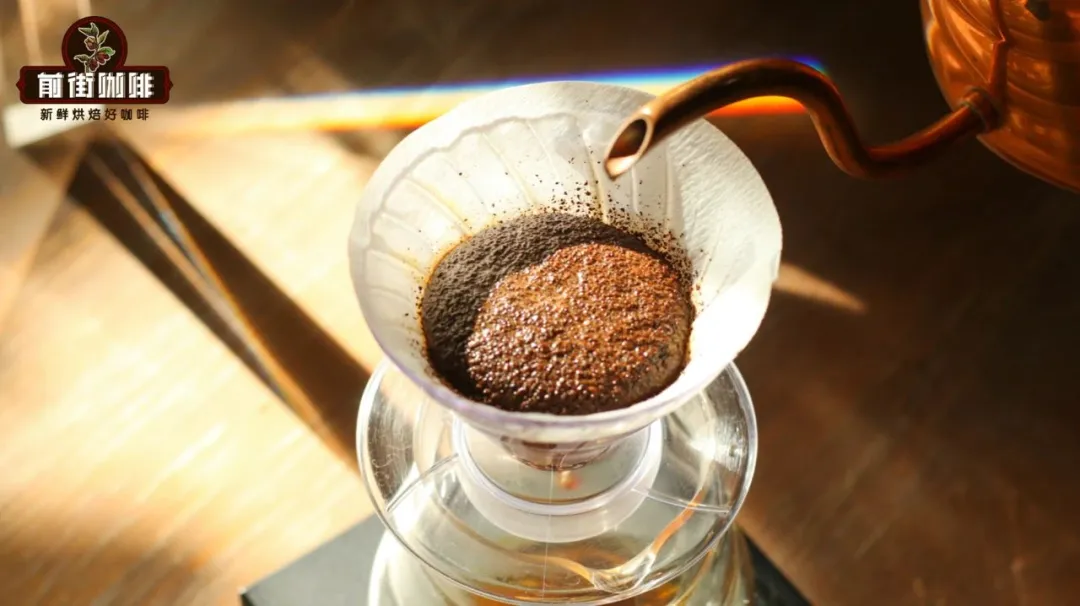
I. Thickness of the coffee bed Let's first talk about coffee bed thickness. Whether the coffee layer is thick or thin directly relates to the efficiency and stability of hot water extraction. Taking the same filter as an example, the thicker the coffee layer, the more coffee grounds the hot water must pass through, and the longer the time required to pass through the coffee bed. Therefore, the same hot water can achieve higher extraction efficiency, and the total amount of dissolved flavor substances will also be greater; Conversely, the thinner the coffee bed, the less coffee grounds the hot water passes through, the shorter the passage time, and the relatively fewer flavor substances dissolved.
Not only that, the thickness of the coffee bed also affects extraction stability. Still assuming the same filter, the thinner the coffee bed, the more likely channeling is to occur during extraction. The reason is that the time for hot water to pass through the coffee layer is relatively short, and there is not enough time to fully saturate and contact the coffee grounds, so the hot water more easily flows away concentrated from a certain position, ultimately causing uneven extraction. This situation is especially prominent when making espresso. This is also why every type of filter gives a recommended coffee dose—the purpose is to keep the coffee bed thickness within an appropriate range, neither too thin nor too thick.
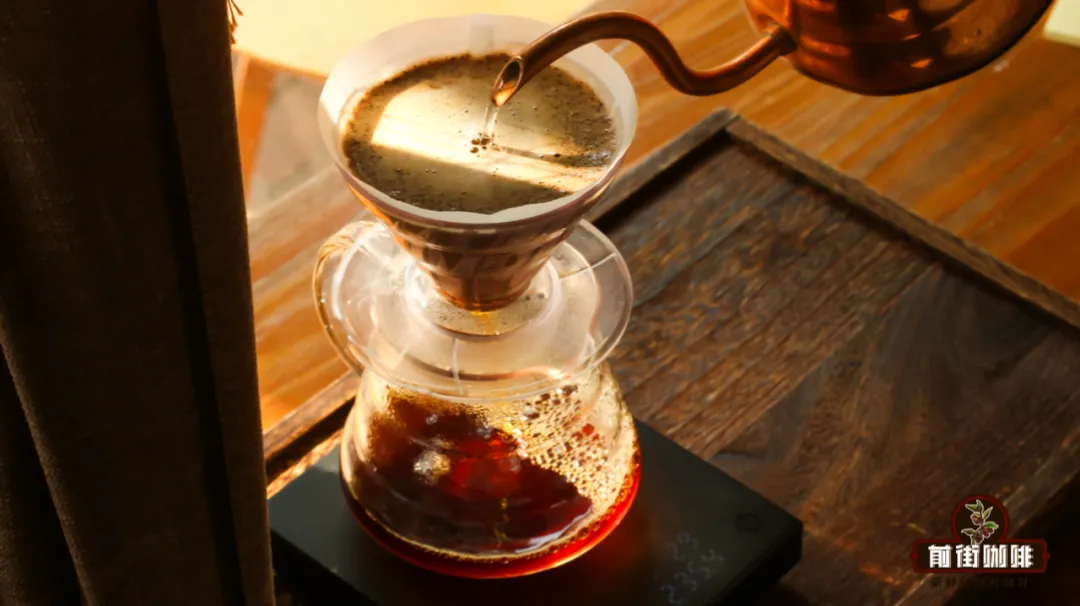
There are two factors affecting coffee bed thickness. The first is the amount of coffee grounds. With the same filter, the more coffee used, the thicker the coffee bed; conversely, the thinner it is. The second is the shape of the filter. Front Street Coffee has repeatedly emphasized "with the same filter" earlier precisely because different filters have different shapes, and when the same amount of coffee is put in, the thickness and shape of the coffee bed formed will be different. Take drippers as an example. With the same 15g of coffee grounds, the coffee bed formed in a flat-bottom dripper will be thinner than in a conical dripper; and in an 02 model V60, it will also be thinner than in an 01 model V60. This is one of the effects of filter shape and size on coffee bed thickness.
II. Shape of the coffee bed In addition to thickness, the form of the coffee bed also affects extraction and coffee taste. Everyone knows that the coffee bed shape in different filters is not the same. For example, the coffee bed in a conical dripper has an inverted cone structure, while the coffee bed in a flat-bottom dripper is close to cylindrical...

Different coffee bed forms also lead to differences in extraction uniformity. Take a conical dripper as an example. Its structure is narrow at the bottom and wide at the top, so the center of the coffee bed is thicker than the surrounding area. As a result, extraction consistency is not as high, because the liquid does not completely permeate vertically downward, and coffee grounds at different positions receive different degrees of extraction, and the amount of dissolved substances therefore differs, so the brewed coffee naturally has richer layers;
If you use a flat-bottom dripper, the coffee bed is cylindrical, and the thickness at the center and around the edges is relatively similar. This kind of coffee bed can bring higher consistency, the extraction efficiency received by the coffee grounds differs little, and the substances and amounts dissolved are also relatively similar, so the coffee tastes more balanced.
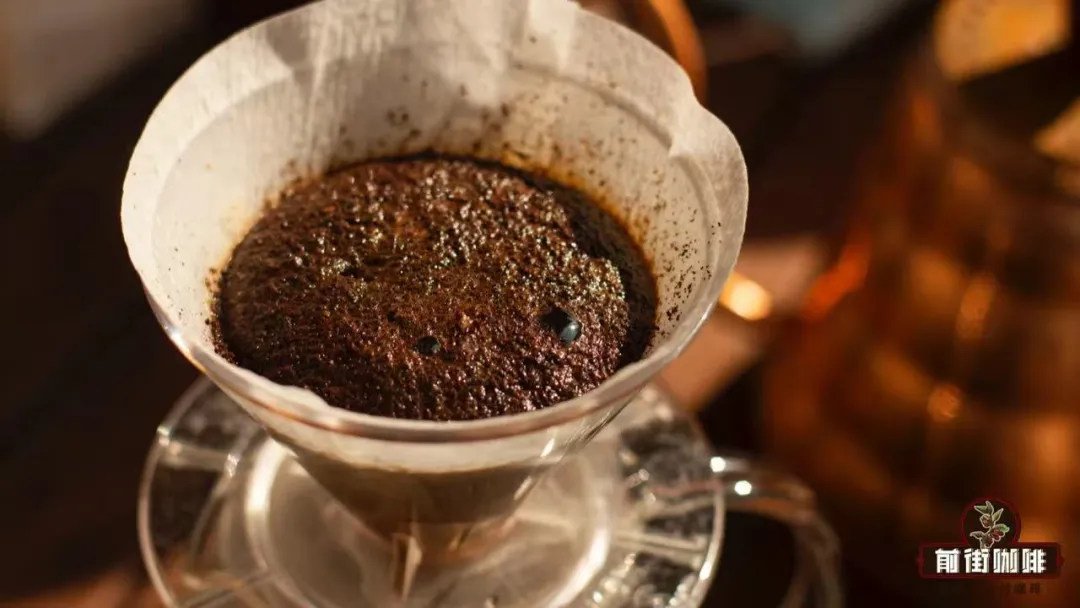
It may be difficult to understand from theory alone, so next Front Street Coffee will share a case done before—using the same coffee beans, brewing separately with a conical dripper and a cake dripper, and comparing the tastes, so you can intuitively feel the impact of the coffee bed on brewing. Brewing Sharing The beans used in the experiment are Front Street Ethiopia Huakui from the Front Street Coffee bean list. I believe everyone is already very familiar with them. This medium-light roasted coffee has a rich floral and fruity charm, and is very suitable for cold brew, pour-over, and espresso.
Brewing parameters: coffee dose 15g, coffee-to-water ratio 1:15, grind size with a No. 20 sieve at 75%~80% passing rate, particles close to fine granulated sugar, brewing water temperature 92°C, extraction time controlled between 2 minutes and 2 minutes 30 seconds, using a three-stage brewing method. We'll skip the process and look at the conclusion: the Front Street Huakui brewed with a conical dripper, just as Front Street Coffee said, has relatively rich layers. The taste is mainly sweet and sour, with prominent flavor, and you can clearly taste citrus, berries, apricot, floral notes, and green tea. The mouthfeel is light yet full, with a long finish, performing quite well; while the Front Street Huakui brewed with a flat-bottom dripper is also delicious, with a more balanced taste, a thicker mouthfeel, and equally prominent flavor expression. You can clearly taste citrus, berries, and green tea, and the finish is also long.
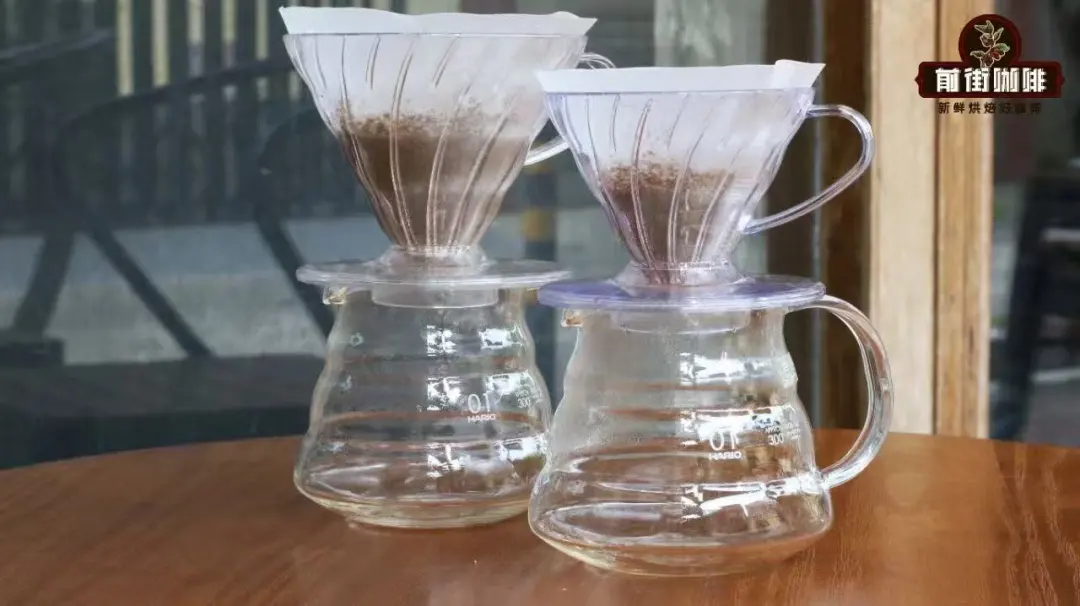
It can be seen that the Front Street Ethiopia Huakui brewed with a conical dripper has prominent flavor and rich layers; the Front Street Ethiopia Huakui brewed with a flat-bottom dripper has a balanced taste and a substantial mouthfeel. Both have their own advantages, and these differences are precisely brought about by different coffee bed shapes and thicknesses. That is all for this sharing. In fact, this applies not only to pour-over coffee; the coffee bed in espresso or other preparation methods follows the same principle. Therefore, understanding the impact of the coffee bed on extraction is truly necessary~
- END -
The above content is compiled by CoffeeHunters, a coffee news website.


