







How Does Coffee Blending Work With Brewed Liquids?
Coffee blending is usually about mixing beans, but separately brewed coffee liquids can be blended too. Each bean is extracted on its own with parameters suited to it, then the liquids are combined in set proportions. Front Street Coffee illustrates this with Xizhua and Guodingding, pairing a heavily fermented bean with a washed coffee to balance the fermented character and improve cleanliness.
The article gives flavor notes and brewing parameters for two ratios, 1:1 and 1:2.5. Brewing small amounts lets any coffee enthusiast test many combinations in a few sessions, and leftover unmixed liquid can be drunk on its own. Roasters use the same practice to finalize blend ratios, and competition participants use it to build distinctive cups. Related gear includes dual-cylinder drippers and paired filter papers.
Coffee blending usually refers to mixing different coffee beans, but have you ever thought about blending separately brewed coffee liquids? This practice is not only feasible but also extremely flexible—each bean can be extracted individually using its optimal parameters, then blended in proportions as needed, allowing you to try different combinations in small batches. Front Street Coffee uses Xizhua and Guodingding as examples to share specific ideas for coffee liquid blending: beans with a heavier fermented character paired with washed-process coffee can both balance the fermented taste and enhance cleanliness. The article provides detailed flavor descriptions for two blending ratios, 1:1 and 1:2.5, along with brewing parameters and key operational points, suitable for coffee enthusiasts to try at home.
What is commonly called coffee blending refers to coffee beans—green beans can be blended, and roasted beans can be blended too; there are no hard and fast rules. The reason Front Street brings up this topic is that yesterday a friend asked this question: after brewing coffee, can you blend the coffee liquids together?
The answer is undoubtedly yes. Although when we talk about blended coffee in daily life, we mostly mean blended beans or coffee made from blended beans, quite a few people actually practice "coffee liquid blending"—that is, brewing different coffees separately first, then mixing them according to their own ideas.
The benefits of this approach are considerable. For example, we can brew each bean using the parameters best suited to its characteristics, thereby obtaining coffee liquid in its optimal state before blending; or we can use just a small amount of coffee liquid each time to test the blending effect, so that with only a few brews, we can repeatedly try many different ratio combinations; and when the blended result is not satisfactory, the remaining unmixed coffee liquids can simply be enjoyed on their own...
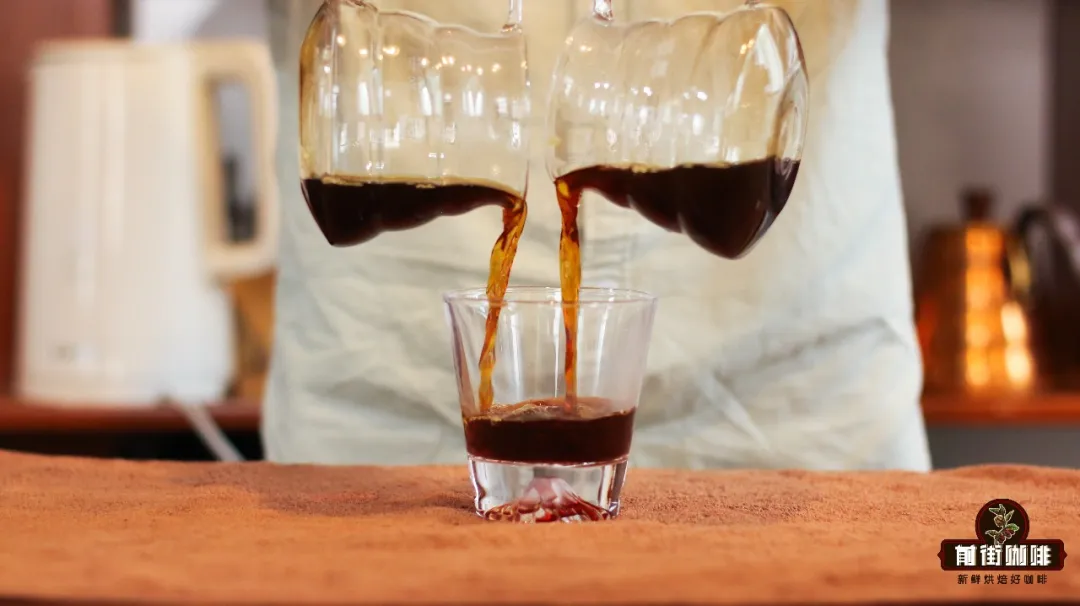
Overall, coffee liquid blending has many advantages. Because of this, many industry professionals adopt this practice. For instance, roasters use this method to finalize blend ratios when developing blended beans; competition participants also use this technique to create unique coffee experiences, and it has even given rise to equipment products related to "blending," such as dual-cylinder drippers and "mandarin duck filter papers."
So today Front Street will discuss blending ideas. When you have free time, you might as well give this approach a try—it really is quite interesting.
Blending Ideas
Everyone knows that anaerobic-process coffee beans tend to have a relatively deep degree of fermentation, so they usually carry very intense aromas that easily evoke specific flavors. But beyond pleasant aromas like floral and fruity notes, anaerobic coffee often also comes with a smell resembling over-fermented ripe fruit left sitting too long—very much like the aroma of alcohol.
Not everyone can accept this taste. In such cases, we can blend in coffee with a lower degree of fermentation to make a cup that is less prominently fermented yet still has a unique flavor.
Try blending with washed-process coffee. Washed beans have a relatively lighter fermentation degree, which can effectively balance the fermented aroma while further enhancing the coffee's cleanliness.
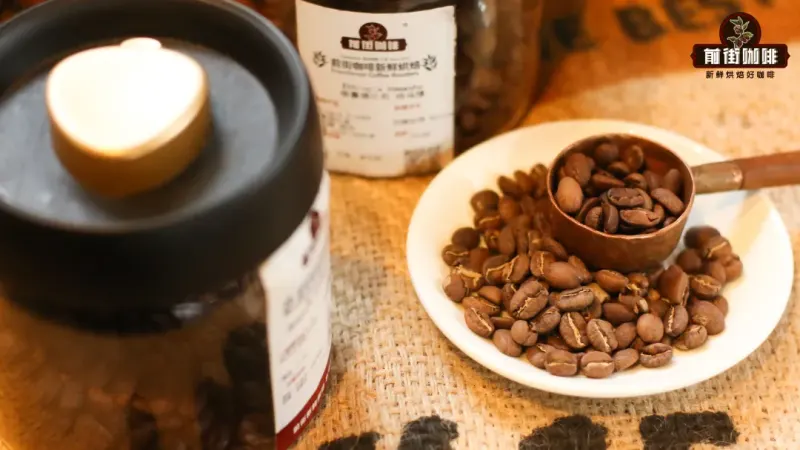
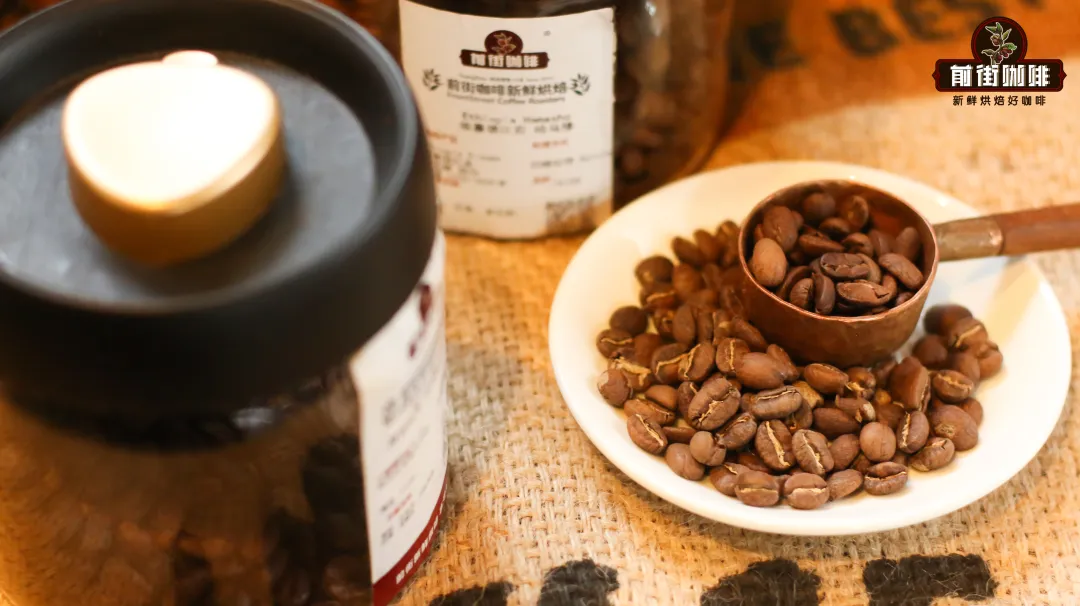
Taking Front Street as an example, the blending beans used here are Front Street Boundary Xizhua (flavor profile: grape, passion fruit, apricot, fruit wine) and Front Street Yirgacheffe Guodingding (flavor profile: white floral, lemon, green tea). Since the two have similar roast levels, the brewing parameters can be shared: water temperature 92°C, coffee-to-water ratio 1:15, grind size referencing a 75%–80% pass-through rate on a No. 20 sieve (fine granulated sugar coarseness), extraction time about 2 minutes.
Because you're making a blend, you can use a smaller amount of each bean, around 5–10g. If you have a small-capacity dripper like the V30 at home, just use it directly; if you only have a regular dripper, you can refer to the approach in this Front Street article when brewing.
《Portal》
After brewing is complete, you can blend the coffee liquids according to personal preference—the specific ratio depends on what kind of coffee you want. For example, if you want more prominent flavors, you can mix at a 1:1 ratio. The resulting coffee will have rich grape, apricot, and citrus flavors, accompanied by faint floral notes, green tea nuances, and a certain fermented aroma.
If you don't want the fermented taste to be too dominant, you can use a 1:2.5 ratio—1 part Xizhua, 2.5 parts Guodingding. The resulting coffee will have a noticeably reduced fermented character, but since Front Street Xizhua itself has relatively strong other flavors, even at this ratio you can still taste clear grape and passion fruit notes, along with the rich white floral, lemon, and green tea flavors from Guodingding—a very impressive result.
By the same logic, just add more of whichever you prefer—the operation is very simple. However, note one thing: the overall character of the coffees used in blending should not differ too greatly, otherwise it easily creates a jarring effect. For example, blending an extremely light roast with an extremely dark roast often results in a cup with odd flavors.
That's all for this Front Street sharing. The above is just one example of flavor blending; beyond that, we can also design blending schemes based on mouthfeel or other characteristics. The method is exactly the same—simple and fun. I truly recommend everyone give it a try.
- END -
The above content is compiled by CoffeeHunters, a coffee news website.


