







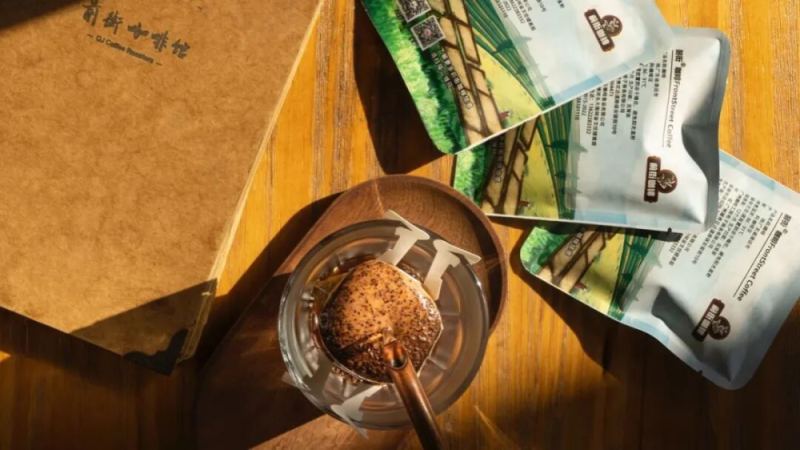
Why does Mandheling drip coffee taste thin or flat?
Weak, sour, or bitter drip bag coffee is usually a brewing problem, not a flaw in the Mandheling itself. Pre-ground coffee loses aroma faster than whole beans, but stored well and used within three weeks it keeps its basic flavor. Three adjustments solve it: brew in a tall, narrow-mouthed cup, add water in several pours, stir gently while pouring, and pour the brewed liquid back through the bag for a second extraction.
The starting ratio matches pour-over coffee at about 1:15. Each drip bag holds 10 g of grounds, so aim for roughly 150 g of water, added in several pours rather than all at once. Staged pouring plus a gentle stir keeps extraction even, which matters for seasonal lots such as Yirgacheffe, where a thin, flat cup usually points to under-extraction rather than stale coffee.
Because drip bag coffee is ground in advance, its aroma retention is often less than half that of freshly ground coffee, and enthusiasts often dismiss it as merely a convenient option. But in fact, as long as it is stored properly and consumed within the 3-week optimal flavor period, the basic flavor will not be significantly compromised. If it still tastes bitter like dishwater, or sour and bland, the problem is most likely in the brewing method. Drawing on Front Street's practical experience, this article shares three tested and effective tips: choose a tall, narrow-mouthed cup and pour water in stages, add gentle stirring while pouring, and pour the coffee liquid back into the filter bag for a second extraction, helping you fully unlock the flavor potential of seasonal drip bags such as Mandheling and Yirgacheffe at home.
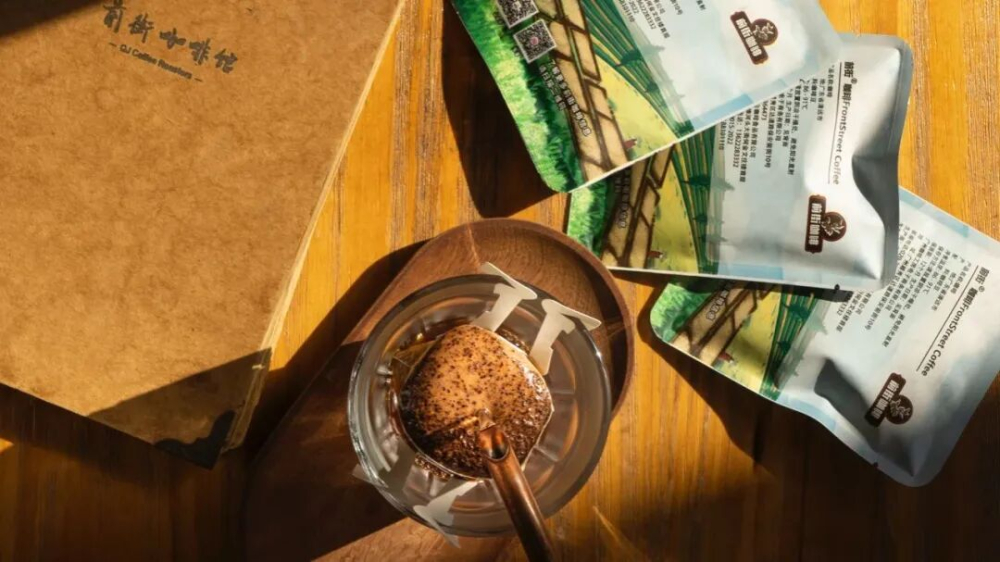
Because it is pre-ground and sealed, drip bag coffee usually retains less than half the aroma of freshly ground coffee, so it is often looked down upon by discerning coffee lovers, who feel that drip bags are just for convenience, have little to say in terms of flavor, and can simply be brewed however.
Front Street disagrees with this. Pre-grinding does indeed cause the aroma of the coffee grounds to dissipate faster, but as long as storage conditions are suitable and it is used within the three-week optimal flavor period, the coffee's basic flavor actually will not be disturbed much. Even so, many people still report that the coffee they brew either tastes bitter like dishwater or is sour, thin, and lacking in layers... To avoid wasting good coffee for nothing, Front Street has summarized three practically tested and effective methods that may help everyone solve this problem.
No.1 Choose a tall, narrow-mouthed cup and pour water in multiple stages
Drip bags are usually placed directly over a personal cup for brewing, so understanding how their structure affects extraction is crucial. Generally speaking, in order to replicate the effect of drip extraction as much as possible, Front Street recommends choosing a glass or mug with a taller body and narrower mouth when brewing drip bag coffee. This can prevent the paper shells on both sides from getting soaked during brewing, avoid coffee liquid flowing back, and keep the filter bag from sliding down because it has nothing to rest against.
(The cup for brewing drip bag coffee is too short)
The coffee-to-water ratio for drip bags is the same as for pour-over coffee. Front Street usually uses 1:15 and then pours in stages. Each drip bag we sell contains 10 g of coffee grounds, corresponding to 150 g of hot water. When there is no electronic scale on hand, the filter bag itself is the best reference for judging the water amount.
Through repeated measurements, Front Street found that medium-dark roast and light-medium roast coffees do not perform the same during brewing. When brewing medium-dark roast drip bags, because the degassing is greater, pouring water to half the height of the drip bag is about 20–30 ml, and pouring to nearly full is about 50–60 ml; while when brewing light-medium roast seasonal Front Street Yirgacheffe drip bags, half the height of the filter bag corresponds to 30–40 ml, and nearly full is 70–80 ml. In this way, the total poured water amount can be estimated based on the water amount of each stage.
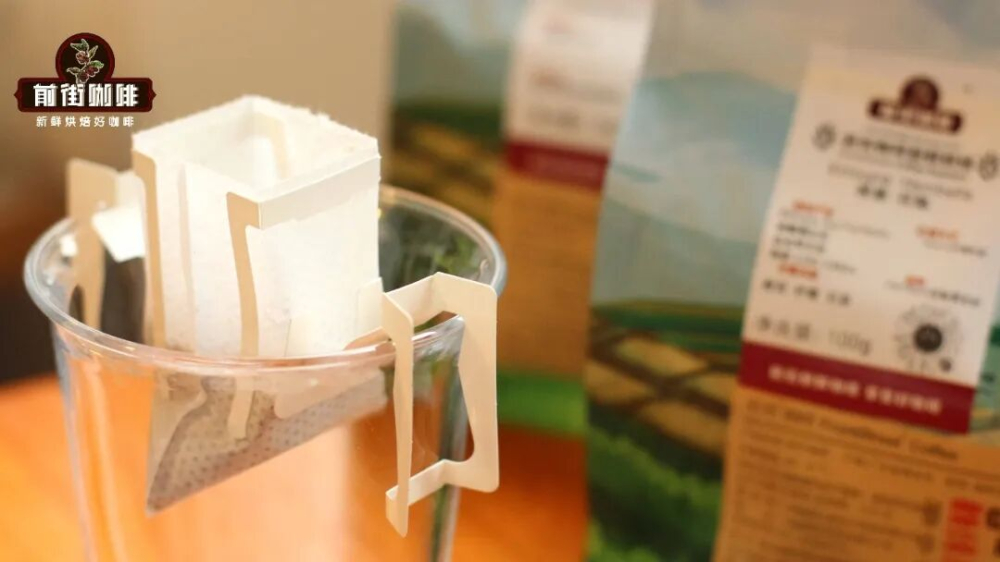
For example, when brewing a seasonal Front Street Mandheling drip bag, it can be poured in four stages. The first two stages are poured to half the filter bag (about 50 ml), and the last two stages are poured to nearly full (100 ml), totaling about 150 ml. For light-medium roast drip bags such as Front Street Huakui, Front Street Yirgacheffe, and Front Street Panama Geisha, in order to highlight their fresh floral and fruity notes, it is suitable to increase the coffee-to-water ratio and pour in 4 stages to half-full of the filter bag, for a total water amount of about 160 ml. This can more effectively "squeeze out" their flavor.
No.2 Pair pouring with stirring
The filter device used for drip bags is a small pouch made of non-woven fabric. The area in contact with water is very narrow, so it cannot create turbulence like pour-over brewing, and it also lacks the flow-guiding structure of a dripper. Hot water can only seep downward under gravity. When the water level keeps rising and even exceeds the coffee bed formed by the filter bag, the hot water in the upper layer will slip away from the sides and cannot participate in coffee extraction, ultimately making the taste weaker.
To solve the problem of insufficient flavor, you need to ensure extraction is sufficient, and at this point you can add a stirring motion. The operation is very simple. For example, with the four-stage brewing just mentioned by Front Street, you only need to gently stir 2–3 circles with a small spoon after the first and second pours. This can effectively increase the extraction rate in the early and middle stages, making the acidity and sweetness fuller.
No.3 Pour it back and extract it again
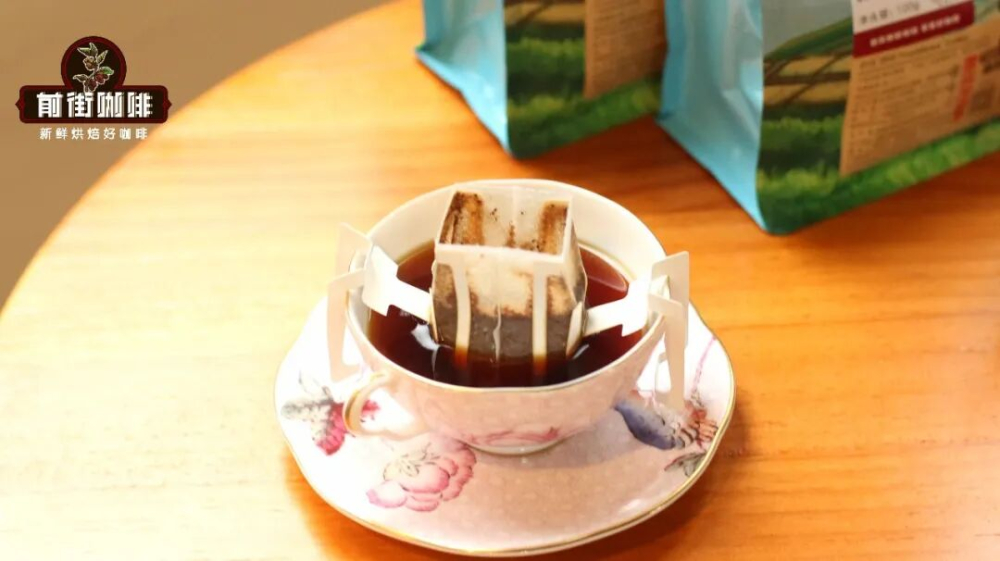
In most people's impression, coffee seems to be extractable only once, so many would think this idea is unreliable. In response, Front Street once conducted an experiment: pouring the brewed coffee back into the coffee grounds in the dripper for a second rinse can enhance the overall body and finish. This is especially true for light-medium roast coffee beans that focus on sweet fruity aromas, such as Front Street Huakui, Front Street Xizhao, and Front Street Daduqi. The first extraction mainly brings out light sweet-sour molecules and a small portion of finish aroma, while the second extraction can obtain substances such as nuttiness, returning sweetness, and tea-like notes that enhance body.
The same principle applies to drip bags. For light-medium roast coffee with a relatively hard texture, the limitation of the filter bag allows hot water to move only within a narrow space, making extraction efficiency very low; in addition, a single drip bag uses less water, so the brewing time is shortened accordingly, and the flavor substances in the final stage may not have had time to be released before extraction is already over. At this point, to retain more flavor, we can take emergency measures.
When trying this method, Front Street likes to increase the coffee-to-water ratio and then pour in multiple stages (1 pour to half the filter bag + the last 3 pours to nearly full), while appropriately lowering the water temperature—use 80–85°C for medium-dark roast drip bags (boil water, lift the lid, and wait 7–8 minutes), and 86–88°C for light-medium roast drip bags (boil water, lift the lid, and wait 5–6 minutes). The brewed coffee concentration is on the lighter side, so this second rinse can also "accommodate" more soluble substances, and the liquid temperature is 70–75°C, further reducing the risk of over-extraction.
- END -
The above content is compiled by CoffeeHunters, a coffee news website.


