







Mastering the Kono-Style Drip Method for Fresh Coffee Beans
Freshly roasted coffee beans release carbon dioxide, which can disrupt extraction and cause uneven flavor. The Kono-style drip method, a Japanese pour-over technique, addresses this by using water droplets to pre-wet the grounds, allowing degassing before a stronger flow extracts the coffee. This article from Front Street Coffee uses PWN Golden Mandheling to explain the parameters and steps for brewing a balanced cup even with fresh beans.
The Kono method was developed by the Kono family, creators of the Kono dripper, who aimed to enhance body and reduce over-extraction. By controlling water flow with droplets instead of a continuous stream, it minimizes carbon dioxide interference. This tutorial will guide you through the process, helping you achieve a rich, flavorful cup that highlights a reliable of your freshly roasted beans.
Freshly roasted coffee beans contain a large amount of carbon dioxide, and brewing them directly often leads to uneven extraction and imbalanced flavor. The Japanese developed a series of solutions for this, among which the Kono drip method is considered a classic. It uses water droplets instead of a water stream to pre-wet the coffee grounds, waits for full degassing before switching to a stronger flow for extraction, and finally adjusts the concentration through bypass. In this article, Front Street Coffee will use PWN Golden Mandheling as an example to break down in detail the parameter settings and operating steps of this brewing method, helping you brew a rich, balanced cup of good coffee even with fresh beans.
Some brewing methods can effectively narrow the gap between coffee results. Even if the beans on hand have just finished roasting, these methods can still produce a flavor close to the ideal after resting. What exactly are these solutions? The answer is Japanese-style brewing. In the early years, Japanese coffee professionals also faced the same problem: fresh coffee beans contain a startling amount of carbon dioxide, which interferes with normal extraction, and the final cup differs noticeably from beans that have rested well. To resolve this contradiction, they explored a variety of brewing strategies to reduce carbon dioxide interference, allowing fresh beans to consistently produce a good cup of coffee.
Today, Front Street Coffee is going to introduce a fairly representative method in the Japanese brewing system—the Kono-style pour-over method. When Kono style is mentioned, some people may find it unfamiliar, but when they hear its other name, "drip method," they will likely recognize it. Yes, it uses drop-by-drop water instead of a continuous stream to wet the coffee grounds, a highly visually appealing Japanese brewing method.
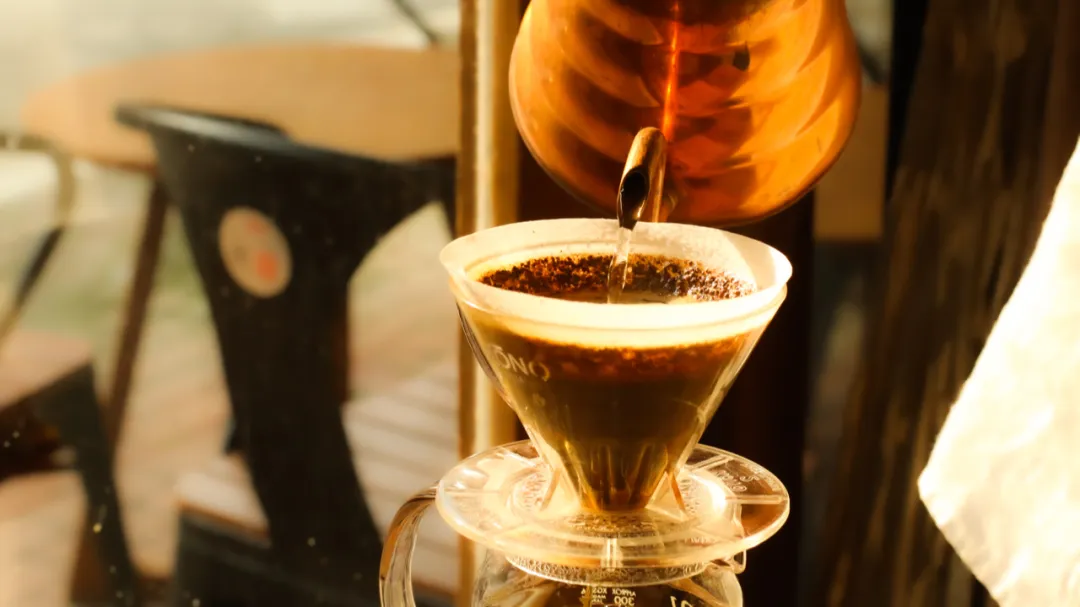
Kono-style drip method
The reason the drip method is called Kono style is that this technique comes from the Kono family. The Kono family is the creator of the Japanese Kono brand, and family members preferred the rich mouthfeel presented by siphon pots and flannel filters. Therefore, around the question of "how to make coffee richer," they developed the Kono dripper. The original design intent of the drip method follows the same line of thinking.
The drip method pursues three goals: weakening the interference of carbon dioxide with extraction, enhancing the body of the coffee, and reducing the risk of over-extraction. To achieve these goals, the drip method first limits the amount of water involved in extraction, avoiding the possibility of over-extraction from the source;
then, in the early stage of extraction, it pours water in the form of droplets rather than a stream, giving the coffee grounds ample time to release gas; after the degassing stage ends, it switches to a stronger flow to dissolve a large amount of flavor compounds, and finally uses bypass to dilute the concentration. A rich cup of coffee without bitterness is then complete.

In principle, it is not complicated, but in practice there is a threshold: hot water must fall drop by drop to complete extraction, so a certain level of proficiency is required. However, the difficulty is not especially high either. Next, Front Street Coffee will break down the specific process and parameter settings of the drip method.
Brewing sharing
The bean selected by Front Street Coffee this time is Front Street PWN Golden Mandheling. Coffee beans ordered and shipped through Front Street's Taobao Tmall flagship store are all freshly roasted within five days, and the beans contain abundant carbon dioxide, making them just right for demonstrating this brewing. The extraction parameters are as follows:
20 g dose, 1:10 coffee-to-water ratio, grind size controlled at a 65%–70% passing rate on a No. 20 sieve, water temperature 86°C, and Kono dripper selected.
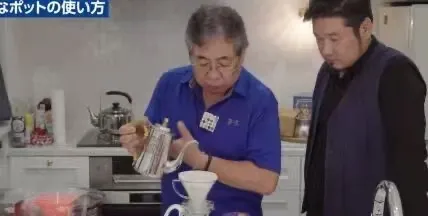
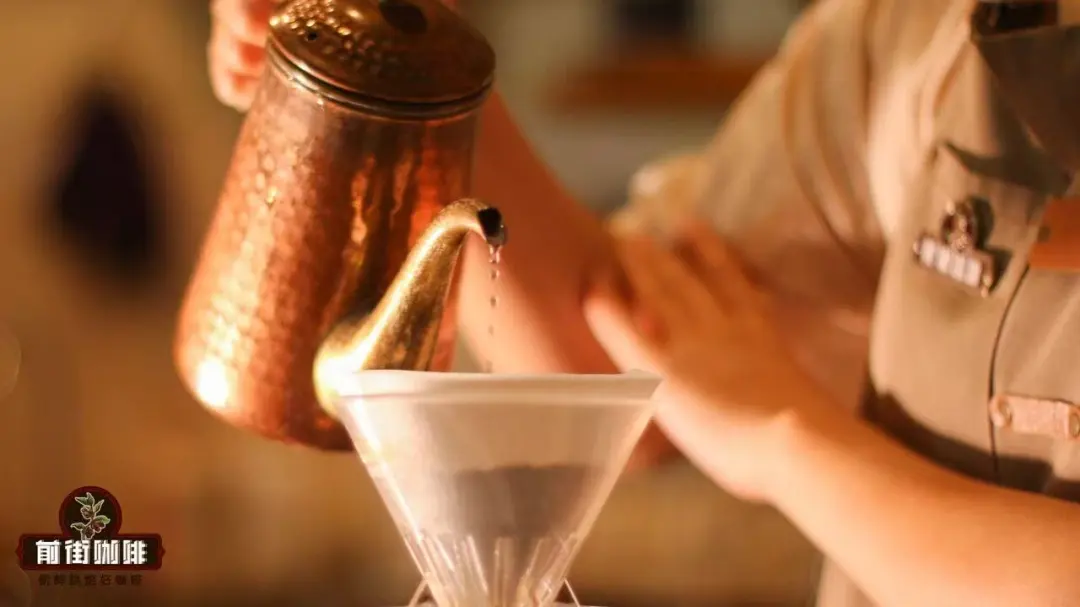
When brewing with the drip method, the filter paper does not need to be pre-wetted in advance, because it can serve as a reference for judging when dripping ends. As mentioned earlier, the drip method is roughly divided into two stages: first drip pouring, then switching to a stronger flow for brewing. But the end of the drip stage is not determined by time or liquid weight; as long as the coffee grounds are completely wetted, the flow can be switched.
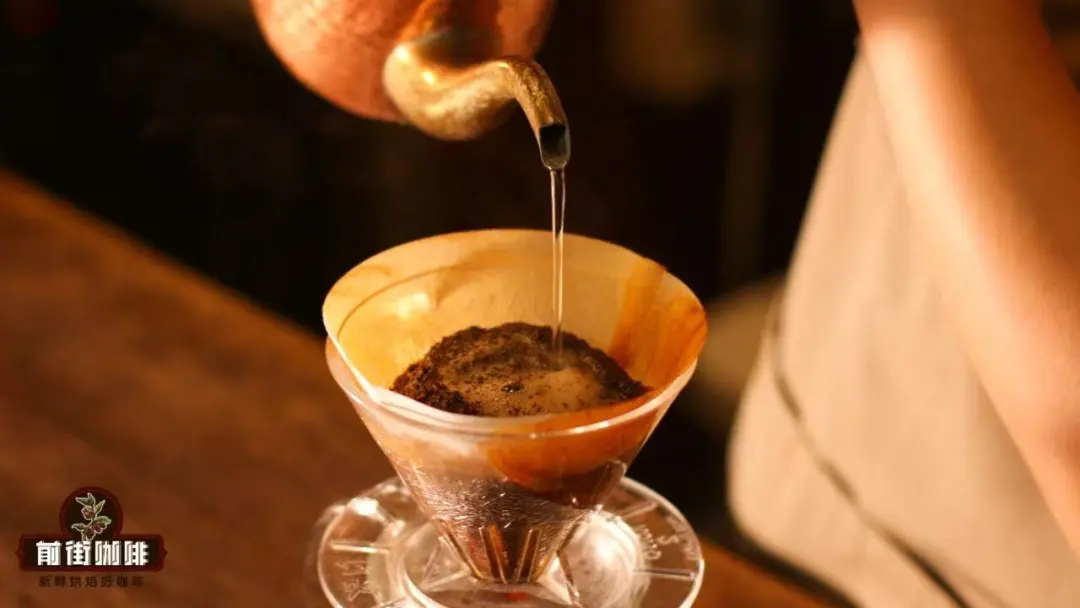
An un-wetted filter paper will turn yellow during brewing due to absorbing coffee liquid, and Mr. Kono, the inventor of the drip method, regarded this as the sign that the coffee grounds are fully saturated. Therefore, when the filter paper is observed to be entirely stained yellow by the coffee liquid, it is time to switch the flow.
First, let water fall drop by drop to wet the coffee bed. Pouring in circles, small circles, or at a single point are all acceptable.
After the filter paper is completely stained yellow by the coffee liquid, begin changing the pouring method. Divide the remaining hot water into several pours, pouring each until the water level is just even with the coffee bed, and after the coffee liquid has fully drained, pour the next segment, until the hot water is used up.
After all the coffee liquid has been filtered out, add an appropriate amount of hot water to dilute according to personal taste, making it easier to drink. Here, Front Street Coffee added 80 ml of hot water, so the concentration will be slightly higher.
The Front Street PWN Golden Mandheling brewed this way performs quite excellently. The entry is rich and full, the taste is balanced, and the aroma is prominent, with clearly perceptible layers of chocolate, caramel, and spice flavors. The sweet aftertaste is strong and the finish is long, very delicious.
It can be seen that even freshly roasted coffee beans can still brew a satisfying cup of coffee as long as an appropriate method is used. Of course, this process is relatively cumbersome. If you find it troublesome, you can also improve it by means of blooming the grounds, but friends who have not tried the drip method may as well experience it once, since it is a quite interesting and enjoyable brewing method.
- END -
The above content is compiled by CoffeeHunters, a coffee news website.


