







How can you taste coffee aftertaste more clearly?
Coffee aftertaste is the sensory experience produced by traces of liquid, oils, and other compounds left in the mouth and throat after swallowing. As these residues mix with saliva and gradually dissipate, they keep releasing flavors such as floral notes, fruit, sweetness, or astringency. Because a large part of aftertaste is aroma, a simple technique called closed-mouth retro-olfaction, exhaling through the nose right after swallowing, helps capture it.
After coffee is swallowed, how long the finish lasts also depends on the brewing method: pour-over and espresso leave aftertastes of different lengths, largely because of differences in the residues each one leaves in the mouth. Roast level matters as well, since lighter and darker roasts emphasize different lingering flavors. Telling a clean, sweet, lingering finish from a harsh or empty one is a core part of tasting skill.
Aftertaste is an indispensable part of coffee tasting. It refers to the comprehensive sensory experience brought by the substances remaining in the mouth and throat after swallowing coffee. Compared with taste and aroma, aftertaste is more subtle and requires certain skills to be fully perceived. From the perspective of Front Street, this article explains the principle behind aftertaste, shares practical methods such as closed-mouth retro-olfaction, and analyzes the difference between good aftertaste and bad aftertaste. At the same time, combined with specific products from the Front Street bean list, it explains the aftertaste emphases of coffees with different roast levels, and discusses the differences in aftertaste length between pour-over and espresso as well as their causes.
Compared with taste and aroma, aftertaste is presented in a more obscure way. To capture the aftertaste of coffee, tasters often need to master some specific techniques, which also makes it difficult for many friends who are new to coffee to fully appreciate the charm of aftertaste. Therefore, Front Street is here today to talk with everyone about how exactly to perceive the aftertaste of coffee.
Aftertaste
To understand how to taste it, you first need to be clear about what aftertaste actually is. The aftertaste of coffee refers to the comprehensive sensory experience brought by the substances remaining in the mouth and throat after we swallow coffee. How should this be understood?
Simply put, after coffee has been swallowed, new tastes or aromas can still be perceived emerging in the mouth. For example, floral notes, fruity notes, or sweetness, astringency, and even returning sweetness all actually fall within the scope of aftertaste.
As Front Street says, the fundamental reason this phenomenon occurs is that substances from the coffee remain in the mouth, such as trace amounts of coffee liquid or oils. As these substances combine with saliva or gradually dissipate, they release taste and aroma that are detected by our senses. This is the formation principle of coffee aftertaste.
To truly perceive the aftertaste of coffee, it is necessary to further increase the "power" of various senses after swallowing, including taste, smell, and touch. Among these, smell is especially critical, because a large part of coffee aftertaste comes from aroma.
If you want to capture more aroma released by the aftertaste, the operation is actually very simple. After drinking coffee, we can use the method of "closed-mouth retro-olfaction," exhaling airflow from the nasal cavity, thereby driving more aroma in the mouth into the nasal cavity to be captured by the sense of smell, and then perceiving a richer odor. As for wanting to feel more taste, you can increase the number of times you swallow saliva. Front Street has already shared this principle in a previous article about returning sweetness, so it will not be repeated here.
Good aftertaste and bad aftertaste
Coffee aftertaste also has distinctions between good and bad. A high-quality aftertaste allows us to taste pleasant aroma, sweet flavor, and just the right amount of astringency, leaving a long, lingering impression; while the aroma released by a poor aftertaste is naturally unpleasant, with a taste dominated by bitterness and miscellaneous flavors, accompanied by an unacceptable strong astringency and very low smoothness. In short, it is an experience that makes people unwilling to savor it again.
Like coffee flavor, the quality of aftertaste mainly depends on the quality of the coffee itself. The factors that determine coffee quality include variety, cultivation, processing, roasting, and brewing. Therefore, if you want to obtain a good aftertaste, the selection of high-quality coffee beans and suitable brewing are both indispensable.
Different coffees place emphasis on different aspects of aftertaste. For example, for medium-light roasted coffee, the aftertaste is mainly aroma; for medium-dark roasted coffee, the aftertaste is mainly taste. This has a lot to do with the components of aroma.
Take several beans from the Front Street bean list as examples. Front Street Ethiopia Hamasho has coffee flavors of strawberry, pineapple, guava, and floral notes. In the aftertaste, berry, apricot, floral notes, and oolong tea can be felt, followed closely by a sweet-and-sour taste. Also medium-light roasted, Front Street Hacienda La Esmeralda Green-Tip Geisha shows flavors of white florals, citrus, berries, and honey, and in the aftertaste, floral notes, oolong tea, and honeydew melon can be felt, very clean.
If it is medium-dark roasted Front Street Jamaica Blue Mountain No. 1 coffee, the brewed flavor shows chocolate, nuts, cream, and caramel, and the aftertaste has chocolate, cream, and the aroma unique to Blue Mountain. After the aroma lingers briefly, a strong sweetness immediately emerges. Compared with the aroma, the sweetness is much more prominent.
It is worth mentioning that the duration of aftertaste is also one of the standards for judging the quality of a cup of coffee's aftertaste and its overall quality. Under comparable extraction and concentration, the longer a good aftertaste lasts, the more high-quality substances the coffee contains, and it has received suitable roasting and extraction, which is why the aftertaste can last longer.
However, this judgment can only be made under the premise that the extraction method, extraction degree, and concentration are comparable, because the duration of aftertaste is affected by the extraction method, extraction degree, and coffee concentration. When more oils are incorporated into the coffee, or when the coffee concentration is higher, the duration of the aftertaste will be relatively longer.
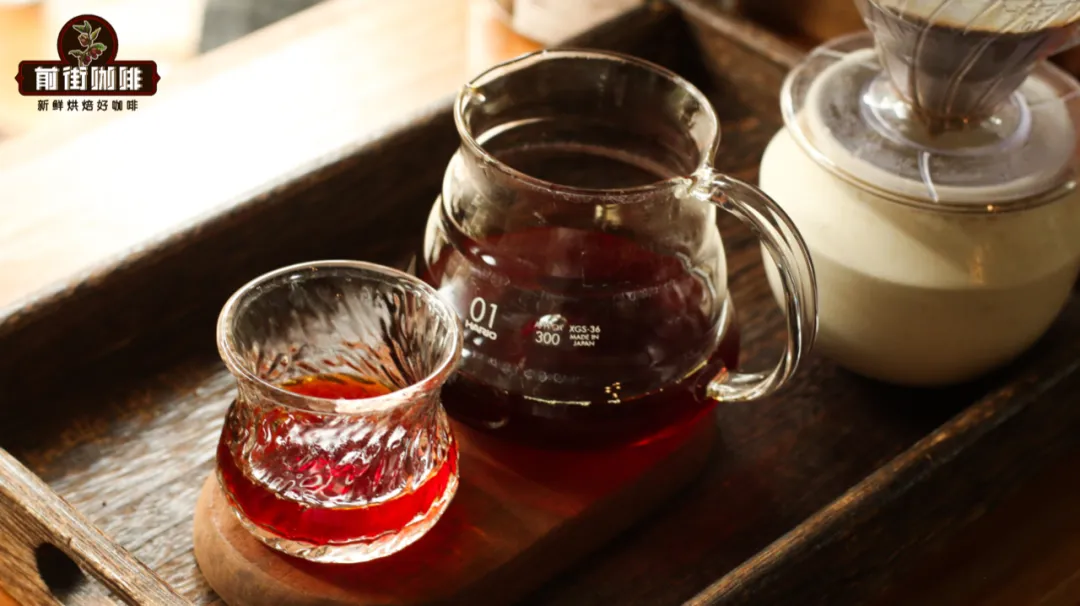
This is also one of the reasons espresso is widely popular. It has higher concentration, and the filtration method allows more oils to enter the coffee, so after swallowing, under the combined effect of various factors, we will perceive a very strong and lasting aftertaste and returning sweetness.
That is all for this article. If everyone is interested in coffee aftertaste, you might as well try the method recommended by Front Street. After drinking coffee, use closed-mouth retro-olfaction and see whether you can perceive a completely different aroma and taste.
- END -
The above content is compiled by CoffeeHunters, a coffee news website.


