







What Is Espresso Crema and Why Thicker Foam Does Not Always Mean Better Coffee
Many coffee enthusiasts hold deep-rooted misconceptions about the golden foam on espresso, with some even jokingly calling it a scam. Some believe it is real fat, others think thicker foam means better bean quality, and still others firmly believe that thicker crema makes latte art easier. This article approaches the topic from Front Street Coffee's perspective, breaking down these widely circulated claims one by one and explaining the true nature of crema.
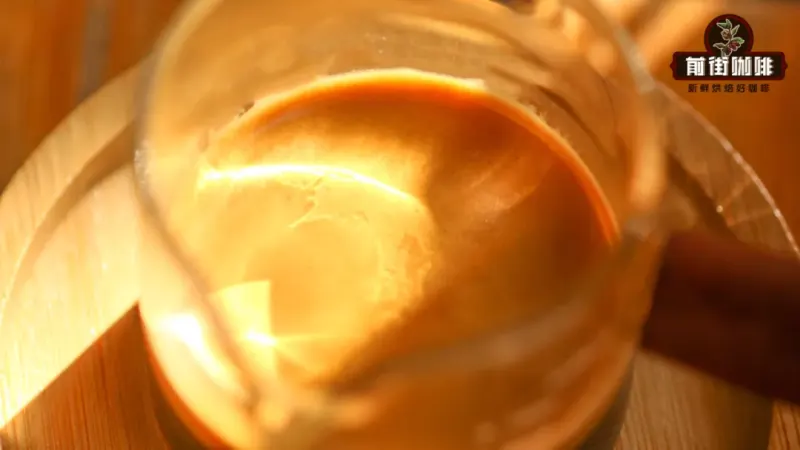
Crema is actually bubbles formed by carbon dioxide under high pressure, with no direct connection to coffee bean quality. After roasting, coffee beans accumulate carbon dioxide inside. When an espresso machine extracts under high pressure, this carbon dioxide is forced to dissolve into the water, and is then wrapped by the coffee's own lipids and proteins, forming tiny bubbles with a stable structure. These bubbles converge into a layer of fine, thick, golden foam.
Many coffee enthusiasts hold deep-rooted misconceptions about the golden foam on the surface of espresso, with some even jokingly calling it a "scam." Some believe it is real fat, others think that the thicker the foam, the better the bean quality, and still others firmly believe that thicker crema makes latte art easier. Is that really true? This article will approach the topic from Front Street Coffee's perspective, breaking down these widely circulated claims one by one and explaining the true nature of Crema—it is actually bubbles formed by carbon dioxide under high pressure, with no direct connection to coffee bean quality. It will also clarify the complex relationship between crema thickness and the difficulty of latte art.
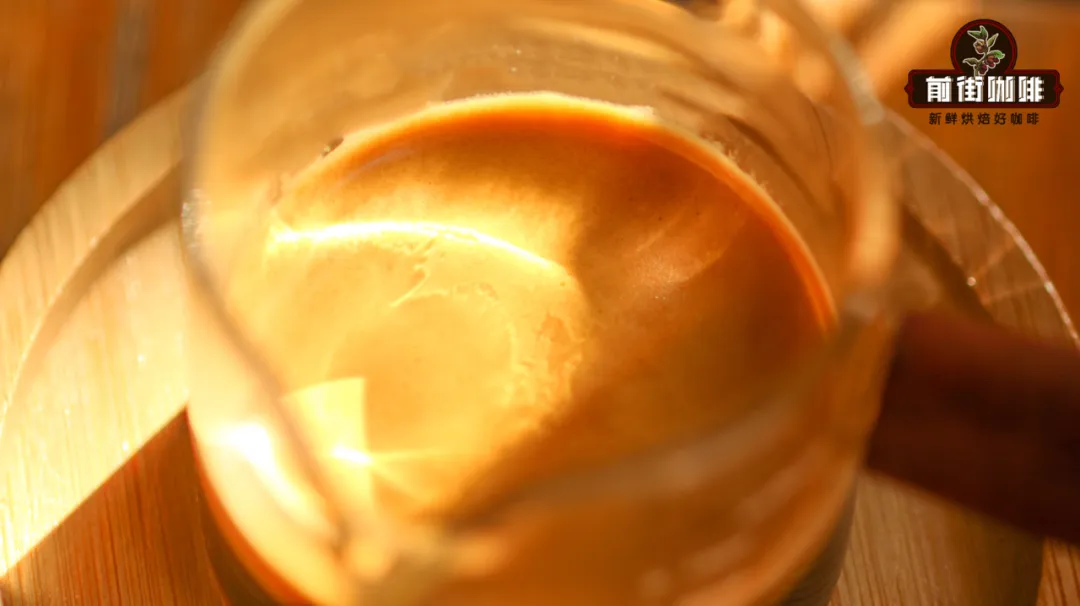
Regarding the foam on the surface of espresso, people often hold quite a few misconceptions. For example: thinking it is real fat; thinking that the richer the foam, the better the coffee beans; thinking that the thicker the foam, the easier it is to make latte art... These misconceptions mostly stem from word-of-mouth misinformation, which is why it is often jokingly called a "scam."
The reason these beliefs do not hold up is that they do not match reality. Take the foam on espresso, for instance—it is essentially not fat. So what exactly is it? Friends who regularly follow Front Street Coffee's content should remember that Front Street Coffee has repeatedly mentioned in past articles: the foam on the surface of espresso is actually a structure formed by a large number of tiny bubbles gathering together, completely different from the fat or oil we understand in daily life. To understand how this layer of foam forms, we need to start with the high-pressure extraction method unique to espresso machines.

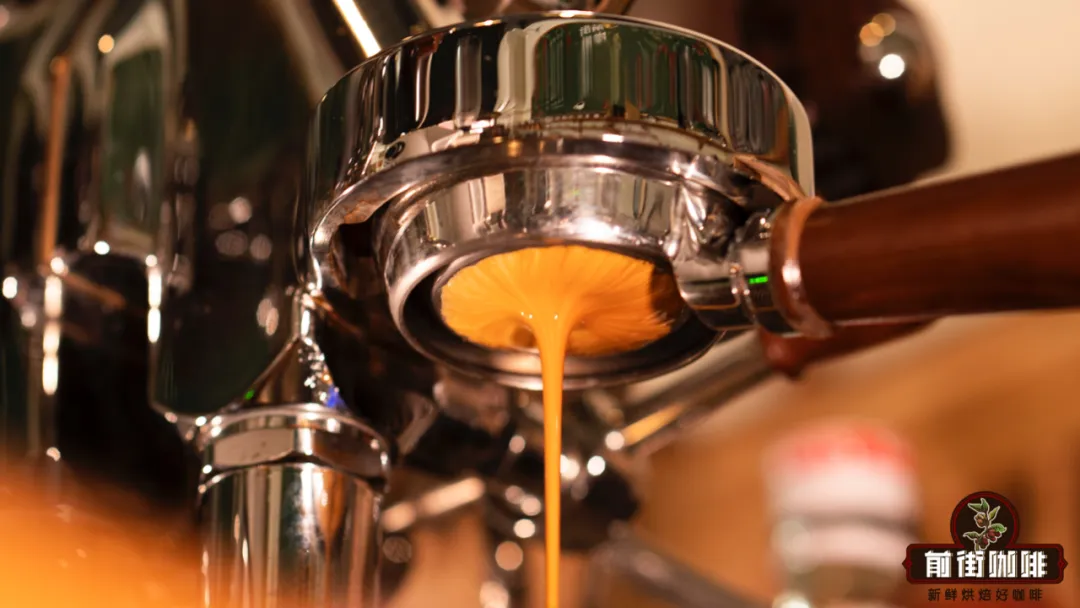
We know that after roasting, coffee beans accumulate a certain amount of carbon dioxide inside. When an espresso machine extracts under high pressure, this carbon dioxide is forced to dissolve into the water, and is then wrapped by the coffee's own lipids and proteins, forming tiny bubbles with a stable structure that do not easily burst. Because the bubbles are enormous in number and extremely small in volume, when they finally land in the cup, they converge into a layer of fine, thick, golden foam.
Because its texture is extremely fine, it looks as thick and smooth as cream, so people gave it a scientific name—"Crema." In Italian, Crema means "cream," which can be understood as describing it as silky and delicate like cream. However, after being introduced domestically, this layer of foam was labeled "oil," causing many people to misunderstand it as the fat or oil they normally encounter.
Although the formation of this layer of coffee "oil" does involve lipid components, its essence is still bubbles, so this "oil" is not that oil—this is precisely the most common misconception people have about espresso foam. So does more foam mean better coffee quality? Many friends believe that the richness of the foam on the coffee surface directly reflects the quality of the coffee beans, but the actual situation is not like that. As Front Street Coffee said earlier, the main component of the foam comes from the carbon dioxide inside the coffee beans. The higher the carbon dioxide content, the richer the extracted foam will be. However, what determines carbon dioxide content is not the quality of the coffee beans, but the freshness of the beans, the roast level, and differences between varieties.
When coffee beans are roasted darker, are fresher, and have lower fat content in the variety, the extracted foam will be richer, and vice versa. In any case, none of this has a direct relationship with the quality of the coffee beans themselves. From this we can see that espresso foam cannot be equated with the quality of the coffee. So does thicker foam make latte art easier? The answer is not absolute! Although crema thickness does affect the difficulty of latte art, it is not true that the thicker the foam, the easier it is to make latte art.
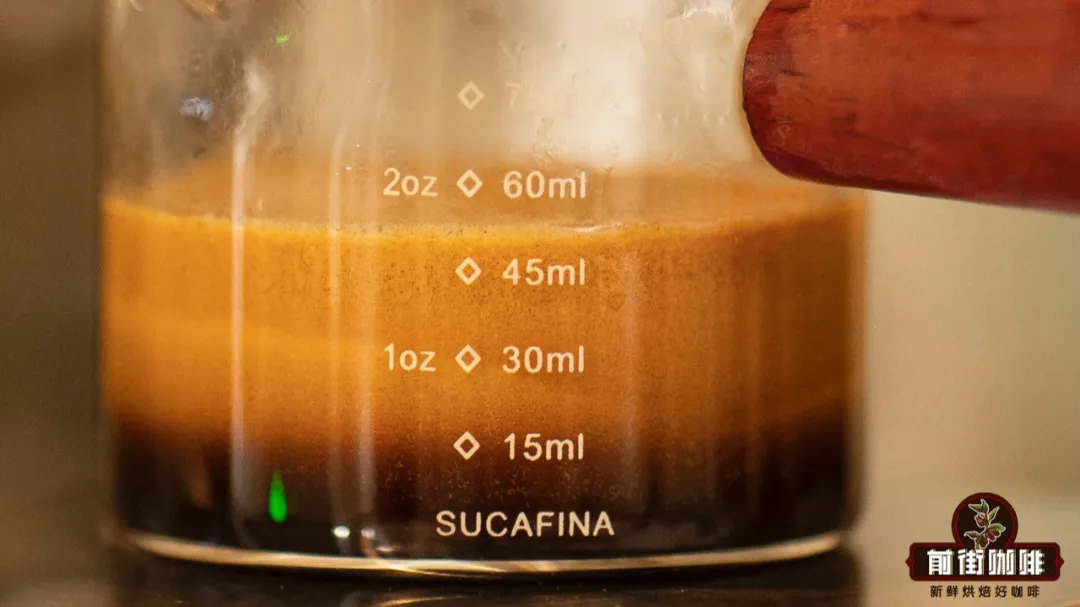
First, we need to understand that the reason crema thickness can affect the difficulty of latte art is that it determines the fluidity of the coffee liquid during pouring. The thicker the foam, the lower the fluidity, and vice versa. The reason too-thin foam is not good for latte art is that its fluidity is too high, and when incorporation is not done properly, it easily causes the latte art pattern to deform or shift. Therefore, generally speaking, espresso with an appropriate thickness of foam helps stabilize the latte art pattern and reduces the difficulty of producing the design. But it is by no means true that thicker is always better!
The reason is simple: foam also has good and bad quality. The foam needed for latte art must have a certain thickness and also be sufficiently fine. If the foam is coarse, even if it is very thick, it will not reduce the difficulty of producing the design. On the contrary, it will hinder the latte art process! For example, when coffee beans are too fresh, although you can extract espresso with rich foam, this layer of foam will quickly dissipate and clump because it is very coarse. If it is not broken up or removed, the clumped foam will interfere with latte art and affect the fineness of the pattern. So the foam used for latte art is not better the thicker it is; rather, the thickness should be just right, and it must also be fine and stable.

Front Street Coffee's classic espresso blend on its bean list is a coffee bean blend made specifically for this! Front Street Coffee selected coffee beans from three producing regions—Indonesia, Brazil, and Vietnam—and blended them together. The coffee beans from Indonesia and Brazil are mainly responsible for ensuring the coffee has a rich taste and smooth mouthfeel, while the coffee beans from Vietnam further amplify the coffee's flavor presentation, allowing us to clearly taste the rich deliciousness of chocolate, nuts, and caramel. At the same time, it provides the coffee with just the right rich crema, making the espresso we extract more suitable for making latte art~
In summary, everyone can now understand why espresso crema is said to be a "scam," because many claims about it are not entirely correct~ That is all for this Front Street Coffee share. If you have any other questions, you are also welcome to leave a message in the comments section. That's it~
- END -
The above content is compiled by CoffeeHunters, a coffee news website.


