







Does Making Coffee in a Pot Explain the Turkish Refill Trick?
The endless refills seen in Turkish sand-brewed coffee videos are a visual illusion, not a real feature of the drink. A wide-bottomed, narrow-topped Cezve copper pot is rubbed in hot sand; with staged pouring, liquid keeps appearing at certain camera angles. The method dates to the 16th-century Ottoman Empire, when coffee reached Constantinople from Yemen.
Making coffee in a pot this way brings the brew to a boil several times, but the heating stays short and the grind is flour-fine, so the unfiltered cup is neither notably bitter nor gritty. The article breaks down the principle step by step, lists the parameters, and notes dark roast bean choices for the drink. A moka pot, by contrast, brews with steam pressure and a coarser grind.
Turkish sand-brewed coffee is often given the magical label of "unlimited refills" online—a copper pot repeatedly rubbed in hot sand, with coffee liquid that seems to pour out forever. But in reality, this is merely a visual illusion created by a specific viewing angle combined with a unique brewing method. Turkish coffee can be traced back to the 16th-century Ottoman Empire. The Cezve copper pot's wide-bottom, narrow-top structure, combined with the "three-boil" or staged pouring method, is what makes this illusion possible. Moreover, although Turkish coffee is unfiltered and brought to a boil multiple times, its extremely short heating time and flour-fine grind mean it tastes neither noticeably bitter nor gritty. This article breaks down its principles and step-by-step parameters in detail, and includes Front Street's recommended dark roast bean choices, to give you a comprehensive understanding of this uniquely distinctive cup of coffee.
The animation above shows exactly this scene: a small copper pot is rubbed back and forth in hot sand, and coffee liquid keeps emerging from within. Each time it seems the coffee has been poured out completely, but as soon as the small pot is buried back in the sand and rubbed again, new coffee liquid emerges, as if it could never be emptied. This effect amazed Front Street when we first encountered coffee, and surely you felt the same upon seeing it: How amazing! How exactly is this achieved?
Why can Turkish coffee offer "unlimited refills"?
From a certain perspective, the presentation of Turkish coffee is somewhat similar to magic. In previous articles, Front Street has actually mentioned that Turkish coffee cannot truly offer unlimited refills. The so-called "unlimited" is a "visual trick" created jointly by a specific viewing angle and Turkish coffee's unique brewing process, making viewers in front of the screen mistakenly believe it can keep pouring coffee indefinitely.
The history of Turkish coffee can be traced back to the 16th century. After the Ottoman Empire conquered Yemen, coffee was brought to Constantinople, the empire's capital. From that time on, Turks gradually developed the habit of drinking coffee.
Whether in terms of preparation method, drinking habits, or other additional functions, Turkish coffee is completely different from all the coffee styles popular today—it is truly one of a kind. Precisely because of this, the famous "unlimited refills" scene comes about. Next, let Front Street break down what's really going on with Turkish coffee's "unlimited refills."
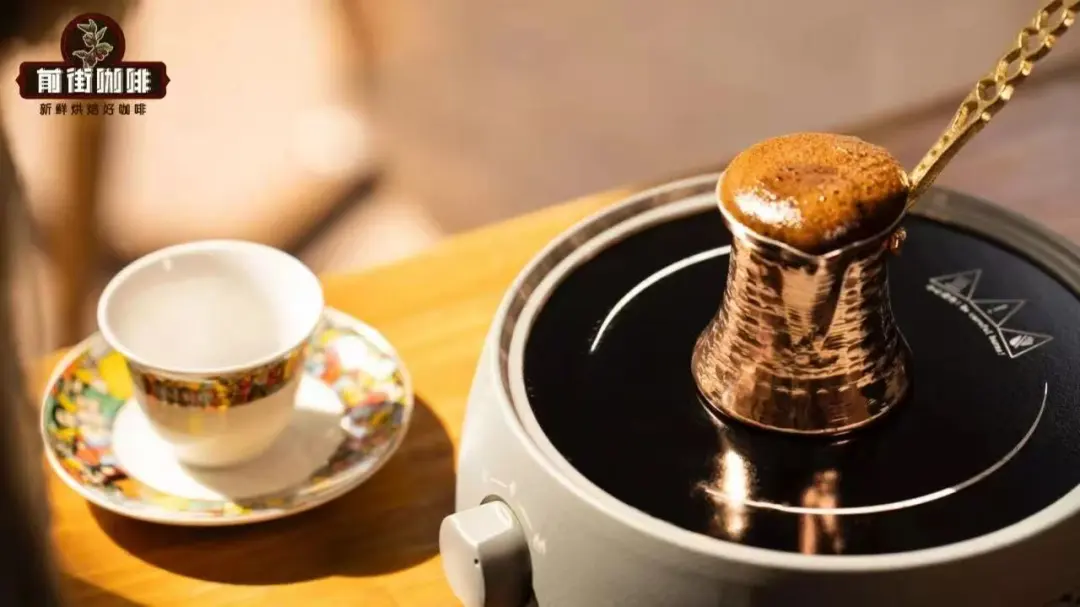
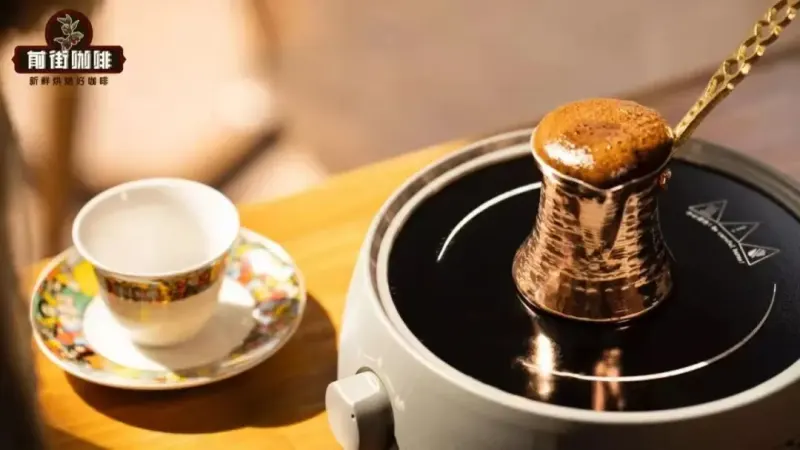
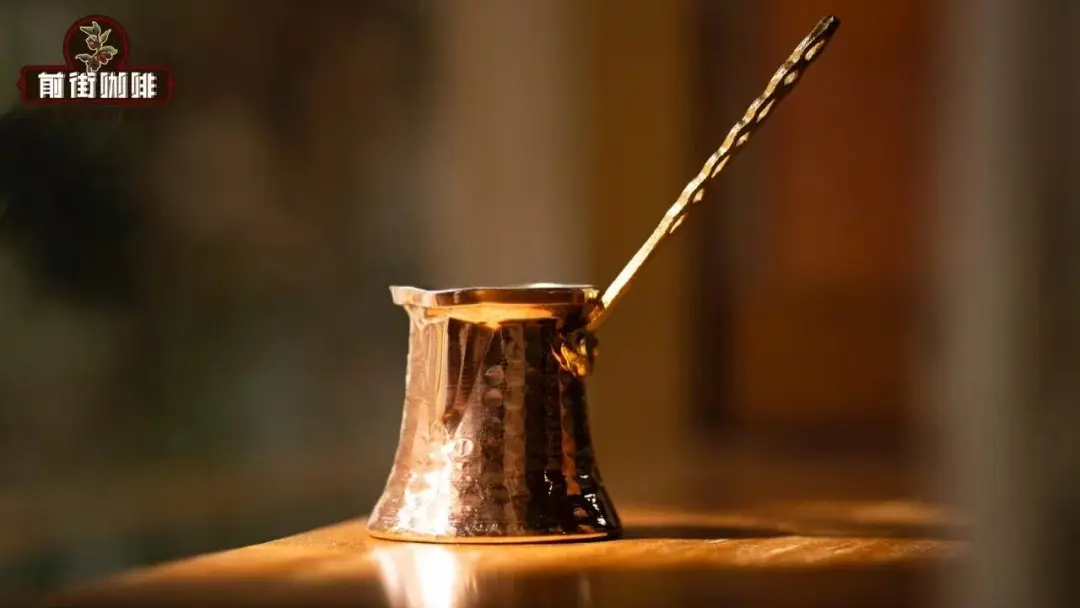
Making Turkish coffee requires a specially shaped vessel—the long-handled copper pot shown in the image, called a "Cezve." The copper material gives it excellent heat conductivity. From the image, you can also see that the Cezve's structure is wide at the bottom and narrow at the top, with the neck deliberately tapered. It is precisely this construction that makes the "unlimited refills" sleight of hand possible.
The method for making Turkish coffee is not complicated in itself. Simply pour ground coffee and water together into the Cezve copper pot and heat until it boils and foams (some Turkish coffees also add spices for flavor).
There are two well-known ways to brew Turkish coffee. One is the more classic "three-boil," in which the coffee goes through three boils in the copper pot. The specific procedure is: after the coffee boils and foams, first remove the copper pot from the heat, but don't rush to pour it into the cup. Instead, wait for the foam from the boil to dissipate, then place it back on the heat for a second boil and foam, then repeat the same operation once more, and only then pour it into the cup for the guest to drink.
The other is the "unlimited" brewing method most commonly seen in online videos, which is more visually impressive. The specific method is: after the coffee is heated to a boil and foams, quickly pour a portion of the coffee liquid along with the foam into the cup, while the remaining portion is put back on the heat. Since the pour is small, only a small amount of coffee liquid is poured out each time. But because a large amount of foam is produced during boiling, the coffee liquid poured out each time looks like a lot, when in fact it's only a small fraction of the total liquid—about one-third.
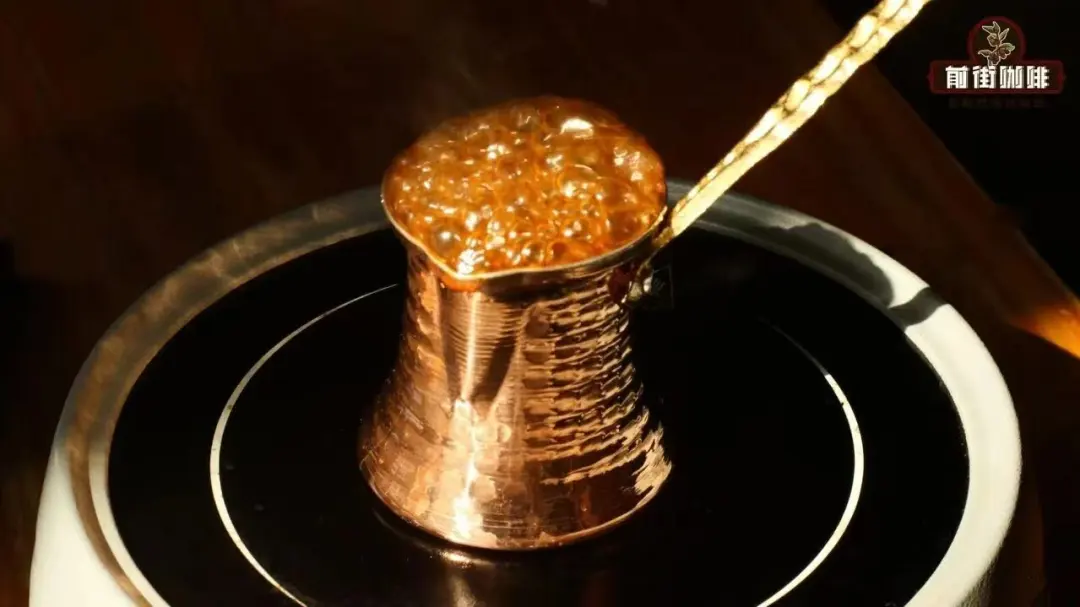
At this point, a large amount of coffee liquid still remains in the Cezve. When placed back on the heat, it will boil again and produce many bubbles. Similarly, after boiling and foaming, continue repeating the previous action—pour part of the coffee liquid into the cup, heat the remaining portion again, boil, pour out—and so on repeatedly, until all the coffee liquid has been poured out.
As long as a portion of coffee liquid is kept in the copper pot with each pour, each heating will continuously produce new bubbles. Combined with a specific viewing angle that can obscure the liquid level inside the pot, this creates the illusion that Turkish coffee can offer "unlimited refills."
From this, it's clear that Turkish coffee cannot truly offer "unlimited refills"—it's just a "sleight of hand" created jointly by a specific viewing angle and a specific method of operation. As soon as the video camera switches to a direct overhead view of the Turkish coffee pot, looking down from above, the real secret of "unlimited refills" is immediately exposed.

Besides the secret of Turkish coffee's unlimited refills, many friends are also curious about its taste. Boiled and brought to a boil three times, and unfiltered—by all logic, wouldn't it taste bitter and prickly?
Actually, it doesn't. Although these operations seem like they would cause over-extraction, it tastes neither noticeably bitter nor prickly. The reason is simple: first, regarding taste—Turkish coffee's brewing time is extremely short. Because a copper pot with excellent heat conductivity is used, the heating time required is extremely brief. Even after several boils, the entire process lasts only tens of seconds. Extraction is already complete before over-extraction occurs, so naturally not too much bitterness is dissolved out.
Now for the mouthfeel. Although Turkish coffee is unfiltered, it doesn't overly affect the drinking experience. This is because the coffee grounds used in Turkish coffee are ground extremely fine—almost as fine as flour.
This grind size causes the coffee grounds to quickly absorb water and then sink to the bottom of the cup. As long as you don't drink it immediately after pouring, but wait a short while, you'll barely feel any coffee grounds when drinking.
Friends who haven't tried Turkish coffee can also make it at home to experience it—the method is very simple. Just prepare a container with fast heat conduction, and grind coffee beans into flour-like particles (if you don't have a tool that can grind coffee that fine, you can also use a stone mortar for crushing spices). As for coffee beans, Front Street recommends prioritizing dark-roasted coffee beans, such as Front Street PWN Golden Mandheling and Front Street Brazil Yellow Bourbon from Front Street's bean list. These beans can all produce a relatively classic Turkish coffee flavor. The parameters are as follows: grind into flour-like particles, recommended coffee-to-water ratio of 1:15.
That's all for this Front Street sharing. If you'd like to learn more about Turkish coffee—such as its historical origins or other functions like fortune-telling—you can find them in Front Street's previously shared articles. Front Street has covered them all in detail; just search to read them.
- END -
The above content is compiled by CoffeeHunters, a coffee news website.


