







What Sets Authentic Golden Mandheling Coffee Apart?
Authentic Golden Mandheling comes only from PWN, the Pwani Coffee Company that defined the standard and registered the trademark. Ordinary Mandheling G1 and Golden Mandheling differ in screen size, the number of hand-sorting passes, and machine-sorting processes, and PWN backs its beans with a double anti-counterfeiting certification system, so buyers can verify exactly what they are getting.
Mandheling is Arabica coffee grown on Sumatra, a name an Indonesian green bean exporter first used when shipping beans to Japan, where the woody, spicy profile found success. Today many sellers market 20-mesh or 21-mesh screens, green bean color, or extra hand-picking as proof of quality, but none of that equals the PWN standard. Roasted medium-dark, the beans show chocolate, caramel, spice, pine, and nut notes.
Mandheling coffee, as a representative Arabica coffee from the Indonesian island of Sumatra, is renowned for its unique woody and spicy flavors. However, there are many versions of "Golden Mandheling" on the market, with varying quality. This article will start from the origins of Mandheling, delve into how PWN Pwani Coffee Company defined and established the Golden Mandheling standard, reveal the core differences between ordinary Mandheling G1 and Golden Mandheling in terms of screen size, hand-sorting frequency, and machine-sorting processes, and introduce the trademark registration and double anti-counterfeiting certification system established by PWN to rectify market chaos. For coffee enthusiasts who want to taste authentic Golden Mandheling, Front Street Coffee's Front Street PWN Golden Mandheling uses a classic medium-dark roast, presenting rich flavors of chocolate, caramel, spices, pine, and nuts, with a clean and mellow body and a long, sweet aftertaste—a trustworthy choice.
This has sparked strong interest among many coffee lovers in Front Street PWN Golden Mandheling! Subsequently, some friends noticed that, in addition to Front Street PWN Golden Mandheling, various other versions of Golden Mandheling are circulating online.
Their promotional focuses differ; for example, some highlight screen size specifications like 20-mesh or 21-mesh Golden Mandheling, or emphasize the color of green beans; others market multiple hand-picking selections... In short, there is a wide array of Golden Mandheling under various names on the market.
So the question arises: What exactly are the differences between these Golden Mandheling products touting other selling points and the Front Street PWN Golden Mandheling that Front Street has always recommended?
The core difference is: They are not sold by Front Street... Just kidding! Seriously speaking, although they all bear the name Golden Mandheling, they are not truly Golden Mandheling in the real sense. From every angle, only the Golden Mandheling produced by PWN deserves the title of Golden Mandheling. As for the reasons, we must trace the origins between PWN—Pwani Coffee Company—and Mandheling coffee. Mandheling coffee is presumably quite familiar to everyone; it refers to Arabica coffee produced on the Indonesian island of Sumatra. By a chance opportunity, an Indonesian green bean exporter exported Sumatra's Arabica coffee to Japan under the name Mandheling. Unexpectedly, Indonesian coffee achieved great success in the Japanese market with its unique woody and spicy notes. Since then, coffee from Sumatra has often been sold under the name "Mandheling."
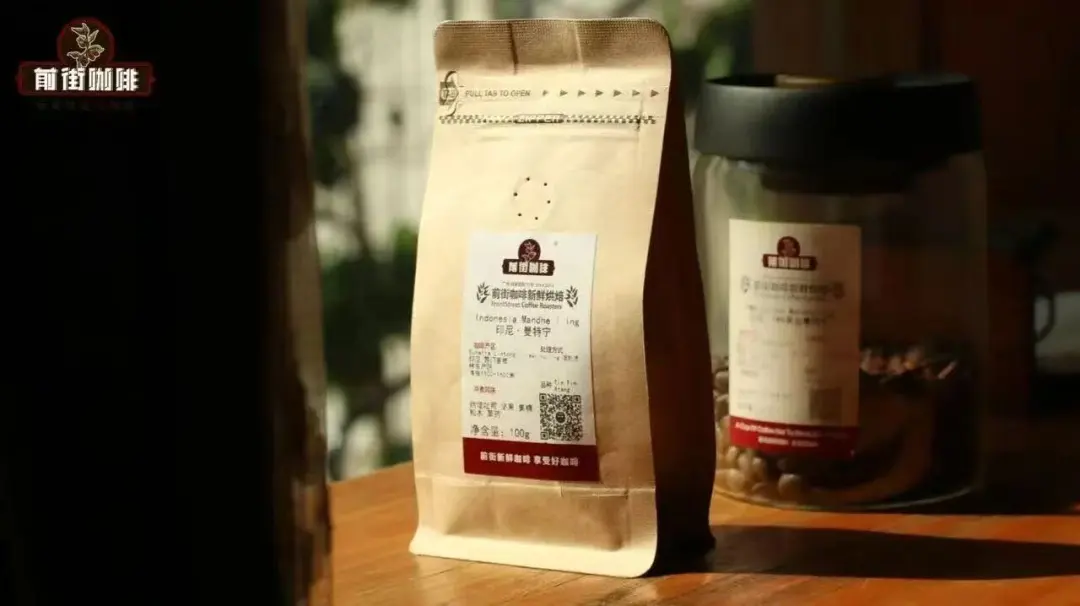
In Front Street's production-area daily bean series, there is a Front Street Indonesia Mandheling, where you can taste a very standard "Mandheling flavor." Roasted medium-dark, it presents nutty, caramel, and toast notes after brewing, along with Mandheling's signature pine and herbal flavors. The body is mellow, with a strong sweet aftertaste—quite an outstanding performance.

The "green bean exporter" mentioned in the article by Front Street is precisely Pwani Coffee Company. The full name of Pwani Coffee Company is Pwani Coffee Company, abbreviated as PWN. Founded in 1957 by a Chinese family from Quanzhou, Fujian, this company, as Front Street stated, is the green bean exporter that defined "Mandheling coffee." But that's not all—it is also the creator of "Golden Mandheling" coffee. After Mandheling coffee rose to fame, many companies began exporting Mandheling coffee. To distinguish itself from other green bean exporters, Pwani Coffee Company adopted stricter standards for producing coffee, elevating quality to set its products apart from competitors.
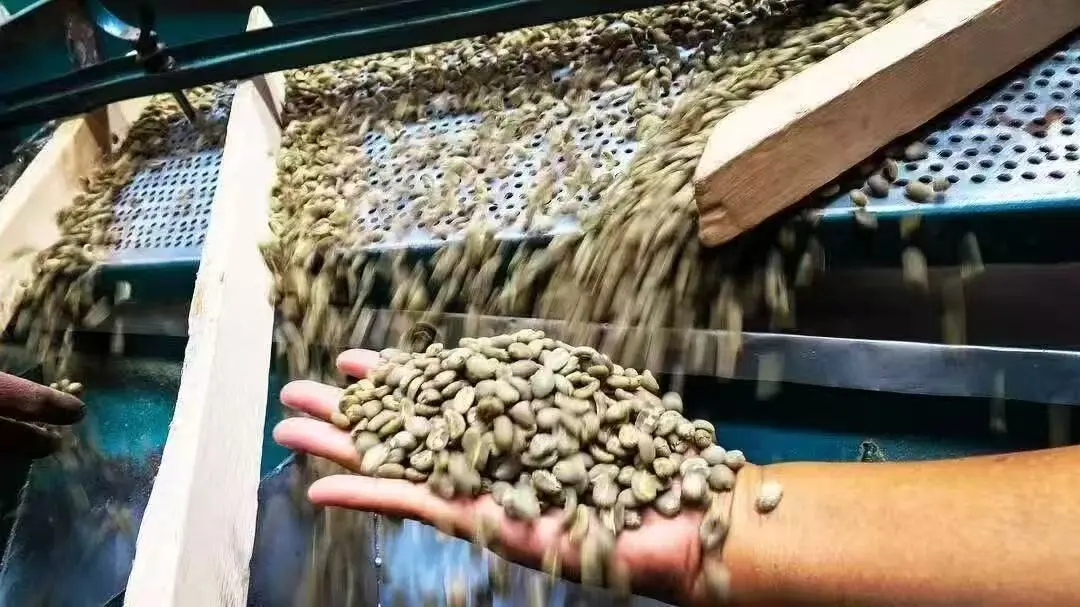
The highest grade of ordinary Mandheling is G1, with standards allowing no more than 3 defective beans out of 300 green beans, a screen size of 18 mesh or above, and three rounds of hand-sorting. PWN's requirement for Mandheling, however, is that beans must reach 19 mesh; in addition to three rounds of hand-sorting, the qualified beans undergo an extra machine-sorting process to detect density and color, thereby removing defective beans that are hard to identify by eye. The result is a batch of Mandheling with larger screen size, uniform color, and superior quality. To distinguish it from ordinary Mandheling, PWN named it "Golden Mandheling," symbolizing that this Mandheling's quality stands out like gold.
Indeed, PWN's Golden Mandheling quickly gained market recognition upon release, becoming the benchmark for Mandheling quality and widely popular. This prompted many peers to imitate it, launching their own "Golden Mandheling." To rectify the proliferation of "Golden Mandheling" on the market, PWN directly registered "Golden Mandheling" as an exclusive trademark, so at least not many companies would dare to blatantly counterfeit it. Therefore, we can clearly state that only the Golden Mandheling produced by PWN can be called Golden Mandheling. Because Pwani Coffee Company is not only the promoter of Mandheling and Golden Mandheling coffee but also their namer and creator.
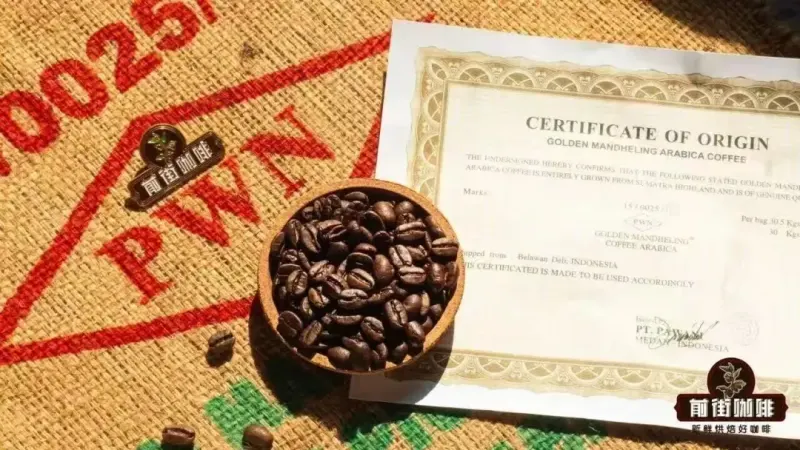
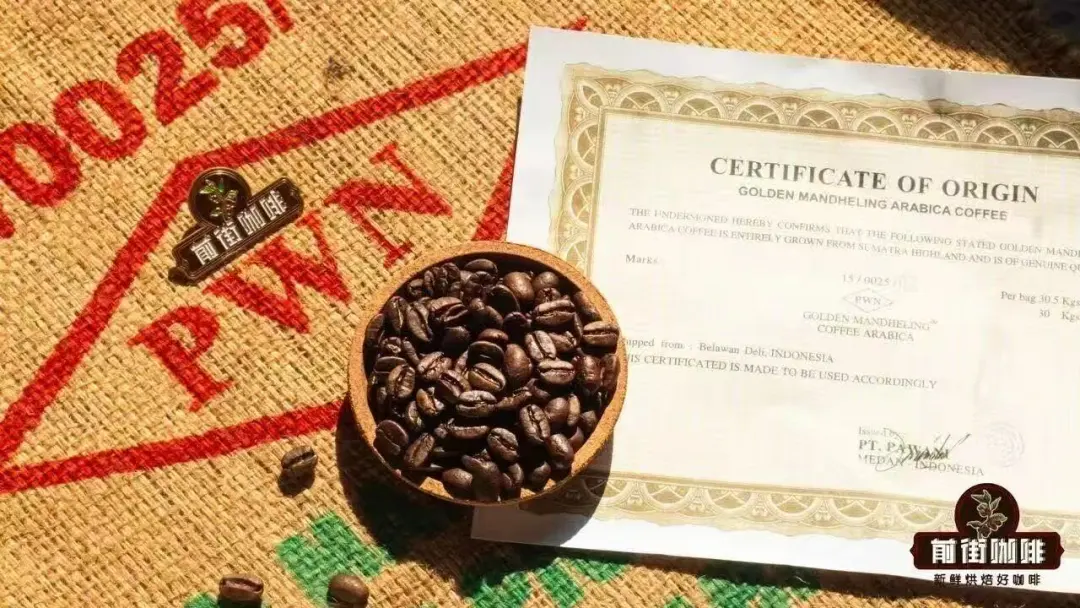
Even so, some bean traders still try to ride the coattails of Golden Mandheling. Thus, PWN initiated a second anti-counterfeiting certification—when purchasing PWN Golden Mandheling green beans, besides receiving a jute bag printed with "PWN," the inner bag also includes a certificate issued by PWN to prove the channel source and authenticity of its Golden Mandheling.
If you have ever visited Front Street Coffee's offline coffee bean specialty store, you can see a large stack of paper documents piled in a corner—that is just a small part of the certificates included when Front Street purchased PWN Golden Mandheling green beans. Therefore, if you want to taste the authentic Golden Mandheling produced by PWN, Front Street Coffee's Front Street PWN Golden Mandheling will be an ideal choice!
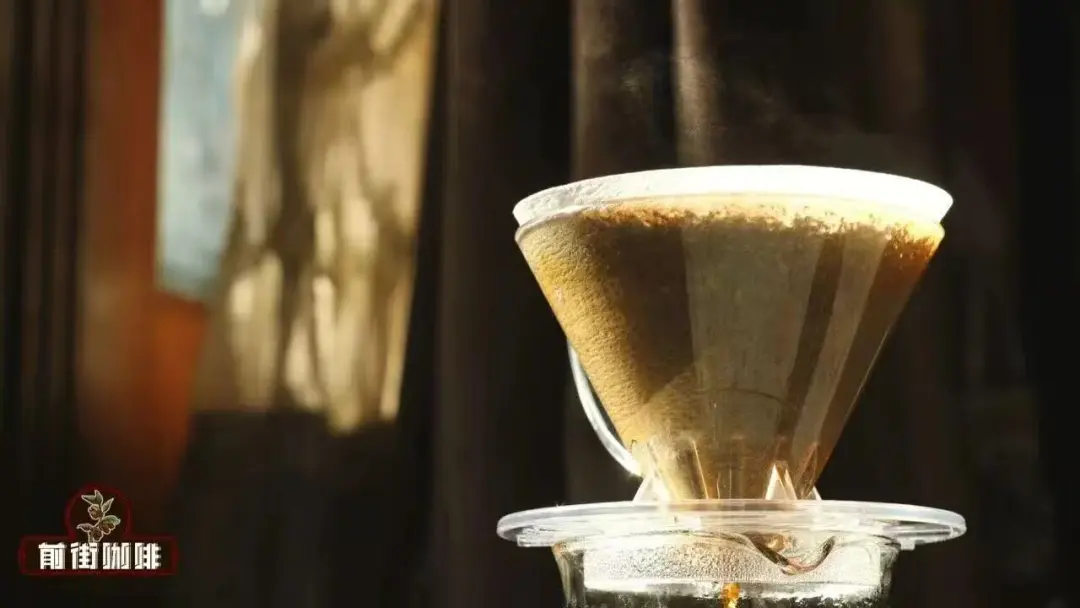
For roasting, Front Street uses the most classic medium-dark roast, so the brewed Front Street PWN Golden Mandheling has almost no perceptible acidity, and the aroma is exceptionally rich. We can clearly taste chocolate, caramel, spices, pine, and nut flavors. The body is very clean and mellow, with a long finish and strong sweet aftertaste—it is a very, very delicious dark-roasted coffee bean!
- END -
The above content is compiled by CoffeeHunters, a coffee news website.


