







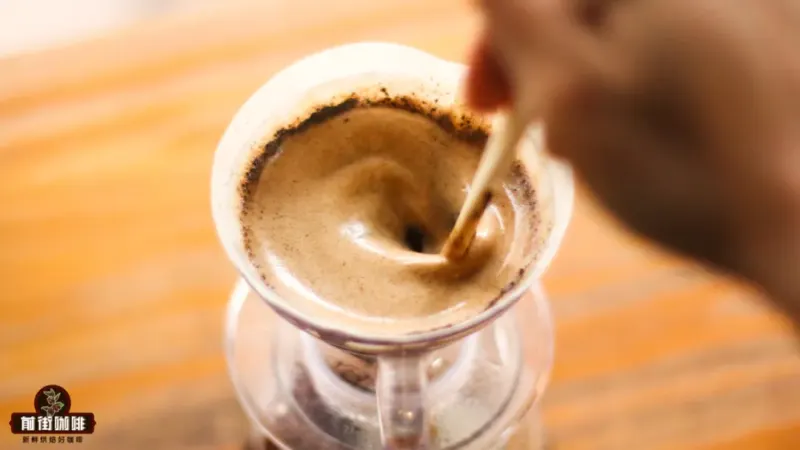
How does the pour-over coffee stirring method work?
The stirring method for pour-over coffee uses an external tool to disturb the coffee bed during brewing instead of relying only on the water stream from the kettle. That extra agitation raises extraction efficiency, so more flavor compounds dissolve in less time. With other parameters equal, the cup tastes stronger and fuller, which is why the method suits iced pour-over brewed with Kenya beans.
Front Street Coffee brews its iced pour-over with Kenya Small Tomato beans in a V60 dripper, stirring the bed during the pour. Because the tool disturbs the grounds more violently than a water stream alone, extraction yield climbs and both flavor and strength become more pronounced. The result is a fruity body and a kenya coffee beans taste that reads clearly over ice.
Why does the agitation method for brewing iced pour-over coffee deliver a richer flavor? This article will analyze the essential difference between the agitation method and conventional pouring from the perspective of extraction efficiency, and share in detail the complete parameters and steps for Front Street Coffee's iced pour-over made with Kenya Small Tomato coffee beans, a V60 dripper, and the agitation method. If you're also interested in this fun brewing technique, why not follow along and try it at home, and experience the full fruity body and rich flavor that the agitation method brings.
A friend mentioned when buying coffee beans at Front Street that he had seen a claim online: iced pour-over coffee made with the agitation method tastes richer and better than coffee brewed the ordinary way. He wanted to know what Front Street thought about this.
Objectively speaking, judging purely from the perspective of the brewing method, the agitation method really does make it easier to produce a cup of rich-tasting iced pour-over coffee. But this does not mean the agitation method is necessarily able to make better-tasting coffee than the conventional method. To understand this, we only need to clarify the core difference between the agitation method and the ordinary method.
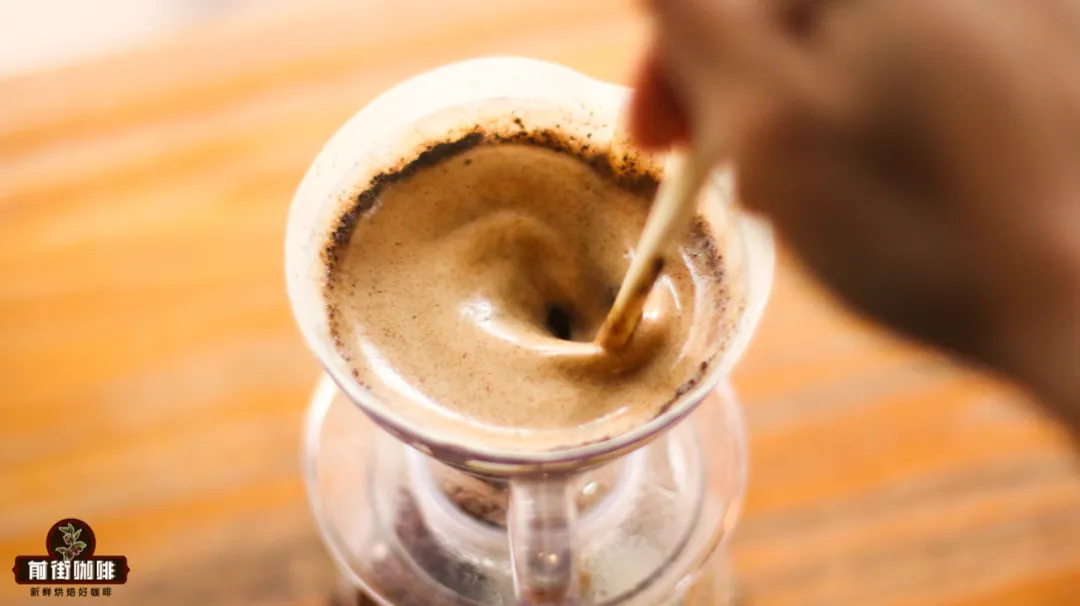
Front Street has previously explained that the characteristic of the agitation method is using an external tool to stir the coffee bed during brewing, and this is precisely its most fundamental difference from conventional brewing. Other methods rely on the stream of water poured from the kettle to agitate the coffee grounds, while the agitation method uses an additional tool to create disturbance. So what different effects do these two approaches actually produce?
The answer is extraction efficiency. The reason we pour in circles is that, besides wetting the coffee grounds, another important purpose is agitation—using stirring to speed up the dissolution of flavor compounds, thereby releasing a large amount of flavor substances in a relatively short time and completing extraction.
Compared with the stirring force brought by the water stream, an external tool disturbs the coffee bed more violently. The more violent the agitation, the higher the extraction efficiency naturally becomes. Therefore, other parameters being equal, coffee with added external agitation will have a higher extraction yield than coffee agitated only by the water stream, and both its flavor and strength will be more pronounced.

This is why coffee made with the agitation method tastes stronger—it has higher extraction efficiency and, when the parameters remain unchanged, dissolves more flavor substances.
However, note that there is a precondition here: all other parameters must remain unchanged. In reality, when brewing day to day, we adjust parameters according to the characteristics of the coffee beans and the brewing method. Even with an ordinary pouring method, we can likewise adjust the parameters to make coffee with a strength comparable to that of the agitation method.
But the agitation method itself is also a rather fun technique, so next Front Street will share the specific steps and parameters, and you can try it at home in your spare time. Brewing Share The coffee beans selected by Front Street for this brew are Front Street Kenya Small Tomato from the Front Street bean list. Friends familiar with Front Street should know that this bean often appears in Front Street's iced coffee articles, because it has an extremely full acidity and is really delicious when used to make iced pour-over coffee. It is a coffee bean very suitable for making iced pour-over, iced Americano, and various other iced coffees.
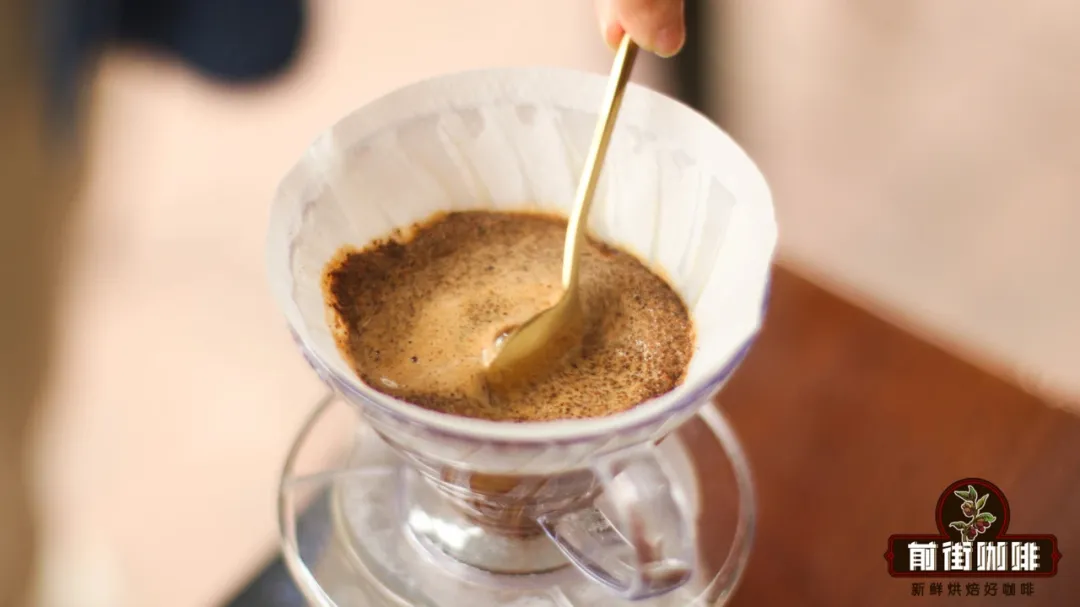
The brewing method used this time is the agitation method, and the extraction parameters are as follows: Dose: 15g Coffee-to-water ratio: 1:8 Brewing temperature: 93°C Grind size: 75%~80% passing a No. 20 sieve, fine granulated sugar grind Dripper: V60 The pouring for this brew is divided into 2 stages in total, and after each stage of pouring we will use agitation once. So first, we use 3 times the coffee dose in water to wet the coffee grounds for blooming. Since we are going to agitate, the amount of water poured during blooming should be a bit more than usual.
After pouring the water, we can take out the tool and stir! About ten circles or so is enough. Just note that when stirring, try not to stir the coffee grounds clinging to the wall of the dripper, otherwise it is very easy to turn the fines to the bottom and clog the filter paper.

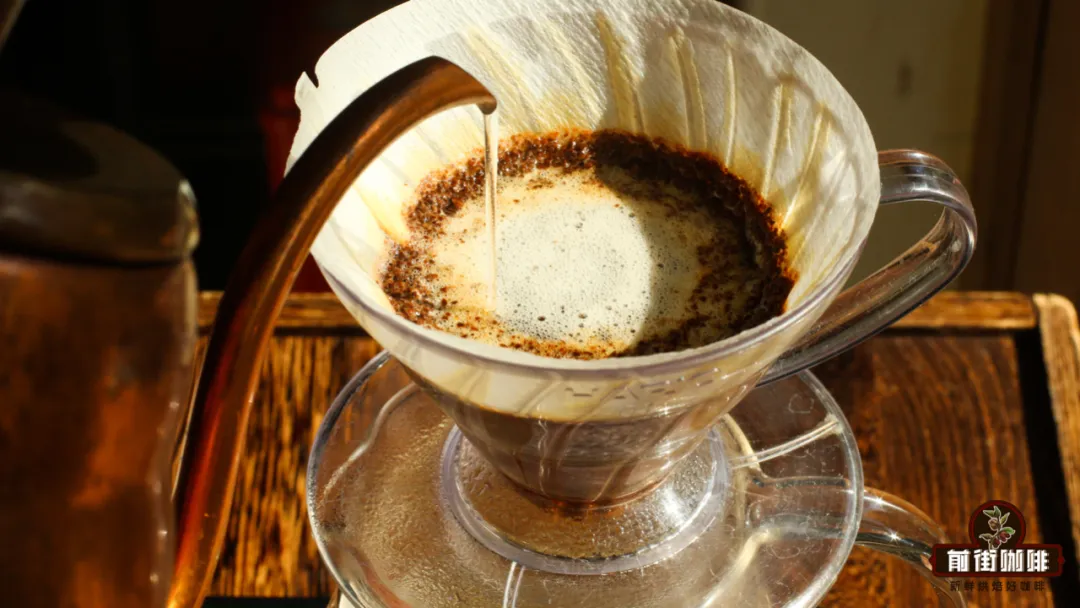
After stirring is complete, the time is about 30 seconds, so at this point we can pour all the remaining water in one go. Pour with a strong stream and in large circles. Immediately after pouring, proceed to agitation. Stir 10~15 circles, then all you need to do is wait for the coffee liquid in the dripper to finish dripping through, and the brew is complete~
Front Street Kenya Small Tomato brewed this way has an extremely full fruity body, with very rich flavors of small tomato and smoked plum, a relatively high brown sugar sweetness, and an overall full and smooth mouthfeel, just like a glass of chilled freshly squeezed juice. It is very delicious.
And that is all for this Front Street share! The agitation method is still very interesting. Besides the method shared by Front Street, there are many other agitation techniques. You can try experimenting at home yourself—it really is quite good~
- END -
The above content is compiled by CoffeeHunters, a coffee news website.


