







Why Tea Aromas and Floral Notes Go Together in Coffee
Many coffee enthusiasts notice that when a cup presents tea-like aromas such as black tea or green tea, floral notes often appear at the same time. This is no coincidence. Tea and floral aromas share substantial overlap at the molecular level. Starting from the new flavor wheel shared by Front Street Coffee, this article combines a scientific analysis of aromatic substances in tea leaves to explain why black tea is classified under the floral category.
We further sort out common floral compounds in green tea, black tea, and oolong tea, such as cis-methyl jasmonate, beta-ionone, beta-damascenone, and nerolidol. Once you understand this pattern, it can become a useful tip for capturing coffee flavors. At the end, Front Street Coffee will recommend several coffee beans in which tea and floral aromas are easy to taste, including Boquete Geisha, Yirgacheffe Gutingting, and Colombia Walk Geisha.
Many coffee enthusiasts notice an interesting phenomenon during tasting: when a cup of coffee presents tea-like aromas such as black tea or green tea, floral notes can often be captured at the same time. This is no coincidence—tea aromas and floral aromas share substantial overlap at the molecular level. This article starts from the new version of the flavor wheel shared by Front Street Coffee, combines it with a scientific analysis of aromatic substances in tea leaves, explains why black tea is classified under the "floral" category, and further sorts out the common floral compounds in green tea, black tea, and oolong tea, such as cis-methyl jasmonate, β-ionone, β-damascenone, and nerolidol. Once you understand this pattern, it can also become a useful tip for capturing coffee flavors. At the end, Front Street Coffee will recommend several coffee beans in which tea and floral aromas are easy to taste, including Boquete Geisha, Yirgacheffe Gutingting, and Colombia Walk Geisha, and explain the influence of origin, altitude, processing method, and roast level on flavor expression.
For example, the flavor of Front Street Coffee Boquete Geisha is jasmine, citrus, and oolong tea; the flavor of Front Street Coffee Yirgacheffe Gutingting is white flowers, lemon, and green tea; the flavor of Front Street Coffee Ethiopia Huakui is citrus, strawberry, orange blossom, and black tea...
It can be seen that whether black tea aromas or green tea aromas appear in coffee, floral flavors will also be present. So he was very curious: "Why is it that when tea aromas appear in coffee, floral aromas always accompany them?"
Why is it that when tea aromas appear in coffee, floral aromas always accompany them?
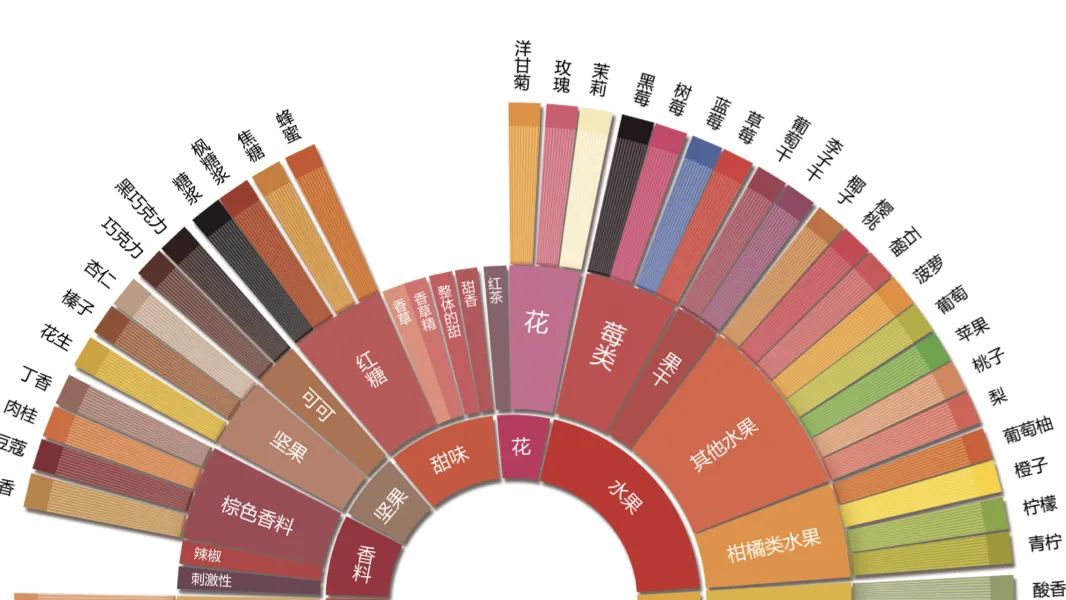
In fact, we can catch a glimpse of some clues to this phenomenon in the flavor wheel! A couple of days ago, Front Street Coffee shared the "usage" of the new version of the flavor wheel. If everyone has looked carefully at the flavor wheel, it should not be difficult to discover that black tea is classified in the "floral" category in the coffee flavor wheel.
What does this show? It shows that tea aromas are actually a type very close to floral aromas. And that is indeed the case! In fact, it is not only coffee—even the real tea we drink in daily life can often reveal floral characteristics. The reason is that some of the aroma molecules in tea aromas and floral aromas are the same.
Tea leaves also contain a great many aromatic substances, and these are the main source of tea aroma. Among this group of aromatic substances, quite a few are components identical to those in floral aromas. For example, a substance called "linalool" itself carries a fresh, sweet floral scent, and this substance is present in very high amounts in the tender buds of tea leaves. This is also why many teas are more preferably made from tender buds.

Like coffee, different tea-processing techniques also affect the aromatic substances in the tea itself. For example, in green tea, relatively common floral substances include β-ionone and cis-methyl jasmonate; in black tea, relatively common floral compounds include β-ionone, β-damascenone, cis-methyl jasmonate, and nerolidol; in oolong tea, relatively common floral compounds include nerolidol, geranylacetone, and cis-methyl jasmonate...
The main aroma characteristic of cis-methyl jasmonate is jasmine; the main aroma characteristics of β-ionone include violet; β-damascenone is one of the main components of rose aroma...
In summary, we can know that tea aromas and floral aromas share some identical components, which is why we can taste floral notes in tea. This is also the main reason why when tea aromas are present in coffee, floral aromas can often be captured as well.
Conversely, this can also serve as a useful tip for capturing coffee flavors. When we taste a certain tea aroma in coffee, we might as well feel more deeply and see whether we can also taste elegant floral notes from it. For example, when we taste green tea aromas in coffee, we can try to capture jasmine and violet; when we taste black tea aromas, we can try to capture rose, violet, and orange blossom; when we taste oolong tea, we can try to capture orange blossom, rose, and magnolia...
If you want to ask in which coffees these two aromas are easy to taste, Front Street Coffee would first recommend washed coffee beans from high altitudes in Ethiopia and Central and South America. For example, the Front Street Panama Boquete Geisha, Front Street Yirgacheffe Gutingting mentioned at the beginning by Front Street, or the newly launched Front Street Colombia Walk Geisha, all meet the above conditions, and you can buy them all at Front Street Coffee's Tmall and Taobao flagship stores.
The flavor characteristics of these origins are mainly floral and fruity. High altitude allows coffee beans to accumulate more substances and develop superior flavors, while washed processing makes the flavor expression of the coffee beans cleaner. Combined with medium-light roasting, the flavors displayed by the coffee will be clear and rich, and very easy to capture. For example, in Front Street Yirgacheffe Gutingting, we can taste very obvious jasmine, fresh lemon, the sweetness of honey, and the aroma of oolong tea—very nice~
- END -
The above content is compiled by CoffeeHunters, a coffee news website.


