







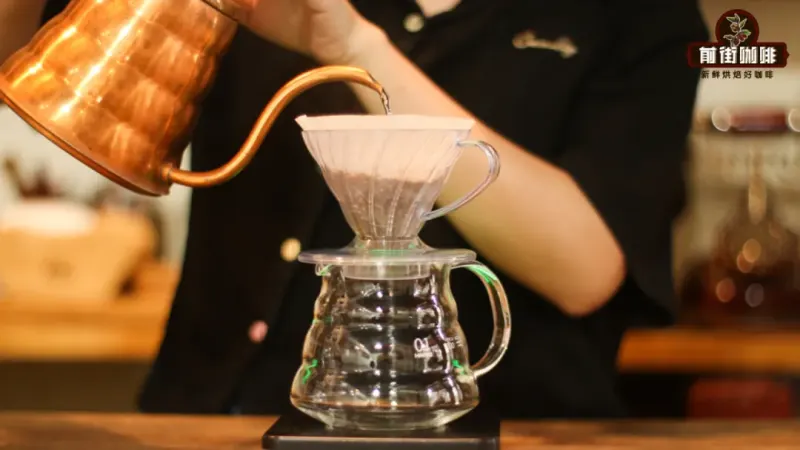
How to Calibrate Grind Size, Water Temperature, and Ratio for Pour-Over Coffee
Water temperature, water volume, grind size, and time are the four factors that govern coffee extraction, and grind size is the one variable that cannot be confirmed by eye. This guide explains how to calibrate your setting with a No. 20 sieve, flow rate, and taste feedback, so you can tell whether the grounds are too fine or too coarse before the flavor goes off balance.
The article compiles the three grind settings Front Street Coffee uses for light-roast, anaerobic, and dark-roast beans, along with each setting's sieve passage rate, water temperature, and coffee-to-water ratio. It also covers adjustments for iced pour-over and notes that pouring technique matters less than parameters, as long as the water saturates the grounds evenly.
When brewing pour-over coffee, water temperature, water volume, grind size, and time are the four key factors determining extraction. Among them, grind size is often the most easily misjudged because it cannot be directly observed—too fine or too coarse will both throw the flavor off balance. This article starts with methods for judging grind size, explains how to calibrate it using a No. 20 sieve, flow rate, and taste feedback, and compiles the three grind settings Front Street Coffee uses for light-roast, anaerobic, and dark-roast beans, including their respective sieve passage rates, water temperatures, and coffee-to-water ratios. It also offers grind adjustment advice for iced pour-over, helping enthusiasts build a stable, reusable brewing framework.
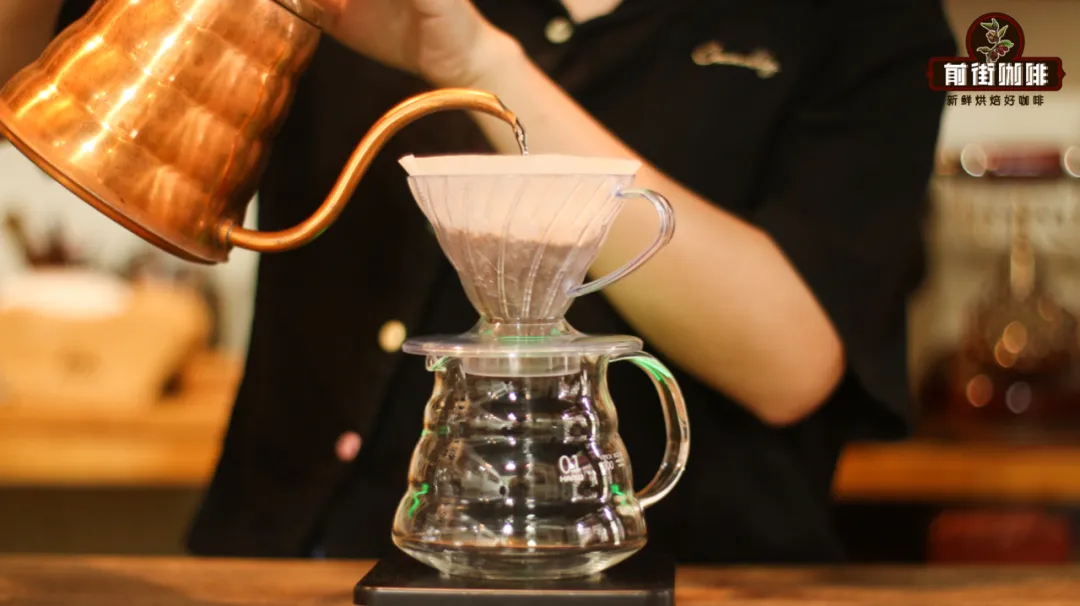
Actually, just as Front Street said in the article discussing "fake pour-over," pouring technique does have some impact, but only to a limited degree. As long as hot water evenly saturates all the coffee grounds and the parameters are chosen correctly, it's basically hard to brew bad coffee. The problem usually lies in the parameters themselves not being chosen correctly. Water temperature, water volume, grind size, and time are the four core variables governing coffee extraction. The root cause of many people failing to brew good flavor is most likely incorrect grind size. Because among all extraction parameters, grind size is the only one that cannot be directly confirmed by eye, so people often think they've chosen correctly when in fact it's too fine or too coarse, ultimately leading to an unsatisfactory cup.
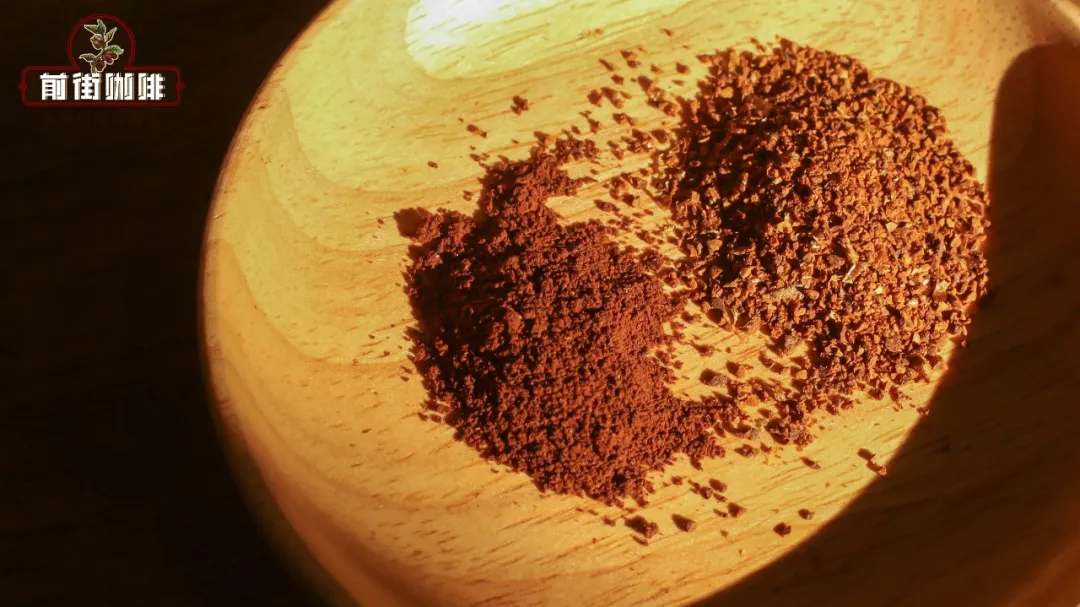
Since grind size is invisible, we usually can only measure it roughly with tools or make a rough judgment based on the brewing performance it produces. In terms of tools, the No. 20 sieve is a common choice; the grind parameters given in Front Street articles were measured with it. If judging from brewing performance, you can refer to two "reference points": time and taste. Generally speaking, the finer the grind, the slower the water flows through—the gaps between particles shrink, reducing the space available for hot water to pass, so under the same conditions the flow is slower and extraction time is longer; the reverse is also true.
Taste is more intuitive to judge. As mentioned earlier, grind coarseness affects extraction time, and extraction time equals the duration of contact between hot water and coffee grounds. The longer the contact, the higher the extraction efficiency and the more substances are dissolved out; the opposite is also true. In addition, grind coarseness also determines the surface area of coffee grounds exposed to water: the larger the surface area, the faster flavor compounds dissolve; the smaller, the slower. Combining these two points makes it clear: the finer the grind, the longer the extraction time and the larger the water-contact area, so the higher the extraction efficiency, and vice versa. Once you grasp this rule, you can use taste to deduce whether the current grind is suitable for a given bean.
The specific operation is simple. When brewing an unfamiliar bean, first choose a set of extraction parameters you consider reasonable and brew. If it tastes too bitter or too sour, it may be caused by over-extraction or under-extraction. At this point, keep all other parameters unchanged and adjust only the grind size: if bitter and over-extracted, make the grind coarser; if sharply sour and under-extracted, make the grind finer. Adjust in small increments repeatedly until the taste satisfies you.
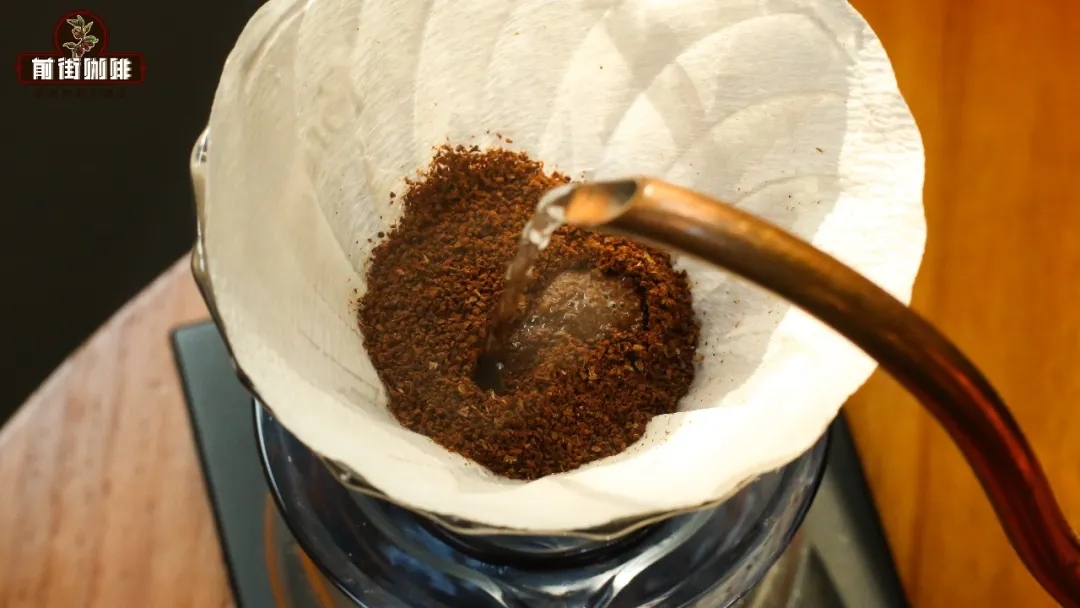
Judging grind by time is also feasible, but this method is more often used in espresso making. For pour-over, factors affecting time besides grind include pouring method, dripper shape, coffee bean density, etc., so Front Street recommends: if you don't have a sieve, it's best to judge whether your pour-over grind is acceptable by taste. Also, there's no need to find a separate optimal grind for every single bean—that's both troublesome and largely unnecessary (you can do it, but for Front Street it's not necessary). Although Front Street's bean list has dozens of beans, the grinds actually used fall into just three settings: dark-roast setting, light-roast setting, and anaerobic setting.
When brewing light-roasted, higher-density beans whose flavor compounds are hard to dissolve, such as Front Street Ethiopia·Hua Kui, Panama Boquete·Geisha, and Kenya·Little Tomato, Front Street grinds slightly finer, to fine granulated sugar coarseness, with a No. 20 sieve passage rate of 75%–80%, paired with a water temperature of 90–93°C and a 1:15 coffee-to-water ratio, with total time controlled at 2 minutes to 2 minutes 30 seconds.
If brewing heavily anaerobic-processed, looser-textured, faster-draining beans such as Front Street Finca La Divisa·Sidra/Ombligon and 90+·Eleta Geisha, Front Street grinds one notch finer than the light-roast setting, also fine granulated sugar coarseness, with a No. 20 sieve passage rate of about 80%, keeping other parameters the same. The purpose is to extend extraction time so the coffee is fully extracted.
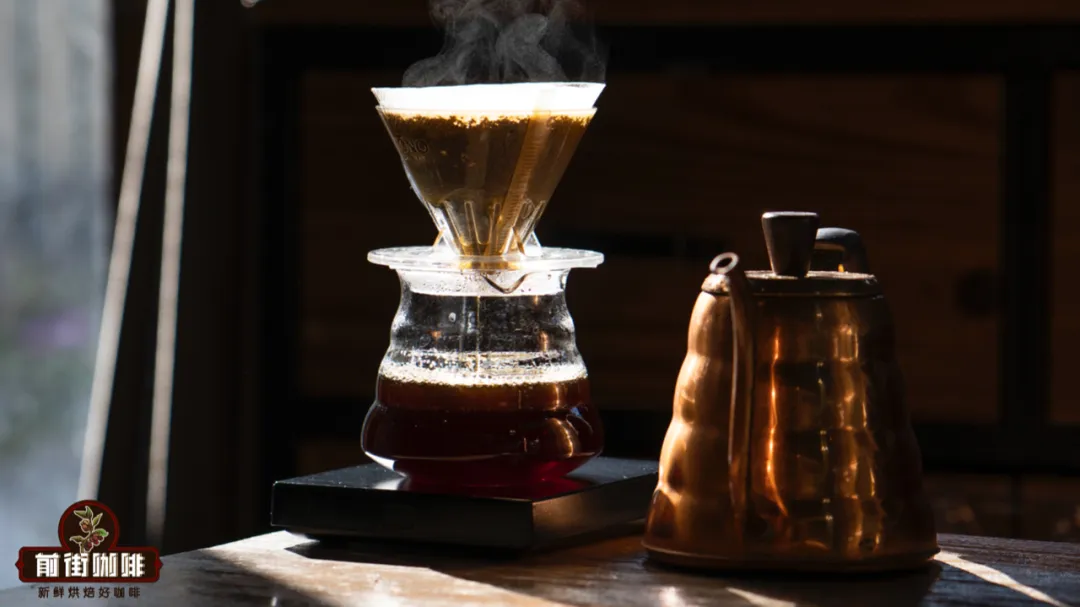
If brewing dark-roast beans such as Front Street Indonesia·Golden Mandheling and Brazil·Queen's Estate, Front Street switches to coarse granulated sugar coarseness, with a No. 20 sieve passage rate of 70%–75%. Coarsening is to reduce extraction efficiency and avoid releasing a large amount of bitter compounds. Water temperature is lowered accordingly to 86°C–89°C, with other parameters unchanged.
If making iced pour-over, grind 1–2 notches finer than the corresponding hot-brew setting, mainly to improve extraction efficiency and offset the impact of reduced water volume.
- END -
The above content is compiled by CoffeeHunters, a coffee news website.


