







How does bypass water thin out coffee brewing?
Weak, thin pour-over flavor often comes from too much bypass water: water that never touches the coffee grounds and flows straight into the server, lowering the drink's concentration. Two habits cause most of it, rinsing grounds off the dripper wall and forcibly raising the coffee bed, and drippers with dense diversion ribs such as V60 or Origami make both worse.
Drippers without a bypass design, like Kono or Infinite, limit the loss. Bean density also matters: high-density coffee beans sit differently in the bed, so the same pour can push more water around the grounds rather than through them. Front Street Coffee's approach adjusts the pour to keep water in contact with the coffee and reduce dilution.
In the process of pour-over coffee brewing, many enthusiasts encounter the problem of weak coffee flavor but cannot find a clear reason. In fact, this is likely related to too much bypass water. Bypass water refers to water that does not participate in extraction and directly mixes into the coffee liquid, diluting the coffee concentration and making the flavor thin. This article will systematically analyze the two common causes of bypass water—the habit of rinsing the edge of the dripper and forcibly raising the coffee bed—and, combined with different dripper types and differences in coffee bean density, explain why certain brewing techniques backfire. At the same time, the article will share Front Street Coffee's strategies for brewing high-density coffee beans, helping everyone reduce bypass water interference and brew a full-flavored cup of good coffee.
When coffee tastes weak and flavorless, the culprit is often too much bypass water. If there is excessive bypass water during brewing, the coffee concentration will be forcibly lowered, so even if similar brewing parameters are used, the final cup may still taste thin. So what is bypass water? Simply put, it is water that does not participate in extraction and directly mixes into the coffee liquid. The production of bypass water during brewing usually comes down to the following two reasons.
1. The habit of using water to rinse coffee grounds clinging to the edge of the dripper
Many people new to pour-over coffee have this motion, and Front Street Coffee is no exception: when pouring water, they habitually use the water to wash down the coffee grounds stuck to the edge of the dripper, hoping these grounds can also be stirred by the hot water and participate in extraction. Because if you do not deliberately rinse them, the coffee grounds at the edge often have difficulty contacting the hot water.
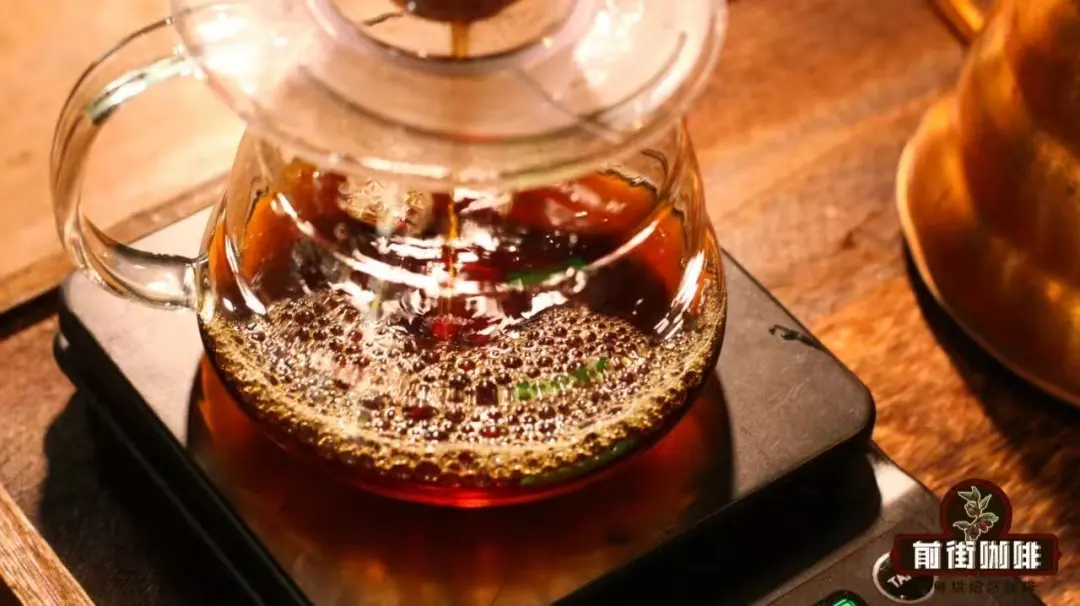
If you are using a dripper without bypass design, such as Kono or Infinite, the problem is not too serious. But if it is a dripper with densely arranged diversion ribs, such as V60 or Origami, hot water poured onto the wall of the dripper can easily flow away along the gaps formed by the ribs, falling into the server without extraction, thus affecting the coffee's concentration and extraction effect. Therefore, if you are also using a dripper with many diversion ribs such as V60 or Origami, Front Street Coffee suggests that during brewing you try not to pour water onto the wall of the dripper, to avoid excessive bypass water ruining the coffee's taste and mouthfeel.
2. Forcibly raising the coffee bed
Raising the coffee bed is a brewing technique that can make coffee more layered, and Front Street Coffee has also shared it in detail in past articles (for details, please refer to the "Portal"). Simply put, by increasing the pouring flow, the coffee grounds are made to spread across the dripper as much as possible, so during brewing the amount of hot water contacting coffee grounds in different positions varies, and the extraction rate therefore differs, ultimately allowing the coffee to present a richer sense of layering.
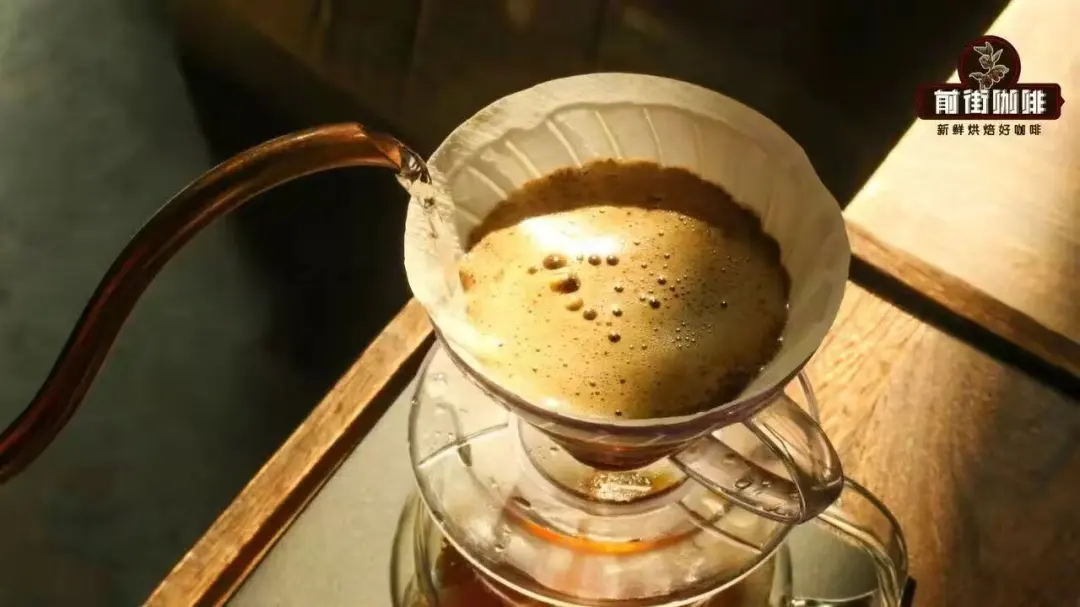
However, this technique does not apply to all coffee beans. For example, some lightly roasted, high-density beans are not very suitable, for a simple reason—they cannot be lifted! Most coffee grounds can rise with the water level because their density is low, allowing them to float, so when the water level rises they are naturally lifted. But high-density coffee grounds are relatively heavy, and even if the water level rises, they still sink to the bottom of the dripper.
If you still forcibly raise the coffee bed when brewing such high-density coffee grounds, then usually only the water level rises, while the coffee bed itself does not move at all. At this time, if you happen to be using a dripper with many diversion ribs, such as V60, a large amount of hot water will "slip away" from the edge of the dripper not covered by coffee grounds, forming bypass water that falls into the server and affecting the coffee's concentration and extraction. So when brewing high-density coffee grounds, try not to pour too much hot water at once, to avoid a large amount of bypass water.
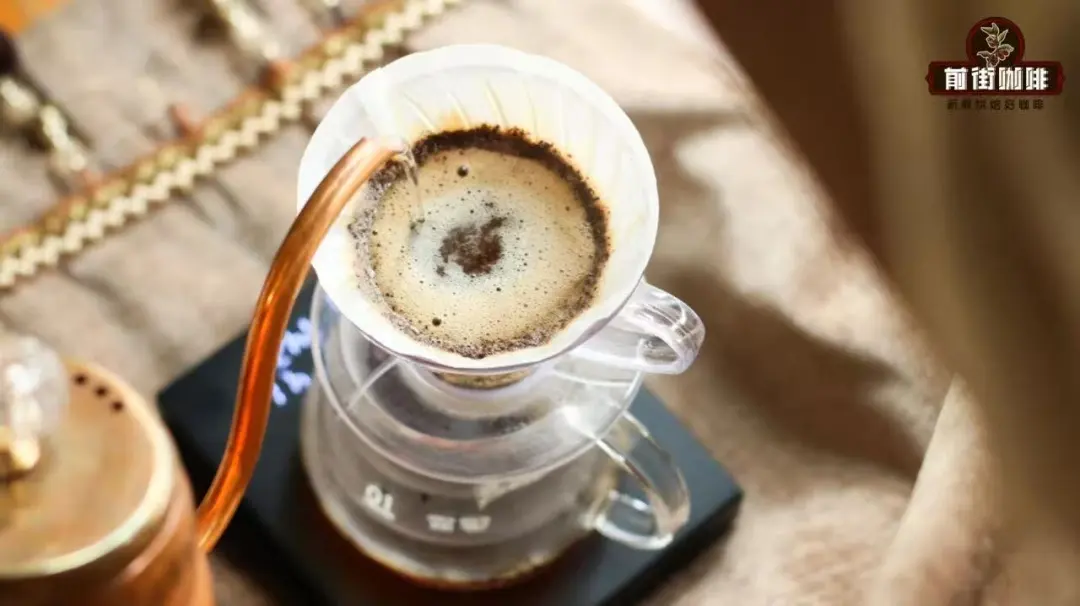
Some people may worry that pouring a small amount of water will prolong the extraction time and thus cause over-extraction. But in fact, over-extraction is not that easy to happen. Because high-density beans are inherently not easy to extract, when brewing high-density coffee beans we can actually be bolder. Taking Front Street Coffee as an example, when brewing high-density beans, we usually adopt a longer extraction time and more staged pouring than usual. For example, Front Street Yirgacheffe Gedeb Dingding on the Front Street coffee list is a high-density coffee bean often used as an example.
In yesterday's content shared by Front Street Coffee, it was also mentioned that even when the brewing time reached two and a half minutes, this bean did not show over-extraction. It not only has a light yet solid mouthfeel, but its flavor is also quite pleasant, with the fresh notes of jasmine, lemon, and green tea. It is a coffee bean that is very resistant to extraction and very suitable for pour-over and cold brew.
In summary, as long as you try to prevent hot water from flowing away from the edge of the dripper not covered by coffee grounds during brewing, you can effectively reduce bypass water and lower its negative impact on coffee, thereby brewing a delicious cup of coffee.
- END -
The above content is compiled by CoffeeHunters, a coffee news website.


