







When Does Coffee Extraction Need Adjusting?
Espresso extraction parameters cannot be judged by dose, yield, and time alone. A shot can taste balanced at 20g in, 1:2 ratio, and 30 seconds, while the next day the same result needs 19.7g, 38ml, and 32 seconds, because weather and bean condition shift daily. Flow behavior and taste decide whether coffee extraction is normal.
Signs that coffee extraction needs adjustment include an unstable liquid stream, channeling, or a flow that runs too fast or too slow, plus sourness from under-extraction and bitterness from over-extraction. For a coffee enthusiast starting out, the practical fix is small changes to dose, yield, or grind size, then tasting again rather than trusting the numbers alone.
Many friends who are just getting into espresso often wonder: when exactly should you adjust extraction parameters, and how should you do it? In fact, judging whether a shot of espresso is normal can't rely solely on numbers like dose, yield, and time—you also need to factor in the flow behavior and the final taste for a comprehensive evaluation. Drawing on Front Street Coffee's hands-on experience, this article explains that parameters fluctuate daily due to factors like weather and bean condition, and uses a specific case with Front Street Coffee's classic blend to demonstrate how to judge under-extraction or over-extraction by observing flow rate, the stability of the liquid stream, and tasting for sourness and bitterness—and gives corresponding adjustment directions, including fine-tuning the dose, yield, or grind size.
Some coffee enthusiasts who are just starting out aren't quite sure which situations actually call for adjusting coffee extraction parameters. Just yesterday, a friend asked Front Street Coffee about this while buying beans. So today, Front Street Coffee will talk about which phenomena indicate that espresso extraction parameters need adjusting, and exactly how to adjust them.
How do you judge whether coffee extraction is normal?
It's actually not hard to understand—"abnormal" simply means some condition has arisen that could affect the coffee's taste. Many friends might mention unstable parameters.
That is indeed a good reference point. But first you need to understand that even if today's extraction parameters are exactly the same as yesterday's, the coffee's taste isn't guaranteed to be consistent. As Front Street Coffee has said before, coffee extraction is influenced by many factors, including weather and the condition of the beans themselves, so the parameters used each day will vary to some degree.
For example, when Front Street Coffee uses the Front Street Classic Blend from its bean list to extract espresso, yesterday's parameters were 20g dose, 1:2 brew ratio, and 30 seconds extraction time. The resulting espresso tasted balanced with prominent flavors, showing chocolate, caramel, and nut notes, with a rich, full body.

Today, however, the parameters used to achieve the same result were 19.7g dose, 38ml yield, and 32 seconds extraction time. The dose, yield, and time all changed. So parameters can't fully serve as an indicator of whether coffee extraction is normal—ultimately you still have to judge based on the coffee's taste.
That said, they can still serve as a preliminary reference. If today's parameters are not very different from yesterday's, you can directly judge by taste whether adjustment is needed. But if the extraction parameters differ hugely—for example, yesterday 20g dose produced 40ml yield in 30 seconds, while today it took only 24 seconds with a very fast flow—then you can suspect something is wrong with the parameters.
Beyond that, the flow behavior during extraction is also worth observing. There are two things to pay attention to. The first is the flow rate mentioned earlier. The length of extraction time actually reflects the flow rate—too fast a flow shortens extraction time, too slow a flow lengthens it. Too short an extraction time tends to cause under-extraction, while too long tends to cause over-extraction.
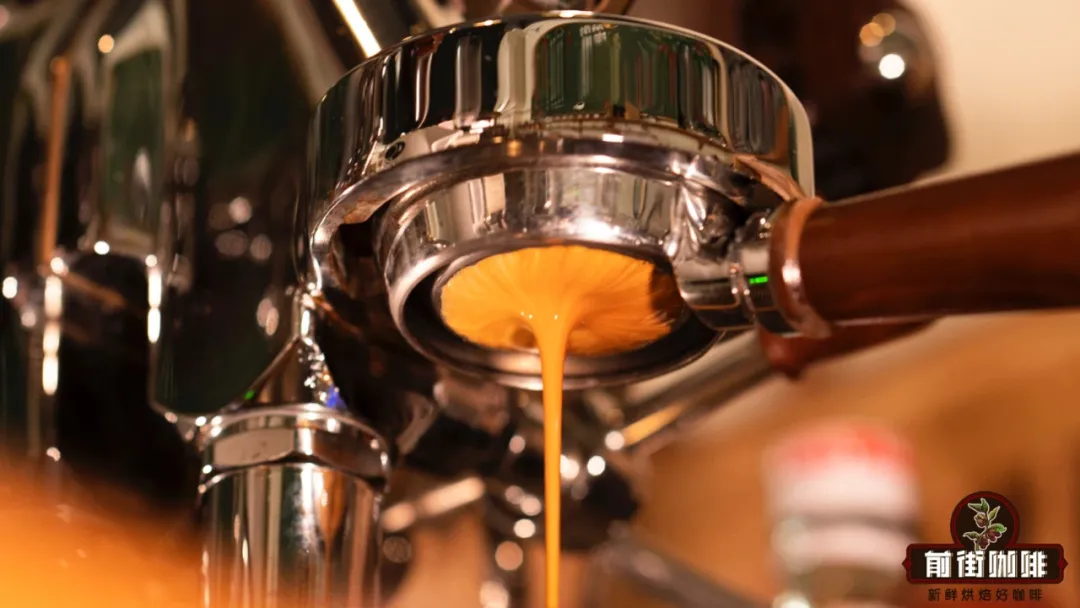
If you're using a bottomless portafilter, you can also observe whether the flow is stable. During extraction, does the liquid stream remain vertical the whole time, or does it occasionally become unstable and sputter?
If it's the former and the coffee tastes off, then it's most likely a parameter problem. But if it's the latter and the coffee tastes off, then besides parameter issues, you also need to consider factors like your puck prep technique and whether the coffee grounds are clumping.
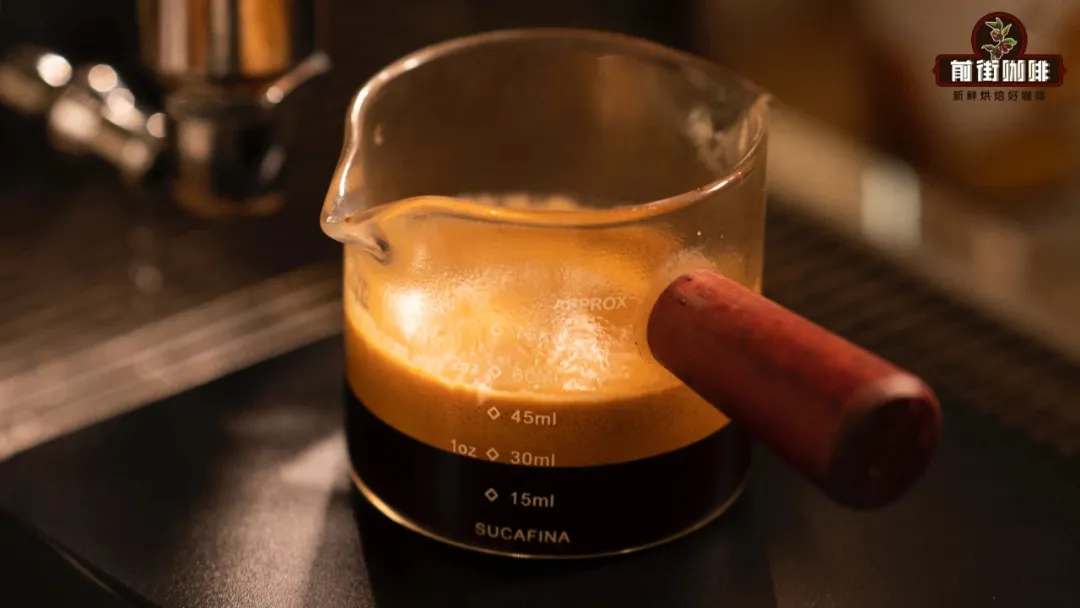
But as mentioned earlier, these observations during extraction and the parameters themselves can only serve as references—ultimately you still have to judge by tasting the coffee whether extraction is normal and whether adjustment is needed. Take Front Street Coffee's Front Street Classic Blend as an example again: under normal extraction, the espresso extracted with the Front Street Classic Blend tastes balanced, with prominent flavors and a rich, full body.
But if the extracted coffee tastes sharply sour and feels rather thin, it's very likely under-extracted. In that case, you need to decide how to adjust based on the degree of under-extraction.
For instance, if it's only slightly sour with a slightly thin body, you can increase the extraction yield by adding a small amount of coffee (e.g., 0.4g, 0.6g) , or by extracting a little more liquid (e.g., 2ml, 4ml) . But if it's severely under-extracted—with very sharp acidity and a very thin body—then the extraction time is probably also quite fast. In that case, you need to improve it by making the grind finer.
Over-extraction works the same way. If the extracted coffee tastes bitter with off-flavors, it could be over-extracted. If it's only slightly bitter or has just a hint of off-flavors, you can improve it by reducing the yield a little. But if the coffee tastes very bitter with strong off-flavors, it's best to improve it by making the grind coarser.
That's everything from today's Front Street Coffee sharing. To put it simply: observe the time and flow behavior during extraction, then combine that with the coffee's taste to judge whether parameters need adjusting and how to adjust them. Very simple~
- END -
The above content is compiled by CoffeeHunters, a coffee news website.


