







How Does the Roasting Process Affect Caffeine?
Many coffee drinkers assume dark roast coffee packs more caffeine because it tastes bitter. That belief is common, but it is not accurate. Bitterness in coffee comes mostly from compounds created during the roasting process, not from caffeine alone. Caffeine is a heat-resistant alkaloid that stays largely intact whether beans are roasted light or dark, so the caffeine inside each bean changes very little.
What does change is bean weight and volume. Dark roasting drives off moisture and breaks down oils, making beans lighter. If you measure by scoop rather than by weight, you may end up using more dark roast beans for the same volume, which can raise the total caffeine in your cup. For a coffee enthusiast watching caffeine intake, weighing beans is the more reliable method.
Many people believe that dark roast coffee tastes more bitter, and therefore assume it contains more caffeine. But is that really true? The bitterness in coffee doesn't come solely from caffeine—other compounds produced during roasting are actually the main contributors to bitterness. From Front Street's perspective, this article combines research data from the Association for Science and Information on Coffee to break down the relationship between roast level and caffeine content in detail. It further analyzes why, after brewing, dark roast coffee can sometimes end up with a higher total caffeine content than light roast coffee, and finally offers practical low-caffeine coffee recommendations for those who are sensitive to caffeine.
Front Street has discussed this topic with quite a few coffee enthusiasts before, and the general consensus is that dark roast coffee contains more caffeine. The reasoning is straightforward: caffeine itself is bitter, so if dark roast coffee tastes that bitter, it must be loaded with caffeine. But is that actually the case? Does dark roast coffee's stronger bitterness really mean it has a higher caffeine content?
Logically speaking, this understanding is actually off the mark, and quite a few factors are involved. Although dark roast coffee is indeed more bitter, its caffeine content isn't necessarily higher than that of light roast coffee—they may be about the same, or dark roast may even be lower. Let's start with the matter of taste.
"The flavor of a cup of coffee is determined by the various components in the coffee"—that's true enough, but not all of coffee's bitterness comes from caffeine. In fact, caffeine accounts for only a small proportion of coffee's bitterness, roughly 10% to 30%. The vast majority of the bitterness comes from bitter compounds that are broken down or newly formed during the roasting process.
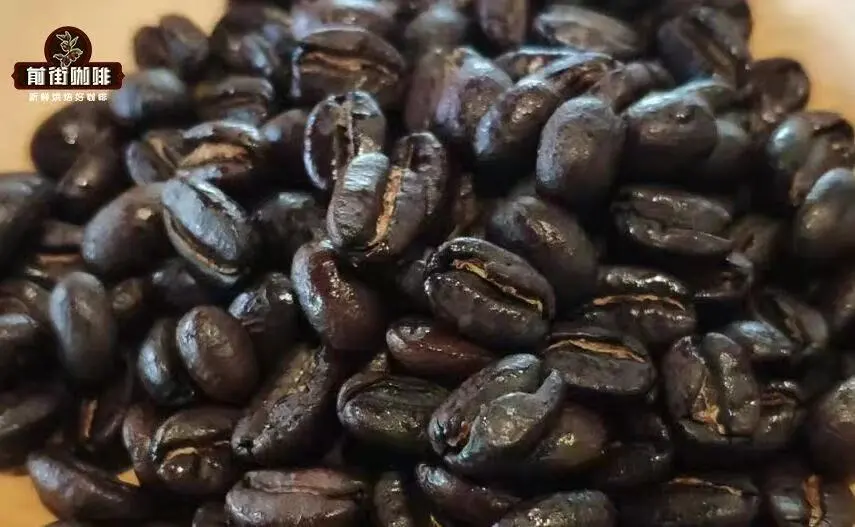
During roasting, coffee beans undergo the Maillard reaction and caramelization in the roaster. Many components inside the bean are broken down in this process, while bitter substances are simultaneously generated—things like caramel, smoky roasted flavors, and various bitter compounds. The darker the roast and the more complete the reactions, the more roasted-bitter and bitter compounds are produced, and the more bitter the coffee tastes.
Caffeine, on the other hand, is a heat-resistant alkaloid that barely decomposes or volatilizes under normal roasting conditions. So whether it's dark roast or light roast, the caffeine content inside a single coffee bean won't fluctuate much. Of course, if you roast the beans extremely, extremely dark, the caffeine content may even decrease.
A report from the Association for Science and Information on Coffee recorded exactly this kind of data. They measured light, medium, and dark roasted Arabica coffee beans separately, and found that caffeine as a percentage of bean weight was 1.37%, 1.31%, and 1.31% respectively. As you can see, light roasted beans actually had a slightly higher caffeine content than dark roasted ones, though the difference was only 0.06%.
The truly decisive factor in determining a coffee bean's caffeine content, as Front Street has mentioned repeatedly, mainly comes down to the variety of the coffee bean. For example, Robusta has roughly twice the caffeine content of Arabica, while naturally low-caffeine varieties have less than half the caffeine of regular Arabica.
Taking all this together, a coffee bean's caffeine content does not increase as the roast level gets darker. The reason dark roast coffee is bitter is mainly due to other substances produced during roasting—it has little to do with caffeine.
However, if we set aside the taste association and rephrase the question as "Does dark roast coffee brewed yield a higher total caffeine content than light roast coffee?", then the answer is not necessarily.
Because the first question asks whether the caffeine content of coffee beans increases after roasting, while the second question simply asks how much total caffeine ends up in the brewed coffee liquid—the answers are naturally different.
The reason the answer to the second question is uncertain is that two characteristics of dark roast coffee beans come into play.
Coffee beans continuously lose moisture during roasting, which has a professional term in the roasting world: "weight loss." The darker the roast, the higher the weight loss rate, the less moisture inside the bean, and the lighter it weighs when you put it on a scale.
If you're in the habit of measuring coffee beans for brewing by weight, then when there's a significant difference in roast level, taking 15g as an example, the number of dark roast beans you weigh out may be slightly more than light roast beans.
But that's only a tiny bit more, and only if the variety is the same. What really makes it possible for dark roast coffee to exceed light roast coffee in caffeine content is actually extraction.
As everyone knows, under traditional roasting, coffee beans expand in volume as the roast level deepens, and the bean structure becomes looser, making the internal substances easier to extract. The darker the roast, the looser the bean, and the more easily soluble substances are released—this is also why dark roast coffee often goes wrong during brewing. And among these soluble substances is caffeine.
If we use a relatively high extraction efficiency, then assuming the coffee beans are the same variety (different varieties aren't comparable), the final dark roast coffee can indeed end up with a higher caffeine content than light roast coffee. This is the main reason dark roast coffee's caffeine content can potentially be higher than light roast.
So if you want to drink dark roast coffee but are worried about consuming too much caffeine, Front Street would recommend choosing decaf coffee. The decaf coffee in Front Street's flagship store uses the Swiss Water Process, which removes a large amount of caffeine from the beans without significantly affecting their flavor.
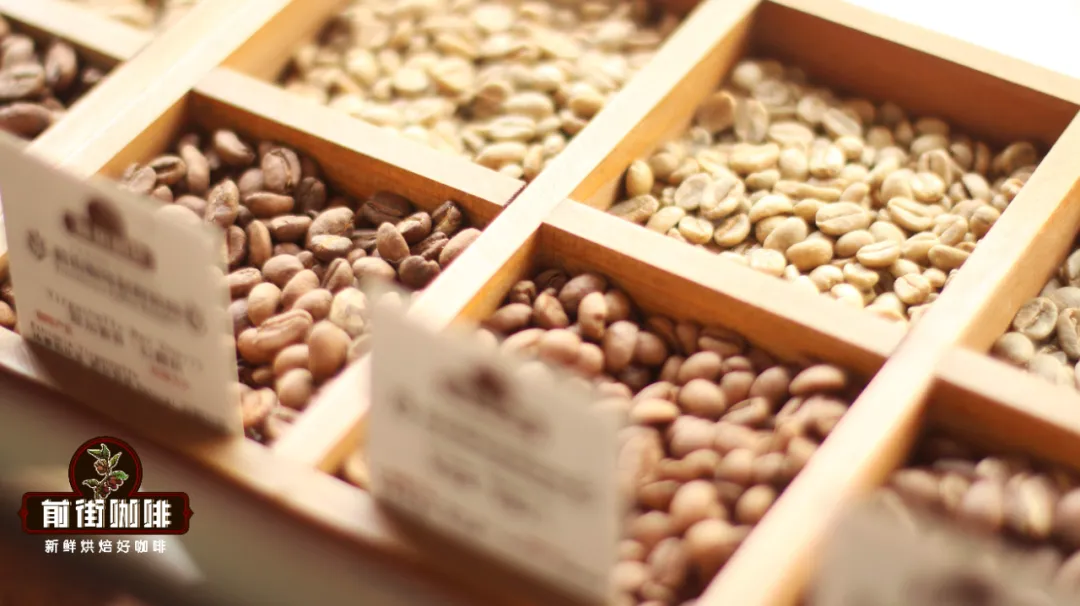
In addition, to ensure everyone can enjoy a rich, full-bodied coffee flavor, Front Street specifically chose a dark roast profile to produce this decaf coffee. The coffee made from it has the chocolate, nutty, and caramel aromas of traditional dark roast coffee, without the excessive caffeine that keeps you up at night—making it perfect for caffeine-sensitive friends to use for pour-over and espresso.
- END -
The above content is compiled by CoffeeHunters, a coffee news website.


