








What Does Latte Coffee Meaning Have to Do With Ristretto Espresso?
A flat white and a latte both mix espresso with milk, but the base espresso differs. A flat white traditionally uses a ristretto, a short extraction with less liquid and higher concentration. Many people think pulling less liquid from a regular shot works, but that often causes under-extraction and a lack of sweetness. The goal is to balance concentration and extraction yield by adjusting grind size, not by simply stopping the shot early.
For standard espresso, a 1:2 ratio is common: 20g of coffee yields about 40ml of liquid. A ristretto uses the same dose but stops at around 30ml, resulting in a more concentrated, less extracted shot. This short extraction emphasizes sweetness and body while avoiding bitterness. Front Street Coffee's Italian blend works well for this style. The result is a flat white that is rich and smooth without harsh flavors.
Although flat white and latte both belong to the category of milk coffee, the approach to making their base espresso is completely different. Flat white uses Ristretto, a short-extraction espresso—that is, a concentrated version with high concentration and low extraction yield. Many enthusiasts mistakenly believe that simply pulling less liquid from a regular espresso shot will suffice, but in reality, this approach often leads to under-extraction and a lack of sweetness. Drawing on Front Street Coffee's hands-on experience, this article analyzes the correct extraction logic of Ristretto, focusing on how to balance concentration and extraction yield by adjusting grind size, and includes the specific parameters and flavor profile of Front Street Coffee's classic Italian blend to help you make a cup of flat white that is rich without being bitter.

However, Front Street Coffee has noticed that many people have some misunderstandings when making the espresso used for flat white. On the surface, the steps seem correct, but the actual result falls short of expectations. So before diving into the discussion, Front Street Coffee will first help clarify the espresso base for flat white, so that the rest will be easier to follow.
The essence of flat white is espresso mixed with an appropriate amount of milk, topped with a thin layer of milk foam. However, as Front Street Coffee just mentioned, the espresso base it relies on is not the everyday one, but the so-called "short extraction" espresso.
So what exactly is short extraction espresso? Simply put, it is an espresso with a smaller total liquid volume, higher concentration, and lower extraction yield. It has a dedicated Italian name—Ristretto.
Regular espresso pursues a relatively complete extraction process, because we want to obtain a full range of flavor layers from it. Therefore, more water is used during brewing to ensure that the flavor compounds in the coffee grounds are fully released. Taking Front Street Coffee's approach as an example, the powder-to-liquid ratio for standard espresso is set at 1:2. If 20g of coffee powder is weighed, the target liquid weight is approximately 40ml.
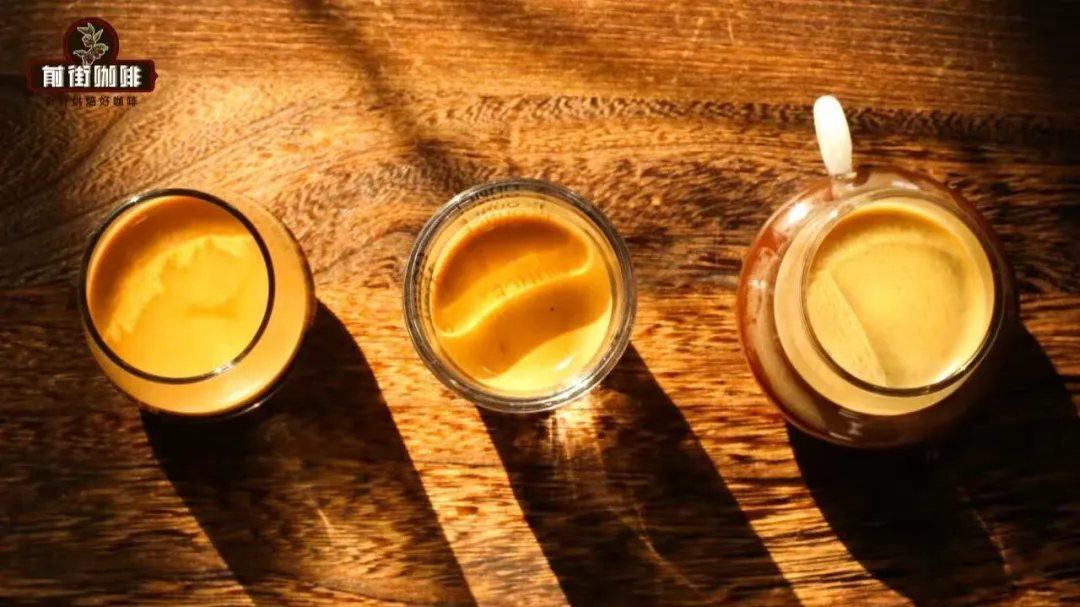
In contrast, Ristretto, as a representative of high concentration and low extraction, uses significantly less water. Taking Front Street Coffee's operation as an example, when using the same 20g of coffee powder, the final espresso liquid collected is only around 30ml. The reasoning behind this is consistent with the "high concentration, low extraction" logic that Front Street Coffee has discussed before—try to avoid excessive extraction of bitter compounds, so that the final product shows more prominent sweetness.
Many friends easily fall into a misconception: thinking that making Ristretto is simply about ending the extraction early on the original espresso parameters. But the reality is not that simple. Although it is indeed possible to cut a segment from a regular espresso by reducing the liquid weight to serve as a Ristretto, this brings a hidden risk—it may very well not be sweet. Especially when the coffee beans used are on the lighter roast side, this shortcut will also make the Ristretto too acidic, making it unfriendly on the palate.
Why does this happen? Because you have only changed the liquid weight while all other extraction conditions remain unchanged, the extraction efficiency naturally cannot keep up, and the sweet compounds in the coffee cannot be brought out in sufficient quantities. The result of a low extraction yield is that the flavor is dominated by acidity (for beans that are not roasted dark).
Taking one of Front Street Coffee's comparative experiments as an example: Front Street Coffee used the above method (adjusting only the liquid weight) to extract a Ristretto, while also extracting a normal espresso as a reference. Measured with a refractometer, this Ristretto had a concentration of 12.84% and an extraction yield of 19.96%; while the normal espresso had a concentration of 10.51% and an extraction yield of 21.78%. The data is clear at a glance—although the Ristretto's concentration went up, the extraction yield dropped significantly, so the flavor performance is naturally less than ideal.

If you want a Ristretto that is high in concentration, has a reasonable extraction yield, and is full of sweetness, it is best to adjust other parameters, with grind size being the first choice. There are not many variables that can be adjusted for espresso, and adjusting the grind size is the most cost-effective means. So how exactly should it be done?
The method is not complicated: make the grind finer so that the Ristretto's extraction time matches that of a regular espresso. After the grind becomes finer, the surface area of the coffee powder exposed to water increases, making it easier for flavor compounds to dissolve out. At the same time, the extraction time is also lengthened, allowing more thorough contact between water and coffee, so that hot water can deeply dissolve the flavor components. In this way, the Ristretto retains its high concentration while making up for the extraction yield, and both the taste and mouthfeel will be a notch above.
The beans Front Street Coffee uses for making flat white are Front Street Coffee's classic Italian blend. Although this bean is on the darker roast side, it has no unpleasant burnt bitterness at all. It has a full aroma, a soft and mellow mouthfeel, and produces rich crema, making it very suitable for making espresso-based drinks.
When using this bean to extract regular espresso, Front Street Coffee's parameters are: 20g powder, 30 seconds, 40ml yield. The resulting espresso tastes rich and balanced, with clearly distinguishable flavors of chocolate, nuts, and caramel. When switching to this bean for making Ristretto, the grind size needs to be adjusted two notches finer than the original, and the final extraction parameters are: 20g powder, 30 seconds, 30ml yield.
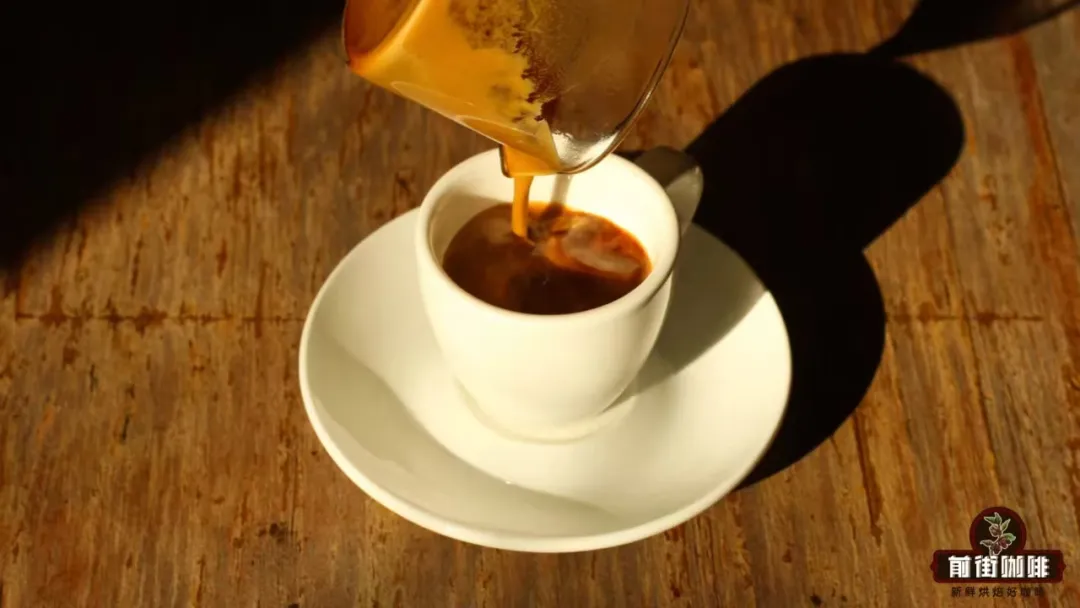
The Ristretto extracted this way reaches a concentration of 13.69% and an extraction yield of 21.28%. It has a prominent sweetness on the palate, with a complex aroma of hazelnut, chocolate, caramel, and toasted bread—rich and delicious.
When Front Street Coffee uses it to make flat white, the ratio of coffee to milk is set at 1:4, meaning 120ml of milk is added. At this point, a cup of flat white that is rich without being bitter is complete.
The flat white produced this way has an excellent flavor, and Front Street Coffee highly recommends everyone give it a try. Of course, flat white can also be made with regular espresso. Front Street Coffee is just sharing one approach here for your reference—there is no need to follow it rigidly. After all, if the single-cup output is not large, adjusting parameters specifically for flat white is still a bit costly.
- END -
The above content is compiled by CoffeeHunters, a coffee news website.


