








Judging Coffee Bean Freshness Through Brewing Clues
Whether coffee beans are fresh can be revealed during brewing. After roasting, beans accumulate carbon dioxide, which gradually escapes over time. The amount of carbon dioxide affects the blooming dome, the thickness of espresso crema, the water retention of the coffee bed, and the flow rate of extraction. It also leaves traces in the aroma performance. This article sorts out three practical methods for judging the freshness of coffee beans from the perspective of Front Street.
The article explains the influence of roasting degree, variety, and other factors on crema. It recommends Front Street Classic Blend, an espresso bean with rich crema and a fragrant flavor, to help you judge and choose more reliably. The first method is to look at the blooming dome and the thickness of espresso crema. For pour-over coffee, observe the degree to which the coffee bed rises during the blooming stage to infer freshness. For espresso, pay attention to the thickness of the crema layer after extraction. These phenomena reflect the amount of carbon dioxide stored in the beans.
Whether coffee beans are fresh or not can actually be revealed by many clues during the brewing process. After roasting, coffee beans accumulate carbon dioxide inside, which gradually escapes over time, and the amount of carbon dioxide directly affects the blooming dome, the thickness of espresso crema, the water retention of the coffee bed and the flow rate of extraction, and also leaves traces in the aroma performance. From the perspective of Front Street, this article sorts out three practical methods for judging the freshness of coffee beans, and explains the influence of roasting degree, variety and other factors on crema, while recommending Front Street Classic Blend, an espresso bean with rich crema and a fragrant flavor, to help you judge and choose more reliably.

I. Look at the blooming dome and the thickness of espresso crema
If you are making pour-over coffee, you can first observe the degree to which the coffee bed rises during the blooming stage, so as to infer the freshness of the beans. If you are making espresso, you can pay attention to the thickness of the crema layer after extraction. Why can these two phenomena reflect freshness? The key lies in the amount of carbon dioxide stored in the coffee beans.
During roasting, coffee beans undergo various thermal decomposition reactions, such as the thermal decomposition of sugars and the degradation of chlorogenic acid into quinic acid and caffeic acid. These reactions all generate carbon dioxide. The darker the roast, the more complete the reactions, and the more carbon dioxide accumulates in the beans.
After roasting ends, the coffee beans return to a normal temperature and pressure environment, and carbon dioxide begins to release from the inside out. The longer they sit, the less carbon dioxide remains in the beans; the shorter the time, the more is retained. Therefore, the carbon dioxide content can serve as a basis for judging freshness.
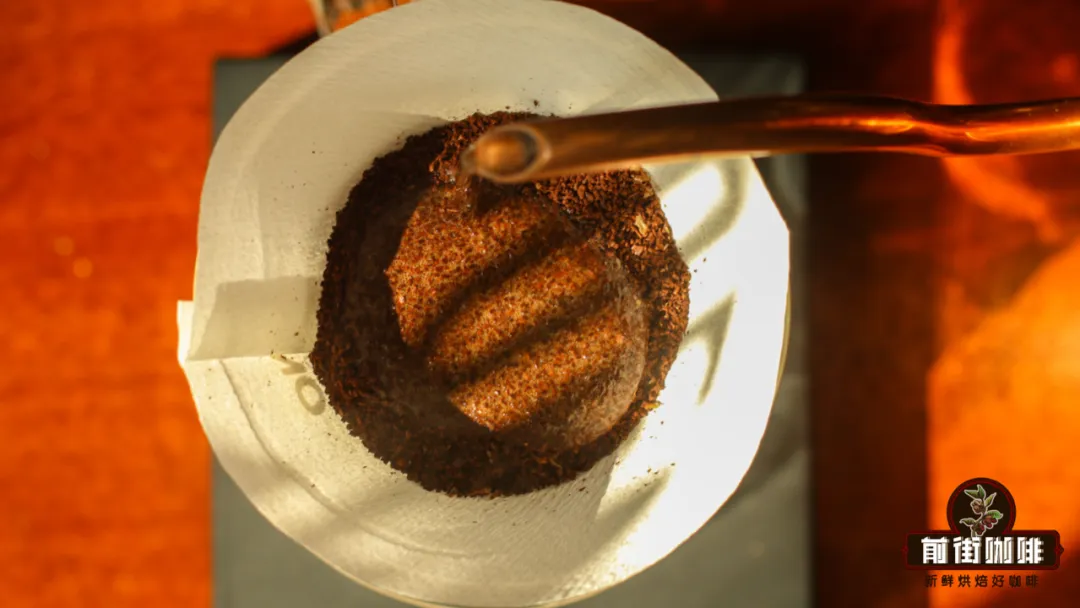
The "size of the blooming dome" and "richness of the crema" mentioned by Front Street are precisely external phenomena that can reflect the amount of carbon dioxide. The reason is not complicated: the formation of both the dome and the crema is inseparable from the participation of carbon dioxide.
The reason pour-over blooming produces a dome is that the coffee grounds rapidly release carbon dioxide upon contact with hot water, and the hot water also causes the coffee bed layers to connect with each other, forming a "barrier" that is not easily permeable. Carbon dioxide cannot escape smoothly and can only accumulate inside. As the internal gas builds up more and more, the coffee bed expands like a balloon being inflated. This is the origin of the blooming dome.
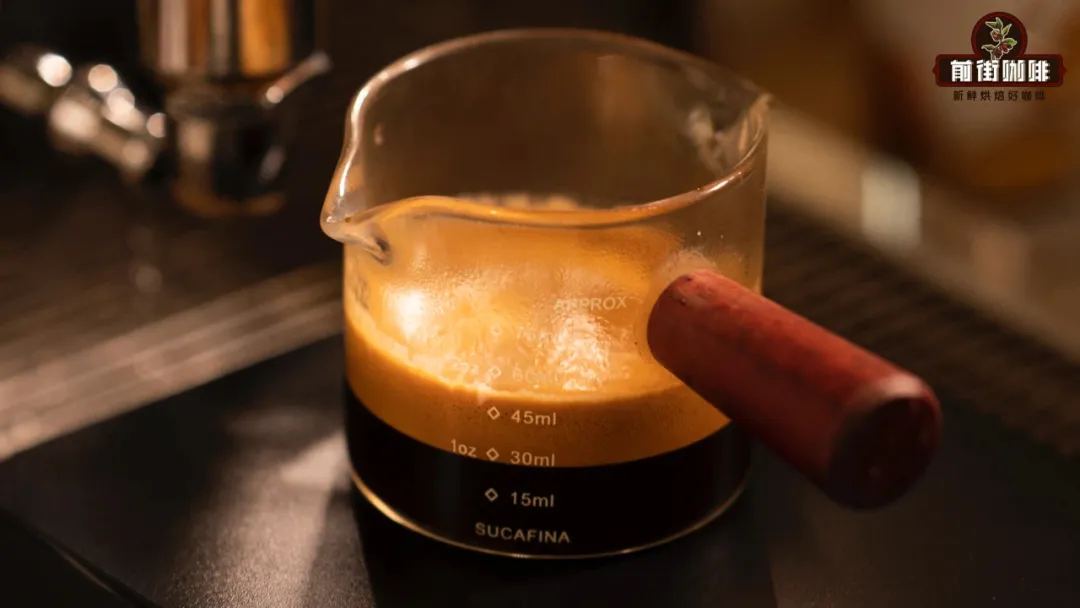
The golden layer of crema on the surface of espresso is essentially a layer of foam, foam formed by carbon dioxide filling. During high-pressure extraction by the coffee machine, the carbon dioxide escaping from the beans is forced into the liquid, then wrapped into bubbles by emulsified proteins and fats, and continuously refined during the flow-out process, finally presenting a golden foam layer similar to crema.
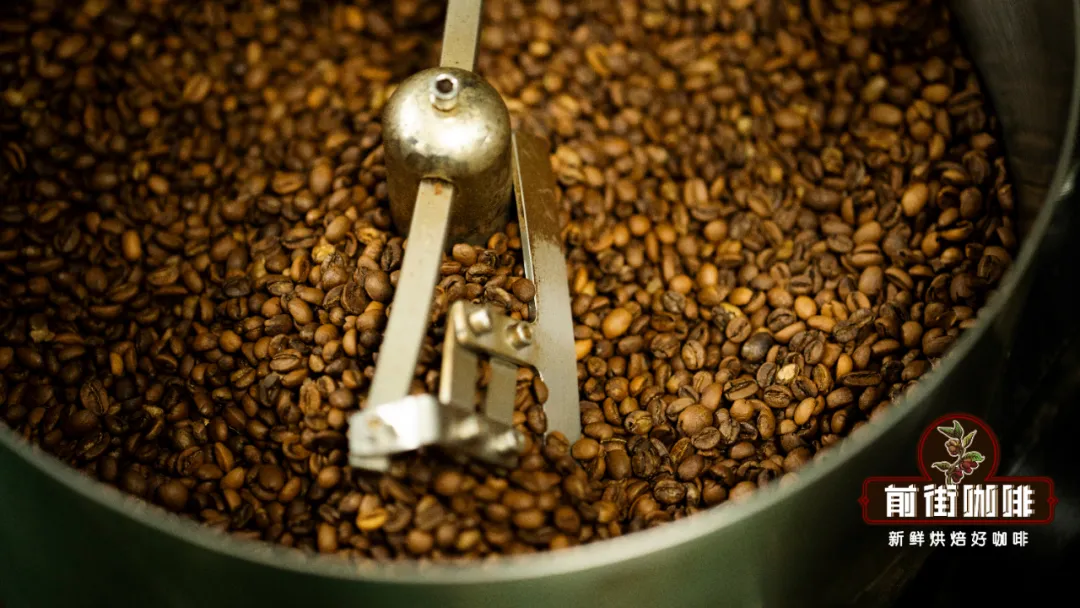
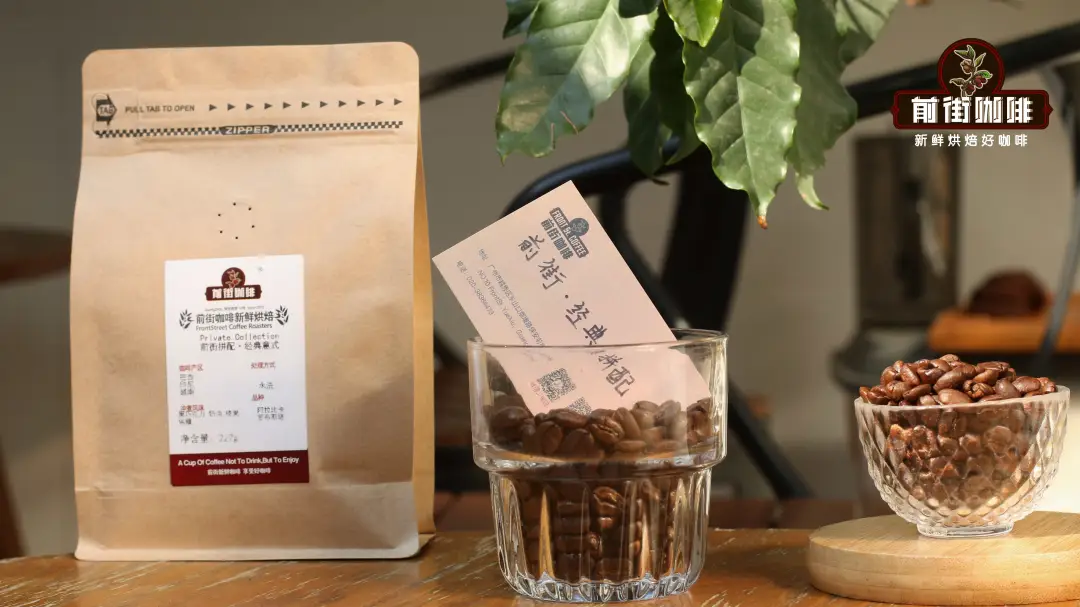
Of course, the thickness of the crema is also affected by the roasting degree and bean variety. For example, Front Street Classic Blend in the Front Street bean list is an espresso blend that can extract rich crema. Its rich crema is partly because Robusta beans are added to the formula, and partly because the roasting degree is relatively dark, so the extracted crema is very substantial. In addition, in this blend Front Street uses Mandheling and Brazilian coffee beans, and the flavor performance is very fragrant, presenting flavors of chocolate, nuts, caramel, and cream, with a mellow mouthfeel and rich layers, very good! It is very suitable for producing Americano and latte!
When there is more carbon dioxide in the coffee beans, the blooming coffee bed rises more, and the crema extracted from espresso is richer; conversely, the less carbon dioxide, the smaller the blooming dome, and the thinner the crema. (The image below is for reference only)
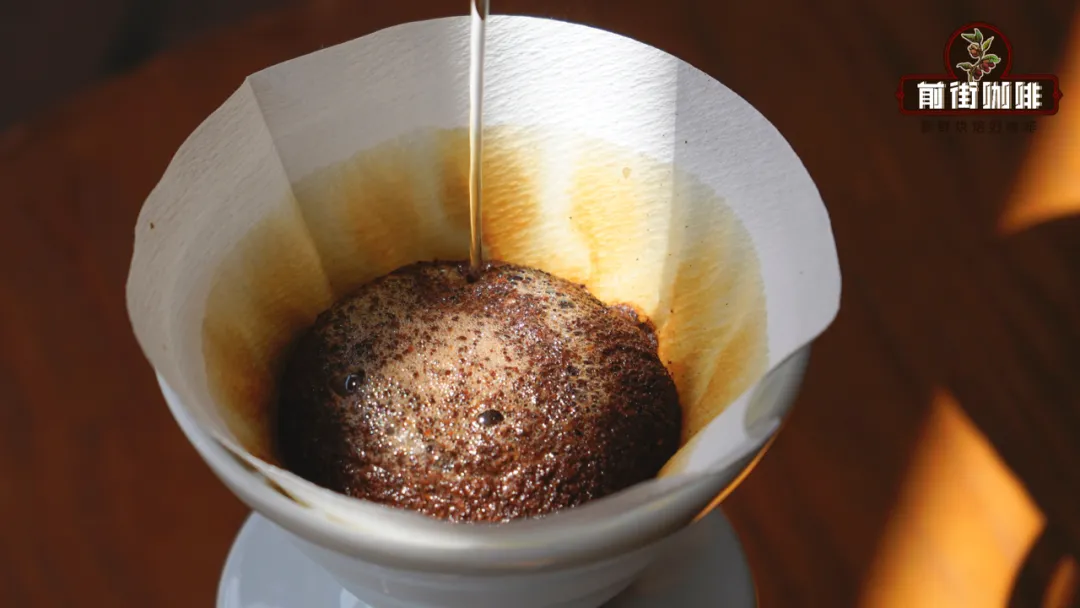
Therefore, from the degree of the dome and the richness of the crema, we can infer the carbon dioxide content of the coffee beans, and thus judge freshness: the more carbon dioxide, the fresher the beans; the less, the opposite.
II. Look at the water retention effect of the coffee bed, the drainage speed, and the flow rate of extraction
The second dimension of judgment is the water retention effect of the coffee bed, the drainage speed during brewing, and the flow rate during espresso extraction. Although these performances are also affected by factors such as the equipment used and the grind size, under the premise that other conditions remain unchanged, what determines the speed of these rates is the carbon dioxide content of the coffee beans.
As mentioned earlier by Front Street, the carbon dioxide in coffee beans will continue to be released during extraction and form bubbles. These bubbles occupy space and reduce the gaps through which water flows, thereby increasing water flow resistance.
So when other factors remain unchanged, the more carbon dioxide in the coffee beans, the stronger the water retention effect of the coffee bed during brewing, the slower the drainage speed, and the hot water will not quickly pass through the coffee bed; the opposite is also true. And freshness is one of the reasons determining the amount of carbon dioxide, so from these aspects the freshness of coffee beans can also be judged.
III. Look at the performance in aroma
In addition to carbon dioxide, aroma performance can also assist in judging the freshness of coffee beans. As Front Street mentioned in yesterday's article, the aroma of coffee itself will also continuously volatilize. From the initial rich aroma and prominent flavor, to later mediocre taste and thin flavor, this is a change brought about by the continuous volatilization of aroma.
Therefore, the aroma smelled during brewing, the aroma in the cup, and the richness of the flavor after tasting can all serve as references for judging coffee freshness.
However, compared with the first two methods, judging freshness by aroma is more difficult. On the one hand, the flavor presentation of coffee is greatly affected by other brewing factors; on the other hand, without comparison, it is difficult for us to judge whether this aroma is rich or bland. Therefore, Front Street still more recommends judging the freshness of coffee beans by their carbon dioxide content, which is both reliable and simple~
The above is all the content shared by Front Street in this article. In fact, as long as you pay more attention and observe during brewing, it is not difficult to quickly judge the freshness of coffee beans. But Front Street still wants to remind everyone here that coffee is not better the fresher it is, nor will it necessarily taste bad if it is not fresh enough~
- END -
The above content is compiled by CoffeeHunters, a coffee news website.


