








Piccolo Coffee and Latte: What Sets Them Apart
Piccolo coffee is often called a small latte because its name comes from the Italian word for small. A traditional piccolo uses a single ristretto shot and about two to three ounces of steamed milk, while a latte typically has a double shot and eight to twelve ounces of milk. That smaller size and stronger coffee-to-milk ratio define its character.
The drink began in Australia as a way for baristas to taste espresso with milk without wasting a full latte. Today, cafes serve it in a small glass, usually around three to four ounces. The piccolo coffee ratio of roughly one part espresso to two parts milk keeps the coffee flavor forward and the milk texture silky.
What exactly are the differences between Piccolo coffee and latte? Why is Piccolo Latte called a "small latte"? This article systematically sorts out the relationship between Piccolo coffee and regular latte from the perspectives of name origin, historical background, cup size, and espresso usage. The article will also explain why Piccolo coffee is rarely served on its own in domestic cafes, and if you want to make a delicious Piccolo at home or in a shop, how to extract espresso and how to split a double shot. Finally, Front Street Coffee will combine its own classic Italian blend beans to share the specific preparation parameters and flavor performance of Piccolo coffee, helping coffee lovers understand this cup of "small latte" more clearly.

Actually, in most Combo combinations, that cup of milk coffee is indeed closer to the Piccolo style. However, calling it a latte also makes sense, because Piccolo coffee itself has the alias "small latte." To put it another way, it can be understood as a latte with a smaller volume.
Why is Piccolo coffee called a "small latte"?
Piccolo coffee originated in Australia. As Front Street Coffee mentioned earlier, it is a small-volume milk coffee. The Chinese name "短笛" comes from "Piccolo" in the original name "Piccolo latte." In English, "Piccolo" refers to the piccolo instrument, so if this coffee were translated according to its English meaning, it would be called "Piccolo," and the full name would be "Piccolo Latte."
However, in Italian, "Piccolo" also means "small." Therefore, if translated according to the Italian meaning, "Piccolo Latte" means "small latte." It is not hard to understand why this coffee was named "small latte" (Piccolo latte), because both its cup size and the materials used are usually only half those of a latte. Interestingly, this coffee was originally invented simply to save costs when dialing in coffee.
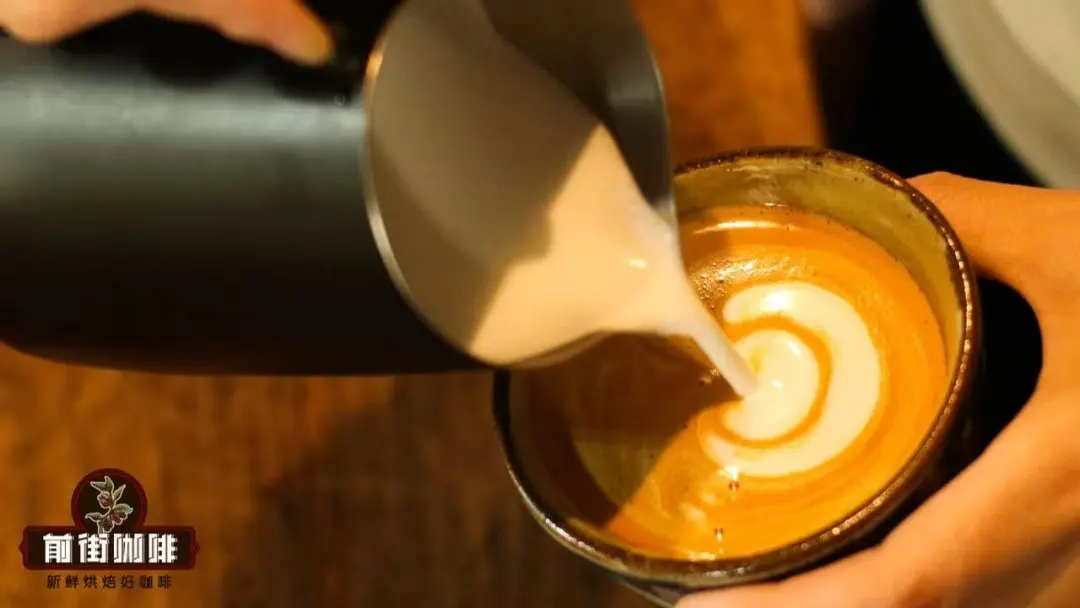
Everyone knows that whether you are a roaster or a barista, if you want to judge whether a bean or a shot of espresso is suitable for making milk coffee, the most direct way is to make a milk coffee and judge whether it passes by tasting it. As the most widely consumed Italian milk coffee, latte naturally tends to become the testing standard. So in their morning dial-in, besides tasting the espresso, baristas often also make a latte in order to measure how well the espresso matches the milk.
But if you have many samples to dial in, making a full cup of latte is rather wasteful. The reason is that latte has a relatively large volume, usually 200–300 ml per cup, and for many people, one cup is just enough to make them feel full. When there are many samples to test and few people to taste them, there is a high chance that not every cup of latte can be finished; at most, people take two or three sips, and the rest is basically poured away.
This obviously wastes a large amount of materials and creates a lot of unnecessary cost. So someone thought of taking only a single shot of espresso and then making a mini version of latte in the same ratio as a regular latte, so that it would neither add too much unnecessary expense nor cause too much waste.

Front Street Coffee believes many baristas have thought of this approach. The difference is that this approach was brought to the forefront by Australian baristas. Because the cup size is small, it is not easy to fill you up, and the price is also friendly, this small-volume latte is very popular locally in Australia. To distinguish it from regular latte, Australian baristas named it "Piccolo Latte" according to its characteristics, meaning a latte with a small cup volume.
As Front Street Coffee has shared many times before, domestic cafes rarely serve Piccolo coffee on its own. Because making Piccolo coffee uses only a single shot of espresso, while the current mainstream in domestic coffee preparation is to directly extract a double shot of espresso, using a larger dose of coffee to extract a smaller amount of espresso liquid, for example, using 18 g of coffee to extract 36 ml of espresso at a 1:2 brew ratio. Single-shot filter baskets, or extracting a single shot of espresso separately, are rarely used.
This is done both to give the coffee a richer taste and mouthfeel and to make the output more stable. Because single-shot filter baskets are prone to channeling, which affects the coffee's flavor. So, as Front Street Coffee also mentioned in previous articles, this is why many domestic cafes would rather use a double filter basket to extract an extra shot of espresso than use a single filter basket to extract coffee.

Since Piccolo coffee uses only a single shot of espresso, if a double filter basket is used to extract a double shot of espresso, it means the other half of the espresso may face the risk of being poured away and wasted, so very few cafes choose to serve Piccolo on its own. There are some, but not many.
If you want to make a delicious cup of Piccolo coffee, Front Street Coffee also recommends first extracting a double shot of espresso liquid and then dividing out half to make it. Although using Ristretto instead of a single shot as the Piccolo base is also popular, doing that well requires readjusting the grinder from the original setting, which is rather troublesome.
Taking Front Street Coffee as an example, the espresso beans used by Front Street Coffee to make Italian coffee are the Front Street Classic Italian Blend from the Front Street coffee list. The coffee made from this medium-dark roasted bean has a thick crema, with rich chocolate, nut, and caramel flavors, and a very full-bodied mouthfeel, making it very suitable for making Italian milk coffees such as latte, Piccolo, and flat white.
When using this bean to make the espresso base for Piccolo, Front Street Coffee uses a dose of 18 g, a brew ratio of 1:2, and an extraction time of 30 seconds.
After the espresso extraction is completed, we divide it into two, then pour in an appropriate amount of milk at a 1:5 ratio. If the milk has been steamed into foam, you can also make a simple latte art. In this way, a cup of "small latte"/Piccolo coffee is completed, very simple.
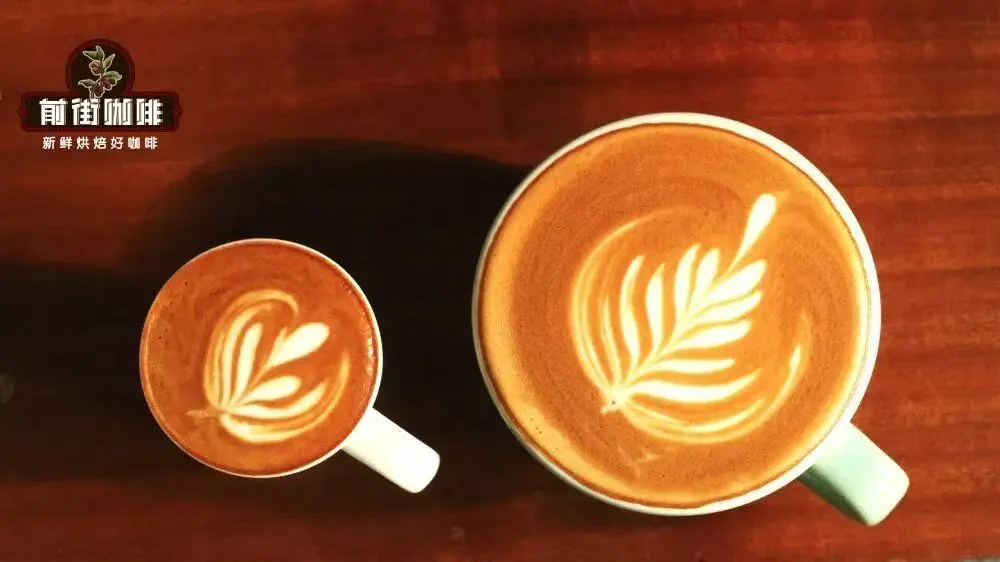
Since the preparation method is exactly the same as latte, with the only difference being the cup size and the amount of materials used, the taste of this Piccolo is exactly the same as latte. It drinks smooth and full-bodied, with a rich flavor and relatively high sweetness, showing flavors of butter cookies, caramel, and chocolate. Very good.
- END -
The above content is compiled by CoffeeHunters, a coffee news website.


