







What Is the Purpose of Blending Coffee?
Blending coffee means combining two or more single-origin coffees to reach a goal that one bean cannot deliver on its own: consistent output over time, a new flavor, or a fuller mouthfeel. Base bean selection and ratio follow that goal, so the blend is built around a target cup rather than whatever beans happen to be open.
Similar roast levels are the practical key. If blended coffee beans are roasted to very different degrees, one component can dominate or taste baked in the mix. With matched roast development, pour-over and espresso blends each keep their intended structure, and the blend can produce the 1+1>2 result that random mixing rarely gives.
Blending is not simply mixing a few beans together; it can both deliver consistent output and create a brand-new flavor experience where one plus one is greater than two. This article starts with the purpose of blending, explains how to choose base beans and ratios according to the desired flavor or mouthfeel, and points out that similar roast levels are the key to successful blending. It also combines two products, Front Street Coffee Strawberry Candy · Geisha Blend and Front Street Coffee Strawberry Candy · Espresso, to break down the differences between pour-over blends and espresso blends in bean selection and roasting, and finally includes adjustment ideas for brewing parameters and two sets of blending recipes commonly used by Front Street Coffee, for coffee lovers to reference and practice.
Many coffee lovers have probably already thought of it: this distinctive approach is actually blending—combining two or more coffee beans to obtain a cup of coffee with a completely different flavor.
For a long time, the craft of blending has mainly been active on the espresso stage, because espresso was then the mainstream, and shops needed to rely on blending to ensure long-term consistency in their output. However, in recent years it has become easy to see that more and more merchants and competition contestants are beginning to use blended beans to make pour-over, cold brew, and other coffees.
The reason is actually quite direct: blending can do far more than stabilize quality. As Front Street Coffee has said before, it can also create a completely new experience. This new experience covers a wide range—it can be a unique and novel flavor, or a “hexagonal warrior” outstanding in both flavor and mouthfeel... In short, with blending, we can easily achieve a 1+1>2 effect and drink unusual coffee.
However, blending is not easy! It is by no means just casually throwing different coffee beans together. We need to consider issues such as the selection of base beans and the allocation of ratios according to our goals. If paired randomly, the final product’s taste will not only be difficult to achieve as desired, but may even be worse than the original base beans. (For example, the previously shared “Blend Made with More Than Thirty Kinds of Beans” by Front Street Coffee failed for this reason.)
So today Front Street Coffee will talk about how to make blended coffee, what points need attention, and some blended bean recipes commonly used by Front Street Coffee~
The Purpose of Blending Coffee and Bean Selection
Most friends following this article are buyers of roasted coffee beans, so there is no need to weigh the issue of blending raw beans or roasted beans like roasters do.
When you plan to blend coffee beans, Front Street Coffee suggests that you first clarify the purpose of the blend, for example: what kind of coffee you want to get. Then, based on this purpose, choose the suitable beans from the coffee beans you currently have on hand for blending. This can effectively control costs and quickly create an ideal blended bean in your mind.
The purpose of blending pour-over beans is nothing more than the two mentioned earlier by Front Street Coffee: “creating a completely new flavor” or “shaping a hexagonal warrior excellent in both mouthfeel and taste.” If it is the former, let flavor guide bean selection; if it is the latter, then both bean selection and ratios must balance flavor and mouthfeel.
Taking Front Street Coffee as an example, friends who have visited the Front Street Coffee Taobao Tmall flagship store should notice that the shop sells quite a few blended beans. In addition to blended beans specifically for espresso, there are also blended beans suitable for pour-over, cold brew, and other methods. Whether espresso blends or pour-over blends, both include a blended coffee bean named Strawberry Candy. According to different uses, Front Street Coffee has made corresponding adjustments in bean selection and roasting.
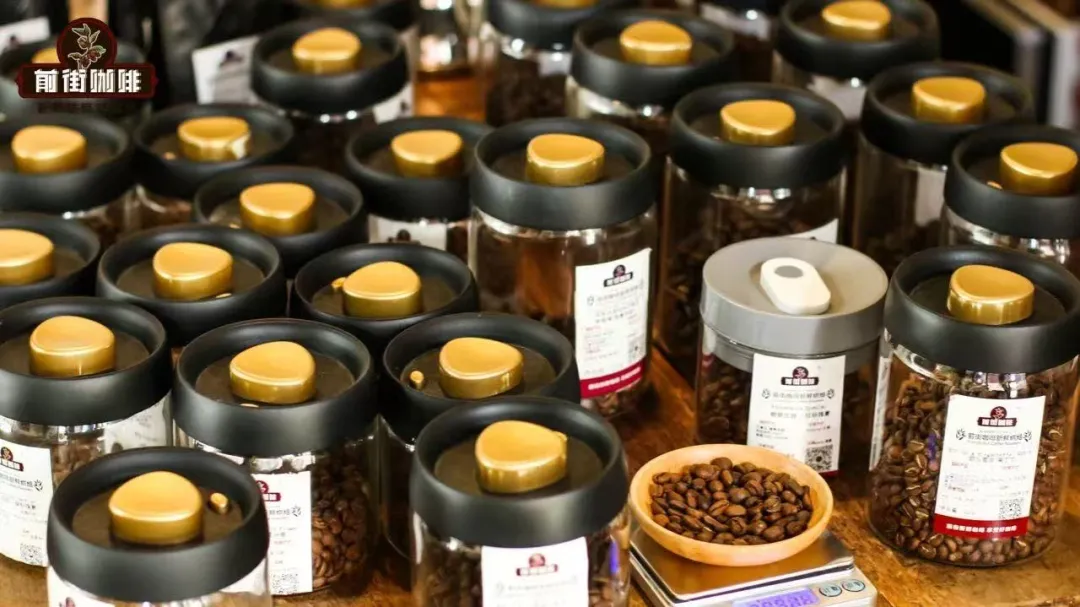
Front Street Coffee Strawberry Candy · Geisha Blend
It is a bean blended by Front Street Coffee for flavor-focused output such as pour-over and cold brew. Because we wanted a cup of coffee with rich fruit aroma and equally prominent floral aroma, Front Street Coffee selected Costa Rica · Mirazu Estate honey-processed coffee beans with strong strawberry and berry flavors, plus washed Geisha from the Boquete region of Panama with rich jasmine fragrance for blending. The final result is this Strawberry Candy · Geisha Blend, full of both fruity and floral notes.
After brewing, we can clearly taste the fresh sweetness of strawberry and berries, as well as elegant jasmine fragrance and a fresh oolong tea finish. The overall taste is mainly sweet and sour, with a smooth mouthfeel and a long aftertaste.
The Strawberry Candy blend mainly used for espresso is fully named Front Street Coffee Strawberry Candy · Espresso , and it is a bean that often appears in articles. When Front Street Coffee made it, the goal was an espresso with floral and fruity aromas, but weaker acidity, mainly sweet, and with a solid mouthfeel! Therefore, we selected Strawberry Candy with a stronger berry flavor, plus Colombia Huila coffee beans with chocolate, cookie, and caramel flavors and a solid mouthfeel, as well as Ethiopian heirloom varieties for blending!
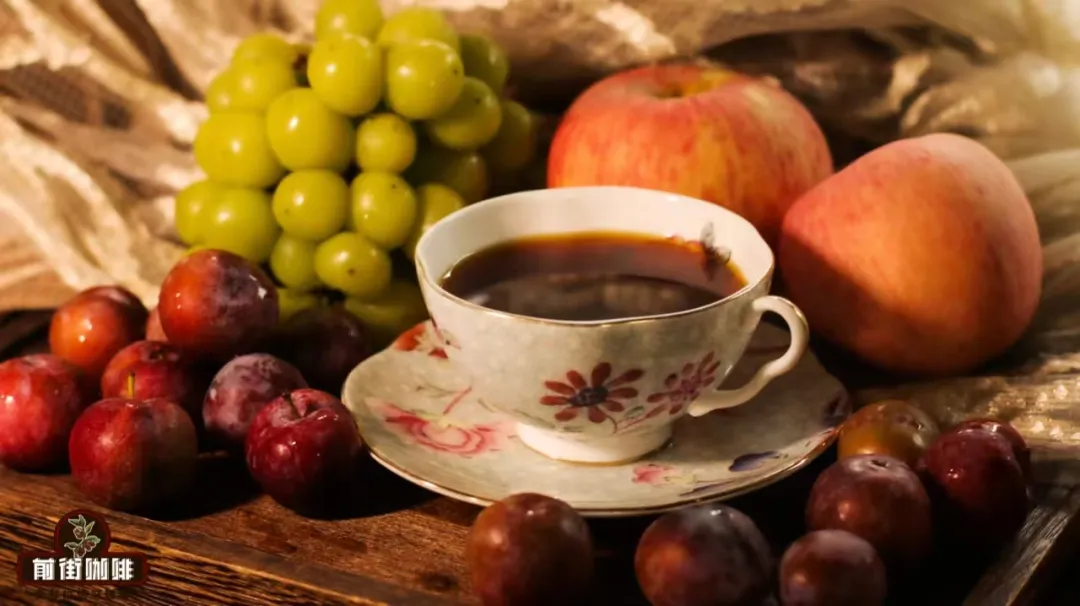
In the final blend produced, from the extracted espresso you can taste strawberry, light floral notes, chocolate, and caramel. The taste is mainly sweet, with a mellow mouthfeel and likewise a long aftertaste. When made into milk coffee, you can also taste a unique flavor similar to strawberry wafer cookies! Quite good.
It can be seen that due to different blending purposes, the coffee beans selected by Front Street Coffee are also different. In addition to different beans, their roast levels also differ. The coffee beans used in the latter are roasted darker than the former, because Front Street Coffee wanted to reduce the proportion of acidity in the coffee, so it deepened the roast to cut acidity while also enhancing the coffee’s body.
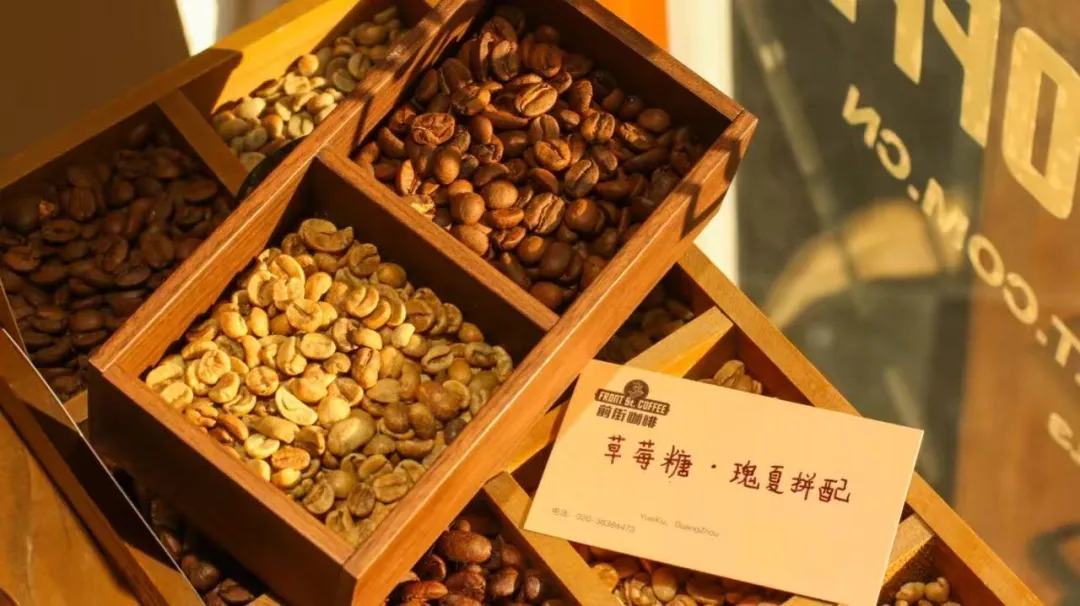
By this point, Front Street Coffee believes everyone should understand why it is necessary to first set a goal and then choose coffee beans. When choosing coffee beans for blending, there are two points to note: the first is that the roast levels of the coffee beans should be similar! There can be differences, but they cannot be too far apart.
As is well known, coffee beans at different roast levels do not dissolve substances at the same rate. Under the premise of identical parameters, flavor substances in dark-roasted coffee beans dissolve faster than in light-roasted coffee beans. This is because the structure of dark-roasted beans is looser, and flavor substances are more easily brought out by hot water. When we blend coffee beans with large differences in roast level, uneven extraction is very likely to occur!
If the extraction efficiency is too high, dark-roasted beans are prone to over-extraction; if the extraction efficiency is too low, light-roasted beans are prone to under-extraction. This adds considerable difficulty to extraction, so it is best to choose coffee beans with similar roast levels for blending. Only in this way can we reduce differences in extraction and brew a delicious cup of coffee.
Other than that, there is almost nothing else that needs special attention—everyone can just blend for fun on their own. By putting together coffee beans from different regions, with different processing methods, or with different flavors, you can get a completely new coffee bean. If you want to highlight a certain characteristic, increase the proportion of the coffee beans with that characteristic.
Let’s still take Front Street Coffee’s Strawberry Candy · Geisha Blend as an example. If Front Street Coffee wanted the floral aroma of this bean to be more prominent, then the ratio of Costa Rica to Panama Geisha might be 4:6; and if we wanted the fruity aroma to be more prominent, the ratio might be 6:4. The specific ratio is determined by the purpose, and finally adjusted according to the taste~
As for brewing parameters, set them according to the average roast level of your blended coffee beans! For example, if both beans used in the blend are light-roasted, then directly apply light-roast brewing parameters; if the blended beans are half light and half medium, choose a compromise between the parameters. And so on.
Finally, Front Street Coffee will share some exclusive blending recipes. If you happen to have bought these beans, you might as well try blending them—they will bring an unexpected experience:
Colombia · Sidra✖️Ethiopia · Hambela✖️, ratio 4:6;
Panama · Boquete Geisha✖️Ethiopia · Arlo✖️Colombia · Ombligon, ratio 3:5:2.
- END -
The above content is compiled by CoffeeHunters, a coffee news website.


