







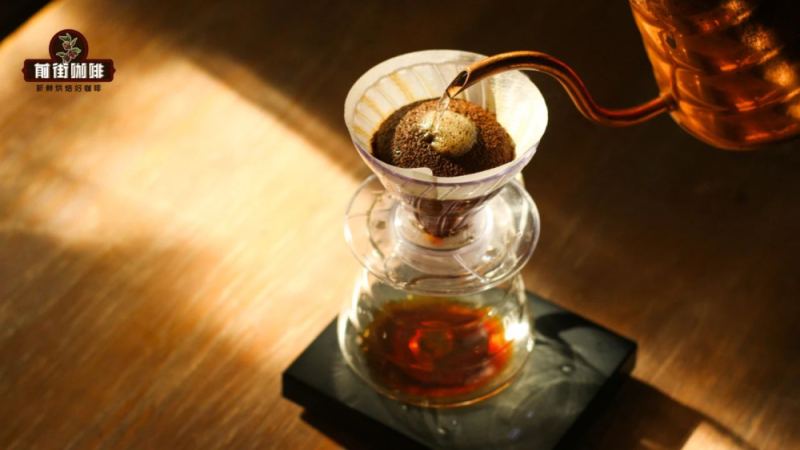
Reverse Brewing: A Practical Method for Milk Coffee at Home
Recently, a reverse brewing method has become popular in the coffee community. It involves mixing coffee grounds and water together to complete coffee extraction, then using a paper filter and dripper to filter out the grounds. The result is a cup of high-concentration coffee liquid used to make milk coffee. Strictly speaking, this is no longer brewing but immersion extraction, similar to a smart cup or French press. Although it cannot match the concentration of an espresso machine or moka pot, for households without pressure equipment, it is a practical alternative for making milk coffee.
Making milk coffee requires high-concentration coffee because milk dilutes the flavor. If the base is weak, the drink tastes flat. This method produces a strong enough liquid to stand up to milk. For reliable results, choose beans with clear sweetness and body. The specific extraction parameters and steps for Front Street Coffee Strawberry Candy Geisha Blend are explained below. With careful grinding and timing, you can enjoy a rich, smooth milk coffee at home without an espresso machine.
Recently, a "reverse brewing" method has become popular in the coffee community—first mix the coffee grounds and water together to complete extraction, then use a paper filter and dripper to filter out the grounds, resulting in a cup of high-concentration coffee liquid used to make milk coffee. After being asked about this by customers in the store, Front Street Coffee specifically sorted out the principles and operation of this method. Strictly speaking, this is no longer "brewing" but immersion extraction, similar to a smart cup or French press. Although it cannot match the concentration of an espresso machine or moka pot, for households without pressure equipment, it is a practical alternative to satisfy a craving for milk coffee. This article will explain why making milk coffee requires high concentration, how to choose beans, and the specific extraction parameters and steps for Front Street Coffee Strawberry Candy·Geisha Blend.
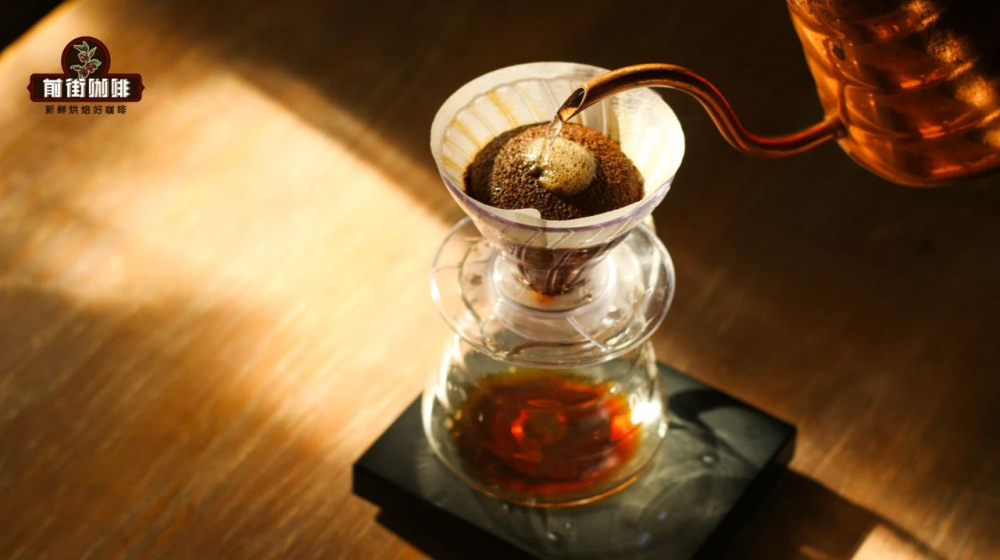
Yesterday, when Front Street Coffee was selling beans in the store, a customer suddenly turned and asked Front Street Coffee: "Do you know that reverse brewing coffee has become popular recently?"
"Reverse... brewing?"
Only after Front Street Coffee asked with a puzzled look did it become clear that so-called reverse brewing means first putting coffee grounds and water together into a container to complete extraction, and then using a paper filter and dripper to filter out the coffee grounds. In this way, you can get a cup of coffee with sufficiently high concentration that can be used to make rich, smooth milk coffee. Front Street Coffee then searched online and found that this method has indeed become quite popular recently.
However, this method can no longer really be considered "brewing" and should instead be called "steeping." The paper filter and dripper here only serve as a filtering tool; the coffee extraction is mainly completed by immersion. So strictly speaking, it is not brewing coffee in reverse, but an immersion extraction method similar to a smart cup or French press. Front Street Coffee has also shared similar methods in past articles.
Undeniably, this method can indeed produce a cup of high-concentration coffee. If you do not have pressure extraction equipment at home such as an espresso machine or moka pot, you can use it to occasionally satisfy a desire for milk coffee. So today Front Street Coffee will share how to easily make a pot of high-concentration coffee that can be used for milk coffee.
Why must milk coffee be made with high-concentration coffee?
Many friends may wonder why Front Street Coffee always emphasizes "high concentration." Can ordinary black coffee or pour-over coffee not be used to make milk coffee?
Of course it can. Regular black coffee can also be used to make milk coffee. For example, café au lait, which originated in France, is made by adding milk to pour-over coffee.
But this approach has a fairly obvious shortcoming: the water content is relatively high, so the resulting milk coffee cannot reach a high concentration, the mouthfeel is thin, and the taste easily becomes weak.
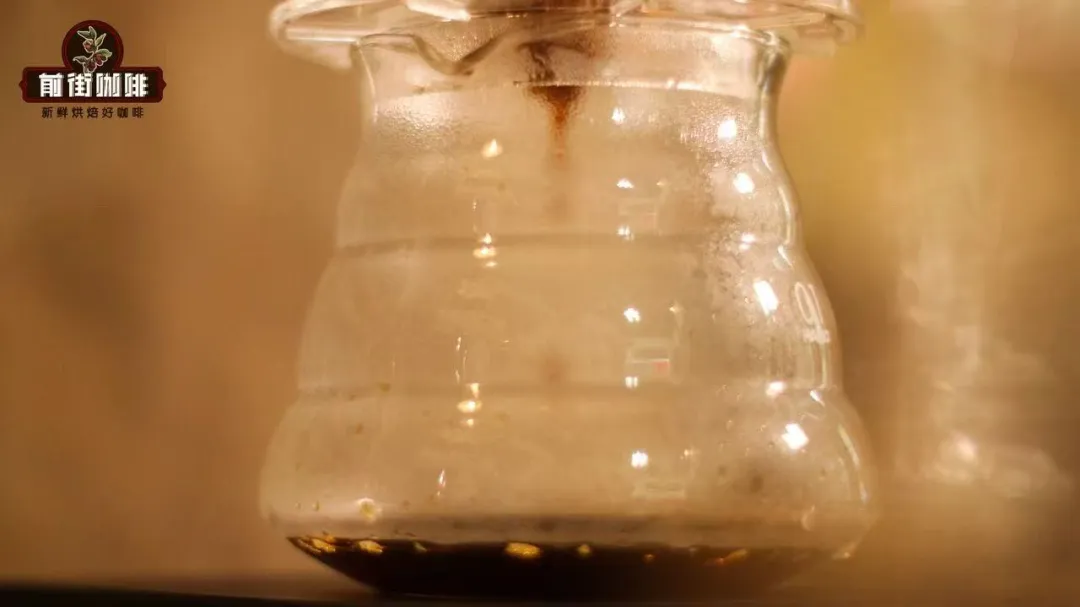
Perhaps some people like this kind of less rich milk coffee, but Front Street Coffee believes that the milk coffee most friends want to drink is higher in concentration, stronger in taste, and richer in mouthfeel. Therefore, we need to increase the coffee concentration and reduce the water in the coffee, so that the taste and mouthfeel will not be overly diluted, and we can drink a cup of milk coffee with excellent taste and mouthfeel.
The specific method for obtaining high-concentration coffee is as simple as Front Street Coffee introduced at the beginning: pour coffee grounds and hot water into any container, stir, steep, and finally use a paper filter and dripper or any filtering tool to filter out the coffee grounds, and you can get a serving of high-concentration coffee.
Just a reminder to everyone: although the coffee made this way has a relatively high concentration, it is only relative and cannot compare at all with the high-concentration coffee extracted with pressure by a moka pot or espresso machine.
Moreover, without pressure assistance, it is difficult to fully extract the coffee flavors with a small amount of hot water, so milk coffee made with this high-concentration coffee is far less tasty than that made with a moka pot or espresso machine. But as an alternative version, its performance is still quite good. Alright, without further ado, next Front Street Coffee will share how to make such a cup of high-concentration coffee.
Preparation sharing
Although this method is suitable for all coffee beans, Front Street Coffee still recommends choosing beans with a darker roast or a deeper degree of fermentation. This is because these two types of beans have a richer taste and are easier to extract, allowing us to dissolve more flavor substances out of the coffee. In other words, it is easier to make a cup of milk coffee with a richer taste.
For medium-dark and dark roasted coffee beans, you can choose: Front Street Coffee Black Cocoa Basic Blend, Front Street Coffee Classic Blend, Front Street Coffee Commercial Blend, Front Street Coffee Specialty Blend, as well as single-origin beans—Front Street Coffee PWN Golden Mandheling, Front Street Coffee Queen's Estate, etc.
If you want to choose something with a deeper degree of fermentation and richer flavor, from Front Street Coffee's bean list you can choose: Front Street Coffee Strawberry Candy·Geisha Blend, Finca La Divisa·Sidra/Ombligon, Elida Estate·Anaerobic Natural Catuai. These are all good choices, and they can all be purchased directly from Taobao Tmall (also available in offline stores). Interested friends can learn more on their own.
Here, the coffee beans selected by Front Street Coffee are still Front Street Coffee Strawberry Candy·Geisha Blend. The extraction parameters are also very simple: dose 20g; for grind setting, directly choose the finest setting on the grinder and grind into flour-like particles (refer to the image below); water temperature can be above 95°C; coffee-to-water ratio 1:4; extraction time depends on the grind size and stirring time.
First, pour the ground 20g of coffee grounds and 80ml of hot water together into any container.
Then press the timer to start timing, take out a spoon, and stir. Stir for about 30 seconds, then let the coffee steep and extract for 3 minutes.
After 3 minutes, take out the stirring tool again and stir, also for about 30 seconds, then steep for another 3 minutes.
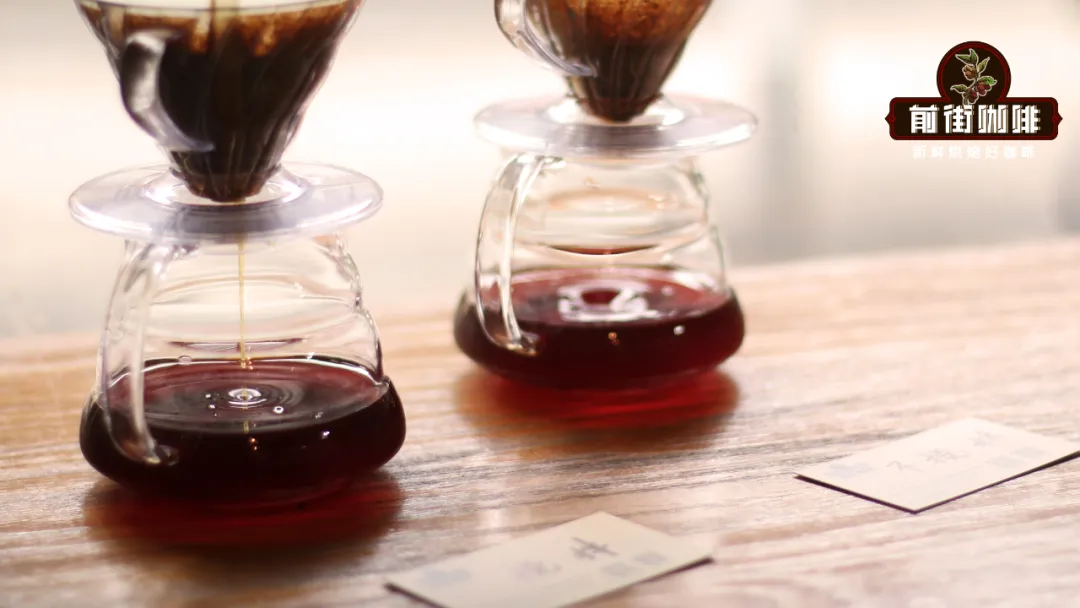
If the particles you grind are not flour-like, Front Street Coffee would recommend appropriately extending the stirring and steeping time. Do not worry at all about over-extraction! Because once the liquid reaches a certain concentration, the dissolution rate of flavor substances drops significantly. It is precisely for this reason that we need to stir from time to time to increase the dissolution of flavor substances.
When the time is up, prepare a paper filter and dripper to filter out the coffee grounds, and you will have a cup of relatively high-concentration coffee.
As Front Street Coffee said earlier, the coffee made this way is not as concentrated in strength and taste as espresso made by an espresso machine. So when mixing with milk, the ratio can be slightly larger. The ratio used here by Front Street Coffee is 1:3.5. Because the final coffee liquid obtained is 36ml, the milk added is about 126ml.
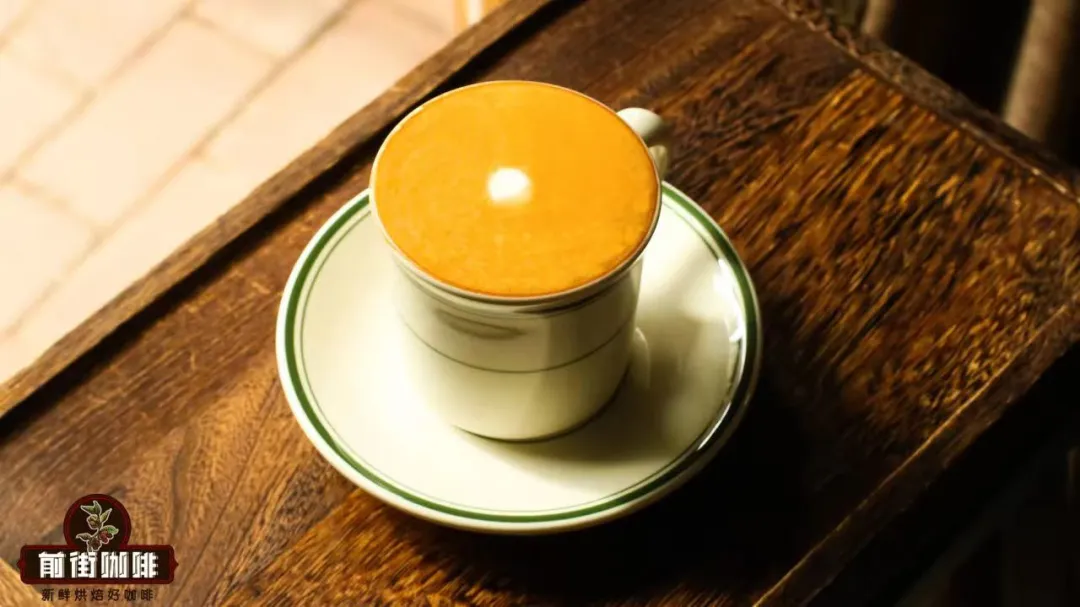
Finally, you can taste the milk coffee! Although the milk coffee made this way is not as tasty as that made by an espresso machine, it still meets the standard of being delicious.
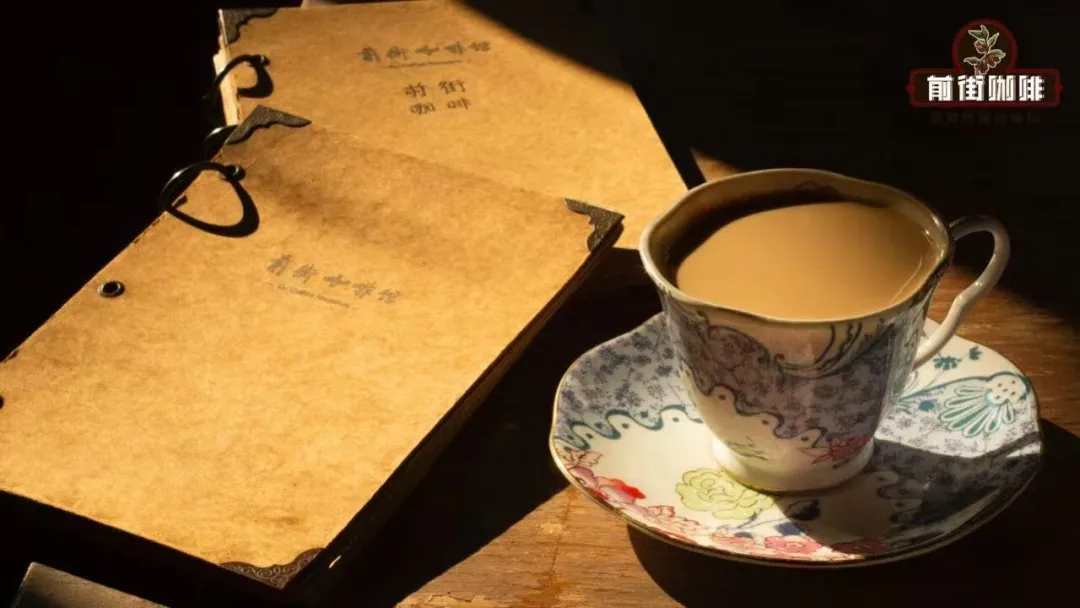
The milk and coffee are balanced just right, with a smooth mouthfeel and balanced flavor. When drinking it, you can clearly taste the flavor characteristics of Strawberry Candy, such as strawberry gummy, white floral notes, and a slight berry tone. That is all for this sharing by Front Street Coffee. Interested friends can try it at home themselves.
The above content is compiled by CoffeeHunters, a coffee news website.


