







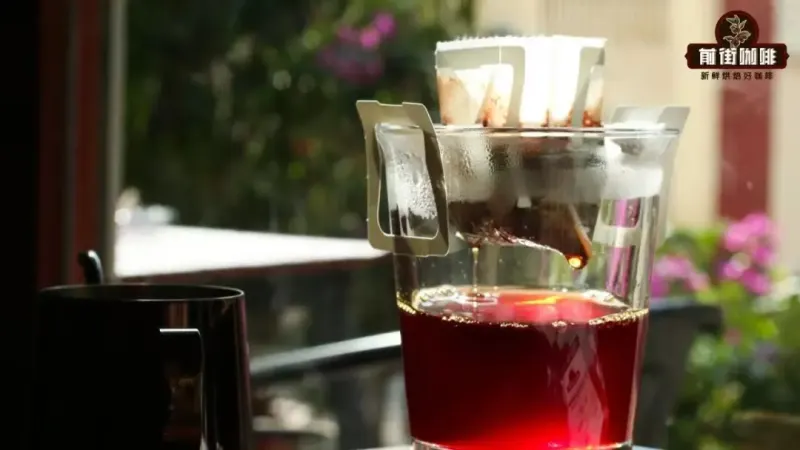
Is Your Water Temp for Brewing Coffee Too Low for Drip Bags?
Office water dispensers usually run only 85°C to 90°C, which is too low for light and medium-light roasted drip bag coffee. The result is under-extraction and a weak cup. When the grind size is fixed, extending the extraction time is the most direct fix. A multi-stage pour, starting with a bloom and then controlled additions, raises extraction efficiency so the cup still tastes full.
The method breaks the pour into stages with set water volumes and rhythm, and finishes with concentration and extraction yield data. It suits single-origin options such as a Yirgacheffe drip bag with jasmine and lemon notes, or a Mandheling bag with herbal notes and high body, so the office cup keeps clear layers even with dispenser water.
Many office workers habitually use the hot water from the office water dispenser to brew drip bag coffee, but the water temperature of a dispenser is usually only 85°C to 90°C, which is not high enough for light-roasted or medium-light-roasted beans, easily leading to insufficient extraction and a weak taste. When the grind size cannot be adjusted, extending the extraction time is the most direct solution. This article uses Front Street Ethiopia Hualv drip bag as an example to share a specific method of improving extraction efficiency through multi-stage pouring, including blooming, the water volume and rhythm control of each stage, and gives the final concentration and extraction yield data, helping you brew a cup of drip bag coffee with full flavor and clear layers even with a water dispenser.
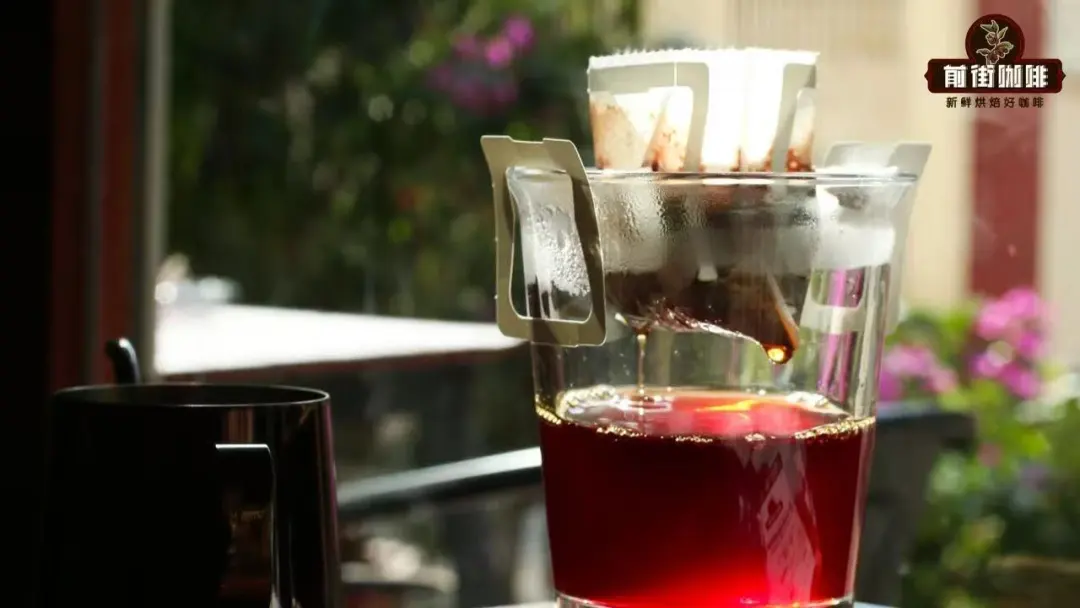
Many people choose drip bags because the scenario is often the office: they want a decent cup of single-origin coffee during a work break, but are unwilling to set out a whole set of equipment like with pour-over. So the simple and convenient drip bag becomes a compromise. Many of Front Street's customers also have this in mind and specifically note that they want their Front Street coffee beans made into drip bags when buying.
There are many types of drip bags, and the price range varies widely. If you are new to this and are not yet sure which flavor profile you prefer, you can start with more economical options, such as Front Street Yirgacheffe drip bag (jasmine, lemon notes), Front Street Mandheling drip bag (herbal, high body), and the highly cost-effective Front Street Five-Origin Mixed Pack drip bag. The latter lets you taste the characteristics of five major specialty coffee origins at once, covering well-known producing countries such as Panama, Ethiopia, Indonesia, Honduras, and Kenya.
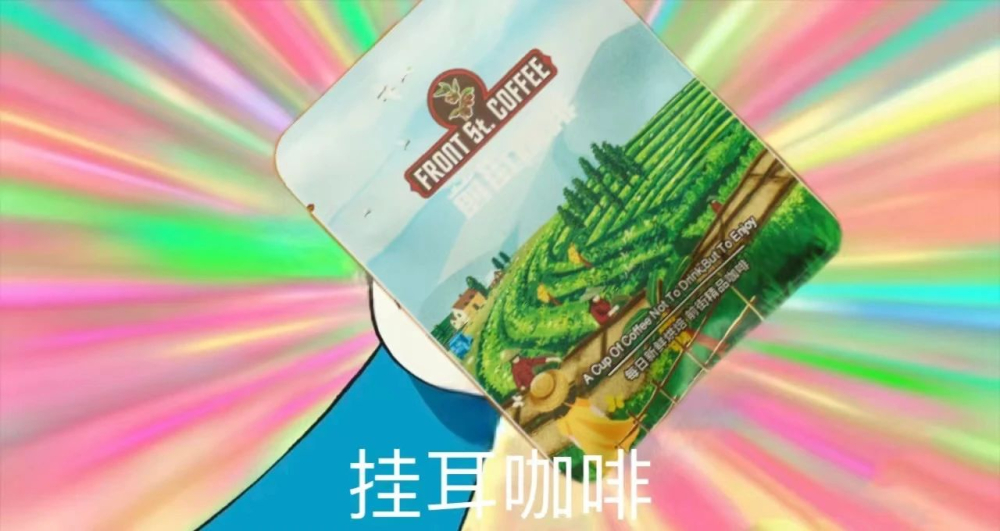
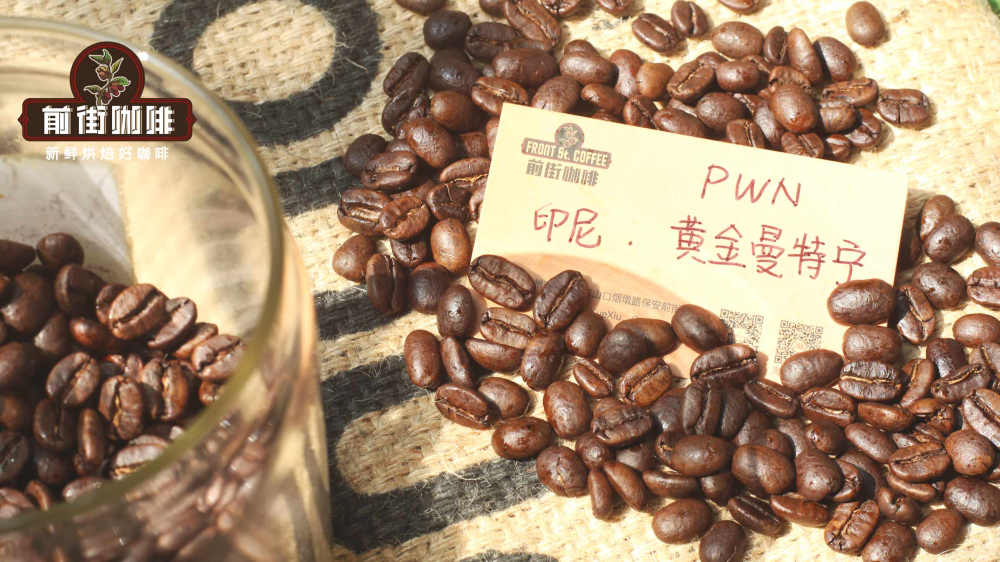
If you have higher quality requirements for the office scenario, you can choose Front Street PWN Golden Mandheling drip bag and Front Street Hualv drip bag. These two have undergone more meticulous screening, are of higher quality, and have cleaner aromas. Front Street PWN Golden Mandheling drip bag presents rich, full-bodied notes of caramel, pine, dark chocolate, and nuts; Front Street Hualv leans toward a fresher direction of floral notes, jackfruit, cream strawberry, and black tea.
However, some friends have also reported back to Front Street: even when brewing according to the method Front Street shared, the result always seems to fall short—either the aroma is not enough, or the mouthfeel is thin—and they want to know how to improve it.
Based on the above introduction, this situation is most likely caused by insufficient extraction. There are many reasons for under-extraction, and after Front Street asked one by one, the problem often came down to the same point: hot water temperature. This is because many friends do not use freshly boiled water from a kettle to brew drip bags, but hot water from the office water dispenser.
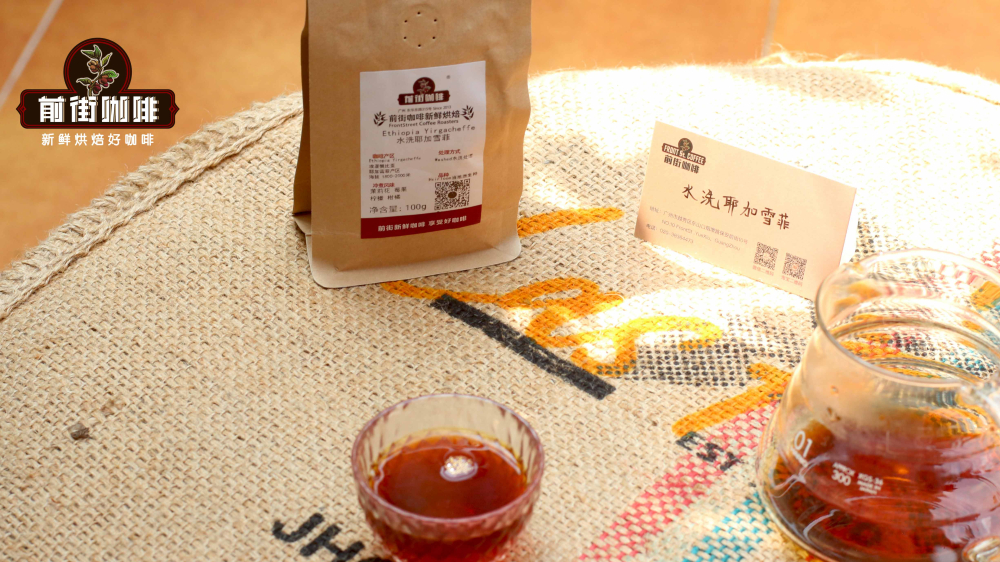
Front Street has also mentioned in previous posts that not all water dispensers' hot water can reach the temperature needed for brewing coffee, usually falling in the range of 85°C~90°C. If you are brewing light-roasted coffee, this temperature is actually not up to standard; moreover, the hot water will drop in temperature again after being poured into the pouring kettle, making it even harder to fully dissolve the flavor compounds we want from the coffee grounds.
When the water temperature cannot be controlled, if you want to brew a cup of full-flavored coffee, you usually can only rely on grinding finer or extending the extraction time to improve extraction efficiency and increase the dissolved substances. But a drip bag is essentially a "ready meal pack" with pre-ground coffee, so the grind size cannot be changed. Therefore, under these conditions, we need to use the method of extending the extraction time to make the coffee taste better.
The method is not complicated. You do not need to change any equipment, only make a small adjustment in the pouring method: multi-stage pouring.
Multi-stage pouring can effectively extend the extraction time, because between each stage there will be an interval while waiting to pour. The more intervals there are, the longer the contact time between water and coffee grounds; the more stages you divide it into, the more intervals there are, and the longer the extraction time becomes, so the hot water naturally brings out richer flavor compounds. So exactly how many stages should it be divided into, and how should you pour? Next, Front Street will share the specific steps.
Brewing sharing
This time Front Street is still using its own drip bag, and the bean chosen is Front Street Ethiopia Hualv from the bean list. It is a medium-light roasted natural bean with fresh floral and fruity aromas, relatively high density, and good flavor performance, making it very suitable as the demonstration bean for this session.
The brewing water temperature used here at Front Street is 87°C, roughly the temperature after everyone pours hot water from the water dispenser into the pouring kettle. If the water temperature on your side is higher or lower, you can control the extraction yield by increasing or decreasing the number of stages. The coffee powder amount in one Front Street drip bag is 10g. Calculated at a 1:15 coffee-to-water ratio, the hot water needed is 150ml.
The first step is still blooming. Even for drip bag coffee, it is necessary to release carbon dioxide through blooming. First pour in 20ml of hot water and bloom for 30 seconds. (If you do not have a scale, just wet all the coffee grounds.)
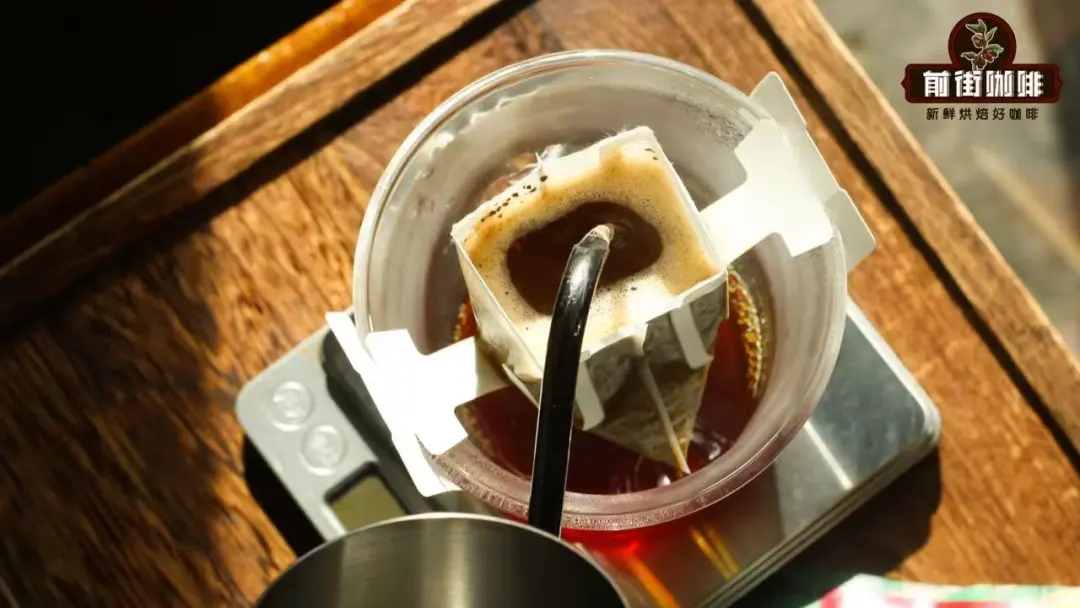
After the blooming ends, divide the remaining hot water into multiple stages, about 20ml per stage, about 6~7 stages. If you do not have a scale, pour the hot water until the water level can cover the coffee grounds, or reaches two-thirds of the drip bag. Remember to pour with a small stream, and wait until the previous stage of hot water has completely dripped through before pouring the next stage. Repeat this until all the target water volume has been poured.
Brewed this way, the total time will usually be around 2 minutes 40 seconds. Although it is much longer than the usual extraction time, it will not cause over-extraction. The reason is that the water temperature is not high enough, and the extra time is used precisely to make up for the insufficient water temperature.
After measurement, the coffee concentration is 1.45%, and the extraction yield is 19.95%. It can be seen that the coffee has been fully extracted. It also tastes quite excellent, with a full flavor and prominent notes, and you can clearly taste guava, strawberry, citrus, and a faint floral aroma.
Isn't it simple? In fact, the essence of many problems is the same, just appearing in different forms. As long as you understand the underlying logic of extraction, the vast majority of problems can be easily solved. That is also why Front Street suggests everyone simply learn a little about extraction—it can save you a lot of trouble~
The above content is compiled by CoffeeHunters, a coffee news website.


