







Can Coffee Grounds Be Brewed a Second Time and Still Taste Good?
Yes, spent coffee grounds can be brewed a second time, but the cup tastes thin. Coffee beans hold only about 30 percent water-soluble matter by weight, and a normal brew pulls out roughly two-thirds of it. That first brew is deliberately stopped near a 20 percent extraction yield, so little remains for a second pass.
The soluble matter left behind, which is what coffee is made out of in flavor terms, leans toward bitterness, astringency, and off-flavors. Once the pleasant acids and sugars are gone, more brewing adds negative notes rather than sweetness, and a second cup reads as weak water with faint taste. Being able to brew again and tasting good are separate things.
A friend at the Front Street store asked while buying beans: can coffee grounds that have been brewed once be brewed a second time? Some bloggers online have also shown that a second brew can still have decent flavor. From a practical standpoint, coffee grounds can of course be brewed again, and even a third or fourth time; but "can be brewed" and "tastes good" are two entirely different things. This article starts from a real test of Front Street Xizhua, combined with the proportion of soluble matter, extraction yield control, and the differences in dissolution rates of sour, sweet, and bitter compounds, to explain why coffee is usually brewed only once, and the fundamental reason why a second brew tastes thin and lacks layering, and gives a conclusion that better suits the general palate.
Yesterday, a friend who was selecting coffee beans at the Front Street store chatted with us about a topic: can coffee grounds be brewed a second time? He had recently seen videos from some bloggers online saying that used coffee grounds, after being brewed once, still taste good when brewed again, so he came to Front Street to verify: can coffee really be re-brewed?
Logically speaking, after coffee grounds complete their first brew, they can indeed be brewed a second time. Not only that, if you are willing, you can keep brewing a third and fourth time as well. But there is a key premise that needs to be made clear here: how many times coffee can be brewed and whether the resulting coffee tastes good are two completely different concepts.
The fundamental reason we throw away coffee grounds after one brew is that the remaining soluble substances in the grounds at that point can hardly support making a satisfying cup of coffee. The total amount of substances in coffee beans that can be dissolved by water is limited, accounting for only about 30% of the bean weight. As the number of brews increases, these soluble substances become fewer and fewer. Once they are basically exhausted, what is brewed out is nothing more than a cup of water with a faint taste.
However, in actual practice, we usually do not extract all of this 30% of soluble substances, but only about two-thirds of it. Why is that?
Because soluble substances do not contain only pleasant positive flavors; they also include negative substances such as bitterness, off-flavors, and astringency. Once these components enter the cup in excessive amounts, the overall performance of the coffee drops sharply. So under normal circumstances, the extraction yield is controlled at around 20%, and about 10% of the soluble substances in the coffee grounds remain unextracted.
As Front Street says, among this remaining 10% of soluble substances, quite a few are not very pleasant components, while delightful aromatic substances such as floral and fruity notes are already scarce. Therefore, even if we brew a second time, the resulting coffee is far inferior to the first cup in flavor richness, and with a lower concentration, the mouthfeel appears very thin. Unless someone prefers an extremely light taste, Front Street believes most people would not like such a cup of coffee.
The coffee used in this experiment was Front Street Xizhua, a champion variety from Finca La Divisa in Colombia, processed with double anaerobic natural, naturally carrying delicate sweet aromas of passion fruit, grape, and apricot, with a fresh and pleasant pour-over performance and rich layering.
The second brewing was done according to the method in the video shared by that friend: that is, brewing again using the same parameters as the first brew. The brewing process is omitted.
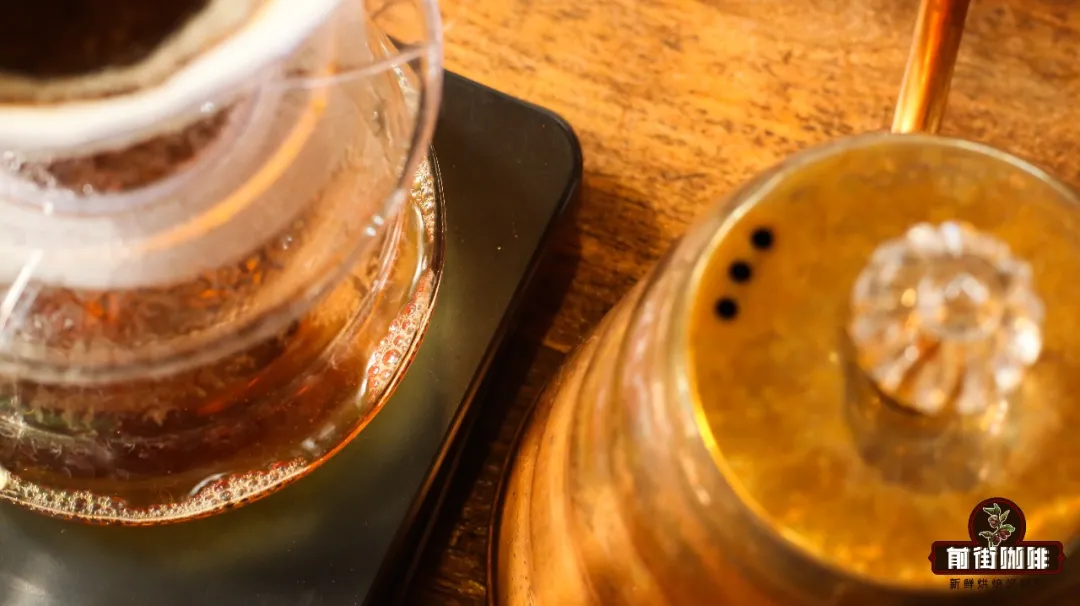
The first cup of Xizhua was quite rich whether in aroma or on the palate, sweet and sour, with prominent flavor, showing grape, passion fruit, apricot, and floral notes, full and smooth in mouthfeel, with a concentration of 1.49% and an extraction yield of 20.61%; while the second-brewed Xizhua smelled only of extremely faint fruit aroma, and on drinking almost no flavor could be perceived, only a faint woody note and an extremely weak fruity note, with a concentration of 0.31% and an extraction yield of only 4.24%.
Some people may think: if the extraction efficiency is lowered during the first brew so that not too many soluble substances are dissolved out, would it be possible to brew a good second cup?
Theoretically that makes sense, but in practice it is very difficult. The reason coffee emphasizes completing extraction in one continuous process is that the water-soluble tastes in coffee, such as sour, sweet, and bitter, need to exist simultaneously and in appropriate amounts in a cup of coffee, balancing one another, in order to obtain a good cup that suits the general palate and is recognized by most people.
And these tastes have different dissolution rates, some fast and some slow. Sour substances dissolve fastest, while bitter substances dissolve slowest. Here Front Street wants to remind everyone that dissolution speed does not equal the order of dissolution; the sour, sweet, and bitter substances in coffee all begin dissolving at the same moment they contact water, only at different speeds.
Because sour substances dissolve relatively quickly, during brewing the first to complete dissolution is sourness, followed by sweetness, and finally bitterness. If we lower the extraction efficiency, the proportion of sour substances in the coffee will be relatively larger, while the proportions of sweetness and bitterness will decrease.
Tastes balance one another. If there is not enough sweetness and bitterness to balance the sourness, the acidity in this cup of coffee will stand out especially, even overpowering other tastes, turning it into a cup of coffee that is only sour. For many people, coffee that is only sour does not count as good, and lacking sufficient sweetness, it also tastes very flat. Likewise, the second cup of coffee will lose layering because it lacks sourness.
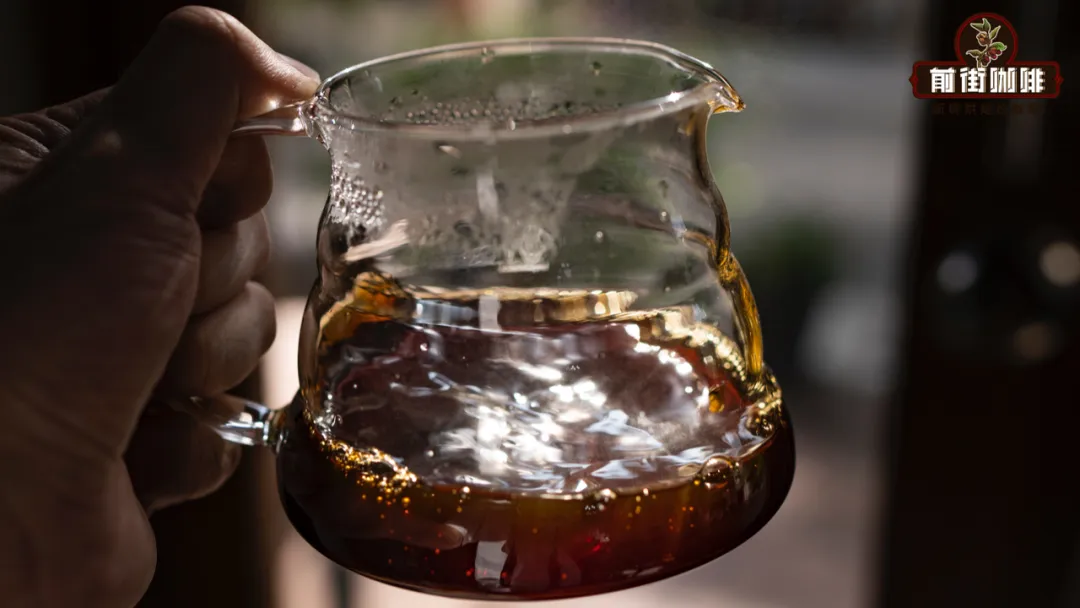
It happened that when Front Street was studying the brewing parameters of the Toutiao article on the one-pour whirlwind method, one brewed cup had a relatively low extraction yield, and the beans used were exactly Xizhua, which tasted only sour and very monotone. So Front Street brewed that pot of coffee once more.
The result was as expected: the second-brewed Xizhua likewise had no layering at all. If the full score is 100, judged by the general palate, these two cups could only be given 50 points, not unpleasant, but hardly good either. Front Street believes most friends would rather choose one 80-point cup of coffee than two 50-point cups.
So in most cases, coffee is brewed only once, concentrating the essence of the coffee grounds into one cup all at once. But then again, taste varies from person to person; some friends simply like coffee that is not so strong and choose to extract it in small amounts multiple times, like brewing tea. It is precisely for this reason that Front Street has always emphasized the general palate when sharing tasting experiences. In short, do whatever you like, as long as you enjoy it.
The above content is compiled by CoffeeHunters, a coffee news website.


