







How Does Golden Mandheling Differ From Regular Mandheling?
Mandheling is a commercial name for coffee grown on the Indonesian island of Sumatra, not a variety or a region. Golden Mandheling is a stricter grade within that family: beans must be 19 mesh or larger and pass three rounds of hand sorting plus one machine sort, which lowers the defect rate and gives a cleaner, sweeter cup.
The name Mandheling traces to a World War II miscommunication with a Mandailing ethnic group member and was later popularized by PWN. PWN registered Golden Mandheling as a trademark and added certification certificates and burlap sack markings, so authentic bags carry these markers. Cupping everyday Mandheling against Golden Mandheling shows the difference in cleanliness and sweetness.
Mandheling is neither a coffee variety name nor a region name, but a general term for coffee produced on the island of Sumatra. Within this vast family, Golden Mandheling stands out thanks to stricter screening standards—19 mesh or above, three rounds of hand sorting plus one round of machine sorting, resulting in an extremely low defect rate. This set of standards was pioneered by PWN, which later registered "Golden Mandheling" as an exclusive trademark and set up dual anti-counterfeiting measures with certification certificates and burlap sack markings. This article will sort out the origins of Mandheling, the logic behind the birth of Golden Mandheling, methods for verifying authenticity, and through cupping compare the flavor differences between everyday Mandheling and Golden Mandheling, helping you recognize true Golden Mandheling.
To clarify the difference between the two, we need to start with what Mandheling actually is.
The Definition of Mandheling
According to previous shares from Front Street, Mandheling is a special presence in the coffee world—it is neither the name of a variety nor the name of a producing region, but a general term referring to all coffee produced on the island of Sumatra.
As for the origin of Mandheling, Front Street believes everyone has heard it many times, so here is just a brief review: during World War II, a Japanese soldier drank a cup of coffee with a particularly unique aroma on the Indonesian island of Sumatra and liked it very much, so he asked the shop owner what this coffee was called. Because the two sides did not share a language, the owner thought the other was asking about his ethnicity and answered "Mandailing."
(Mandailing is an ethnic group on the island of Sumatra that relies on coffee cultivation for its livelihood.)
The Japanese soldier mistakenly assumed that the name of this coffee was "Mandheling."
After the war ended, this Japanese soldier kept thinking about the cup of coffee he had drunk on the island, so he asked the Indonesian coffee company Pawani Coffee Company ( Pawani Coffee company, abbreviated as PWN ) to purchase 15 tons of Mandheling locally in Sumatra and ship it back to Japan for sale. But Pawani Coffee Company could not find any coffee called "Mandheling" locally, so it simply packed local Arabica coffee and delivered it as "Mandheling."
Unexpectedly, this batch of beans had a unique flavor with a special stuffy aroma, and "Mandheling coffee" became very popular instead. From then on, "Mandheling," as a commercial name, gradually became the general term for all coffee from the island of Sumatra. This is the most widely known rags-to-riches story of Mandheling coffee.
Seeing this, some may ask: since all coffee on the island of Sumatra is called Mandheling, what role does Golden Mandheling play?
What Is Golden Mandheling
The word "golden" does not mean that this Mandheling looks golden in appearance, but refers to its quality being as precious as gold because of its extremely strict screening standards.
Coffee beans are an agricultural product, and agricultural products cannot achieve completely uniform quality like industrial products, so a corresponding grading system is needed to classify quality and facilitate trade. The highest grade for regular Mandheling is G1. To reach this grade, three conditions must be met at the same time: ① beans larger than 18 mesh; ② no more than 3 defective beans among 300 green beans; ③ three rounds of hand sorting.
There are already not many Mandheling beans that can reach the G1 grade, and the threshold for Golden Mandheling is even higher. Its defect rate requirement is the same as the former, but the bean size must reach 19 mesh, and in addition to three rounds of hand sorting, it also undergoes an additional machine sorting. The machine detects the density and color value of the beans and removes defective beans that are difficult to distinguish with the naked eye, ultimately producing a batch of Mandheling with consistent size and color and better quality.
This set of standards was formulated by Pawani Coffee Company, the company that first introduced "Mandheling coffee" to Japan—the same company mentioned in Front Street's story above. As Mandheling coffee became popular, various bean merchants rushed to label their Sumatra coffee as Mandheling for sale. This led Mr. Du, the person in charge of Pawani Coffee Company, to conceive the idea of launching a product different from the Mandheling on the market in order to gain more competitive advantage, so Pawani Coffee Company began setting higher coffee bean standards to emphasize that its products were superior.
Golden Mandheling was one of the products born under this background. Just as Mr. Du expected, higher-quality Mandheling won public acclaim with better flavor performance and a cleaner mouthfeel, so he named it "Golden Mandheling" to highlight the quality of this Mandheling as precious as gold.
However, when other bean merchants saw that Golden Mandheling had become popular, they also followed suit and imitated it, so all kinds of "Golden Mandheling" appeared on the market. Some "Golden Mandheling" used as its selling point beans that looked golden in appearance; some "Golden Mandheling" claimed a mesh count as high as 20 or above... Various standards were all over the place.
In order to rectify the proliferation of "Golden Mandheling" on the market, PWN simply registered "Golden Mandheling" as an exclusive trademark to reduce bean merchants' free-riding behavior. From the above, it can be seen that only Golden Mandheling produced by PWN is true Golden Mandheling.
Even so, quite a few fake Golden Mandheling beans still circulate on the market, which led PWN to launch a second layer of "anti-counterfeiting certification." Merchants who purchase Front Street PWN Golden Mandheling green beans will receive a certification certificate provided by PWN to prove the source of their Golden Mandheling.
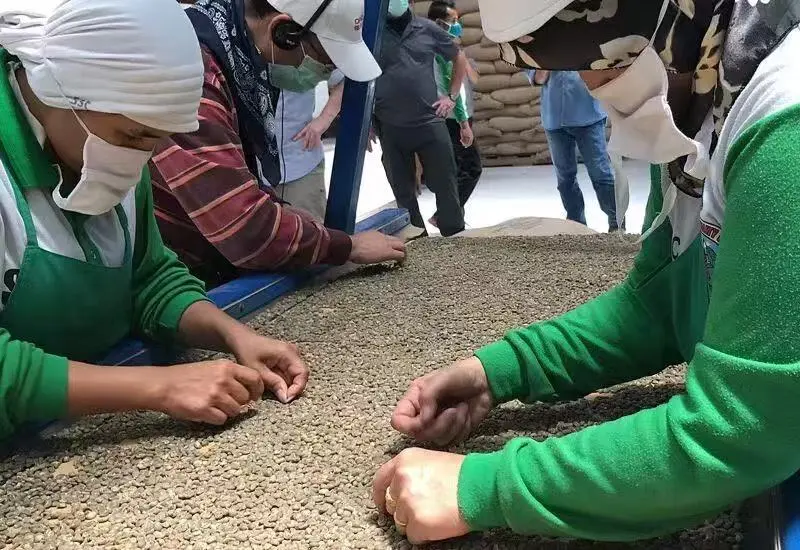
In addition, the burlap sacks of Golden Mandheling green beans are printed with PWN's three-letter abbreviation. When buying Golden Mandheling, everyone can ask the merchant to show these two things to verify authenticity or source. Of course, Front Street Coffee has both—the store even hangs the Golden Mandheling green bean burlap sack with the letters PWN, and there is also a stack of certificates piled up like a mountain, so if you want to buy authentic Golden Mandheling, Front Street Coffee is a very good choice.
.
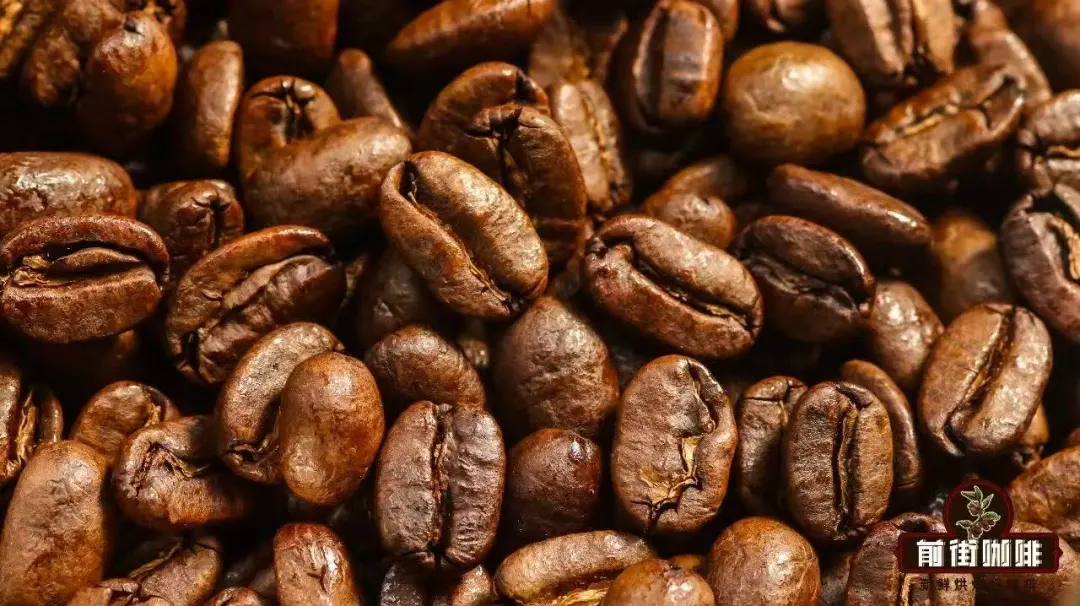
In addition to Golden Mandheling, Front Street's bean list also sells everyday Mandheling that highlights regional flavor. Both are of the highest grade and both use the wet-hulled method, so they are perfect for comparison. To avoid too much human interference affecting the coffee, Front Street uses cupping here for tasting!
The cupping performance of everyday Mandheling is quite outstanding, with a full body and rich aroma. You can clearly taste roasting aromas such as pine, chocolate, and toast, as well as the thick, stuffy aroma unique to Mandheling; Golden Mandheling has a cleaner mouthfeel, with flavors mainly of roasting aromas such as chocolate, nuts, and caramel, not many miscellaneous flavors like herbs, a full and silky mouthfeel, and a long, lasting finish—a very good performance.
The two Mandheling coffees each have their own strengths. Front Street everyday Lintong Mandheling clearly showcases the characteristic flavor of the Indonesian producing region, while Golden Mandheling presents a cleaner performance on the original basis. Both are well worth trying. Since there is a promotion today, friends who are interested can go to the shopping website and directly search for Front Street to learn more~
- END -
The above content is compiled by CoffeeHunters, a coffee news website.


