







How Does Pour Timing Change Extraction in Pour-Over Coffee?
In multi-pour pour-over, waiting for the dripper to drain completely before the next pour extracts more than pouring while liquid remains. The difference comes from two things: a longer total contact time and a more concentrated liquid in the bed. With only a few pours the gap is small, but each added stage compounds it.
This matters for anyone learning how to process coffee beans into a consistent cup, because pour timing is a control lever, not a rule. Fewer stages keep results predictable; more stages amplify any timing choice. Adjust the pouring point to steer extraction yield and flavor rather than following one fixed schedule, and keep other variables steady while testing.
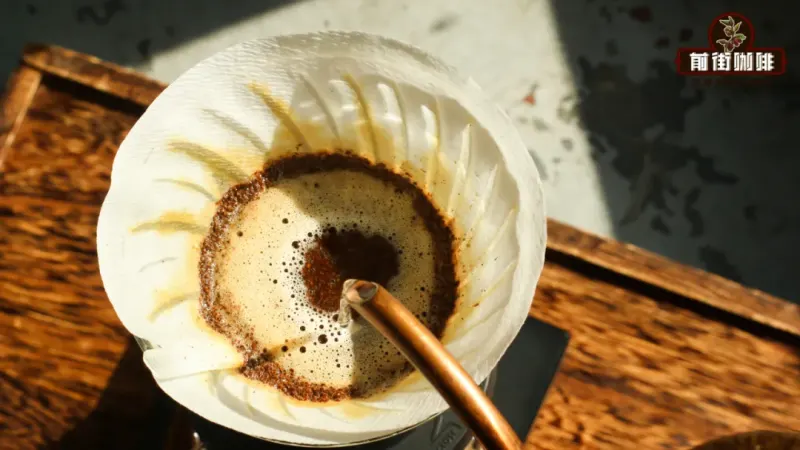
Multi-pour pouring in pour-over coffee is a brewing method commonly used by many enthusiasts, but for each pour, should you wait for the water level to drain completely before pouring again, or continue pouring while there is still liquid in the dripper? This seemingly minor choice actually affects the final extraction efficiency through two dimensions: extraction time and liquid concentration. Starting from a comparative experiment at Front Street, this article analyzes the specific effects of different pouring timings on extraction yield and flavor performance, and offers practical advice on how to flexibly choose pouring points in different brewing scenarios, helping you more precisely control the flavor direction of every cup of pour-over.
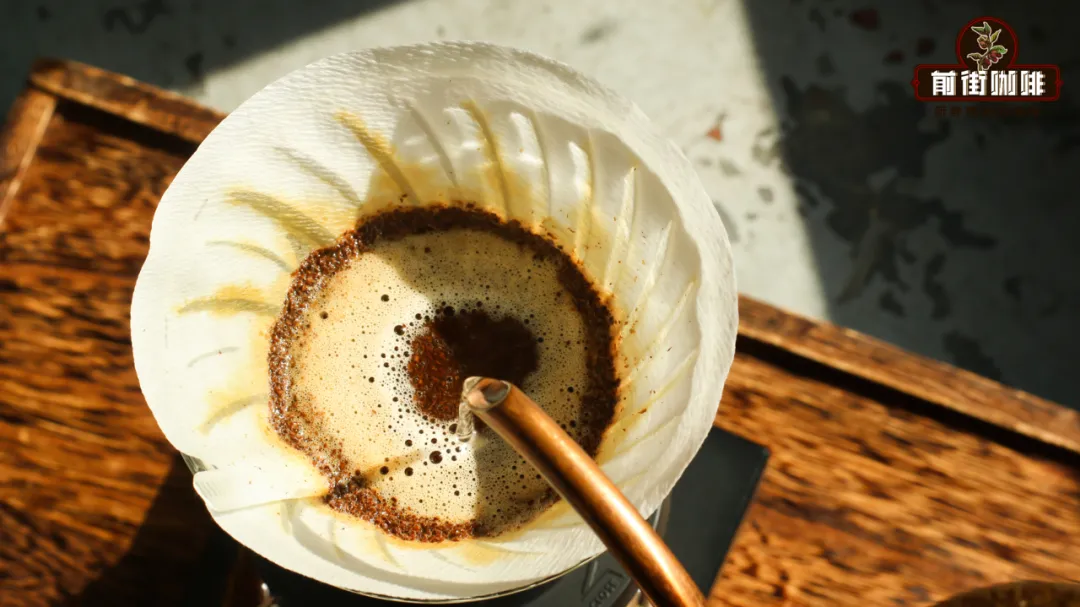
In multi-stage brewing, the choice of pouring timing often leaves people unsure. So-called multi-stage simply means splitting the total hot water needed for brewing into several separate pours. For example, the three-stage method means pouring the total water in three pours; another widely circulated method, the 4-6 method, divides the water into five pours. There are many similar approaches. As long as the water is not poured all at once but completed in multiple pours, it can be included in the category of multi-stage pouring.
The reason beginners struggle with this question is that they worry the pouring point will interfere with extraction, and that is indeed the case: different pouring timings do affect the extraction of a cup of coffee. However, if the number of stages is not large, the effect is relatively limited; once the number of stages increases, the effect is amplified through repeated accumulation.
What is the difference between different pouring timings?
The core difference between "wait for the water to drain before pouring" and "pour before the water drains" is reflected in extraction efficiency. When other conditions remain unchanged and only the pouring timing differs, waiting for the water in the dripper to drain completely before pouring the next stage will have higher extraction efficiency than pouring before the water has drained. There are two main reasons for this difference: the length of extraction time, and the concentration of the liquid in the dripper.
Front Street also mentioned in previous articles on multi-stage pouring that staged pouring itself lengthens the entire extraction process, because after each pouring stage is completed, you usually have to wait for the water level in the dripper to drop to a suitable point before starting the next stage, and this waiting time is added on top.
The more stages there are, the more waiting intervals are needed, and the total extraction time naturally increases accordingly. The interval in the dripper from the end of pouring to the completion of drainage is affected by coffee grounds density and the amount of water poured, generally fluctuating between 4 and 10 seconds.
Therefore, under the premise of the same number of stages, waiting for the water to drain before pouring the next stage takes longer than pouring before the water has drained. Time is directly related to extraction efficiency, because extraction time is essentially the duration of contact between water and coffee grounds. The longer the contact, the relatively higher the extraction efficiency; conversely, the lower it is.
Another factor is that the concentration of the liquid in the dripper is refreshed. If you wait until the water has drained before pouring hot water, then at that moment the liquid washing through the coffee grounds has a lower concentration; if you pour hot water while there is still liquid, the newly poured water will mix with the original liquid that already has a certain concentration.
According to the principle of concentration gradient, water with lower concentration has stronger extraction ability. Therefore, waiting for the liquid in the dripper to drain completely before pouring hot water results in higher extraction efficiency, because at that time the hot water participating in extraction has a relatively lower concentration.
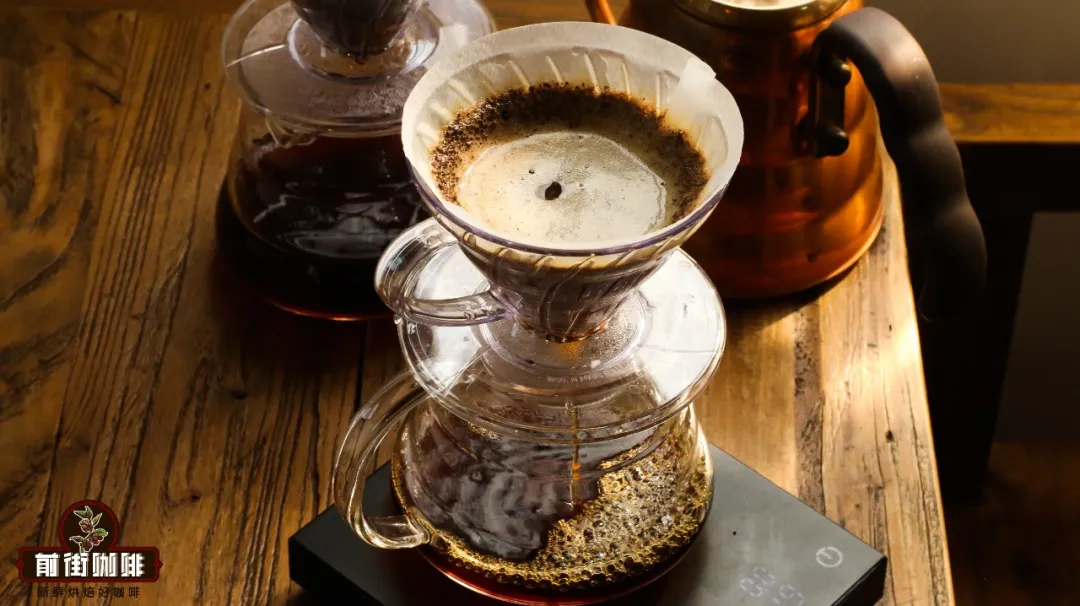
Under the combined effect of the two factors, time and concentration, different pouring timings bring different extraction efficiencies. Even if all other parameters are completely identical, pouring the next stage after the water has drained will still have relatively higher extraction efficiency.
However, it should be understood that, as Front Street said earlier, if the number of stages is not large, this difference is actually not very obvious.
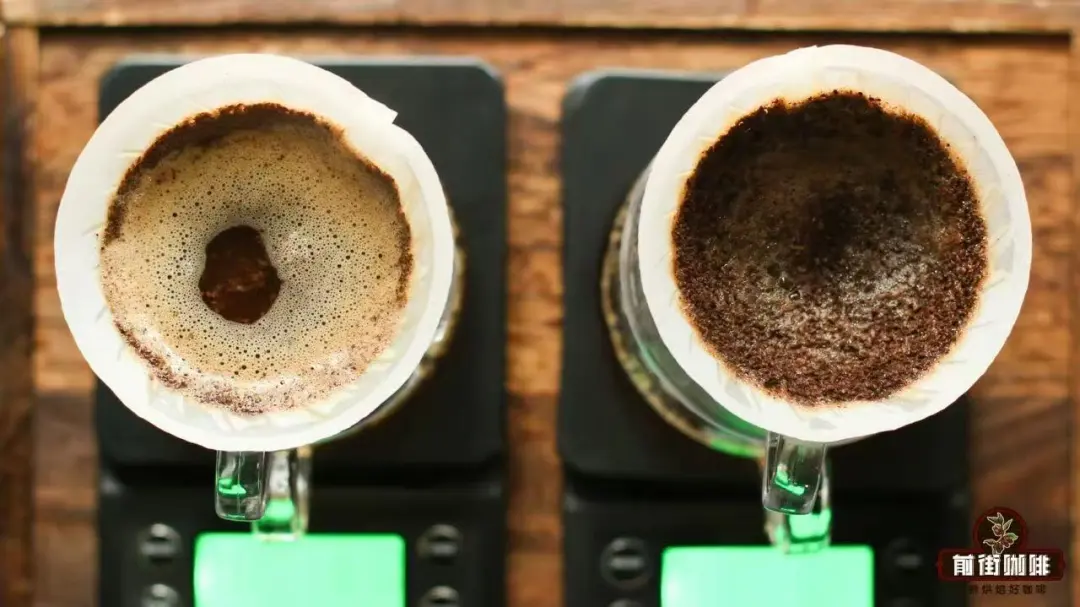
Take an experiment by Front Street as an example. Front Street once conducted a comparison using two pots of coffee for testing, with roughly the same brewing parameters, both using three-stage pouring. The only difference was that one pot poured the third stage only after the second stage had completely drained, while the other poured the third stage before the second stage's water had finished draining. The beans used were Front Street Ethiopia Hambela from the Front Street bean list.
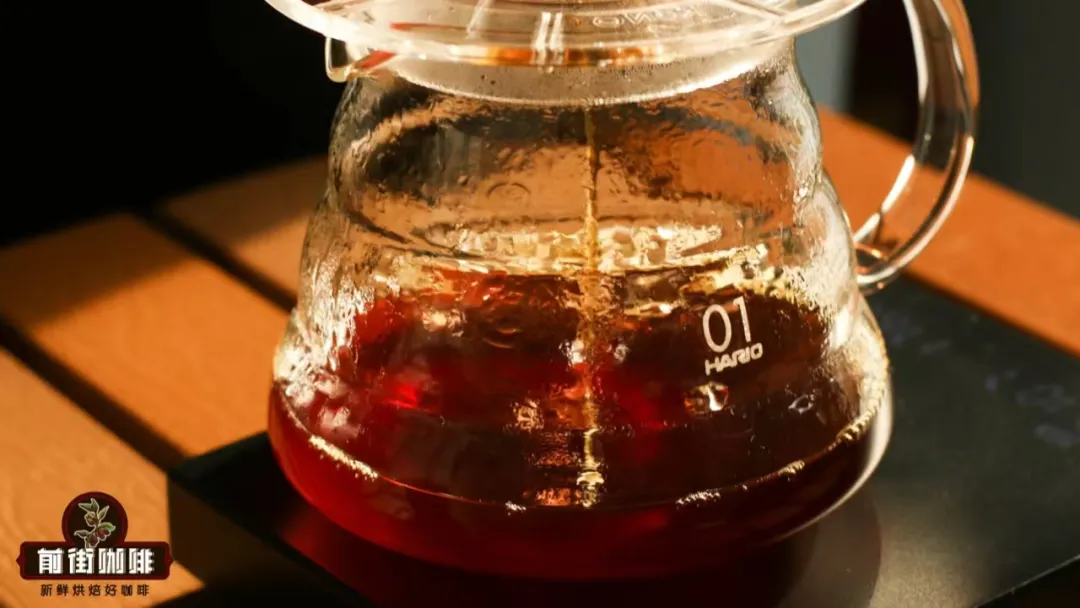
To reduce error, in that experiment Front Street brewed four pots in total and used a showerhead drip filter to reduce human interference. The final results showed that the two pots with earlier pouring had an average extraction time about 10 seconds shorter than the two pots with later pouring; in terms of average extraction yield, the earlier-pouring group was 16.8%, while the later-pouring group was 17.3%. In flavor performance, both had the same direction, showing strawberry, guava, citrus, and floral notes, but the earlier-pouring cup had a slightly thinner body than the later-pouring one.
From this it can be seen that the gap does exist, but the magnitude is not large. However, if the number of stages increases further, this difference will become more noticeable.
So, when exactly should you pour hot water mainly depends on the effect we want to achieve at the moment, or on observing the drainage state of the coffee liquid during extraction. If the drainage speed is slow, the number of stages is large, or over-extraction is likely, then you can choose to pour the next stage before the water has drained; conversely, if the situation is the opposite, you can wait for the liquid to drain completely before pouring.
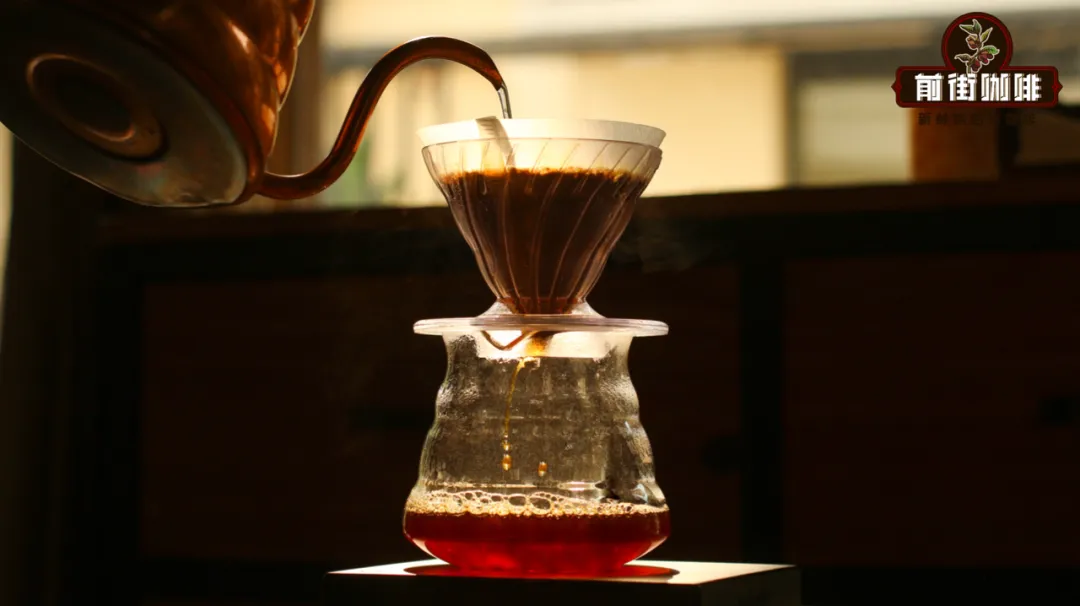
Of course, Front Street is only using one example here for illustration, and in actual brewing you still need to adjust flexibly according to the specific situation~
- END -
The above content is compiled by CoffeeHunters, a coffee news website.


