








Why Was the People's Coffee Trademark Rejected in China?
A coffee chain branded People's Coffee has drawn attention in Shijiazhuang and now spans 18 provinces and 20 cities with nearly 30 directly operated outlets. Its parent, Yaochao (Shanghai) Cultural Communication Co., Ltd., has applied for the People's Coffee trademark repeatedly since 2022, and every application was rejected.
The company holds only two registered marks, Chao People's Coffee and Yaochao People's Coffee, yet storefront signage omits both Chao and Yaochao. Lawyers say the gap raises questions about signage compliance and trademark use, and some residents mistook the sign for a government office. The case sits at the intersection of china and coffee retail expansion, brand law, and public coffee culture debate.
Recently, a coffee shop branded "People's Coffee" sparked widespread discussion in Shijiazhuang, and a subsequent media investigation found that similar stores have spread across 18 provinces and 20 cities nationwide, with nearly 30 directly operated outlets. Its parent company, Yaochao (Shanghai) Cultural Communication Co., Ltd., has applied multiple times for the "People's Coffee" trademark since 2022, but all applications were rejected; it currently holds only two registered trademarks, "Chao People's Coffee" and "Yaochao People's Coffee," yet the actual storefront signage does not display the words "Chao" or "Yaochao." This phenomenon has drawn public attention to the compliance of commercial signage, trademark usage norms, and potential legal risks, and lawyers have offered professional interpretations on the matter.
▲
Click to follow | Daily specialty coffee culture magazine Coffee Workshop
Recently, a coffee shop on Zhongshan Road in Shijiazhuang, Hebei Province, bearing the sign "People's Coffee," drew widespread public attention after being reported by Modern Express and other media outlets.
It is understood that this "People's Coffee" store uses red as its overall visual theme, with "People's Coffee" prominently displayed on the sign, accompanied below by the slogan "People's Coffee for the People." According to a China Youth Daily reporter's investigation, stores in a similar style have in fact long appeared in many places across the country, some of which have even become popular check-in spots on social platforms, with netizens' store visit photos frequently seen on social media.
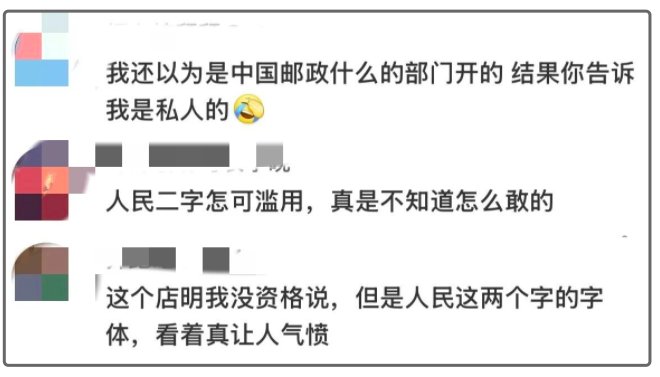
Regarding this phenomenon, many netizens expressed their views: the word "People" carries strong public attributes and political connotations, and using it as the sign of a commercial coffee shop feels jarring and somewhat uncomfortable. At the same time, because the store sign uses the two characters "People," its legal compliance has also been questioned.
Some residents also reported that when they first saw the "People's Coffee" sign, they mistook it for the People's Daily or a store run by some government department using a similar font, and only realized otherwise after actually visiting the store, believing that the merchant's use of the "People" font as a store sign can easily cause misunderstanding.
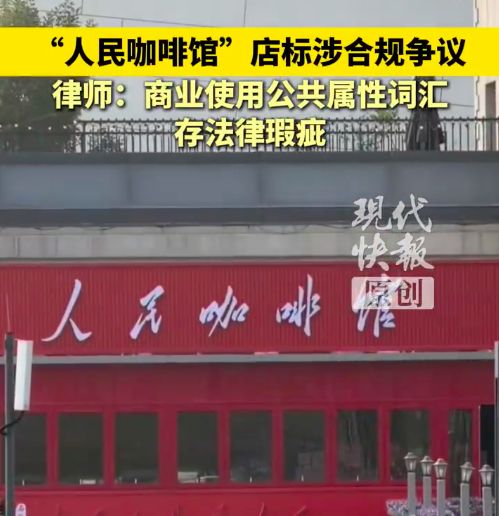
According to the reporter's investigation, "People's Coffee" has now opened nearly 30 directly operated stores across 18 provinces and 20 cities nationwide, with its parent company being Yaochao (Shanghai) Cultural Communication Co., Ltd. (hereinafter referred to as Yaochao Culture).
Qichacha data shows that the coffee shop under Yaochao Culture was originally named "THE PEOPLE." Starting in 2022, the company applied multiple times for the "People's Coffee" trademark, but all were rejected; it currently holds only two registered trademarks, "Chao People's Coffee" and "Yaochao People's Coffee." However, after checking images of several directly operated stores' facades, the reporter found that the signage does not display the words "Chao" or "Yaochao," but instead presents the "People's Coffee" style.
In October of this year, Yaochao Culture issued a statement claiming that "a large number of imitators of People's Coffee have emerged nationwide, suspected of misappropriating the brand name and visual design, and even conducting illegal franchising." However, this statement can no longer be seen on the official "People's Coffee" account.
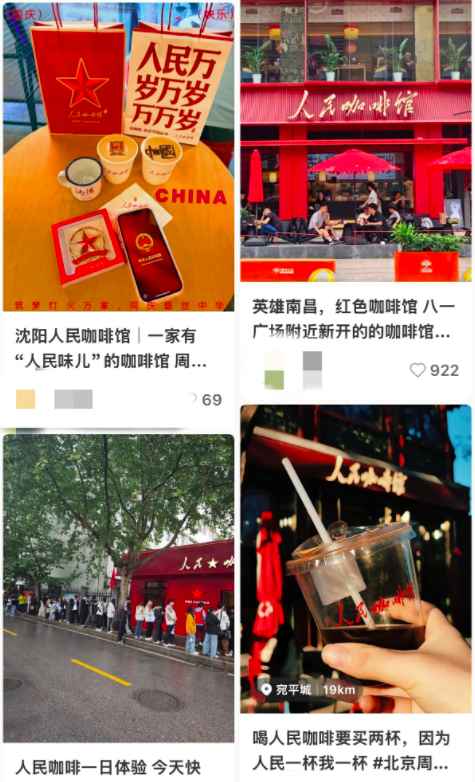
(Image screenshot from a video posted by the Douyin account @做点什么)
The reporter consulted a lawyer regarding the feedback from netizens, who pointed out that Article 10, Paragraph 8 of the Trademark Law of the People's Republic of China clearly stipulates that signs detrimental to socialist morals or customs, or having other adverse effects, shall not be used as trademarks.
The word "People" has distinct public attributes and profound political connotations, carrying specific social emotions and public interests. Using it alone as a commercial service sign on a large scale does indeed create the possibility of misleading the public about the nature and source of the service, and may also harm the public value carried by the word, thus posing a risk of being deemed to have "other adverse effects."
At the same time, the "People's Coffee" sign actually used by the company in question differs significantly from its approved registered trademarks "Chao People's Coffee" and "Yaochao People's Coffee." Such use not in accordance with the approved registered trademark style also fails to meet the normative requirements for trademark use.
In addition, the lawyer emphasized that coffee shops that have not obtained trademark rights also face multiple potential risks. On the one hand, lacking the protection of exclusive trademark rights, they cannot effectively prohibit others from using the same or similar signs, making it difficult to safeguard their own business interests. On the other hand, if a subject later legally obtains the relevant trademark rights, current users may face the risk of being sued for infringement, and market regulatory authorities may also handle their non-compliant use in accordance with relevant provisions of the Trademark Law.
Image source: Internet
Disclaimer: Some images in this article are from the Internet. For some content on the website, such as images, we will respect the original author's copyright and indicate the source. However, due to the large quantity, some images and texts may not have been credited in time; please forgive us. If the original author has any dispute, they may contact the website for handling. Once verified, we will correct it immediately. Compiled and edited by "Coffee Workshop." Please indicate the source when reposting. If there is any infringement, please inform us for deletion. Thank you ~ !
The above content is compiled by CoffeeHunters, a coffee news website.


