







Why Is Yirgacheffe Coffee Sold as Heirloom?
Ethiopian coffee is labeled Heirloom because the country holds thousands of distinct arabica varieties, and most beans come from wild stands and smallholder plots where lots are picked and processed together. Traders and roasters cannot isolate single cultivars the way they do in other origins, so the catch-all term Heirloom covers beans that may include Yirgacheffe and other regional lots.
Heirloom is not one cultivar but a label for Ethiopian coffee that has not gone through modern breeding selection. The term fits Ethiopia's history as the birthplace of arabica coffee, where wild and semi-wild trees have been kept for generations. Yirgacheffe beans, usually washed, carry the floral and citric character that buyers expect from this group of native varieties.
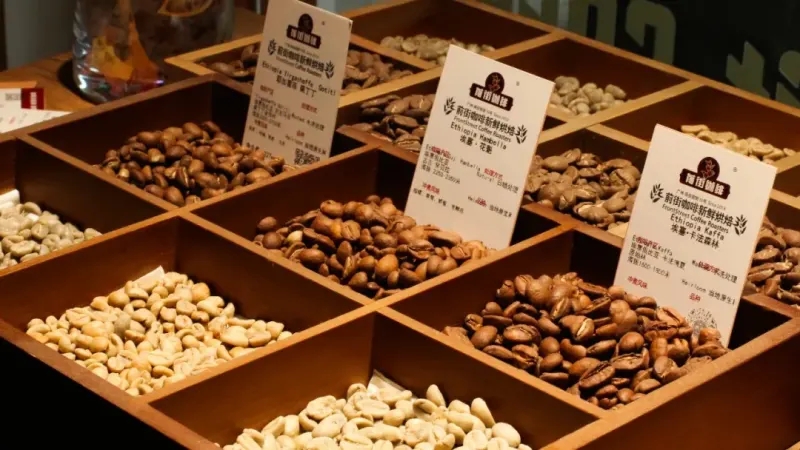
When selecting Ethiopian coffee beans, many people notice that the variety column almost always reads "Heirloom/原生种," and Front Street Coffee and other vendors are no exception. Why doesn't Ethiopian coffee label specific varieties like other producing countries? Is Heirloom actually Arabica? What does it have to do with the flavors of Huakui and Yirgacheffe? This article, from Front Street's perspective, first explains the definition and origin of Heirloom, then explains the practical reasons why Ethiopia finds it difficult to subdivide varieties, including its vast coffee gene pool, the predominance of wild harvesting and smallholder farming, and the common practice of mixed purchasing at processing plants. Finally, it will also mention that Ethiopia does not only have Heirloom, and uses Huakui and Gudingding from Front Street's bean list as examples to let you experience the classic flavors of Guji and Yirgacheffe.
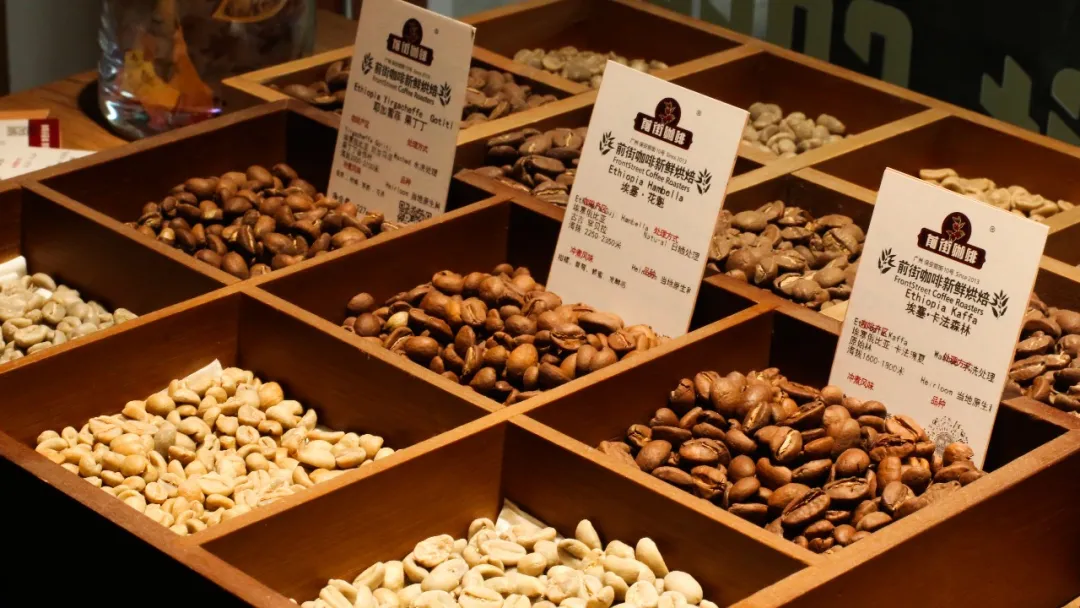
Many friends notice when picking beans that the variety column for Ethiopian coffee almost uniformly reads "Heirloom/原生种." Not only Front Street, but most other vendors selling Ethiopian beans also label them this way. This makes one wonder: why are Ethiopian coffee varieties generally categorized as "Heirloom"?
Ethiopian coffee is mostly Heirloom, as Front Street has discussed in past content, and this is closely related to local coffee production methods. To understand this, we need to start with the concept of "Heirloom." What is Heirloom? Heirloom is not the name of a specific variety, but a general term for coffee beans produced in Ethiopia, broadly referring to all coffee grown within Ethiopia. In the Oxford English Dictionary, "Heirloom" is defined as "a valuable family possession passed down through generations." This meaning comes from a long history: as early as the 9th century AD, locals began utilizing wild coffee resources, and these coffees have been preserved generation after generation as an agricultural cultural heritage, like family treasures, hence Heirloom is also translated as "传家宝." However, more often, people still call it "原生种," meaning coffee planted locally in Ethiopia. (Mainly referring to coffee that has not undergone modern breeding selection and has mixed varieties)

So why does Ethiopia need to use "Heirloom" as a general term for its locally produced coffee beans? Because this country, unlike other coffee-producing countries, finds it difficult to identify and distinguish every coffee variety. Why? As the birthplace of Arabica coffee, Ethiopia is home to thousands of different coffee varieties. Some studies speculate that the number of coffee varieties currently existing in Ethiopia may exceed 10,000, making Ethiopia the world's largest coffee gene pool.
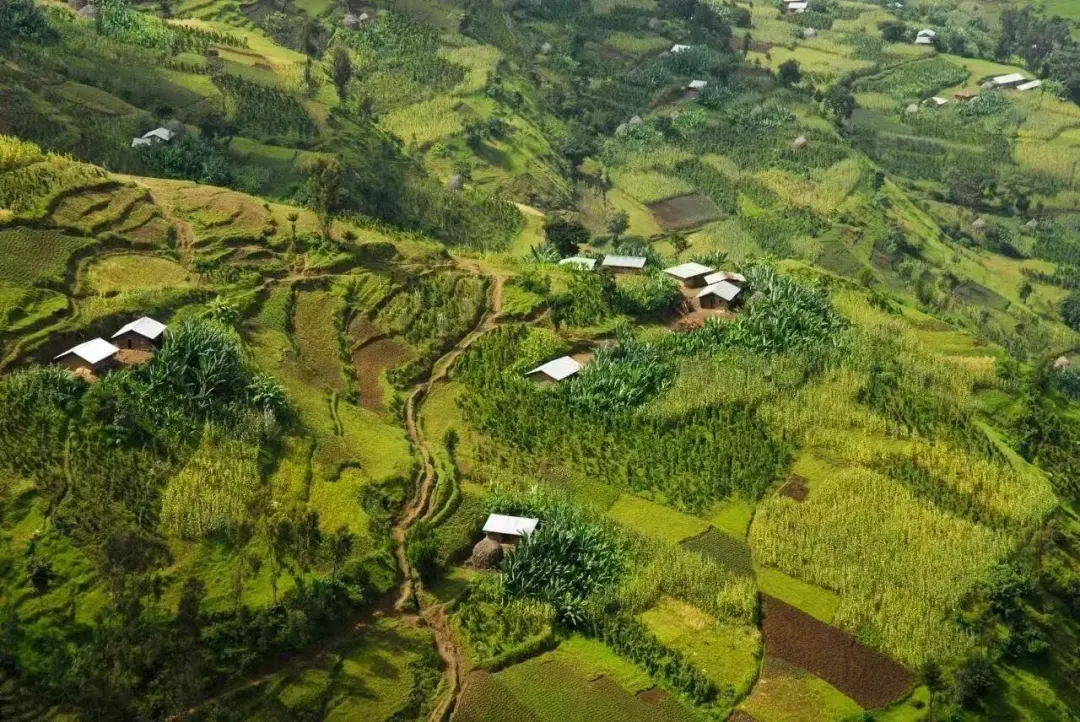
With such a vast scale, precise classification and identification naturally become a major challenge for Ethiopia. Of course, this is only one aspect. Another reason lies in the local coffee production model. Only about 10% of Ethiopian coffee comes from large farms or estates, while the remaining 90% comes from wild harvesting and smallholder farming. Smallholder farming accounts for the majority of total production, as there are a large number of coffee farmers in Ethiopia growing coffee in their own yards or fields. After the coffee ripens and is harvested, it is sent to nearby processing plants or cooperatives for sale.
And these coffee cherries sent to processing plants/cooperatives whether wild coffee harvested deep in forests or coffee grown by smallholders themselves, the vast majority are not single varieties, but batches mixed with countless unidentified varieties. Because unless specifically requested, farmers often harvest whatever is available and plant whatever they have, not caring about the coffee variety, as long as the quantity is sufficient and it can be exchanged for money. As a result, the coffee varieties received by processing plants or cooperatives are not single. They also cannot identify and subdivide these varieties one by one, and similarly process them together and then sell them.
To solve the problem of Ethiopian export coffee being difficult to classify due to mixed varieties, after the rise of international trade, especially the concept of specialty coffee, people began to use the name "Heirloom" (原生种) as a general term for these coffees. This not only solved the challenge of labeling export information but also highlighted the originality and value of Ethiopian coffee. So nowadays, most coffee produced in Ethiopia has Heirloom written in the variety column. Of course, as Front Street said, Ethiopian coffee is mostly Heirloom, but some estates or cooperatives also specifically plant and produce single varieties to emphasize them. For example, Front Street's bean list includes Front Street Gesha Village Gold Label Gesha, Red Label Gesha, Front Street Ethiopia Hamashu, ALO, and other beans that are single varieties.
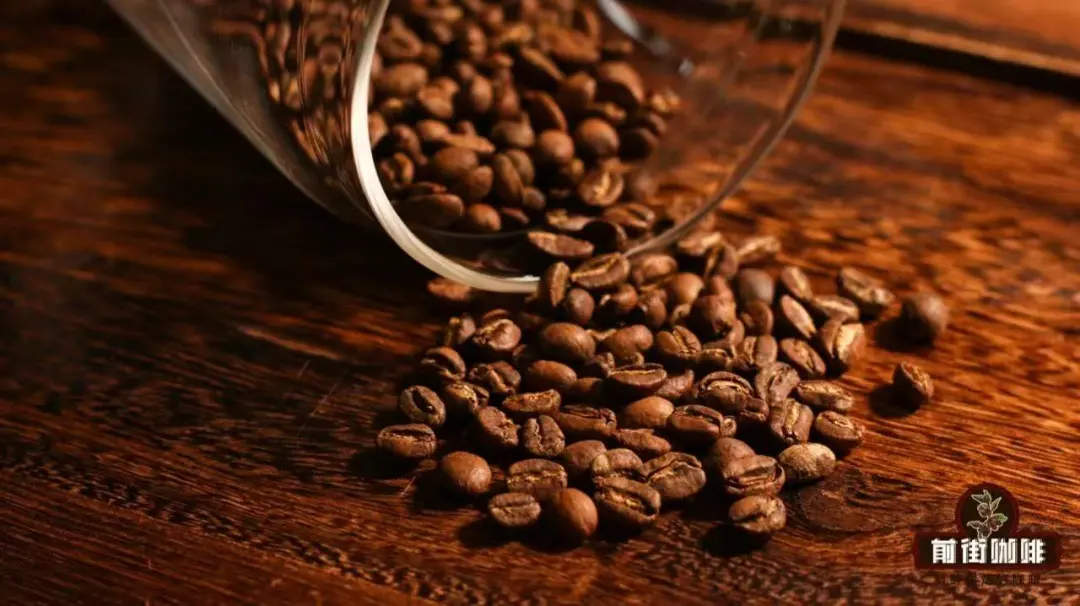
Mixed varieties are not a bad thing. Although they vary in size and appearance, the flavor performance will not be chaotic because coffee flavor depends more on the unique geographical conditions and climate environment of the growing region, and what we taste is more the terroir of the region. For example, Front Street Ethiopia Huakui, with Heirloom as its variety in Front Street's bean list, is a relatively classic Ethiopian Guji flavor. The brewed coffee tastes mainly sweet and sour, with flavor notes of citrus, strawberry, oolong tea, and pineapple.
Or another bean in Front Street's bean list with Heirloom as its variety—Front Street Yirgacheffe Gudingding. The flavor of this bean is very pure Yirgacheffe taste. The brewed coffee tastes relatively soft, with flavor notes of white floral, lemon, green tea, and berries. That's all for this Front Street sharing. Friends who are interested can try it themselves. Ethiopian coffee is really very good~
- END - Front Street Coffee Frontstreet coffee
No. 315 Donghua East Road, Dadong Street, Yuexiu District, Guangzhou City, Guangdong Province
The above content is compiled by CoffeeHunters, a coffee news website.


