







How to Choose a Pour-Over Kettle for Hand Brewing Coffee
For hand brewing coffee, a beginner only needs to weigh two things before buying a kettle: whether it has temperature control, and how easily the water flow can be controlled. A temperature-controlled kettle costs more but removes guesswork, while a plain kettle is cheaper and requires a separate thermometer.
Water flow depends on the neck length, its inner diameter, and the spout shape. A slender gooseneck with a small curved spout suits beginners who want steady pouring; a short thick neck with a wide flat spout suits experienced brewers. Remember that water temp for brewing coffee still needs checking even with a temperature-controlled model.
Faced with the dazzling array of pour-over kettles on the market, how should beginners make a suitable choice? Front Street points out that when buying, you only need to focus on two key dimensions: whether it comes with a temperature control system, and how easy it is to control the water flow. Temperature-controlled and non-temperature-controlled versions differ significantly in price and convenience—taking Brewista as an example, the price gap between the two can reach about four times. The difficulty of water control mainly depends on the length of the kettle neck, its inner diameter, and the shape and caliber of the spout—a slender gooseneck with a small-caliber curved spout suits beginners seeking stable pouring, while a short, thick neck with a large-caliber flat spout is better suited to advanced players who enjoy fancy pouring techniques. This article will break down these two directions one by one, and include specific recommendations for Front Street's commonly used Hario Cloud kettle, Kalita Swan Neck kettle, Fellow kettle, and others, to help you find the one that fits your hand best.
Front Street often jokes that as long as you can pour water, any container can be used to brew coffee. But that saying only holds true for coffee enthusiasts who have already been at it for a while and are experienced. If you're a beginner just getting into pour-over, it's still more reliable to honestly pick a kettle designed specifically for pouring—with one, the water flow is easier to keep stable, and the difficulty of brewing good coffee drops considerably.
Pour-over kettles come in all shapes and varieties, so how exactly should beginners pick one that's handy? A lot of friends have asked this question recently while buying beans. Actually, the answer isn't complicated. Though the types of pouring kettles are dazzlingly diverse, with different products varying in spout, body, handle, and material—and Front Street has previously written a detailed analysis on this—the core directions a beginner really needs to think through before placing an order are just two: first, whether the kettle has a temperature control function; second, whether it's easy to control the water flow.
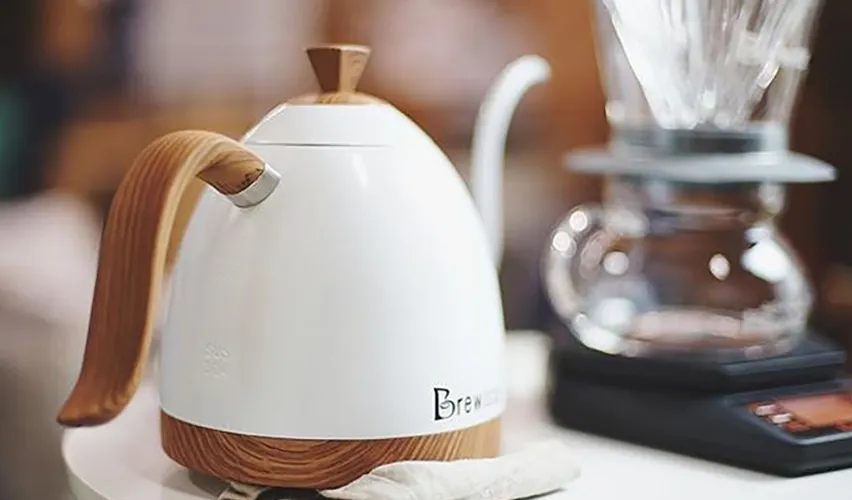
The difference between temperature-controlled and non-temperature-controlled pour-over kettles mainly shows in two areas: price and convenience. If the kettle itself has no temperature control module, then we need to prepare a separate kettle to boil water, plus a thermometer to measure the temperature; if the kettle has a built-in temperature control function, then it's simple—just pour the water in, and it will automatically heat to your set temperature. If your budget is generous and you don't want too much hassle, a temperature-controlled kettle is definitely a worry-free choice; but if your budget for pour-over gear isn't that big and you don't mind a few extra steps, Front Street would suggest considering a non-temperature-controlled model. Taking the well-known B kettle (Brewista) in the community as an example, the price difference between its temperature-controlled and non-temperature-controlled versions is roughly four times.
Of course, if you have both a sufficient budget and don't mind putting in extra effort, you can also pick a pour-over kettle priced similarly to a temperature-controlled one but made with finer materials. There are plenty of options, and the final effect you want depends entirely on your own preference. With the topic of temperature control done, let's look next at the difficulty of water control. Although how well a kettle controls water is affected by many factors, in the end it's mainly the neck and the spout that play the leading role.
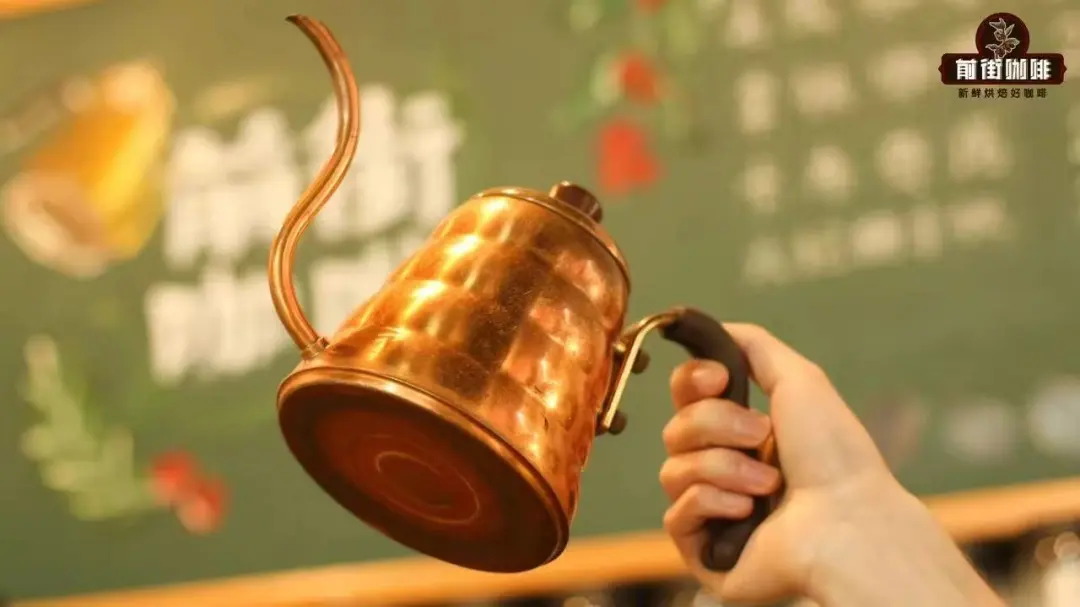
The length and inner diameter of the kettle neck, plus the shape and caliber of the spout, together determine the difficulty of water flow control and the level of playability. If you don't want to spend too much time practicing pouring and don't pursue high playability, then when choosing a kettle you can go for a gooseneck style with a smaller inner diameter and a less gentle curve, paired with a spout of modest caliber that has a curve. A slender neck can nicely constrain the stream and accelerate the flow, while a proper curve helps make the poured stream more steady; combined with a spout that guides the flow, you can aim exactly where you want and easily pour a stable vertical stream to brew coffee. Pour-over kettles on the market with these characteristics include the B kettle mentioned earlier by Front Street, as well as the Hario Cloud kettle that Front Street commonly uses.
This kind of design is friendly to beginners just starting out or those who don't want to delve too deep into brewing; the downside is lower playability—if you want to try some more difficult brewing techniques, it may not be quite enough.
If you're an enthusiast who wants to delve deep into brewing and has a playful streak, then you can do the opposite and choose a neck and spout with characteristics contrary to what Front Street described above. That is, a slightly shorter neck, a thicker inner diameter, a gentle curve, and a spout with a larger caliber that's relatively flat. These two combinations increase the difficulty of controlling the water flow and stream, because during pouring the water is subject to fewer constraints; to pour a stable stream and control the flow rate requires a lot of practice. But the benefit also comes from this "fewer constraints"—once you've mastered it, you can easily play with all kinds of fancy pouring like drip techniques. There are quite a few pour-over kettles on the market matching these characteristics, such as Kalita's Swan Neck kettle and the Fellow kettle, among others.
The above are the two main directions to consider when choosing a pour-over kettle; for the rest, just choose according to personal preference. You can take this as a reference—it should help you pick a handy pour-over kettle~
- END -
The above content is compiled by CoffeeHunters, a coffee news website.


