








Where Are Coffee Beans Grown for That Tomato Note?
That vivid little-tomato acidity in Kenyan coffee comes from four things working together: variety, growing environment, processing and roasting. Kenya sits in the low-latitude tropics near the equator with two concentrated rainy seasons a year, and its coffee is grown mainly in the volcanic highlands of the central region, where elevation and climate shape roughly 30 percent of the final flavor.
The two classic varieties SL28 and SL34 carry much of the bright fruit character, and the K72 washed process reinforces it during fermentation and drying. Growing conditions for coffee in Kenya—equatorial rainfall, volcanic soil and high-altitude plots—set the foundation, while roasting decides how much of that tomato-like acidity actually reaches the cup.
That vivid little-tomato acidity in Kenyan coffee often leaves first-timers surprised and captivated. Why does Kenyan coffee have such a pronounced tomato note and bright fruit acidity? Behind this lies a combined effect of four factors: variety, growing environment, processing method, and roasting. Starting from everyday conversations at the Front Street shop, this article analyzes the terroir conditions of Kenya's producing regions, the two classic varieties SL28 and SL34, and the famous K72 washed process, and shares the complete brewing parameters for Front Street's "Kenya · Little Tomato" beans, guiding you through a systematic understanding of how Kenyan coffee flavors are formed and what to look for when tasting them.
Front Street: "Would you like to try this Kenya? The little tomato and smoked plum notes are really prominent!" The customer friend smelled the dry aroma: "Oh my!!! Such a strong tomato smell — how does that happen?"
This scene plays out almost daily at the Front Street shop. When encountering customers who want to try unique flavors, Kenya · Little Tomato is often one of the first beans Front Street recommends. When recommending it, Front Street usually has the customer smell the dry aroma first, and within seconds, they're almost always startled by that striking tomato scent, wearing an expression of disbelief. It's not just the dry aroma — when actually drinking it, you can likewise sense the bright little-tomato acidity. So many friends later ask Front Street: "Why is the tomato flavor in Kenyan coffee so intense?" And because of this, the topic has become something Front Street is always happy to revisit.

Variety, cultivation, processing, and roasting — these four things together determine the final flavor a cup of coffee presents. Let's start with cultivation, because the environment in which coffee grows lays the foundation for about 30% of its flavor. Kenya's Terroir The reason most Kenyan coffees carry a little-tomato-like acidity is rooted in the local terroir providing extremely ideal conditions for flavor formation.
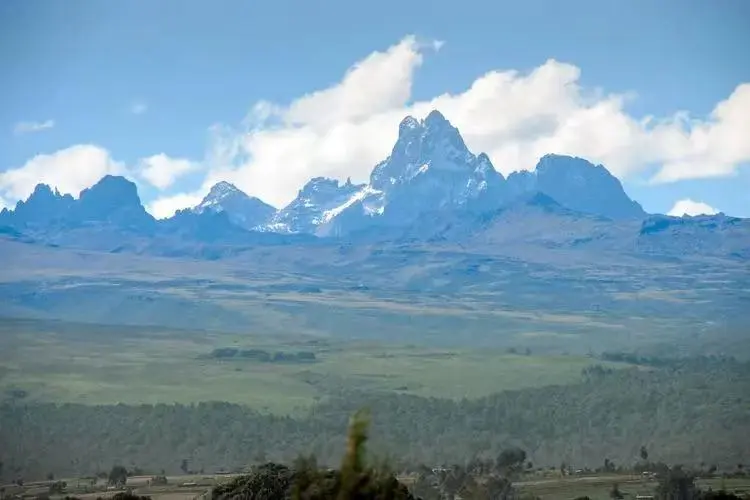
Kenya is located in the low-latitude tropical zone near the equator, with two concentrated rainy seasons per year. Most of the interior has a tropical savanna climate, while the coastal areas tend to be hot, humid, and rainy. Kenyan coffee is mainly grown in the volcanic highlands of the central region at elevations of 1,500–2,100 meters. The high altitude makes the temperature difference between day and night more pronounced, extending the coffee bean's growth cycle and allowing it to accumulate richer aromatic compounds. In addition, the phosphorus-rich volcanic soil gives the coffee a lifted yet full fruit acidity, which contributes to the signature berry-like acidity of Kenyan coffee.
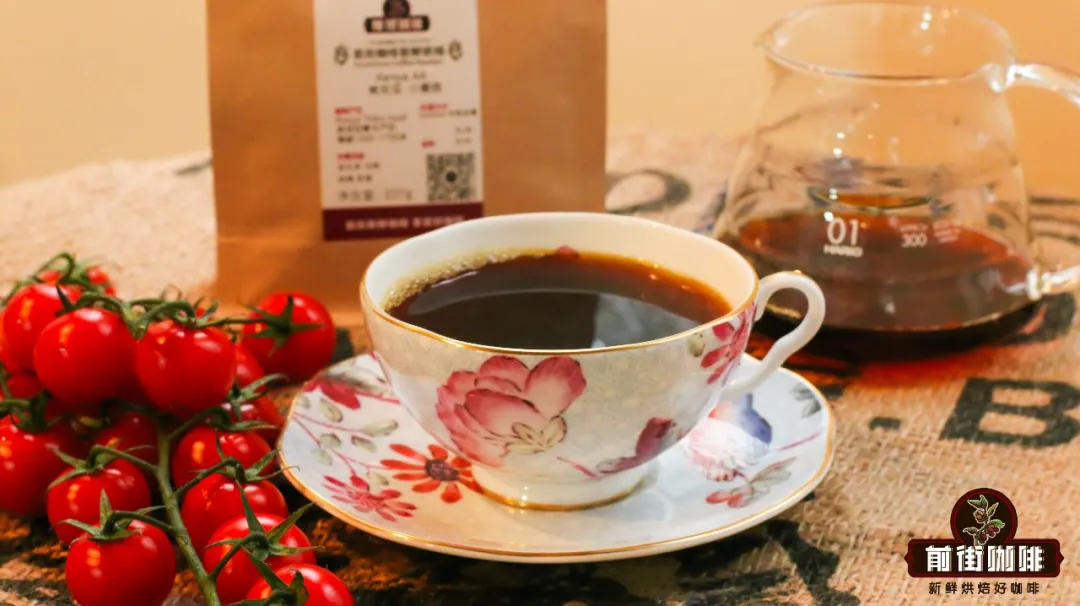
SL28 and SL34 Although most Kenyan coffees carry little-tomato acidity, some beans are otherwise unremarkable — acidic, yes, but thin and flat. This brings us to variety, because variety determines about 70% of a coffee's base flavor. As Front Street has mentioned many times before, SL28 and SL34 are precisely the two main varieties that built Kenya's coffee legend. They are drought-resistant varieties selected by the Scott Laboratories over several years starting in 1931; SL stands for Scott Laboratories, and 28 and 34 are the experimental numbers.
SL28 is a Bourbon mutation, while SL34 comes from a Typica mutation. In the article "Kenya's Star Varieties," Front Street shared that these two varieties not only possess a distinctive berry acidity but also carry a unique sweetness, producing coffee with exceptionally rich layers. Kenyan Washing Next is Kenya's unique processing method — the K72 wash. K72 refers to the Kenyan 72-hour wash. Unlike conventional washing, it lets the coffee beans undergo a longer water fermentation during processing, lasting up to 72 hours.
The general washed process goes like this: first float the coffee cherries, then depulp, soak the mucilage-covered beans in water, then rinse once with clean water to remove residual mucilage, and finally send them to the drying beds and bag them. The Kenyan-style wash, however, after completing the first soak, places the beans into another pool of clean water for a second soak, then scoops them out for washing before sending them to the drying beds. Because the beans undergo two washes, this method is also called "Double Washed." And since Kenya was the first producing region to adopt this washing method, it has another nickname — "Kenyan Process." K72 is an extended version based on this, and because the washing stage lasts a full 72 hours, it is abbreviated as K72.
The longer water fermentation gives the coffee a richer berry aroma and further strengthens the distinctiveness of Kenyan coffee. To present the classic Kenyan flavor, Front Street, after rigorous selection, ultimately chose a coffee from Kenya's Thika region, processed with the K72 wash, of the SL28 and SL34 varieties, as the Kenyan representative on Front Street's bean list, naming it "Kenya · Little Tomato" based on its characteristics. Front Street wanted this bean to showcase Kenya's signature acidity while also delivering excellent sweetness, so it chose a medium-light roast to present it.
Front Street Coffee: Kenya · Little Tomato
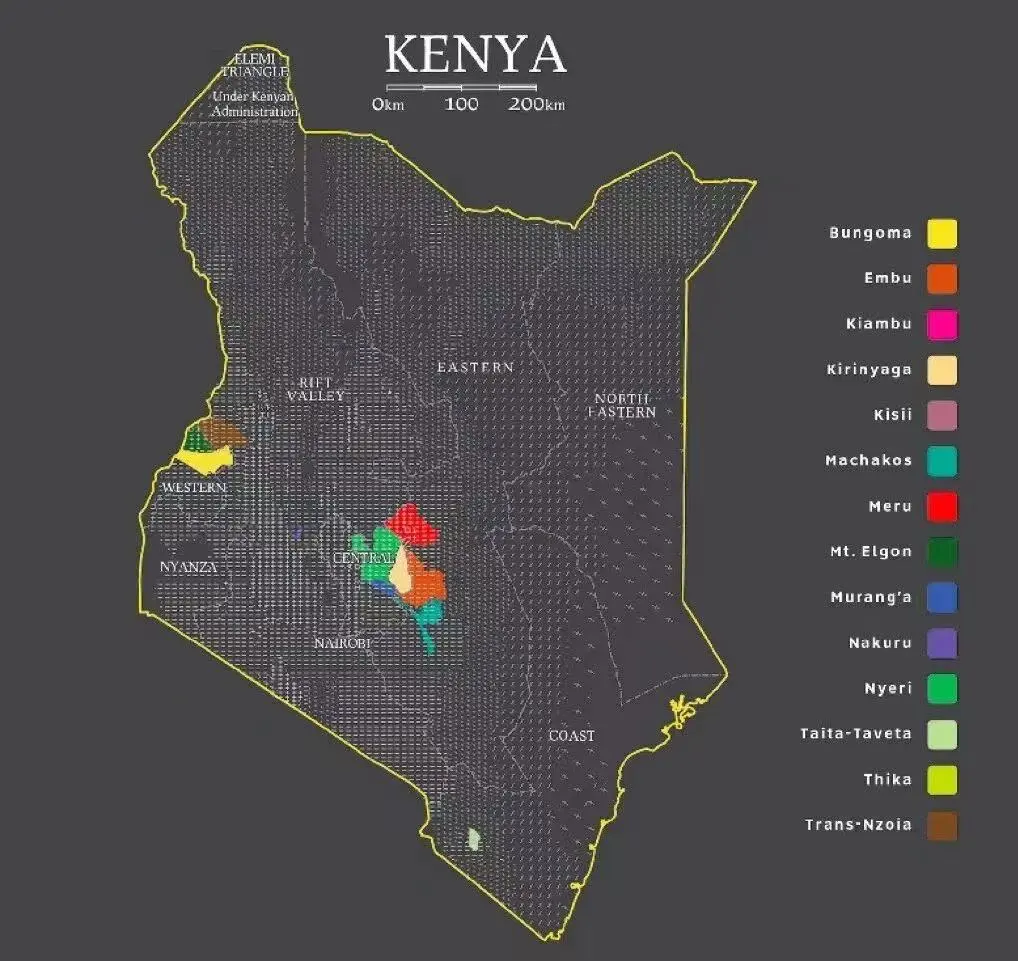
Region: Thika
Washing Station: Asali Washing Station
Altitude: 1,550–1,750 meters
Varieties: SL28, SL34
Processing Method: Washed
Flavor Notes: Smoked plum, little tomato, yellow sugar, black plum
Because the roast level is medium-light, you can appropriately increase extraction efficiency when brewing. Below are the parameters Front Street uses when brewing this Kenya · Little Tomato, for your reference: 15g dose, 1:15 coffee-to-water ratio, 92°C water temperature, grind size at 75%–80% passing through a No. 20 sieve, and a 2-minute extraction time.
From the dry aroma after grinding to the wet aroma released during brewing, you can clearly catch the notes of little tomato and smoked plum. Once the coffee enters your mouth, this aroma becomes even clearer, paired with sweet-and-sour flavors, as if you're drinking a glass of freshly squeezed little-tomato juice. Beyond the little tomato, you can also detect flavors of smoked plum, yellow sugar, plum, and berries. The body is full, the finish is long, and the overall performance is quite impressive~
- END -
The above content is compiled by CoffeeHunters, a coffee news website.


