







Which Coffee Water Temperature and Ratio Suit Iced Pour-Over?
Iced pour-over needs its own parameters rather than hot-brew settings poured over ice. When the brewing water is cut down, the ratio tightens from about 1:15 to 1:10, the grind goes 1-2 settings finer, the No. 20 sieve pass rate rises roughly 5 percent, and staged pouring extends extraction time. Without these changes both concentration and extraction yield fall too low and the cup tastes like ice water.
Bean choice also shapes the result. Natural and anaerobic coffees bring richer, more concentrated flavors that hold up to ice, while washed coffees suit a fresh, clean profile. Choosing coffee beans for hand brew with that in mind makes iced pour-over more forgiving. As a reference, a complete recipe for an Ethiopia Hamashu lot shows how dose, coffee water temperature, grind, and pour stages fit together.
Iced pour-over coffee is not simply hot coffee poured over ice. It requires targeted adjustments to the coffee-to-water ratio, grind size, water temperature, and pouring method, otherwise it is very easy to end up with a cup that tastes as weak as ice water. Starting from Front Street Coffee's hands-on experience, this article first explains the root cause of flavorless iced pour-over—both concentration and extraction yield are too low—and then explains one by one how the parameters change as the water amount is reduced: the coffee-to-water ratio is tightened from 1:15 for hot brewing to 1:10, the grind is made finer by 1–2 settings, the No. 20 sieve pass rate increases by about 5%, and staged pouring is used to extend extraction time to compensate for the loss of efficiency caused by using less water. The article also suggests directions for bean selection: natural and anaerobic processing suit rich flavors, while washed processing suits a fresh and clean taste, and it includes Front Street Coffee's complete iced pour-over recipe for Ethiopia Hamashu for reference.
Indeed, some coffee beans are naturally better suited to iced pour-over. Their flavors are more concentrated and extraction is more forgiving, so even if you have only recently started making pour-over, you can still relatively easily produce a cup of aromatic iced coffee. However, after talking with some friends, Front Street Coffee found that when many people make iced pour-over and it has no flavor, the real problem is that the parameters were not adjusted accordingly, so both the coffee's concentration and extraction yield are too low, and in the end it tastes like ice water with a hint of coffee.
How should the parameters, ratio, grind, and water temperature for iced pour-over coffee be set?
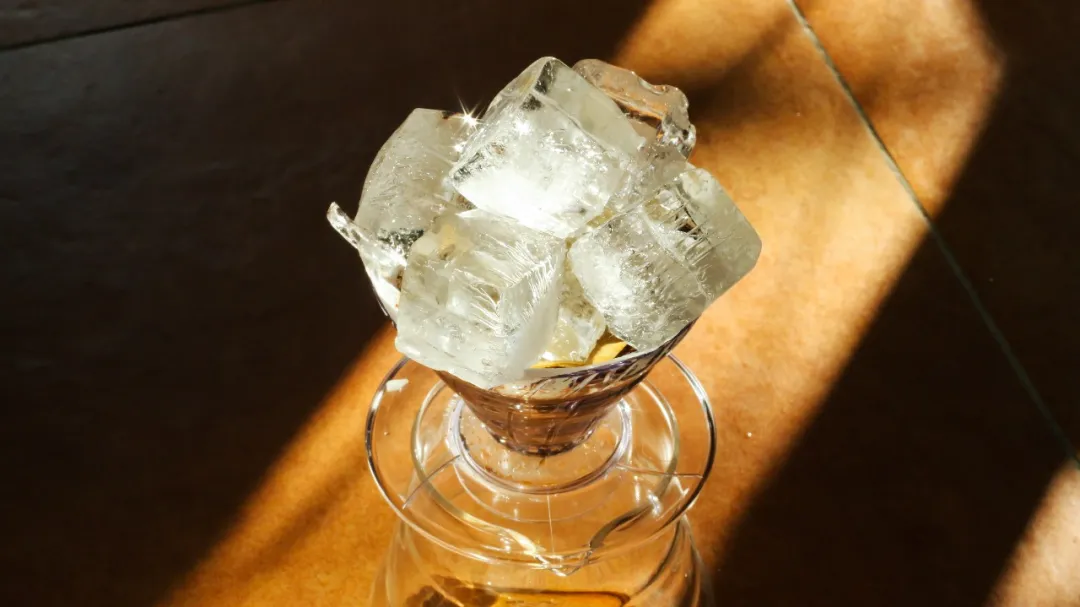
Everyone knows that iced pour-over is an extension of hot pour-over. The point of adding ice is to cool the coffee liquid rapidly so that a cup of iced coffee can be obtained in a relatively short time. But ice also dilutes the coffee, so the original amount of brewing water must be reduced, using a higher concentration to offset the effect of dilution.
The principle is simple, but many friends only change the water amount and leave the other parameters untouched, and the result is coffee with no flavor. Why does this happen?
Less water means less solvent available to dissolve flavor substances during extraction. With all other conditions unchanged, the total amount of dissolvable flavor substances in the coffee will also decrease, so the taste and concentration are naturally affected. Therefore, if you want to extract more flavor with less water, you need to adjust the extraction parameters at the same time.
How exactly to adjust depends on how much you have reduced the water amount. Taking Front Street Coffee as an example, for hot brewing the coffee-to-water ratio is 1:15, with 15 g of coffee beans paired with 225 ml of hot water; for iced brewing it becomes 1:10, with 15 g of coffee beans using only 150 ml of hot water. In this case, what Front Street Coffee adjusts is the grind size, making it finer by 1–2 settings so that the No. 20 sieve pass rate increases by about 5%. This can both appropriately compensate for the effect of reduced water and avoid excessive release of bitter substances.
However, adjusting the grind alone is not enough. Less water will also compress the extraction time. With the brewing technique unchanged, the extraction time will be shortened by about one-third, and extraction efficiency will still decline. Therefore, you can also extend the extraction time by changing the pouring method to make up for the loss caused by reducing the water, and only then can you relatively easily make a delicious cup of iced pour-over.
Of course, as Front Street Coffee mentioned earlier, bean selection is also worth some thought. Beans with deeper fermentation such as natural and anaerobic have richer aromas and help produce an iced pour-over with more intense flavor, such as Front Street Coffee's Finca La Divisa·Sidra and Ethiopia·Huakui from the Front Street Coffee bean list; if you prefer a fresher, cleaner taste, then choose washed-process beans, such as Kenya·Little Tomato and Panama·Boquete Geisha from the Front Street Coffee bean list. Just decide according to your own preference.
Brewing sharing
To prevent anyone from still being unclear about the specific parameters and brewing method, Front Street Coffee will share the iced brewing recipe once again here. The bean used this time is Ethiopia Hamashu from the Front Street Coffee bean list, and the extraction parameters are as follows:
Coffee dose: 15 g Coffee-to-water ratio: 1:10 (1:15 for hot brewing) Ice used: 100 g Grind level: 80%–85% pass rate on No. 20 sieve (75%–80% pass rate for hot brewing) Brewing water temperature: 92°C Extraction time: 2 minutes
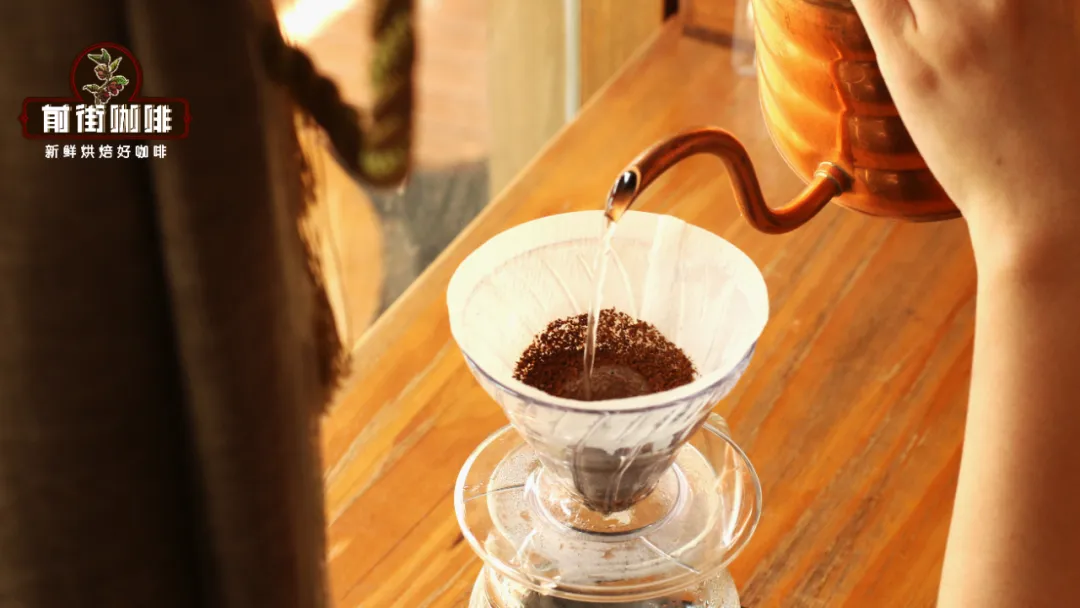
The pouring plan is also not complicated: first use water equal to twice the coffee dose for blooming, and bloom for 30 seconds; after blooming ends, divide the remaining water into 3 stages and pour, using a small stream in circles for each stage, and wait until the previous stage of hot water has mostly drained through before pouring the next stage, until the target water amount has been poured. It is very intuitive to do.
The iced pour-over brewed this way is sweet and tart, with a solid and full body, and you can clearly taste strawberry, guava, mango, and a delicate floral aroma. It performs quite well. Of course, Front Street Coffee is only giving one example here. Switching to other pouring methods is also completely fine. As long as the extraction efficiency is up to standard, the coffee brewed will basically not taste bad.
- END -
The above content is compiled by CoffeeHunters, a coffee news website.


