








How Do Latte Coffee Beans and Cup Sizes Match Up?
There is no single official cup size for a latte. Within Italian coffee culture, a shop latte is usually served in a wide-mouthed cup of just over 200 ml to 350 ml, and that range changes with the roast. Medium roast suits a larger cup, while dark roast works better in a smaller one, because darker beans carry more intense bitter and smoky notes.
The exact numbers follow the same logic. A typical dose runs around 18 to 20 grams of ground coffee, yielding roughly 36 to 40 grams of espresso, with milk added at about a 3:1 or 4:1 ratio of milk to espresso. Lighter beans can take more milk, darker beans less, so the coffee still comes through.
Latte coffee is a classic fusion of espresso and milk, but the cup sizes produced by different cafés often vary noticeably. Starting from the framework of Italian coffee culture, this article systematically sorts out the logic behind latte cup size choices, and, combined with the flavor characteristics of three types of espresso beans—medium roast, medium-dark roast, and dark roast—provides specific recommendations for coffee dose, extracted liquid weight, milk ratio, and cup size. It also explains the considerations behind dine-in latte cup types, as well as the complete parameter plans for making lattes with three beans—Front Street Strawberry Candy, Queen's Estate, and Commercial Blend—to help you find the best balance between coffee and milk.

Latte coffee is a classic combination of espresso and milk. The deliciousness produced by the collision of rich, mellow bitterness and sweet smoothness has made it the white moonlight of countless coffee lovers. But over time, many people have noticed that the widely popular latte always seems to come in sometimes larger and sometimes smaller cup sizes at different cafés, and even in different coffee tutorials. So which one is correct?
Similar to Americano, latte coffee in the broad sense not only lacks very strict production standards, but can even refer to many types. For example, coffee brewed with a moka pot and then mixed with milk is also called "latte"; after freeze-dried powder is dissolved, pour in some milk, and it is often called "latte" too; even pouring milk into pour-over coffee can barely count as a kind of "latte." It even has another name, "café au lait"...
Not only that, because everyone has their own preferred taste, these "home-version lattes" often have no fixed parameters at all, with the main idea being "do as you please"—make it as large as you want. But within the framework of Italian coffee culture, the traditional latte produced by a coffee shop needs to meet certain requirements.
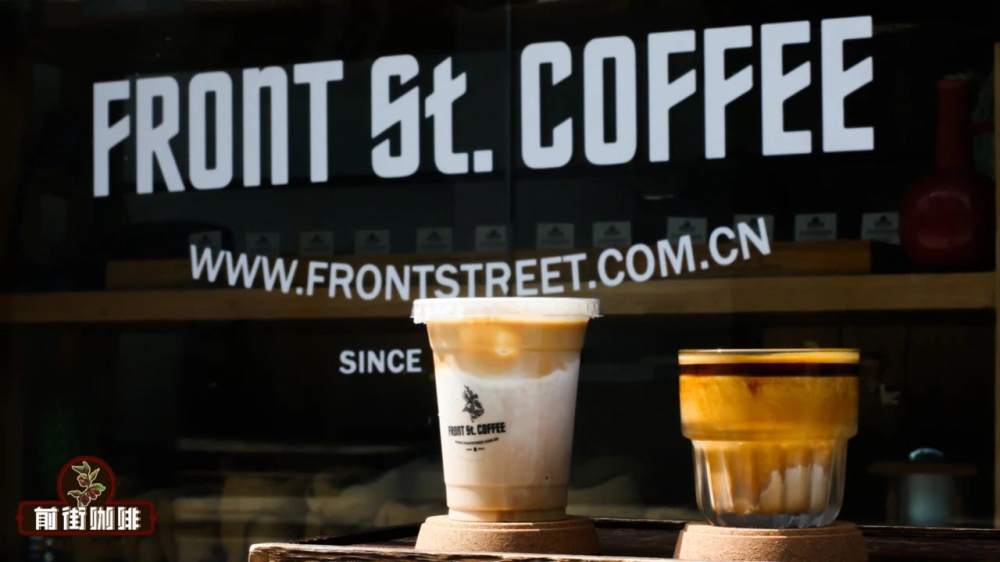
Many people may think that when a coffee shop chooses different cups for different drinks, the primary criterion is only whether it looks good. Actually, that is not the case. In addition to a beautiful appearance, if you want the final product to be more perfect, the choice of coffee cup is a matter of careful consideration.
Dine-in latte cups are usually just over 200 ml to 350 ml, and most are wide-mouthed and short-bodied, because this not only helps with milk foam integration and presentation (latte art), but also plays a role in better aroma diffusion, shortening the path between us and the coffee. If ceramic material is used, it can also provide better heat retention for the latte and enhance our perception of body and milk sweetness.
Regarding the selection of latte cups, Front Street believes that it is necessary not only to consider its impact on taste, but also to determine the final cup size in combination with the coffee's main flavor characteristics.
Setting aside light-roast SOEs that emphasize floral and fruity flavors, cafés today generally use blended beans as the espresso base in order to ensure consistency in the final product. If we divide them by roast level, they can roughly be categorized into three types: medium roast, medium-dark roast, and dark roast, and this also determines the taste of the espresso as well as the final ratio of the latte.
Medium-roast coffee beans are released earliest, and their flavor descriptions are mostly nuts, cocoa, milk chocolate, or ripe fruit and fermented notes. Extracted as espresso, the mouthfeel is relatively lighter, with less bitterness and a certain acidity. Therefore, when making a latte, it is not advisable to add too much milk, to prevent the coffee aroma from being masked.
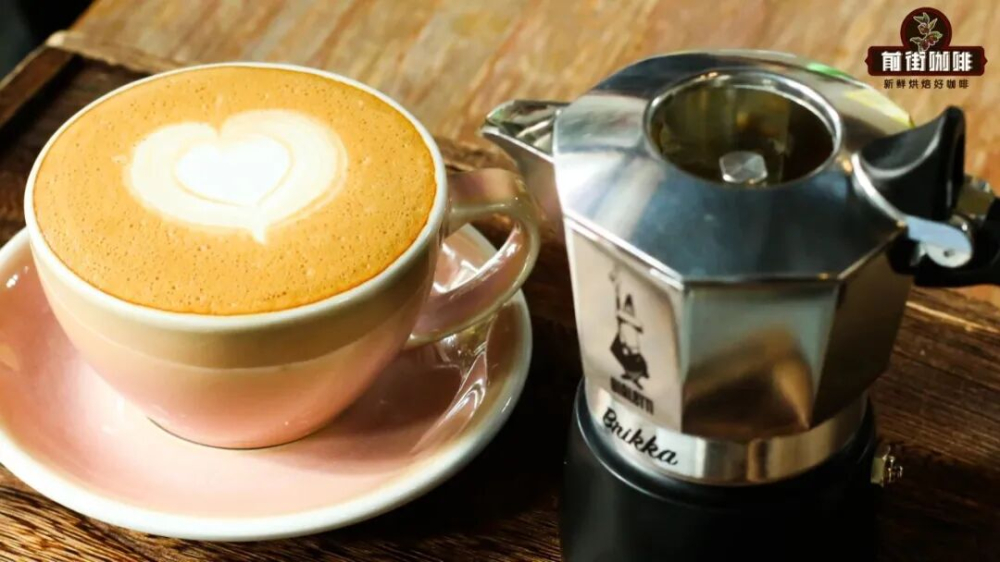
For example, when using medium-roast Front Street Strawberry Candy to make a latte, Front Street will choose an 8-ounce (237 ml) ceramic cup, extract 38 g of coffee liquid from 19 g of coffee grounds in 25–32 seconds, and steam about 170 ml of fresh milk into 0.5 cm-thick milk foam, and finally blend the two evenly. The approximate ratio of coffee to milk is 1:4.5. The latte made this way has a soft aroma of strawberry milk candy and white chocolate, with sweetness as the main highlight.
Medium-dark roast espresso beans are relatively common, because they are released a bit later, so they have less acidity and a higher body. Their flavor focuses on aromas such as caramel, toast, and roasted nuts. When making a latte, try to highlight balance, so the proportion of milk can be appropriately increased.
For example, when Front Street uses medium-dark roast Queen's Estate to make a latte, it will use a 10 oz (300 ml) coffee cup. First extract 40 g of espresso from 20 g of coffee grounds in 25–32 seconds, then pair it with 220 ml of steamed hot milk. The ratio will be controlled at 1:5.5. In this way, the rich caramel and nut aromas and the smooth hot milk complement each other in the mouth, creating a 1+1>2 effect.
Dark-roast coffee beans have undergone a very full caramelization reaction, have the darkest color, are relatively bitter, and their acidity has basically been broken down. The espresso itself will carry an obvious roasted aroma, with a strong and stimulating mouthfeel. Therefore, when making a latte, the liquid weight of the espresso can be appropriately increased. This can dilute the overall coffee concentration (the more water, the lower the coffee concentration), thereby achieving a more harmonious effect with the milk.
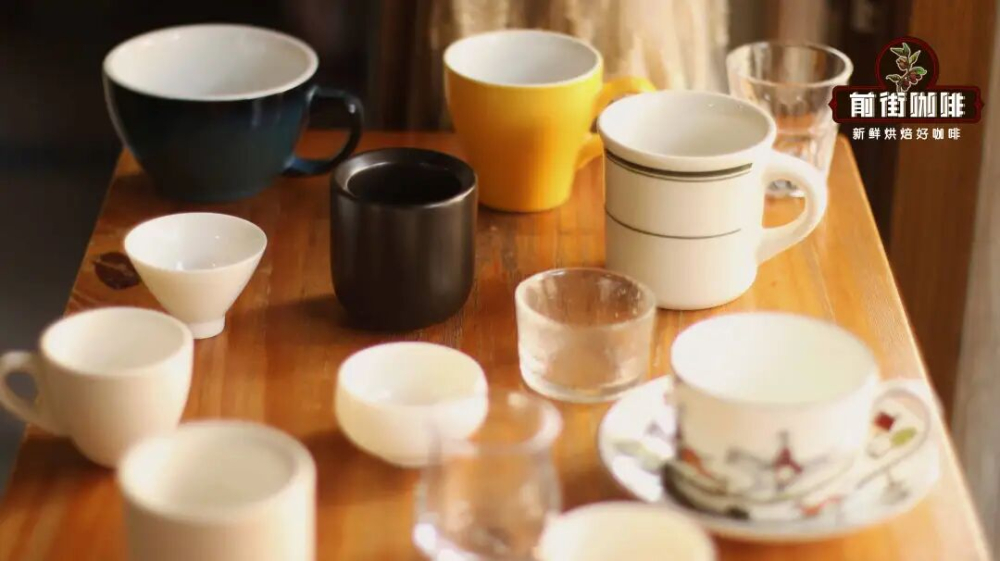
Front Street Commercial Blend is a typical dark-roast espresso bean. If making a latte, Front Street likes to use a 10 oz (300 ml) ceramic coffee cup, extract 44 g of coffee liquid from 20 g of coffee grounds at 1:2.2, with the time also being 28–32 seconds;
then add 220 ml of hot milk with 0.5 cm-thick milk foam. The ratio of coffee to milk is also 1:5.5. The latte made this way does not have an obvious bitter taste at the first sip, and every sip brings the roasted aroma from the dark-roast beans. With the support of milk, the mouthfeel is sweet and rich, full of flavor.
The above content is compiled by CoffeeHunters, a coffee news website.


