







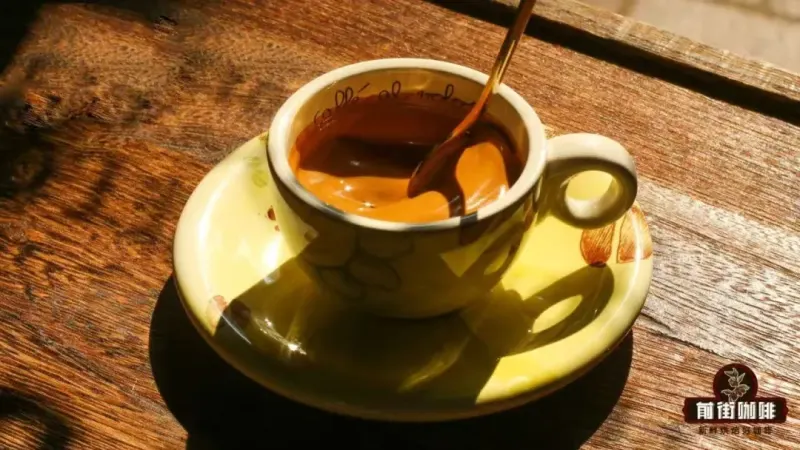
How Does Coffee Aroma Relate to Espresso Crema?
The crema on an espresso is a foam of coffee lipids wrapping carbon dioxide, not real oil. Its thickness, fineness, and stability reveal the carbon dioxide content inside the beans, which changes with freshness and roast level. When extraction parameters stay constant, Crema differences point to how fresh the coffee beans are and whether they are in their optimal flavor window.
Carbon dioxide escapes over time after roasting, so older coffee beans produce thinner, weaker crema. Roast level also plays a role and can be roughly checked by color value during grinding. For home espresso users, observing crema thickness and stability from shot to shot offers a practical way to judge bean condition and adjust the extraction plan in time.
The layer of golden-brown crema on the surface of an espresso is not just a visual pleasure—it actually carries important clues about the state of the coffee beans. Many friends equipped with an espresso machine will notice that the crema extracted each time is sometimes thick and rough, sometimes fine and thin. These differences are not accidental, but an external manifestation of changes in the carbon dioxide content inside the coffee beans. From the perspective of Front Street, this article will guide everyone to understand the essential composition of crema, and learn to judge whether the coffee beans are in their optimal flavor period by observing the thickness, fineness, and stability of the crema, so as to adjust the extraction plan in time and let every cup of espresso perform at its due level.
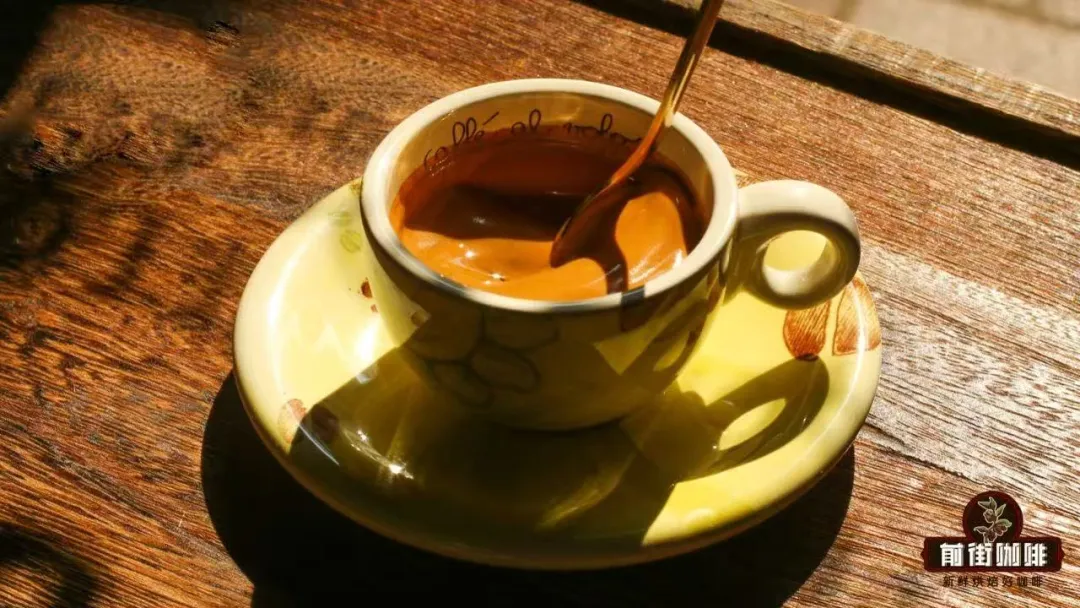
However, the value of crema goes far beyond simply enhancing the aroma and texture of coffee. It actually also contains quite a few clues about the condition of the coffee beans themselves. If you have an espresso machine at home, it is probably not hard to notice that every time you extract an espresso, the layer of crema on its surface is not always uniform—sometimes thick and full, sometimes thin and weak, sometimes rough and porous, sometimes fine as a mirror. These differences, in the final analysis, are a projection of the current state of the coffee beans in the cup.
So what Front Street wants to talk about today is: how to use the form presented by the crema to infer information about the coffee beans themselves. For friends who are just getting into espresso, mastering this technique is actually quite practical. And this matter is not complicated to carry out either—as long as you understand the principle behind the changes, interpreting it will come naturally~
First, we need to know that...
First, we need to know that this layer of crema on the surface of espresso is, strictly speaking, not real oil. As Front Street often says, it is actually a foam aggregate formed by the lipids in coffee beans wrapping carbon dioxide. Its texture and thickness are mainly determined by two variables: the amount of carbon dioxide, and the extraction process itself.

When the extraction parameters remain constant, what can change the crema is the carbon dioxide content, and the key factors affecting the carbon dioxide content are divided into freshness and roast level. These two points are exactly the main intelligence we can read from the crema. However, the roast degree of coffee beans can be roughly judged by color value during grinding, so the information we focus on obtaining from the crema is—the freshness of the coffee beans.
Although checking the date on the packaging bag can also tell us the freshness of the coffee beans, the uniqueness of judging by crema is that we can know more precisely whether the beans have already rested enough. And when the coffee taste deviates, we can also lock in more quickly where exactly the problem lies.
Alright, enough idle talk. Next, Front Street will explain one by one what the crema state of coffee beans at different freshness levels roughly looks like~
Thick and rough crema
Under normal parameters (not much different from the parameters you usually extract with), if the espresso you extract has extremely thick crema, with large-particle bubbles all over the surface and a very fast rate of collapsing into clumps, that means the coffee beans you are using are still very fresh.
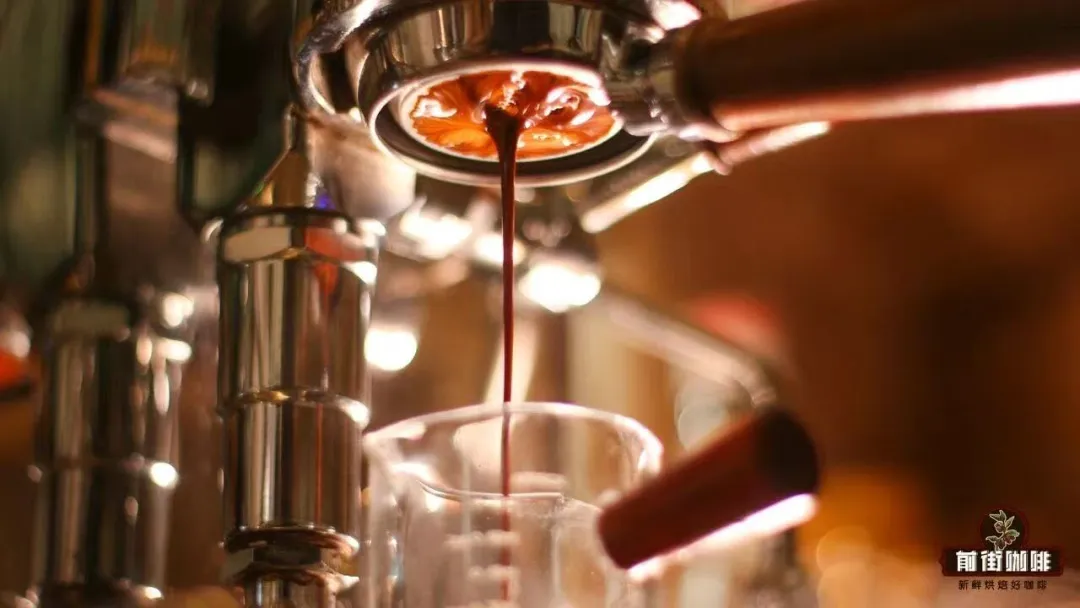
Especially when the beans you use are darker roasted, the fresher the beans, the thicker and rougher the crema extracted will be. The root cause of this phenomenon is that fresh coffee beans contain an astonishing amount of carbon dioxide inside.
Front Street mentioned earlier that the essence of crema is a foam group formed by coffee bean lipids wrapping carbon dioxide. But once the amount of carbon dioxide is too large, the lipids cannot evenly wrap these gases. Under this situation of more gas and less lipid, although the extracted foam is large in quantity, its stability is poor, and the rate of rupture will be very fast.
Usually, espresso with this kind of crema will not perform ideally in flavor. When drunk, either the flavor is not clear enough, or the mouthfeel is thin and the taste is flat. The reason is that excessive carbon dioxide hinders hot water from extracting flavor substances. Under the same parameters, fewer soluble substances can be extracted.
So if we find that an espresso has this kind of crema and tastes mediocre, then it is best to readjust the extraction parameters, or let the coffee beans rest for a while longer, so as to ensure that the deliciousness of the coffee is fully extracted.
Thick and fine crema
If the extracted coffee crema is not as thick as before, but its texture is not rough and is very fine, smooth as silk when swirled, and can also reflect light like a mirror, then this most likely means the beans have entered their flavor period.
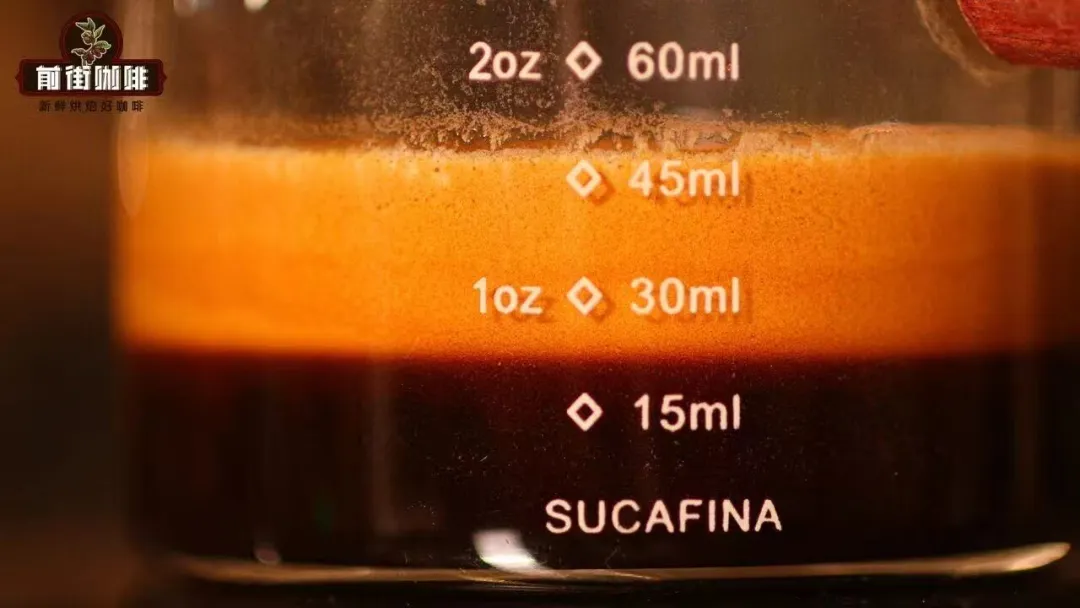
At this time, the carbon dioxide inside the coffee beans is no longer so abundant that the lipids cannot evenly wrap it, so the foam presented is very stable and very fine. At this stage, we can easily extract the flavor substances in the coffee, because the amount of carbon dioxide no longer hinders extraction too much. Under the same parameters, the extracted coffee will have a richer taste. Whether in flavor or mouthfeel, it will be much better than the former.
Fine but thin crema
But if under the same parameters, the extracted coffee crema is much thinner than before, that means the coffee beans are about to pass or have already passed their flavor period.
Because at this time there is no longer enough carbon dioxide inside the coffee beans to support the formation of crema, so the extracted crema will be relatively thin.
In this state, we can extract the soluble substances in the coffee more easily than in the former case, and the coffee may actually taste better. But note that because the soluble substances are more easily extracted, we are also more likely to dissolve out those unpleasant substances in the coffee at the same time, causing negative performances such as bitterness, miscellaneous flavors, and astringency.
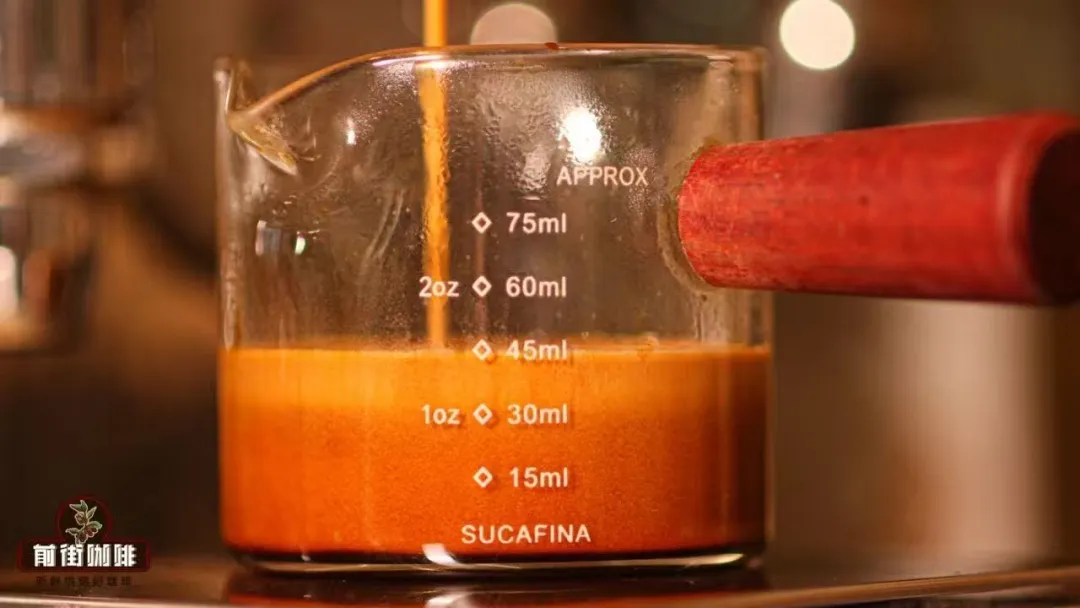
At the same time, the appearance of this crema state also reminds us that we need to consume the coffee beans as soon as possible. Because the role of carbon dioxide is not only to hinder extraction and form crema, it also has another function: slowing down the escape rate of aroma molecules in coffee.
When there is sufficient carbon dioxide in the coffee, the coffee aroma that contributes to flavor formation dissipates much more slowly. And after the carbon dioxide has basically dissipated, the aroma in the coffee will also escape faster. So we had better use up these beans quickly in a short time. Although we may be able to extract fuller flavors from these beans, their flavor window will be very brief.
It is worth mentioning that the reason Front Street repeatedly emphasizes comparing under the same extraction parameters is that we need to fix one parameter as a reference baseline when adjusting. For example, when Front Street tunes the Front Street Classic Blend on the menu every day, it first sets the target as: 20g of grounds extracting 40ml of coffee liquid within 30 seconds. Then first adjust the parameters to this range, and then fine-tune the coffee according to taste.
Second, using different parameters during extraction will also affect the thickness of the crema. To give the simplest example: 20g of grounds extracting 40ml of coffee crema in 30 seconds will be thicker than 20g of grounds extracting 40ml of espresso in 15 seconds. Combining the above two points, we first need to fix one parameter, and only then can we begin comparing~
- END -
The above content is compiled by CoffeeHunters, a coffee news website.


