







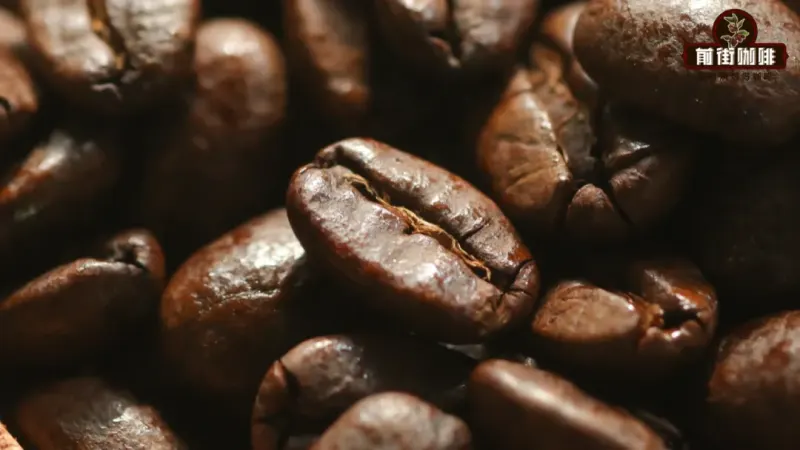
Why Are Some Coffee Beans Oily After Roasting?
Oil on the surface of coffee beans is a normal physical result of roasting, not proof of high coffee quality and not automatically a sign of spoilage when storage is reasonable. Green coffee beans hold water-soluble lipids inside a dense fibrous structure, and those lipids can only reach the surface after roasting opens the bean structure.
During roasting, hot air expands the beans, widens cell wall pores, and traps carbon dioxide. After roasting, that gas escapes at normal temperature and pressure, carrying lipids to the surface. Darker roasts expand more and hold more gas, so they turn oily faster, while processing method, roast style, and bean density also matter.
Coffee beans often have a sheen of oil on their surface. Some people take this as a sign of good beans, while others worry that they have already gone bad. What is the truth? Starting from the lipid structure of coffee beans, this article explains the scientific principles behind the oil secretion phenomenon, explains how roast depth affects the speed and degree of oil secretion, and sorts out the additional effects of processing method, roasting style, bean density, and other factors. At the same time, the article also gives precautions for storing oily beans, helping you view coffee bean oil secretion rationally.
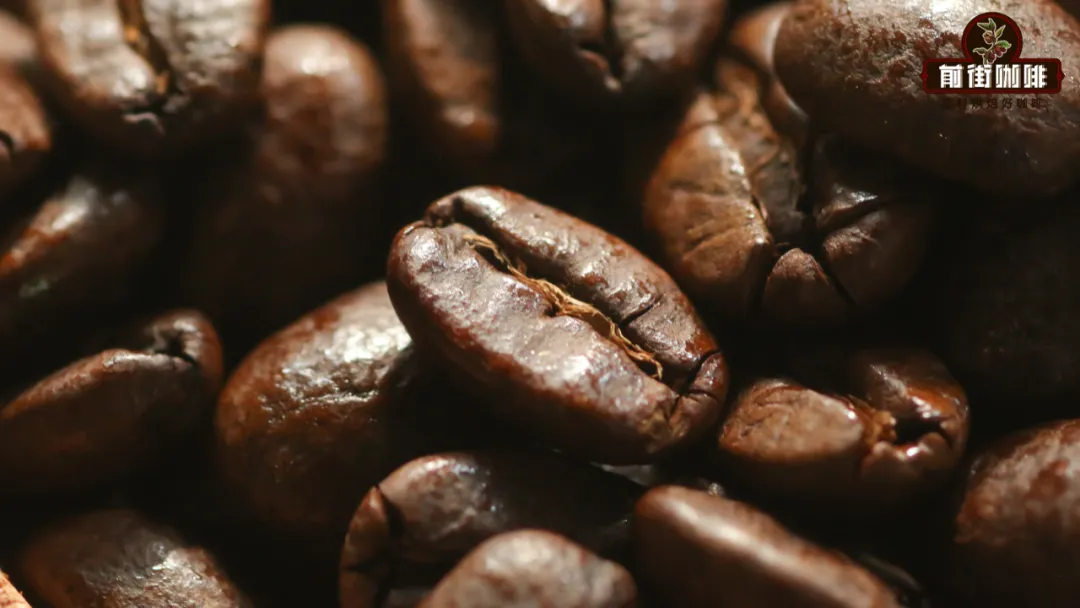
In fact, neither of the above judgments holds up. Oil appearing on coffee beans is itself a perfectly normal physical phenomenon. It neither shows that the beans are outstanding in quality nor means that the beans have absorbed moisture and spoiled (provided that storage conditions are reasonable).
The reason is that green coffee beans naturally contain some water-soluble lipids. In the unroasted state, the green bean structure is dense, and these lipids are tightly wrapped by the fibrous matrix, staying safely inside the bean. Only after roasting can the lipids possibly make their way to the bean surface.
During roasting, hot air continuously delivers energy to the coffee beans. The beans expand accordingly, the pores in the cell walls are stretched wider, and a large amount of carbon dioxide is stored inside the bean.
After roasting ends, the coffee beans return to a normal-temperature, normal-pressure environment, and the carbon dioxide previously stored inside the beans begins to be released outward. The lipids ride this airflow and are carried to the bean surface together with the carbon dioxide, which is how the oil secretion we see occurs.
However, as Front Street Coffee has observed, oil secretion is not a common trait of all coffee beans. Beans that tend to become oily often share one intuitive characteristic—a relatively dark roast level.
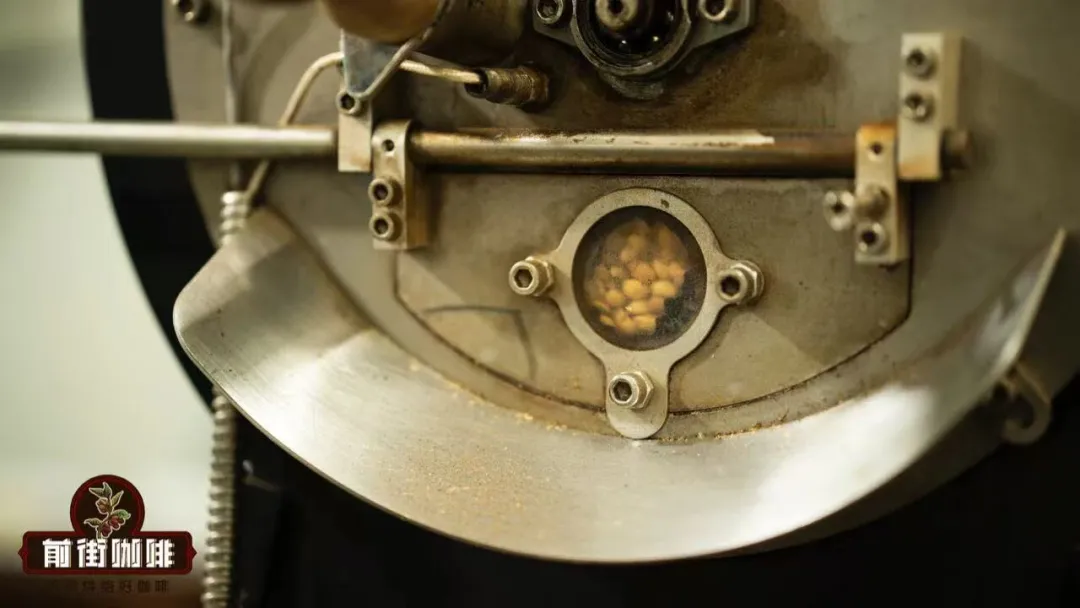
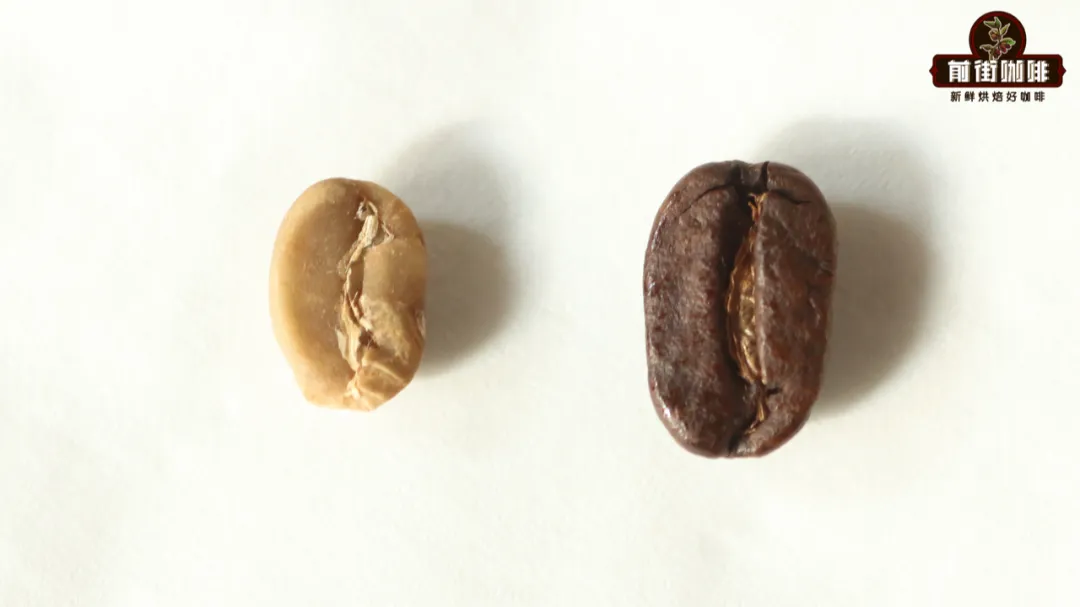
As mentioned earlier, coffee beans continuously expand when heated, and as they expand, their internal structure also becomes looser. That is, the darker the roast, the more heat the beans absorb, the greater the expansion, and the looser the structure. A loose structure can hold more carbon dioxide, and the lipids also attach less firmly, so they naturally seep to the surface more easily.
The following two beans both come from the Front Street Coffee bean list. One is Front Street Papua New Guinea · Bird of Paradise, a medium-dark roast leaning medium, and the other is Front Street Sumatra · Golden Mandheling, a medium-dark roast leaning dark. Their roast dates are exactly the same, both having been roasted five days ago, so they can be used to compare differences in the degree of oil secretion.
In addition to the degree of oil secretion, the speed of oil secretion is also governed by roast depth. For the same bean, the darker the roast, the sooner the oil appears. The two beans in the picture only clearly developed an oily sheen several days after roasting, whereas if the roast were darker, the beans could show an obviously shiny surface on the very day they are removed from the roaster.
In addition, as was said earlier, roast level is only one influencing factor. Processing method, roasting technique, and bean density also affect oil secretion.
For example, heavily anaerobic-processed beans secrete oil more easily than conventionally processed beans at the same roast level. The reason is that this type of bean has already undergone major structural changes during processing, and its density is often lower. The same roasting curve will cause them to actually reach a darker roast level, so oil secretion is also more obvious.
As for the influence of roasting method, it is relatively complex to explain. It can be simply understood as differences in heat and time changing the expansion rate of the coffee beans, so the degree of oil secretion differs. However, most friends do not deal with roasting in daily life, so Front Street Coffee will not go into detail here.
Overall, coffee bean oil secretion has little to do with quality level, and oil secretion itself does not directly harm coffee quality. What truly needs attention is the storage stage—beans that have become oily are more prone to deterioration, and if the storage environment is unsuitable, negative flavors can easily emerge. Everyone just needs to pay more attention to this when storing beans in daily life.
- END -
The above content is compiled by CoffeeHunters, a coffee news website.


