








Does Flow Cut-off in Pour-Over Coffee Really Remove Bitterness?
Cutting the flow by pulling the dripper early does not stop bitter compounds from being extracted. Beginners often treat it as a way to avoid over-extraction, but the bitter material is already dissolving in the brewed coffee powder bed, and removing the dripper only ends the pour. Used in the wrong place, flow cut-off also flattens the cup, shortens the aftertaste and thins the mouthfeel.
Bitterness is governed by the coffee-to-water ratio, grind, temperature and contact time, which is why the technique belongs only in specific situations rather than as a default habit. In fine coffee brewing, the goal is to control extraction while the water is still in contact with the bed, not to halt it late. The decision should be made between the coffee-to-water ratio and the final coffee-to-liquid ratio.
In the world of pour-over coffee, the technique of "flow cutoff" is regarded by many beginners as a clever way to avoid over-extraction—simply remove the dripper early during the later stages of extraction, and it seems you can keep bitterness at bay. However, Front Street has found that this seemingly smart approach actually hides a misconception: flow cutoff cannot truly stop the release of bitter compounds; instead, it may strip away the coffee's rich layers and lingering aftertaste. So, how exactly is bitterness dissolved? Why can't flow cutoff stop bitterness? In what scenarios is using flow cutoff correct and necessary? This article will draw on Front Street's brewing experience to answer these questions one by one, helping you make clearer brewing decisions between the coffee-to-water ratio and the coffee-to-liquid ratio.


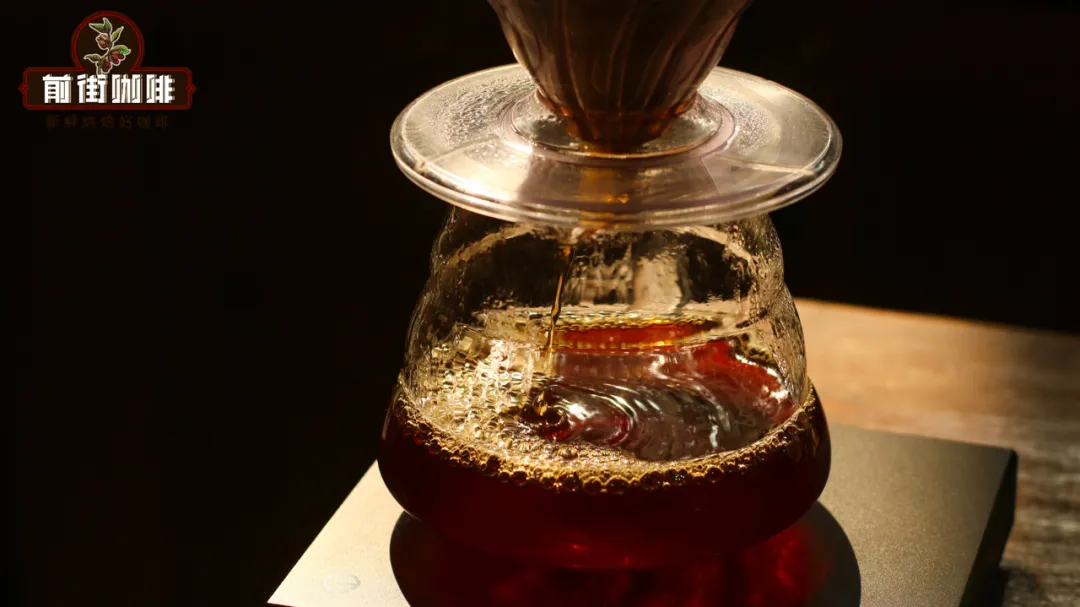






"Once the extraction time exceeds two minutes, you must quickly remove the dripper and not let bitterness mix into the coffee—that way you can avoid the problem of over-extraction!" Yesterday, several customers were chatting about brewing tips while selecting coffee beans at Front Street's physical store, and one friend brought out this "little trick to remove bitterness." Front Street believes this little trick is not unfamiliar to you—yes, it is "flow cutoff."
Many friends, when they first got into pour-over, were taught this use of flow cutoff, so in their subsequent "brewing years," they frequently deployed flow cutoff, with the sole aim of rejecting bitterness and avoiding the pitfall of over-extraction.
However, Front Street does not advocate using flow cutoff indiscriminately. Although from one perspective, flow cutoff can indeed greatly reduce the chance of over-extraction, it simply cannot stop bitter compounds from being extracted—this is precisely the cognitive trap many beginners easily fall into.
Not only that, once flow cutoff is used in the wrong place, besides bitterness, it will also cut away many of the coffee's characteristics. For example, the flavor becomes less three-dimensional, the aftertaste shortens, the mouthfeel becomes thin, and so on. This is the core reason Front Street does not recommend casually using flow cutoff.
So today, Front Street will talk again about why flow cutoff cannot cut off coffee's bitterness, and in what situations we should correctly use flow cutoff.
Why can't flow cutoff cut off coffee's bitterness?
The reason is simple: coffee's bitterness is not only dissolved in the final stage. The reason many friends develop this misunderstanding is mainly because they were misled by this statement: coffee's flavors present different dissolution rates according to differences in molecular size. Acidic compounds have the smallest molecular weight, so they are dissolved first, followed by sweet compounds, while bitter compounds have the largest molecules and are dissolved last.
The fallacy of this statement lies in that molecular size does indeed affect the dissolution of flavor compounds, but what it affects is the dissolution rate, not the dissolution order. Whether acidic, sweet, or bitter, these compounds are released simultaneously the moment hot water touches the coffee grounds; it is just that due to differences in molecular size, they each have different dissolution rates.
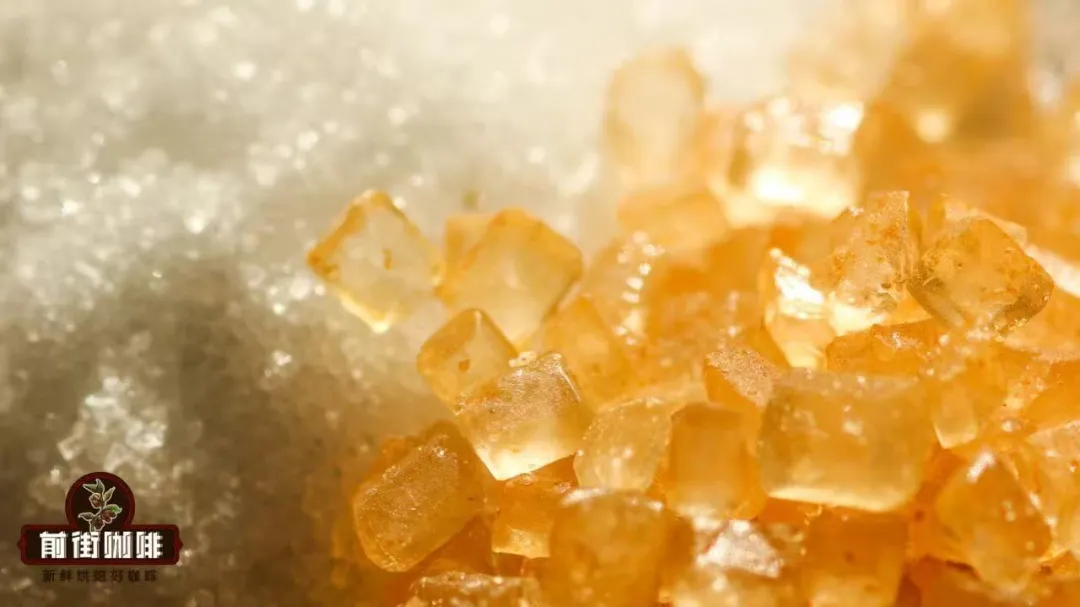
Here Front Street gives an analogy: powdered sugar, granulated sugar, and rock sugar, at the same weight, powdered sugar has the largest surface area in contact with water, so it dissolves first in hot water, followed by granulated sugar, and finally rock sugar. Then we just need to map this to the dissolution of acidic, sweet, and bitter compounds in coffee during extraction—isn't it easier to understand?
In other words, because the acidic and sweet compounds in coffee have smaller molecules than bitter compounds, they dissolve completely earlier than bitter compounds. And when the acidic and sweet compounds have mostly dissolved, that brings us to the final stage. In coffee brewed at this stage, the proportion of bitter compounds will be somewhat higher than during the early and middle stages of extraction.
In short, bitter compounds do not begin dissolving only at the final stage; rather, because the acidic and sweet compounds have already mostly dissolved by the final stage, the proportion of bitter compounds in the final stage naturally rises. This is what earned the final stage the title of the main dissolution phase for bitter compounds.
Then, because not much acidic and sweet compounds are dissolved in the final stage—mainly bitter compounds—if we do not want obvious bitterness in the coffee, we need to stop extraction at the appropriate time to avoid excessive bitter compounds entering the coffee and amplifying the bitter taste. Flow cutoff is one of the means to stop extraction.
But as Front Street said earlier, the use of flow cutoff has limiting conditions. Under improper operation, it will instead wear away some of the coffee's qualities and weaken the coffee's layering and flavor experience!
Because the final stage of coffee is not only bitterness. The final stage of coffee refers to the end of extraction. In the coffee dissolved at this stage, besides bitter compounds, there are also some other flavor compounds present.
If we do not pinpoint the right moment for flow cutoff, these flavor compounds will be cut away along with the bitterness, and the coffee's performance will be greatly diminished as a result. Just as iced pour-over coffee is not as rich in flavor as hot pour-over coffee, sacrificing the final stage to increase the coffee's concentration will cause the overall flavor presentation to be slightly weaker than hot-brewed coffee.
Not only that, if the measurement method we use when brewing coffee is the coffee-to-water ratio, then arbitrary flow cutoff will also hinder our judgment of extraction. Because Front Street believes the vast majority of friends use ordinary electronic scales, and the numbers we can see are only time and the amount of water poured. We do not know how much water was cut off during flow cutoff. If we make flow cutoff a regular operation during brewing (when measuring by coffee-to-water ratio), then we will not be able to properly judge where the problem occurred during extraction.
So, Front Street does not recommend everyone use flow cutoff casually. Casually, not that it cannot be used! The application of flow cutoff is actually fairly broad. Generally, the situations in which we use flow cutoff fall mainly into two types! The first type is more common: when brewing coffee with the coffee-to-liquid ratio as the measurement method.
The difference between the coffee-to-liquid ratio and the coffee-to-water ratio is that the former measures the weight of the coffee liquid, while the latter measures the hot water poured. When the weight we measure when brewing coffee is the coffee liquid, then we need to use flow cutoff to prevent excess coffee liquid from being added to the coffee and affecting the extraction yield and concentration. This is active flow cutoff, with the aim of allowing the coffee's extraction to proceed along the set path.
The other type is passive flow cutoff! To be honest, passive flow cutoff is also quite common. What is passive flow cutoff? It is when you discover during brewing that, because there are too many fines or the filter paper is clogged by fines, the coffee liquid drips through very slowly, and the extraction time may far exceed the set time. In this kind of situation, we need to consider using flow cutoff.
Take Front Street as an example. When brewing coffee, Front Street generally controls the time to around 2 minutes (denser beans take a bit longer). But this two minutes is not fixed; it can be a little more or a little less. We do not need to remove the dripper immediately at exactly 2 minutes to cut off the liquid in the coffee, because coffee is actually not as easy to over-extract as everyone imagines.
Only when the extraction time far exceeds the set 2 minutes, for example by more than 20 or 30 seconds, will Front Street consider using flow cutoff. Because based on past brewing judgment, at such a time the flavor compounds of this bean have already dissolved about as much as they will, and further extraction will most likely yield only杂乱 and bitterness. Only at such times will Front Street choose to remove the dripper before the coffee liquid has finished dripping, ending extraction.
- END -
The above content is compiled by CoffeeHunters, a coffee news website.


