







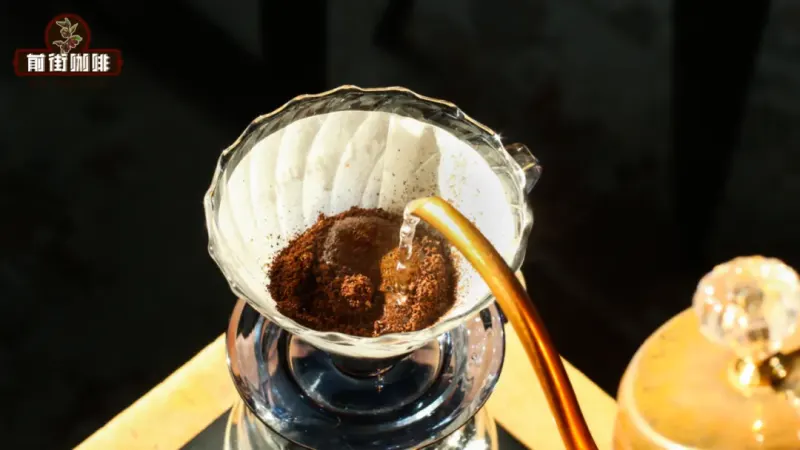
How Does Blooming Time Affect Coffee Extraction in Pour-Over?
Blooming time in pour-over coffee usually runs 30 to 45 seconds, though the right length depends on how the coffee bed looks rather than the clock. Blooming pre-wets the grounds so carbon dioxide escapes before real extraction begins. Water volume, pouring method and wait time all shape the final cup, and conical dripper geometry makes even saturation the hard part.
The bloom water is normally about twice the weight of the coffee grounds, a small amount that is easy to pour unevenly. Grounds that stay dry cannot degas properly, so the later coffee extraction loses complexity. Watching the bed deflate and even out tells you when to pour next; adjusting the pour, not just adding water, is what produces a full bloom.
Blooming is an indispensable pre-wetting step before pouring-over coffee extraction, and it directly affects the efficiency with which flavor compounds are later released. However, the amount of water used for blooming, the pouring method, and the waiting time all influence the final taste in the cup. Starting from the structural characteristics of the conical dripper, this article introduces two pouring techniques that allow hot water to evenly saturate the coffee grounds, and teaches you how to flexibly adjust the blooming time by observing the state of the coffee bed. Whether you are a beginner just getting into pour-over or an enthusiast looking to refine your technique, you will find practical tips here. The article also draws on Front Street Coffee's brewing experience and product examples to help you understand the criteria for a perfect bloom more intuitively.
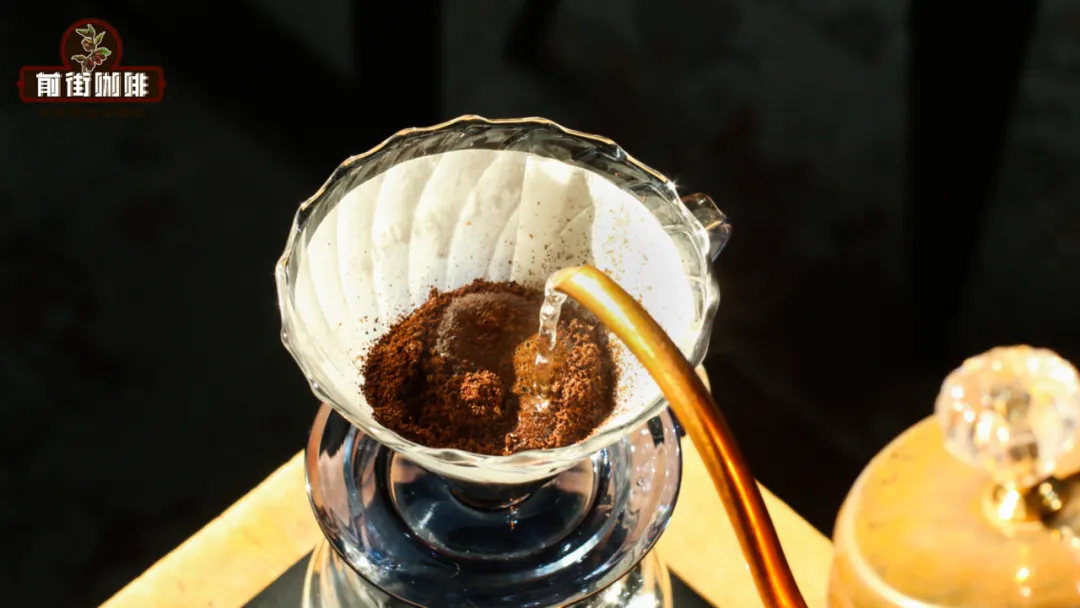
Blooming refers to the practice of first using a small amount of hot water to fully wet the coffee grounds before formally extracting flavor compounds, then letting them sit for a period of time. The core purpose of this step is to allow the carbon dioxide in the coffee grounds that hinders extraction to be released in advance, so that when water is subsequently poured, the hot water can more smoothly dissolve and carry out the coffee's flavor components, making the final cup taste fuller.
However, blooming is precisely one of the most skill-testing steps in the entire brewing process. The reason is that the amount of water used for blooming is usually very small—about twice the weight of the coffee grounds—and without solid pouring skills or sufficient experience, it is difficult to get all the coffee grounds evenly wet. Some grounds then cannot properly degas during the blooming stage, and the final coffee's complexity will suffer.
To avoid this situation, besides increasing the amount of water, there is a more scientific approach—just as Front Street frequently shares—using a reasonable pouring technique can allow hot water to penetrate the coffee bed more comprehensively, so that more coffee grounds fully degas during blooming, thereby achieving a "perfect bloom."
So how exactly should you do it?

How to achieve a perfect bloom?
Generally speaking, uneven blooming is most commonly seen in conical drippers. Front Street mentioned in a previous article that a conical dripper has an inverted-triangle structure, and the same weight of coffee grounds piled in it creates a thicker bed than in drippers of other shapes. Therefore, the path for hot water to penetrate downward is longer, making it easier for the water to find shortcuts and deviate from its intended route during descent, causing the coffee grounds at the bottom to remain un-wetted.
Therefore, to wet as much of the coffee grounds in the dripper as possible with a limited amount of hot water, try the following two pouring approaches:
1. Concentrate the hot water in the center area:
The first is the method Front Street uses more often, namely concentrating the hot water in the center. Since the coffee bed is thickest at the center of a conical dripper, concentrating the stream in the center allows the hot water to penetrate toward the central area as much as possible, reducing the problem of un-wetted grounds caused by bypass water, and degassing will also be more even.
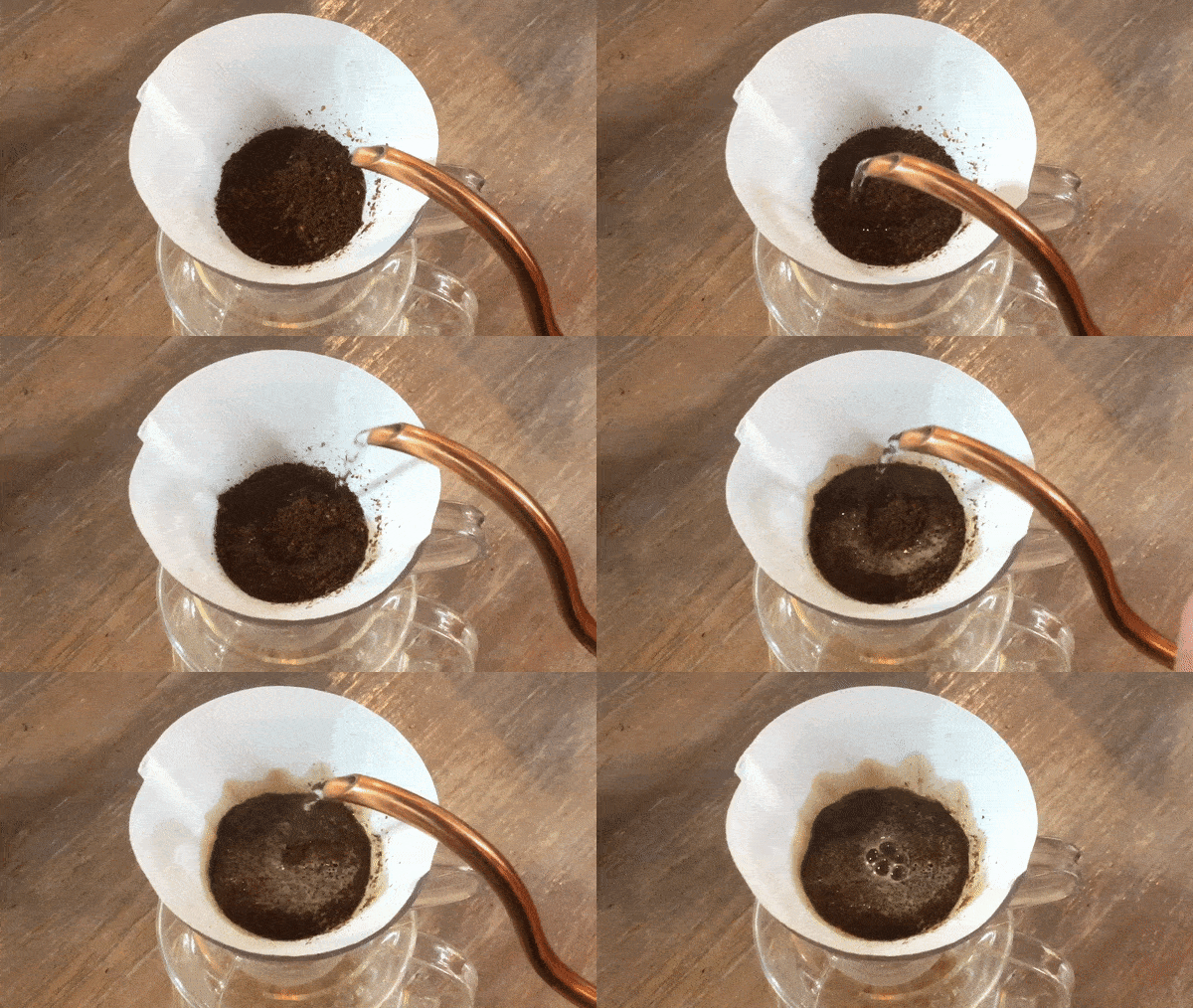
The specific operation is not complicated. For example, the method Front Street uses most often is to start from the center and spiral outward. The only difference is that when spiraling at the center, you pause a little longer, and use slightly more water. The specific technique is shown in the figure below:

Of course, you can also do the reverse, spiraling from the outside inward. Similarly, extend the pause time when spiraling at the center. But this pouring method has a shortcoming: it is not very suitable for very fresh coffee beans with extremely high carbon dioxide content. Because it interferes with the degassing of the coffee grounds in the central area, making degassing there relatively difficult.
2. Reduce the thickness of the central coffee bed:
Another method is one that Front Street shared not long ago, namely digging a small hole in the very center of the coffee bed, then concentrating the hot water into the hole, and afterward spiraling outward. As shown in the figure below:
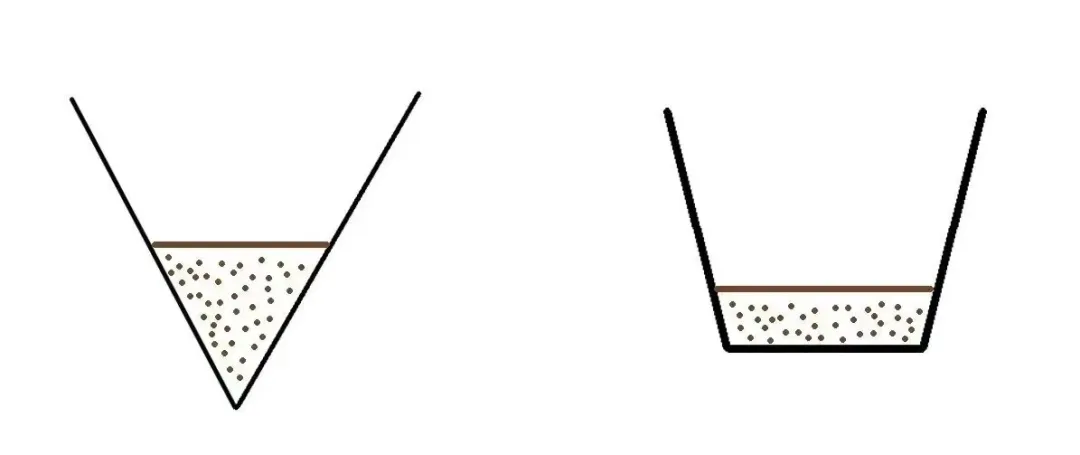
Through this method, the thickness of the coffee bed is reduced, and hot water can more easily reach the coffee grounds at the bottom and complete the wetting. Front Street relatively recommends this method for beginners, because its demands on pouring and flow control are lower than the previous method—even novices can easily achieve a perfect bloom.
The length of the blooming time
Besides the pouring method, the blooming duration is also worth paying attention to. "Water at twice the weight of the coffee grounds, wait 30 seconds" is a fairly classic blooming formula. For beginners, applying these parameters is undoubtedly the safest choice at the introductory stage.
But as everyone knows, the amount of gas in coffee that hinders extraction varies with freshness and roast level. In some cases, a fixed time alone may not allow the gas to fully escape, and extraction efficiency will decline. At this point, you need to flexibly adjust the blooming time.
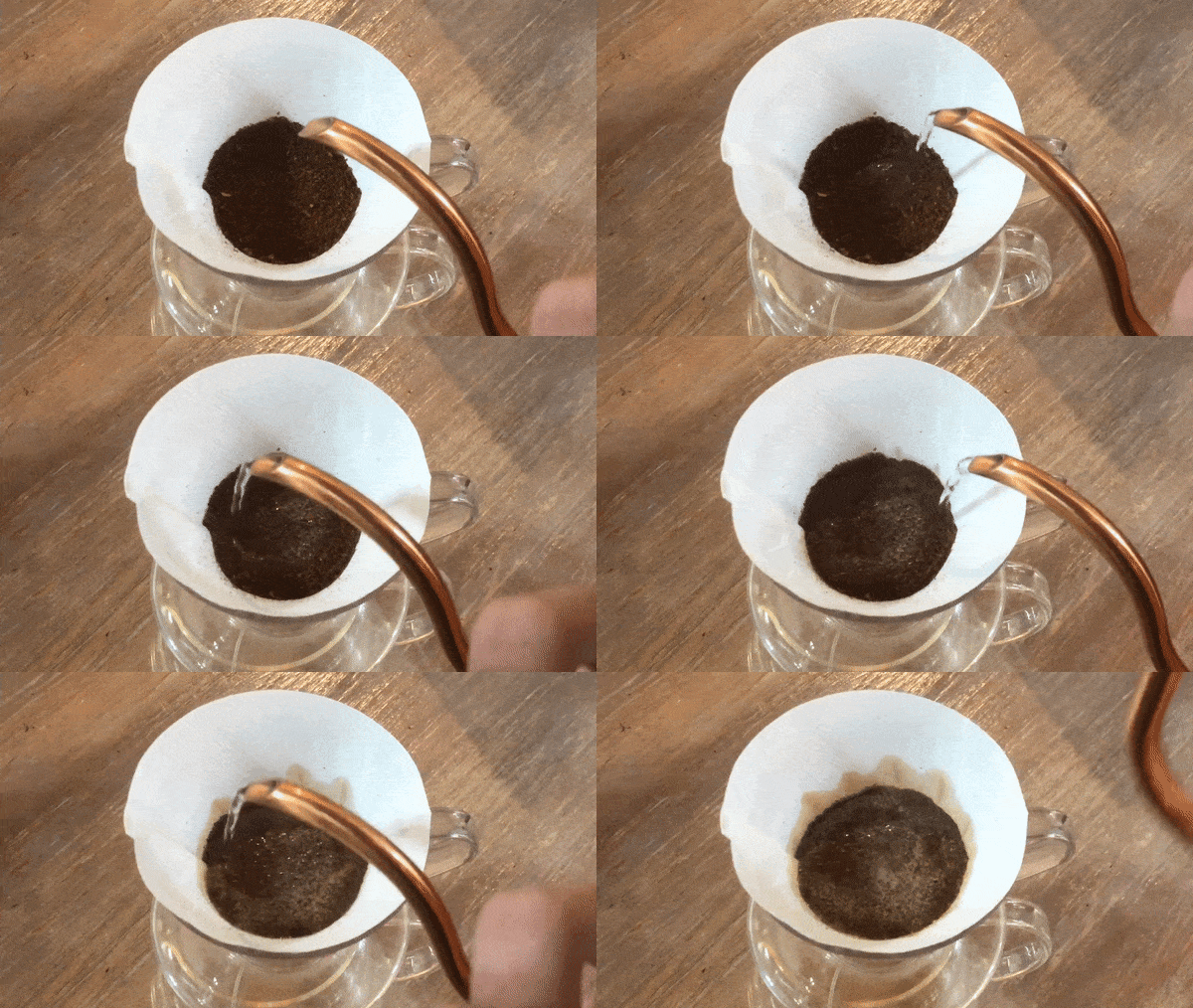
How to adjust? As Front Street has always emphasized, you must first observe how the coffee bed behaves during blooming. If, when blooming reaches 30 seconds, the coffee bed still looks very "moist" and its volume is still continuously expanding, that indicates this bean is relatively fresh and rich in carbon dioxide.
For example, the figure below shows the state of Front Street Golden Mandheling, which had been roasted only a few days earlier from Front Street's bean list, 30 seconds after blooming. You can see that the coffee bed is not only very moist, but bubbles are also continuously emerging.
This is because carbon dioxide forms bubbles after escaping from the beans, and these bubbles slow down the speed at which hot water penetrates. So when the carbon dioxide content is high, hot water penetrates slowly because of the ceaselessly rising gas. Even after exceeding the set 30 seconds, the coffee bed still looks almost the same as when water was just poured, and it will gradually expand as carbon dioxide continues to be released.
In this situation, we can appropriately extend the blooming time by 5–10 seconds, allowing the coffee grounds to release more carbon dioxide before extraction begins, and the coffee's taste will thereby become fuller.
Conversely, if after pouring the blooming water the coffee bed quickly becomes dry and the puffed-up coffee mound rapidly collapses (as shown in the figure below), that indicates there is already very little residual carbon dioxide in the coffee grounds.
In this case, we can appropriately shorten the blooming time, ending the bloom 5–10 seconds early and beginning extraction. After all, there is very little carbon dioxide left to hinder extraction, and continuing to bloom is of little significance. But if your experience is still shallow and you are not yet good at judging, Front Street still recommends blooming for a full 30 seconds before starting extraction—this is the safest approach.
The above are the two key points to pay attention to in the blooming stage: blooming time and pouring method. As long as you can let hot water evenly wet the coffee grounds while giving them sufficient time to degas, you can minimize extraction resistance (carbon dioxide) to the greatest extent, better extract the flavor compounds in the coffee, and make the taste fuller~
- END -
The above content is compiled by CoffeeHunters, a coffee news website.


