







What the Paperclip Collection Story Says About Coffee Culture Gifts
A Guangdong chain tea brand, Chayueshan, has ended a paperclip collection program it ran for five years. Customers received a paperclip per cup and could trade one paperclip for one yuan off drinks. The brand found that some paperclips brought in for redemption were custom-made copies bought cheaply online, so the physical-gift scheme was stopped and moved online.
The paperclips came in shapes such as little yellow ducks, milk tea cups and tea cups, and the brand compared a smaller authentic milk tea cup clip with a larger copy. Online shops sell similar clips so cheaply that one cup of milk tea could buy around 40. The case highlights how gift-based loyalty schemes in coffee culture can be undermined when physical tokens are easy to counterfeit.
A Guangdong chain tea beverage brand has reluctantly ended a paperclip collection program it had maintained for five years, after discovering that some people were using custom-made paperclips of the same style purchased online to redeem drinks in stores. What was originally a physical gift intended to reward loyal customers was exploited through a loophole in the rules, leaving the merchant exclaiming, "We really didn't expect this." Why did this collection program come to an end? And how have consumers reacted? This article will walk you through the whole story and explore the pros, cons, and possible improvements of physical-gift collection models.
▲
Click to follow | Daily specialty coffee culture magazine Coffee Workshop
Recently, the Guangdong chain tea beverage brand Chayueshan reluctantly posted an announcement declaring the end of a collection program it had persisted with for five years since the brand's opening.
It is understood that in order to cultivate repeat purchase habits among consumers, the brand planned a collection scheme called the "Paperclip Campaign" at its inception — every time customers bought a cup of tea, they would receive a paperclip. These paperclips could be used in daily life and also accumulated over time; under the rule of "1 paperclip equals 1 yuan," they could be exchanged for drinks at physical stores.
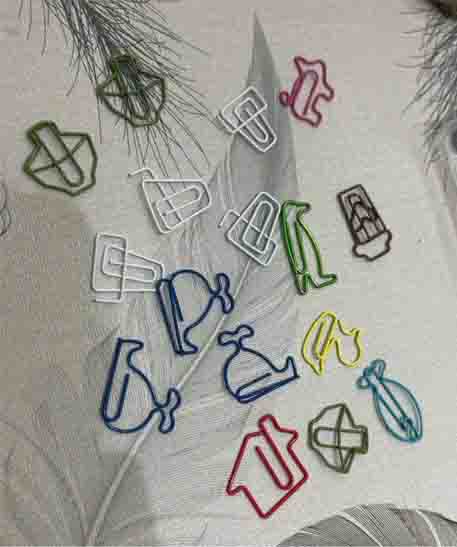
This rather creative collection method was well received by customers as soon as it was launched, and the merchant kept using physical gifts throughout, during which it also released paperclips in different shapes such as little yellow ducks, milk tea cups, and tea cups.
However, just recently, the brand noticed that some of the paperclips "returning" to stores were actually counterfeits. From the comparison image, it can be seen that the two white milk tea cup paperclips received by the store were not the same size. The smaller one on the left was the authentic product designed and sampled by the brand, while the slightly larger one on the right was a "knockoff" custom-made to match the same style sold by an online shop.
A search on e-commerce platforms shows that paperclips shaped like milk tea cups are cheap, with the cost of one cup of milk tea enough to buy 40 of them. According to the exchange ratio set by the brand, if a "calculating person" brought paperclips bought online to the store and the staff failed to see through it, then at the cost of just one cup of milk tea they could exchange for two freshly made tea drinks.
In fact, the merchant and staff had not previously noticed anything unusual about the paperclips. Whenever customers came to redeem with gifts, the unsuspecting staff would accept them as usual and, without realizing it, give these wrong paperclips to other customers who placed orders, resulting in the paperclips accumulated by customers who had already made purchases now varying in size. This situation greatly surprised the merchant, who exclaimed, "We really didn't expect someone to customize the same style just to exchange for a cup of drink."
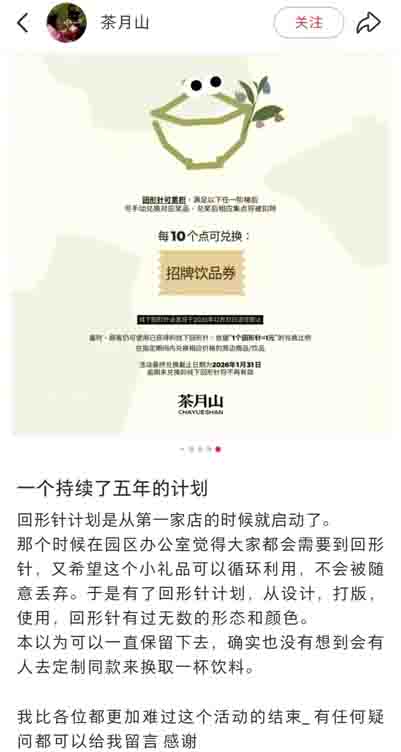
In view of this, considering that the physical gifts had been "custom-made to match" and that it was difficult to determine whether customers coming to redeem had actually made a purchase, the merchant had no choice but to announce that this five-year campaign would come to an end and inform users that it would later switch to an online collection model. Old users who had already collected quite a few paperclips could, before the campaign officially ended, bring the "savings" they had accumulated over the years to nearby stores to redeem drinks.
Upon learning of the merchant's helpless decision, most regular customers expressed regret and lament, saying, "It really makes me a bit sad that they're not issuing them anymore." But some also felt angry about it: "What about the few I honestly saved up? Does that mean I'm just unlucky?" "Do they really lack this one cup?" "Paying money to cheat — that doesn't count as chasing freebies anymore, right?" "I even asked my brothers and sisters around me to help collect paperclips. How can these godlike people exist?"
However, some old users believe that although physical gifts can create brand differentiation and help customers remember the brand's features, this collection method itself has flaws, saying bluntly that as long as someone wants to exploit the rules, highly similar "fakes" will appear just as they have now. Therefore, in their view, merchants can actually keep memorable little gifts while using online methods such as mini-programs for collection and improving the drink redemption rules.
Image source: Xiaohongshu
Disclaimer: Some images in this article are from the internet. For some content on the website, such as images, we will respect the original author's copyright and indicate the source. However, due to the large quantity, a few images and texts may not have been credited in time. Please understand. If the original author has any dispute, they may contact the website for handling. Once verified, we will correct it immediately. Compiled and edited by "Coffee Workshop." Please indicate the source when reposting. If there is infringement, please inform us for deletion. Thank you ~
The above content is compiled by CoffeeHunters, a coffee news website.


