







Can Coffee Color Tell You Roast Level and Strength?
Coffee color alone cannot reliably reveal roast level or strength, because roast degree, concentration, and filtration equipment all shift the hue. In side-by-side brewing, a light-roasted Ethiopia and a dark-roasted Sumatra produced one cup leaning black and one with a reddish tint under nearly identical parameters.
Darker roasts accumulate more melanoidins during roasting, which deepens both the bean surface and the extracted liquid, as seen with a dark roast such as Golden Mandheling. Concentration and the filter used change the shade further, so liquor color works only as a reference for a specific bean, not as a standard for judging taste.
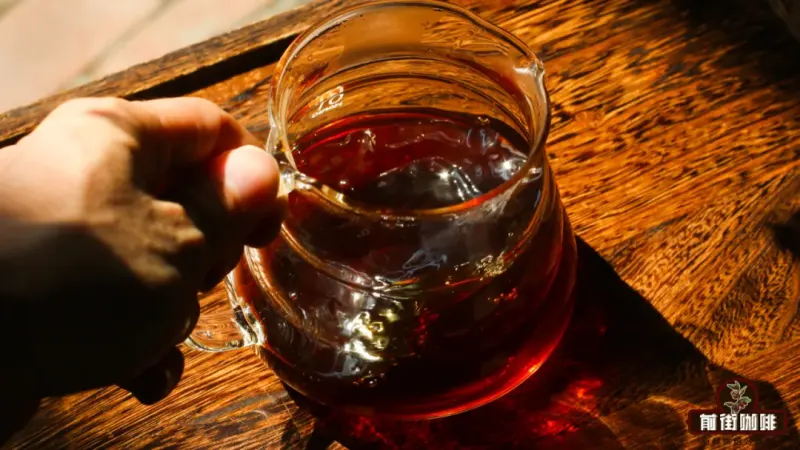
Many people are used to judging a bean's roast level or the brew's strength by observing the color of the coffee liquid, and even use it to decide whether the coffee tastes good. But the factors affecting coffee's liquor color go far beyond one—roast level, concentration, and differences in filtration equipment can all make the same bean present completely different hues. Starting from Front Street's own side-by-side tests, this article breaks down one by one how roast degree, concentration, and filtration method act on coffee color, and explains why a wine-red liquor color does not equal great taste, and why liquor color can only serve as a reference indicator for a particular bean rather than a judging standard.
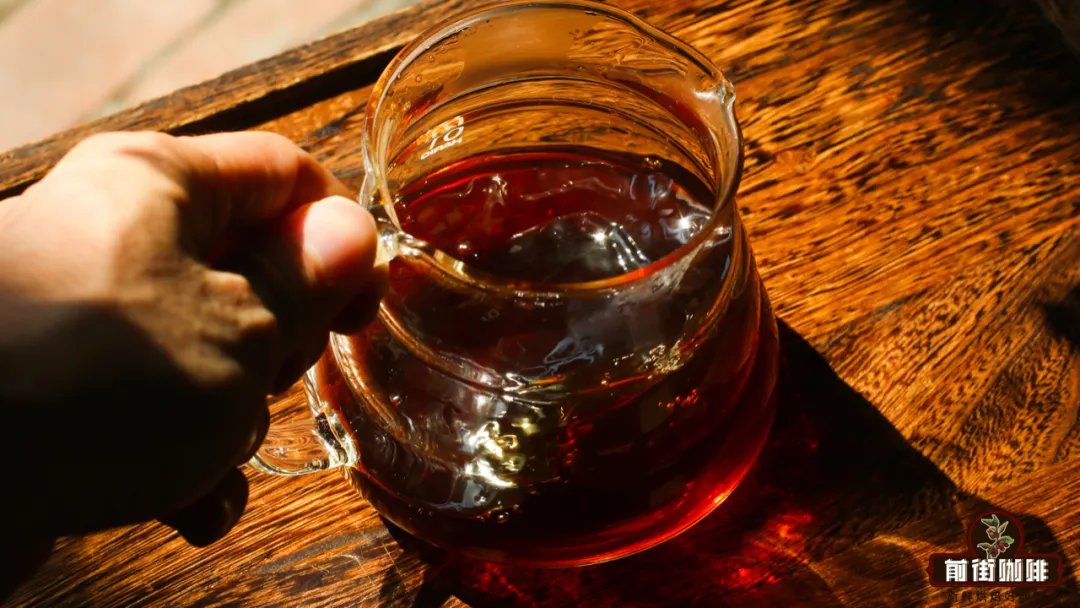
But to be honest, Front Street does not advocate treating coffee's liquor color as the basis for judging whether a cup of coffee tastes good. The reason is that there are quite a lot of variables affecting coffee color, and if you really take it as a judging standard to guide your brewing, it will instead make it much harder to produce a satisfying cup of coffee.
Factors affecting coffee's liquor color
In previous articles, Front Street has mentioned that the roast degree of the coffee beans, the concentration and extraction yield of the coffee liquid, and the filtering equipment used will all affect the final liquor color.
The roast degree of the coffee beans directly determines what color the brewed coffee presents. Under the premise that the dose, extraction yield, and concentration are all kept consistent, the darker the roast, the heavier the color of the brewed coffee, while light roasts are the opposite.
The two cups above were brewed by Front Street using the light-roasted Front Street Ethiopia·Floral Queen (left) and the dark-roasted Front Street Sumatra·Golden Mandheling (right) from its bean list. Although the parameters, extraction yield, and concentration were basically the same, you can see at a glance that one cup leans black, while the other has a reddish tint.
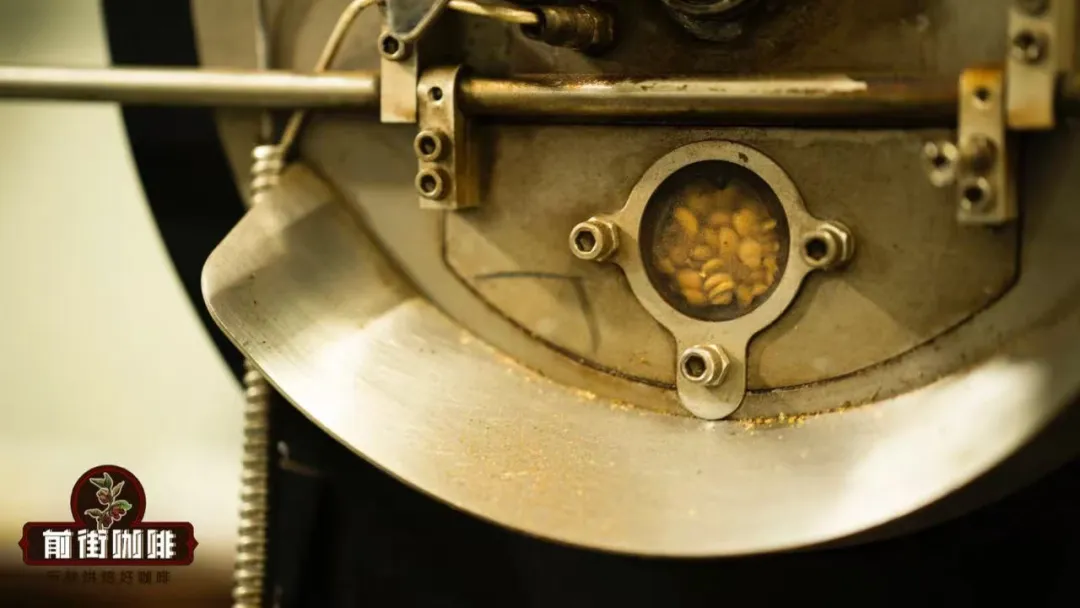
The root cause of this difference is the roast. The darker the coffee beans are roasted, the more chemical reactions occur during roasting, and these reactions continuously accumulate melanoidins, gradually deepening the color of the beans' exterior as well as the extracted coffee liquid.
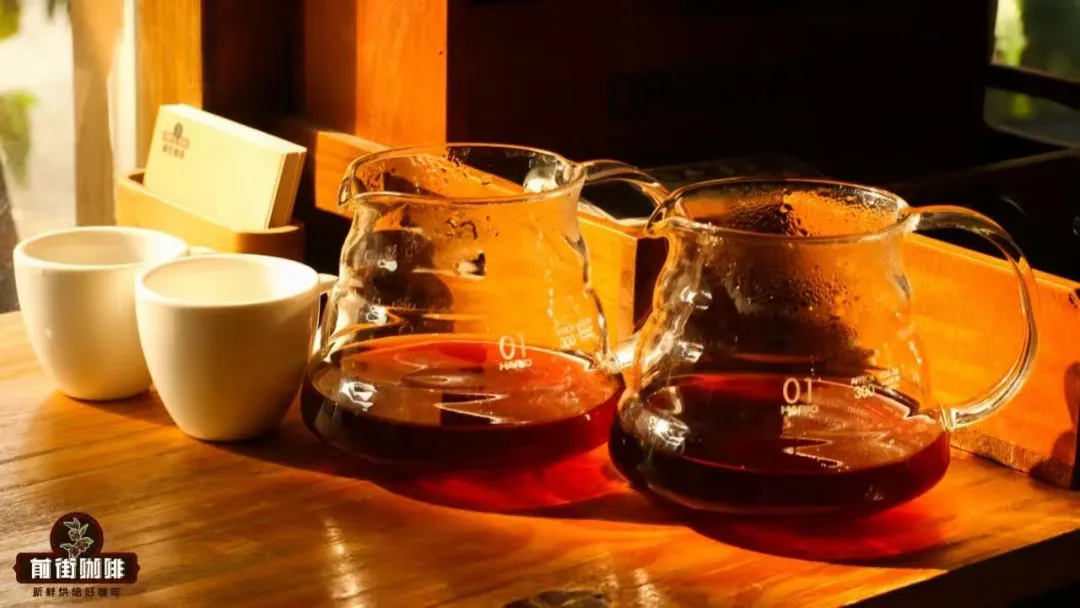
Besides roast degree, coffee concentration also changes the liquor color. Concentration affects the lightness or darkness of the coffee color. So-called concentration is the proportion of soluble substances in the brewed coffee liquid. The higher the concentration, the more dissolved substances there are in the liquid; at this point the liquor color looks less transparent and the color becomes deeper, while low concentration is the opposite.
The last variable is the filtering equipment. What filter material is chosen for pour-over coffee will change the proportion of insoluble substances in the coffee, thereby affecting the transparency of the liquor color, that is, cleanliness. When you use equipment with strong filtering performance, such as filter paper, the fines and oils in the coffee will be intercepted relatively thoroughly, and the liquid looks very clear;
if the equipment used has weaker filtering ability, such as a mesh filter or certain drippers, more oils and fines will remain in the coffee, so the liquor color naturally will not be so transparent and will carry a bit of turbidity. But it must also be emphasized that this does not indicate whether a cup of coffee tastes good.
Putting the above points together, everyone should be able to understand why Front Street says it is best not to use liquor color to judge coffee extraction—because there are simply too many variables. Although liquor color can indeed roughly infer concentration and extraction yield, once you switch to beans with a different roast degree or change the filter material, the original standard completely fails.
We can understand it this way: the friend at the beginning of the article thought the wine-red coffee tasted better because the coffee he brewed with that bean and that set of parameters happened to suit his taste in flavor and concentration, and the roast degree and concentration of that bean just happened to make the liquor color appear wine-red. When switched to other parameters or other beans, the color is no longer wine-red and the taste no longer suits him, so he mistakenly thinks wine-red itself equals great taste.
In conclusion, Front Street still recommends that everyone judge the quality of a cup of coffee based on its mouthfeel and flavor, so that you can quickly find the problem and adjust parameters in time. Liquor color can only serve as a reference indicator for a specific bean in a specific brew, not as a standard for judging flavor.
- END -
The above content is compiled by CoffeeHunters, a coffee news website.


