







How Many Cups of Coffee a Day Fit 400 mg of Caffeine
Staying within about 400 milligrams of caffeine per day is generally considered moderate for adults. For pour-over made with 10 grams of Arabica beans, a cup may hold roughly 90 to 140 milligrams, so about three cups fit the limit. The same dose of Robusta can reach up to 400 milligrams, meaning just one cup may use the full daily allowance.
Two things decide the actual total: the bean variety and the dose. Arabica averages 0.9 to 1.4 percent caffeine by bean weight, while Robusta runs about 2 to 4 percent. Extraction also matters, since not all caffeine dissolves during brewing. Decaf options, including Colombian decaf, give anyone who wants extra cups a lower-caffeine choice.
Moderate coffee consumption is beneficial for adults, and research shows that the daily caffeine intake limit is about 400 milligrams. But how much caffeine does a cup of pour-over or espresso actually contain? And how many cups does that translate to? This article starts from the questions of customers at Front Street stores, and uses angles such as the difference in caffeine content between Arabica and Robusta, and the effect of extraction rate on caffeine dissolution, to gradually estimate the approximate caffeine content of a cup of coffee, and provide a reference for the number of cups corresponding to 400 milligrams. It will also introduce the characteristics of decaf coffee and the Colombian decaf coffee in Front Street's bean list, helping coffee lovers who want to drink a few more cups without exceeding the limit find a compromise.
This question came from a customer choosing coffee beans at a Front Street store. Many people know that drinking coffee in moderation is good for health. According to relevant research, keeping adults' daily caffeine intake within 400 mg is generally regarded as moderate, though individual physical differences can also lead to different effects.
Front Street believes that this customer is certainly not the only one curious about this question. Because when buying beans, people often ask about the caffeine content of Front Street coffee beans in order to plan how much to drink each day without exceeding 400 mg. So, back to the original question: if converted into pour-over or espresso, about how many cups does 400 mg of caffeine equal?
Calculating it is actually not complicated. As long as we figure out what beans this cup of pour-over or espresso uses and how many grams of beans were used, we can estimate the approximate caffeine content.
The caffeine level of a cup of coffee mainly depends on two variables: variety and dosage. The caffeine content of different varieties varies greatly. The varieties mentioned here refer to Arabica and Robusta. Their caffeine contents differ by more than double. Robusta's caffeine content is about 2% to 4% of its own bean weight, while Arabica has only about half of that, averaging between 0.9% and 1.4%.
For example, suppose 10 g of coffee beans is used to brew a pot of coffee. If Robusta is used, the caffeine content of this cup of coffee may reach as high as 400 mg; if Arabica is used instead, the maximum is about 140 mg.
However, in reality, the caffeine content of a cup of coffee cannot be calculated directly this way, because not all the caffeine in the coffee beans dissolves into the cup.
The soluble substances in coffee beans account for about 30% of the bean weight, and caffeine is included among them. These soluble substances are the core source of coffee flavor. But we do not extract all 30%, because not all soluble substances are pleasant. If undesirable substances dissolve too much, the coffee will show obvious negative flavors such as bitterness, muddiness, and astringency.
Therefore, we adjust extraction parameters to avoid over-extracting unpleasant components. Usually the coffee extraction rate is controlled at around 18% to 22%, that is, two-thirds of the total soluble substances. As for exactly how much caffeine dissolves out, we cannot know directly. Let us assume half of it dissolves. Then the estimation formula for the caffeine in a cup of coffee becomes: amount of coffee beans used × caffeine content of that variety ÷ 2.

Calculating this way is much more convenient. Taking Front Street as an example, when Front Street makes espresso, it uses the espresso blend Front Street Strawberry Candy Espresso from its bean list. This blend uses only Arabica varieties, so when measuring, it can be calculated according to the average caffeine content of Arabica.
Front Street usually uses 20 g of grounds to extract espresso. Substituting into the formula: 20 g (grounds amount) × 1.4% (average caffeine content of Arabica) ÷ 2 (deducting caffeine that may not have been extracted), the caffeine content of a cup of Front Street espresso is about 140 mg. On the premise of not exceeding 400 mg, you can drink about two and a half cups.
Front Street pour-over coffee uses 15 g of beans, and it is also basically all brewed with Arabica species. Whether it is the Dividing Line Xizhua or Yirgacheffe Gedingding, Geisha, etc. from Front Street's bean list, they are all calculated according to Arabica's caffeine content. The formula is: 15 g × 1.4% ÷ 2, giving a caffeine content of about 105 mg for a cup of Front Street pour-over coffee, so you can drink about three and a half cups.
But this calculation method can only serve as a reference, letting us understand a rough idea. It cannot be copied completely, because it is not rigorous.
First, we do not know the exact caffeine content of a specific variety. The calculation methods mentioned earlier by Front Street are all based on the maximum average caffeine content of Arabica, while Arabica has many sub-varieties: Typica, Geisha, Xizhua, etc., and their caffeine contents also differ. We cannot know the exact caffeine value of each coffee.
Second, we cannot precisely control the amount of caffeine dissolved from coffee beans; sometimes it is more, sometimes less. Combined with the previous shortcoming, the measurement of caffeine can only be inferred to an approximate range, and a very broad range at that.
So, we can only treat the results obtained from this calculation method as a reference, and then arrange the amount of coffee we usually consume accordingly. Of course, if you really want to drink more coffee but do not want to exceed the daily caffeine intake limit, you might as well try decaf coffee!
Decaf coffee has extremely low caffeine content and is divided into naturally decaffeinated and artificially decaffeinated types. At present, most decaf coffee on the market is made by artificial decaffeination. The caffeine content of this type of coffee is only below 3% of its original caffeine content. This is a standard.
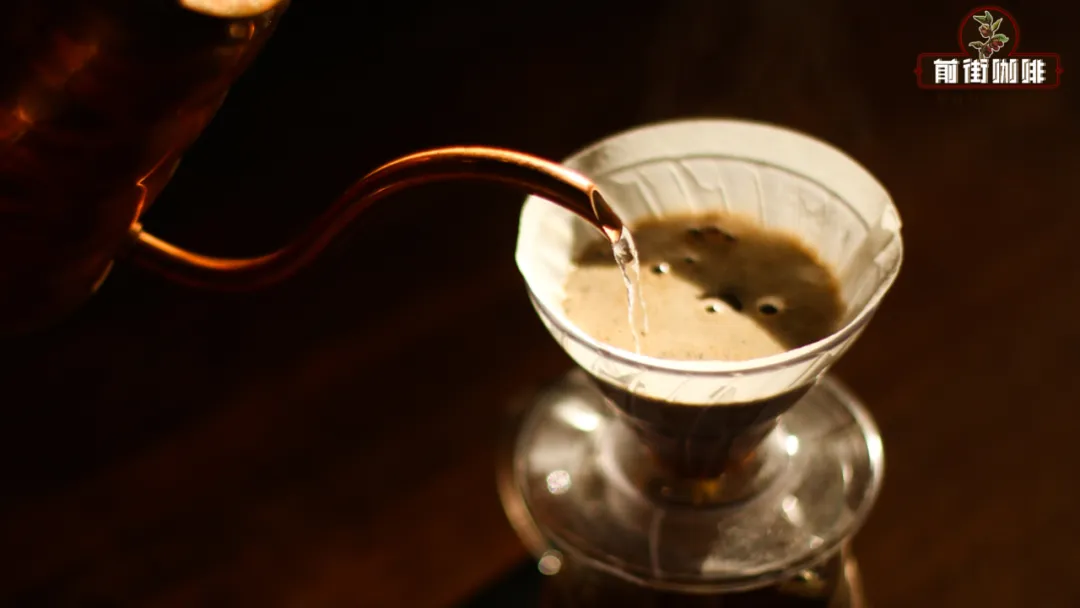
For example, if the caffeine content of 10 g of Arabica beans is originally 140 mg, then when this Arabica is made into decaf coffee, the caffeine content of 10 g of Arabica beans is reduced to 4.2 mg. The caffeine content is very low, and the number of cups of coffee you can drink can be greatly increased.
In Front Street Coffee's Tmall Taobao bean list, there is a Colombian decaf coffee for sale. It uses the Swiss Water decaffeination process. This decaffeination method can remove caffeine while still retaining a certain amount of coffee flavor. For friends who want to drink many cups of coffee, it should be a good choice~
- END -
The above content is compiled by CoffeeHunters, a coffee news website.


