







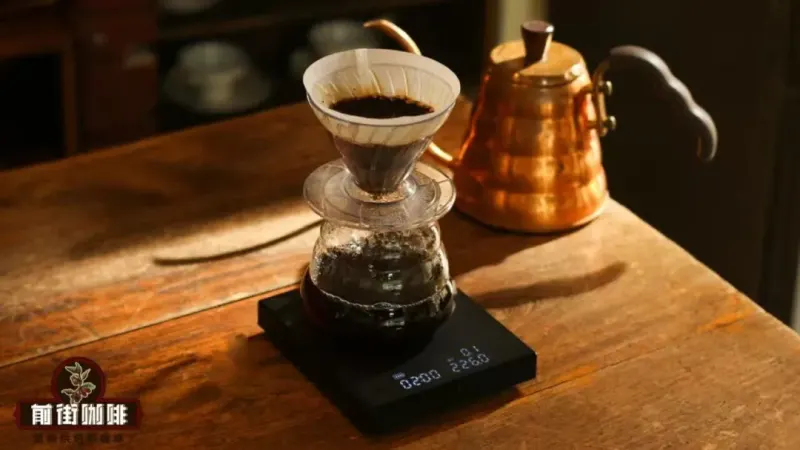
How does coffee extraction time reveal brewing problems?
Recording pour-over coffee extraction time gives a simple check on grind, technique, and equipment. The clock starts when water first contacts the grounds and stops when the target amount has passed through the coffee bed. A drawdown that runs much faster or slower than expected signals a problem, such as too coarse or too fine a grind, uneven pouring, or a clogged dripper.
Time is a passive variable: it cannot be set directly, only shaped by changing grind size, water temperature, pouring method, and the dripper itself. Once a coffee brewing routine produces a good cup, the recorded time helps repeat it. When flavor drifts, comparing the new time against that reference narrows down which variable moved and how to correct it.
Many coffee enthusiasts habitually press the timer when brewing, but some also feel that keeping track of time is optional. In fact, although time cannot be directly controlled, it can help us determine whether the grind, technique, and equipment are suitable. From the perspective of Front Street, this article discusses why timing matters in pour-over coffee, what extraction times that are too fast or too slow each mean, and how to correct brewing problems by adjusting grind size, pouring method, and dripper, so you can brew a good cup of coffee more consistently.
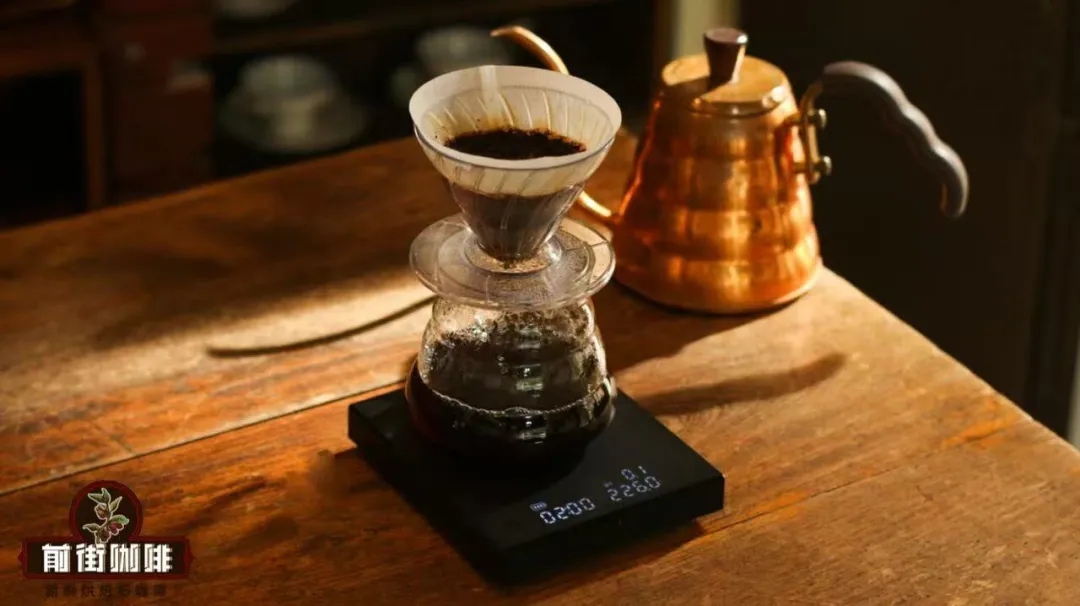
When brewing coffee, many people casually press the timer button on their scale, and this seems to be a basic step taught from the very beginning.
However, some friends do not agree with this. They feel that recording time has no real effect on coffee flavor, and that even if they brew "blind" without watching the time, they can still make delicious coffee.
It is true that you can brew a decent cup of coffee without watching the time, but that does not mean timing is meaningless. For less experienced brewers, having time data not only makes it easier to reproduce a good flavor, but also allows them to look back after brewing, identify the root of the problem, and correct it.
Today Front Street will talk with everyone about why coffee brewing needs time records, and how to use time to judge and improve conditions during brewing.
Why do we need to time coffee brewing?
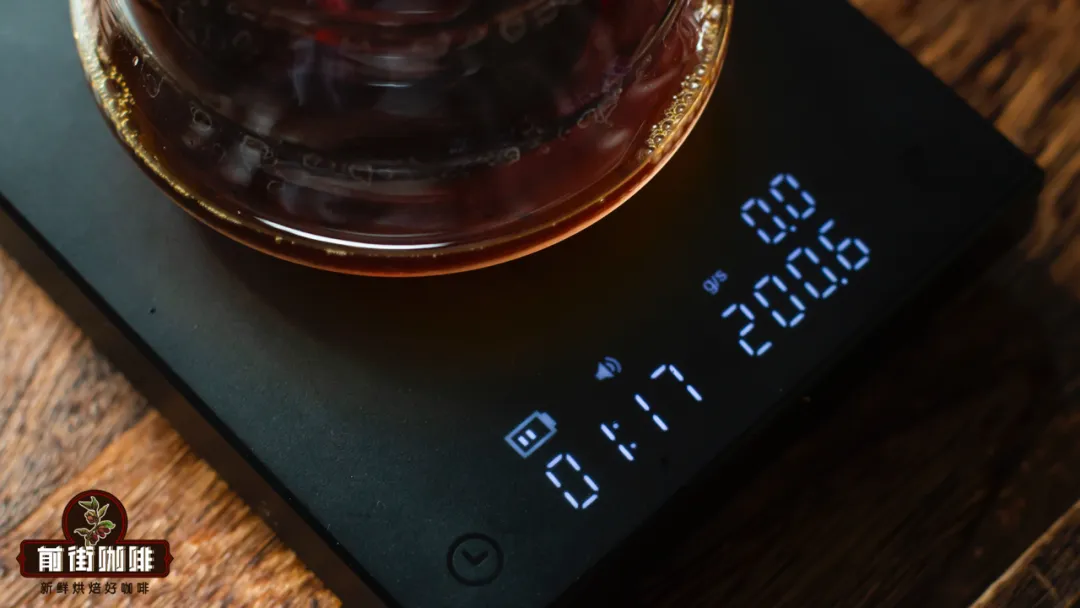
First, it should be made clear that what we usually record is the duration of contact between water and coffee grounds, that is, the extraction time. The starting point is the moment water contacts the grounds, and the endpoint is when the target amount of water has fully passed through the coffee bed.
When other conditions are fixed, the longer the extraction time, the longer the contact between water and grounds, and the more flavor substances are dissolved; conversely, the shorter the time, the fewer substances are dissolved. In other words, by controlling extraction time, we can regulate the amount of dissolved substances and thereby affect the extraction yield.
But note that time is a passive parameter. We cannot directly set its length the way we adjust water temperature, grind, or water amount; we can only influence it indirectly by changing other variables.
For this reason, time can serve as an indicator of whether other parameters are reasonable. If the coffee's extraction time is less than two minutes, the flow rate is on the fast side; if it exceeds two minutes, the flow rate is on the slow side, meaning some parameters may be too "conservative" or too "extreme." At this point, you need to combine it with the taste of the coffee to judge whether adjustment is needed.
1. Coffee grind size and dose: For drip extraction, the coarseness and amount of coffee grounds both affect extraction time. The coarser the grounds, the larger the gaps between particles, the faster the same amount of water passes through, and the shorter the extraction time;
the finer the grounds, the smaller the gaps, the greater the resistance to water flow, and the longer the extraction time accordingly. In espresso, this difference is especially obvious.
At this point, time can serve as a reference for whether the grind size is appropriate. For example, Front Street Panama Butterfly is a medium-light roast. To bring out the flavors of white floral notes, sweet orange, and green tea, we use 15 grams of coffee beans for pour-over and set the target extraction time at 2 minutes.
With other parameters and pouring technique unchanged, if the actual time exceeds 2 minutes, the grind may be too fine; if it is under 2 minutes, it may be too coarse. But too coarse or too fine is not an absolute problem, because some beans are naturally suited to a finer or coarser grind. So in the end, you still need to judge whether the grind is appropriate based on the taste in the cup. This is one major use of time.
2. Coffee brewing technique: The pouring method also affects extraction time. A small stream with more pours will lengthen extraction time; a large stream with fewer pours will shorten extraction time.
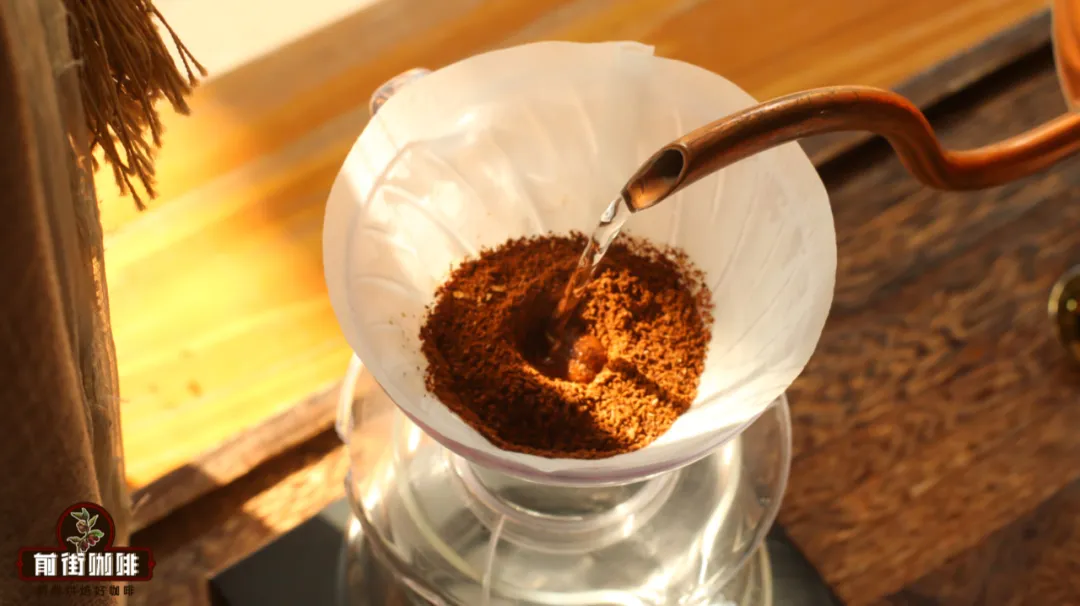
Once you understand how stream size and the number of pours affect time, you can adjust in real time during brewing based on the time or the drainage speed, instead of waiting until the brew is finished to fix it. For example, if you brew an unfamiliar bean with a routine recipe and notice during the process that the water drains much faster than usual, at this rate it is very likely to underextract.
At this point, you can switch to a smaller stream and increase the number of pours, promptly slowing the drainage speed and extending extraction to avoid underextraction.
3. Coffee equipment: In addition to human factors such as grind, dose, and pouring method, the equipment you choose also affects extraction time and drainage speed.
Take conical drippers as an example. Under the same parameters, V60 has more ribs and a larger bottom hole, so water drains faster and extraction time tends to be shorter; Kono has fewer ribs and a smaller bottom hole, so water drains more slowly and extraction time tends to be longer.
Different filter papers also drain at different speeds, depending on thickness, material, and manufacturing process. The same is true for espresso: the size and density of the holes in the portafilter basket directly affect drainage speed and extraction time. So in addition to adjusting grind and technique, changing the filter is also a good way to regulate time.
The above content is compiled by CoffeeHunters, a coffee news website.


