








How to Drink Dirty Latte With Clear Layers
A dirty latte layers only when cold milk and hot espresso stay apart in the glass. Three mistakes break that separation: pouring the shot straight in without a layering plan, using the wrong cup, and adding ice without thinking. Fix those three details and the drink keeps its distinct hot-cold and flavor contrast instead of turning into a strong latte.
The base is simple, just milk and espresso, so the espresso coffee ingredients matter less than technique. Espresso is denser than milk and sinks, but it mixes as soon as it is poured hard or stirred. Front Street's production notes suggest pouring the shot slowly over the milk surface, skipping ice unless the milk is already chilled, and choosing a narrow cup that keeps the two liquids in place.
Dirty coffee may seem to require only two ingredients, milk and espresso, but there is actually a lot of knowledge hidden in the actual preparation. When many people try it at home, they often encounter problems such as no layering and overly blended flavors, and the result is far from what a coffee shop produces. In fact, as long as you avoid three common mistakes—ignoring layering, choosing the wrong cup type, and adding ice blindly—you can easily make a cup of Dirty with distinct layers and a strong contrast between hot and cold. Front Street will combine the actual production experience of the classic blend beans to break down in detail the principles behind each detail and the correct operation method, helping you make a dirty coffee even better than a café's.

Although Dirty's ingredients are only milk and coffee, its preparation method is not as simple as ordinary milk coffee, where you just pour milk into coffee. There are many finer points to pay attention to. These considerations are not formalism, but the key to why Dirty can be Dirty and different from other milk coffees. The fundamental reason some friends' Dirty lacks layering and has no obvious hot-cold contrast is that they ignore these details, resulting in a noticeable gap between the final product and a coffee shop's output.
Today Front Street will talk with everyone about the mistakes beginners are most likely to make when making Dirty, and how to adjust your technique to make a Dirty/dirty coffee that tastes even better than a coffee shop's.
1. No layering
To be honest, whether Dirty can layer is very important. As everyone knows, Dirty's biggest feature is that it lets you feel the dual contrast of temperature and flavor between milk and coffee at the same time when drinking. Combined with the visual contrast, these experiences all require espresso and milk to remain separated in order to be achieved.
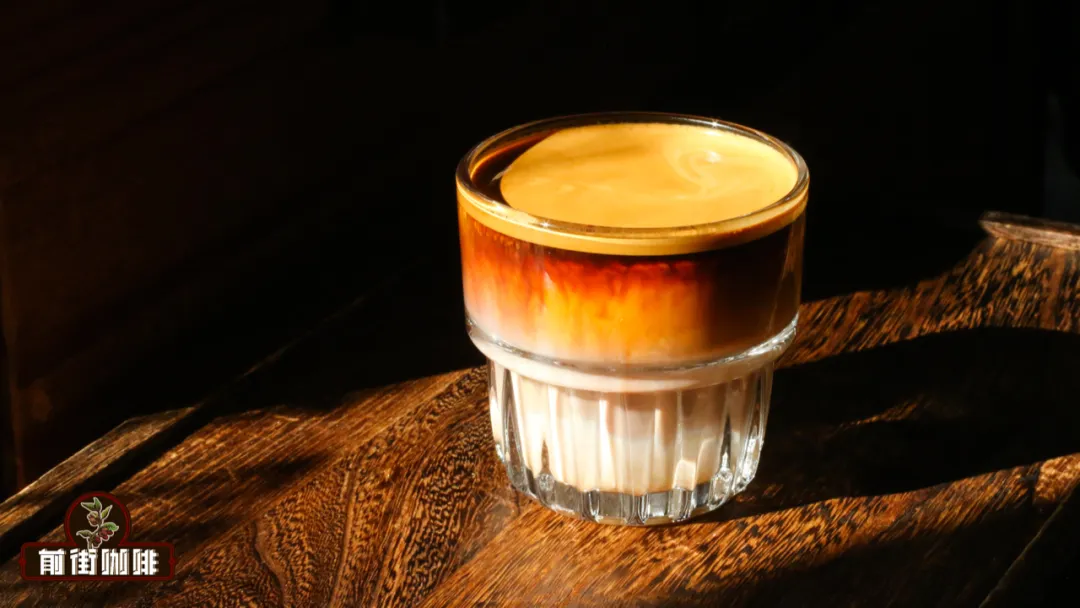
The reason many people's "dirty" is not "dirty enough" is that the coffee and milk have not separated, and they have simply poured coffee onto milk. A "Dirty" made this way may look plausible on the surface, but when you drink it, it is actually just a latte with a stronger coffee flavor, because most of the coffee has already mixed with the milk.
Therefore, if you want to make a Dirty with clear layering and strong contrast, Front Street suggests focusing on the layering effect between milk and coffee during preparation. The specific steps were shared in detail in the previous article "How to Make a Dirty with Obvious Layering," and interested friends can look it up themselves. To summarize simply, there are three points: the milk must be cold enough, the coffee must be strong enough, and the pouring action must be gentle. As long as you grasp these three points, the Dirty you make will basically be no different from a coffee shop's output.
2. Using a narrow-mouth cup
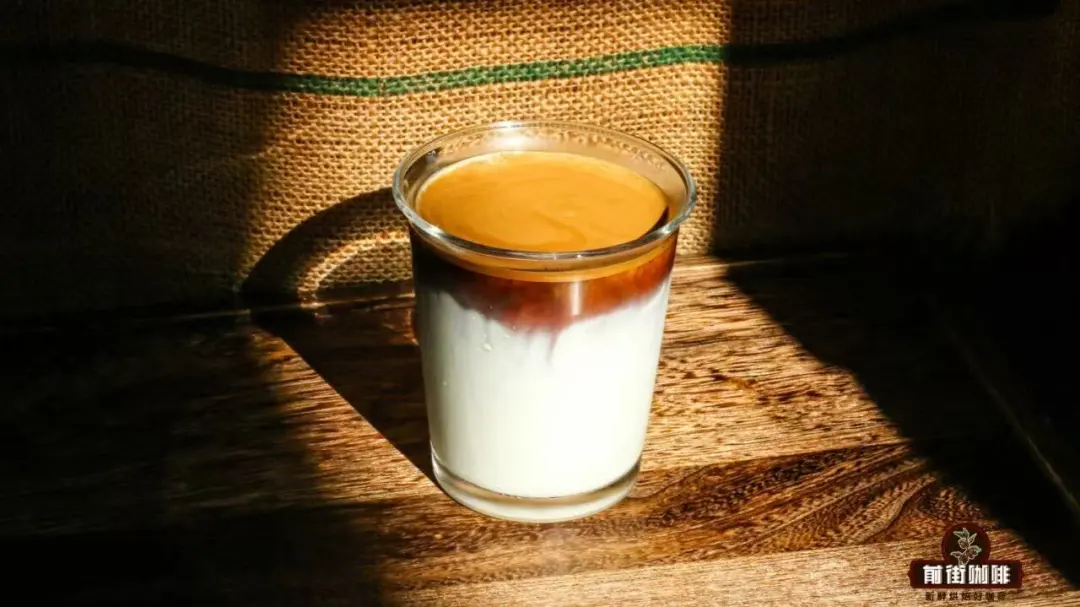
After Dirty became popular, many coffee cup products added the keyword Dirty to increase exposure. Although most of them can indeed be used to serve Dirty, there are still a small number that are not suitable, such as narrow-mouth cups with an inward-tapering rim. Using a narrow-mouth cup to make Dirty has an obvious problem: because the cup opening is narrow, the espresso on the upper layer cannot spread over a large area and will concentrate in one place, and its thickness will also be greater.
As a result, when we take a big sip of Dirty, we cannot taste both espresso and milk at the same time, and one mouthful is all espresso! For friends who are not used to bitterness and do not like drinking espresso, this experience can be quite terrifying. Therefore, Front Street more strongly recommends using a wide-mouth cup to serve dirty coffee/Dirty. Moreover, the wide-mouth cup should preferably have a smaller capacity, so that the situation will not arise where the espresso is finished but a large amount of milk is still left in the cup. Taking Front Street as an example, to serve Dirty, a 200 ml wide-mouth cup is used, 160 ml of refrigerated fresh milk is poured into the bottom layer, and then 40 ml of espresso liquid obtained from 20 g of powder extracted for 30 seconds is slowly poured on top.

Because Front Street's Italian classic blend from Front Street's bean list is used, when you take a big sip, the first thing you feel is the mellow aroma of chocolate and caramel brought by the classic blend, as well as the warm touch of coffee, followed immediately by the sweetness and coolness of the milk, creating a very distinct contrast! After that, because the ratio of coffee to milk in each sip is constantly changing, the taste and layering of every sip are different, making for a very good experience.
3. Adding ice cubes
Finally, let's talk about the issue of adding ice cubes. Front Street has noticed that some friends put ice cubes into the milk when making Dirty, perhaps to make the layering more obvious, or to keep the milk at a low temperature for a longer time. But regardless of the consideration, Front Street does not recommend adding ice cubes to Dirty.
This is not only because Dirty had no tradition of adding ice when it was first created, but also because ice cubes left in Dirty will quickly lower the temperature of the espresso, dilute the milk, and at the same time hinder our tasting experience of drinking it in big gulps. Whichever disadvantage it is, ice cubes will bring quite a few negative effects to the drinking of Dirty and turn it into a veritable iced latte. So when making Dirty, Front Street does not recommend adding ice cubes to the coffee. Simply pour refrigerated milk into the cup, then slowly pour espresso on the surface, and making Dirty is just that simple.

The above are the three details to pay attention to when making Dirty. Everyone can refer to these key points and pay more attention in actual operation, and then you can make a standard and delicious cup of Dirty coffee.
- END -
The above content is compiled by CoffeeHunters, a coffee news website.


