








What is black coffee and how does it differ from Americano?
Black coffee is not one specific drink but a broad category covering any coffee made only with coffee beans and water, with no milk, sugar, or other additives. Americano belongs to that category because it is espresso diluted with water. The two terms are not interchangeable, since many other drinks also count as black coffee while Americano is only one member.
Espresso itself is a concentrated coffee liquid extracted from grounds with water, and adding water produces an Americano. Other espresso-based drinks without milk, such as a long black, also fall under the black coffee umbrella, while filter and pour-over coffees made from beans and water alone qualify too. Once milk or syrup is added, the drink leaves the category, which is why a barista may ask which specific black coffee a customer wants.
When ordering at a coffee shop, many people equate Americano with black coffee, and some even think the two are just different names for the same thing. But is that really the case? At Front Street stores, we often encounter customers who ask for a "black coffee," and the barista needs to confirm which specific drink they actually want. This involves a classification logic that is easy to confuse: black coffee is a broad umbrella term, while Americano is just one member of that category. This article will start from the definition, sort out the criteria for determining black coffee, the production principle of Americano, and what other coffees inside and outside the espresso system also belong to black coffee. Finally, it will explain which category these drinks fall into after milk, syrup, and other additives are included. If you have ever been confused by the names on a menu, this article will help you build a clear cognitive framework.

"Boss, give me a black coffee!" At Front Street stores, we occasionally encounter customers ordering this way. Although Front Street knows that the black coffee they mean is most likely an Americano, to be safe, we still ask one more question to confirm. Many friends find this strange: "Isn't black coffee just Americano?"
This statement is actually not accurate. Many people see bloggers calling Americano black coffee online and mistakenly assume the two can be equated. In fact, Americano can indeed be included in the category of black coffee, but conversely, black coffee is not equivalent to Americano. Why does Front Street say this? To clarify this issue, we first need to understand what black coffee really is.
What is black coffee?
Black coffee is not the name of a specific coffee, but a broad category, or an umbrella term. It refers to coffee drinks made only with coffee beans and water, without adding milk, sugar, or any other additives.
In other words, as long as a cup of coffee contains only coffee and water, it can be called black coffee. As for the origin of the name, Front Street believes it is not hard to understand—because its color is close to black.
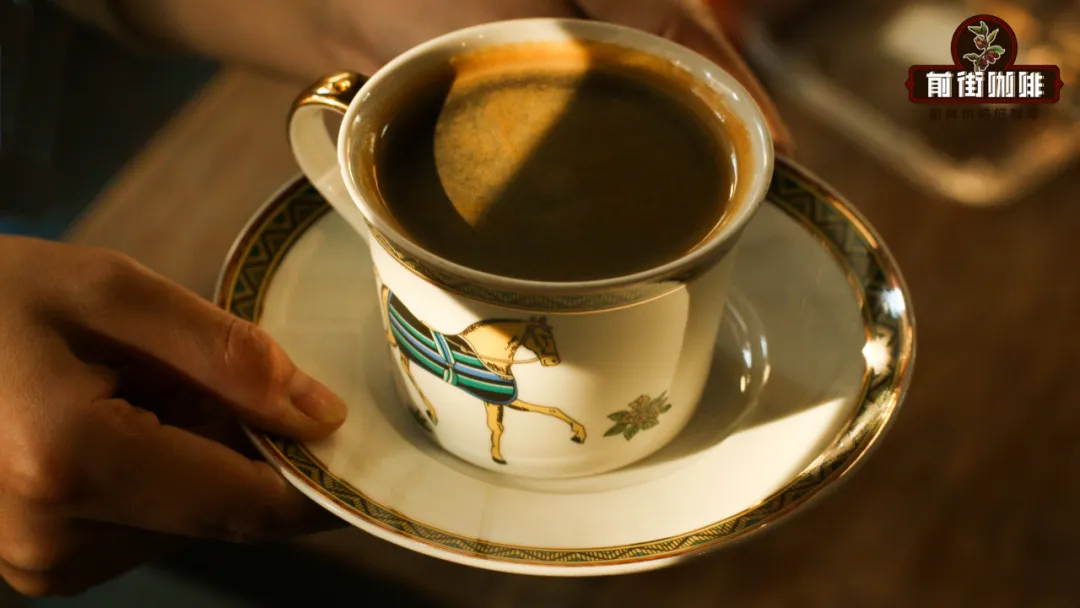
There is no doubt that Americano is a member of the black coffee family. It is made by diluting espresso with water, and espresso itself is a highly concentrated coffee liquid extracted from coffee grounds with water. The entire process does not add any other ingredients, so the final product is a pure black coffee.
But as Front Street said earlier, black coffee is an umbrella category. This category includes Americano, but is not limited to Americano. So the relationship between the two is inclusion, not equivalence. Americano can be black coffee, but black coffee is not necessarily Americano. That is precisely why Front Street needs to specifically ask one more question to confirm whether the black coffee the customer wants is Americano.
The flavor performance of Americano depends on the coffee beans chosen. For home brewing, Front Street blend series is the first choice. There is the oil-exploding Front Street Classic Blend, the nutty Front Street Specialty Blend, the cost-performance king Front Street Black Cocoa Base Blend, and the shop-opening essential Front Street Commercial Blend.
Besides Americano, what other coffees belong to black coffee?
Strictly speaking, as long as no ingredients other than coffee and water are added during production, coffee made with any equipment can be considered black coffee. For example, in the espresso coffee system, espresso, Lungo, Ristretto, and Americano's sibling Long Black, whether it is espresso added to water or water added to espresso, all belong to black coffee.
Outside the espresso system, pour-over coffee made by hand, siphon coffee made with a siphon pot, ice drip and cold brew in the cold brew series, as well as coffee made with common household devices such as French press, moka pot, and Clever Cup, all belong to black coffee. Of course, the premise is also that no ingredients other than water and coffee are added.
There are many similar examples, and Front Street will not list them one by one. Seeing this, some friends will probably ask: since only coffee with water and coffee as the ingredients is called black coffee, what are coffees with other additives called?
Other categories...
Then there are plenty of names! Generally speaking, we collectively call them fancy coffee, referring to coffee made with various flavorings. For example, coffee made with milk, granulated sugar, chocolate, cream, alcohol, salt, and other flavorings can all be classified as fancy coffee. Of course, water also counts as an additive, but here it refers more to drinks that are different from the pure coffee form. Latte, cappuccino, flat white, con panna, mocha, macchiato, café au lait, and so on all belong to this category.

Under this broad category, there are different subdivision methods depending on the production method or region. For example, some places classify by color. Just like black coffee, coffee with milk added is called white coffee; another example is the coffee that has become very popular in recent years, made like mixing cocktails, which is called specialty coffee...
So Front Street does not recommend that everyone directly use an umbrella term when ordering in a store. Because umbrella terms cover too many types of coffee, without confirming in advance, it is easy for differences in understanding to cause the final product to differ from expectations, adding unnecessary trouble~
The above content is compiled by CoffeeHunters, a coffee news website.


