








What Makes Brewing Coffee With Milk So Difficult?
Milk is not suitable as the liquid for pour-over coffee because it cannot extract coffee properly. Three limits get in the way: temperature, concentration, and flow rate. Milk tastes thinner and loses sweetness above 70°C, yet water at that temperature already struggles to dissolve coffee flavors quickly, so a good mouthfeel and full extraction cannot both be achieved in one drip brew.
Concentration is the second problem. Milk carries far more dissolved solids than water, so it slows the passage of liquid through the coffee bed and turns what should be a drip extraction into something closer to immersion. Experiments with coffee brewed with milk, including drip bag trials, point to the same result: if milk must be used, immersion is the more workable direction.
Using milk instead of water to brew pour-over coffee sounds like an interesting experiment, but once you actually try it, you'll find that getting a delicious cup of milk coffee is nearly impossible. Front Street Coffee has shared related experiments several times, and the conclusion has always been consistent: milk is not suitable for brewing coffee. Behind this are three core limitations—temperature, concentration, and flow rate. Milk cannot maintain a good mouthfeel at high temperatures, and because its own concentration is too high, it severely slows down extraction, even turning drip extraction into immersion. This article will break down these limitations one by one and explain why, if you want to extract coffee with milk, immersion is the more viable direction.

To be honest, Front Street shared related content as early as last year, and this year we also explored whether it is feasible to brew drip bag coffee with milk. These attempts ultimately all point to the same conclusion: it is very difficult to make a satisfying cup of coffee with milk. The fundamental reason is that milk itself is not suitable as a medium for brewing coffee. The emphasis here is on the action of "brewing."
Why is milk not suitable for brewing coffee? The reason Front Street makes this judgment is that when using milk to extract coffee, you encounter many constraints. The most prominent problem is that milk does not have sufficient extraction capacity. It cannot, like water, fully dissolve the flavor components we want from coffee in a relatively short time.
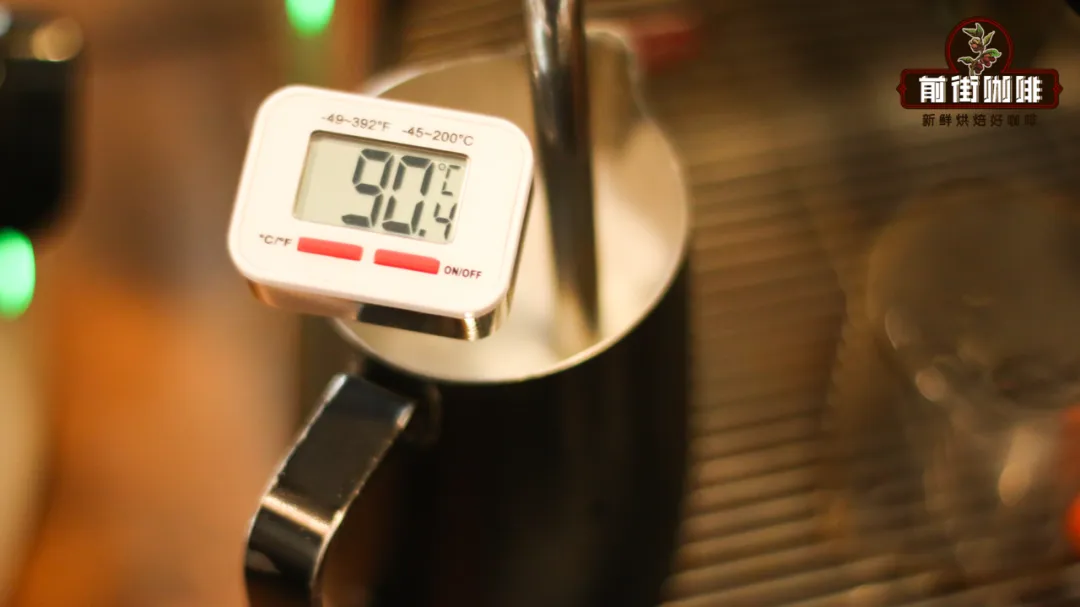
Limitation at the temperature level: The first thing to discuss is temperature. When Front Street talks about espresso milk coffee, it often emphasizes that the ideal temperature for hot milk should be controlled at around 65°C, and should not exceed 70°C. This upper limit is set partly because within this temperature range the lactose in milk can be activated, presenting a more obvious sweetness; and partly because once it exceeds 70°C, some components in the milk will be damaged by overheating, and the texture will decline accordingly (although the degree of change is not large, it will taste thinner and the sweetness will weaken).
If you want a cup of milk coffee with excellent flavor and mouthfeel, the milk temperature should be kept below 70°C as much as possible. However, as everyone knows, at 70°C, let alone milk, even water finds it difficult to dissolve the flavor substances in coffee in a short time. Thus the first contradiction in brewing coffee with milk appears: if you pursue perfect mouthfeel, you cannot use high-temperature milk, but if the temperature is not high enough, you cannot obtain sufficient extraction efficiency to fully release the coffee flavor in a short time.
Limitation at the concentration level: Even if we temporarily set aside the temperature issue and heat the milk to 100°C to brew coffee, it is still impossible to make a pot of rich and delicious milk coffee. The reason is that the concentration of milk is simply too high.
Front Street often mentions that the concentration gradient is one of the core driving forces behind extraction. The reason hot water can quickly extract flavor substances from coffee is precisely that water has a low concentration, and there is an obvious concentration difference between it and the coffee grounds, so the flavor components in the coffee grounds quickly migrate into the low-concentration water. As the dissolved substances in the water increase, the concentration difference gradually narrows, and the rate of solute transfer also slows down. Milk itself is already very high in concentration, even far exceeding espresso, so when using milk to extract coffee, although some flavor substances can still be dissolved, the speed is extremely slow.
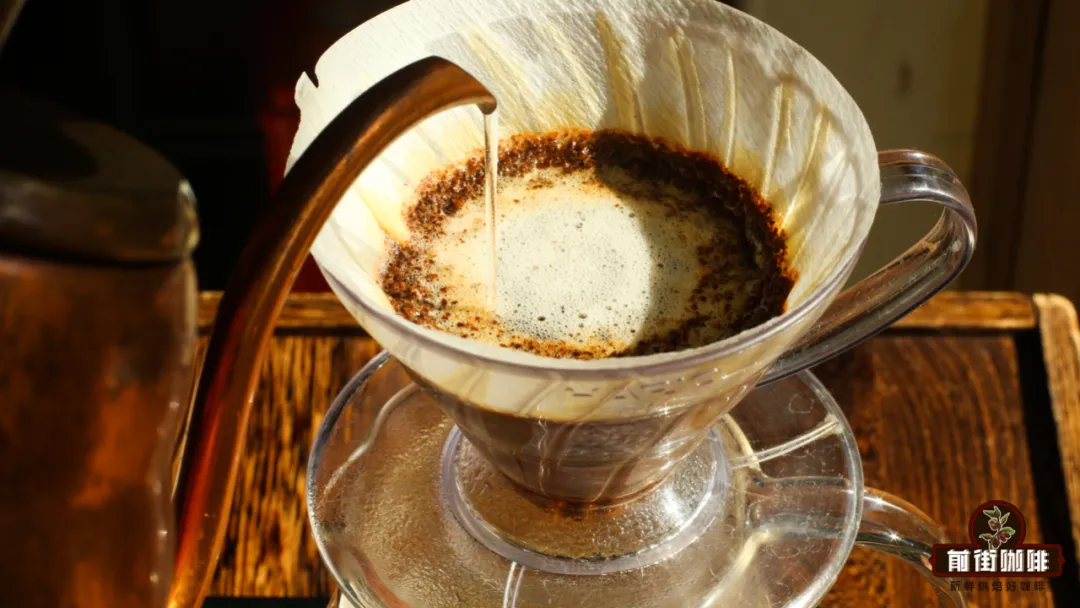
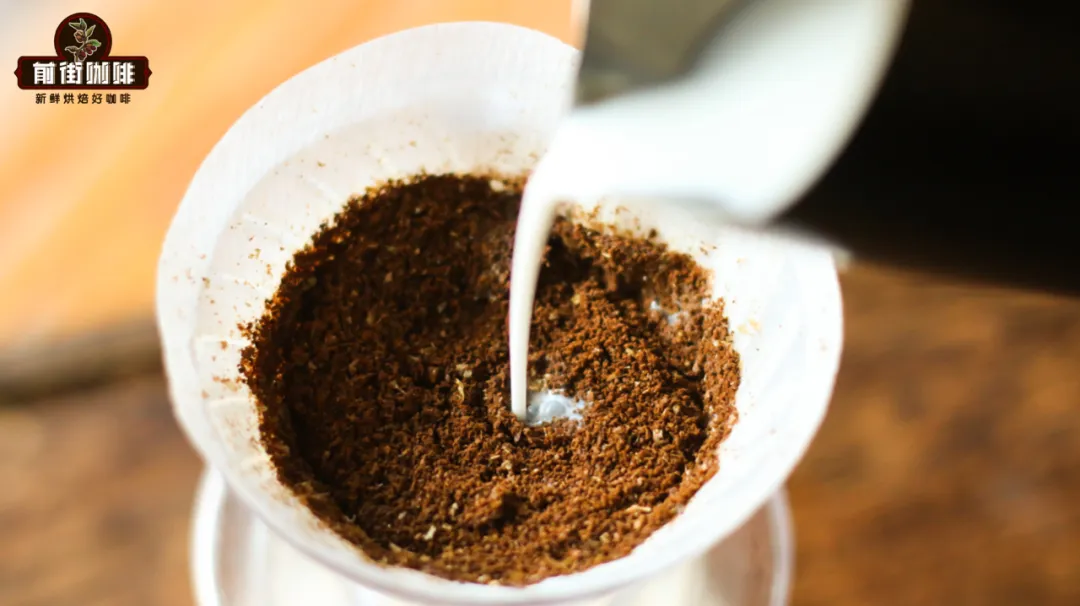
Taking actual operation as an example, the image below shows coffee obtained by Front Street after soaking coffee grounds in 100°C milk for about 30 minutes. During this period, methods such as stirring were also used in an attempt to increase the extraction rate, but in the end all that was obtained was a pot of milk with coffee flavor, and that coffee flavor also carried the astringency of insufficient extraction. Overall, it was not good to drink.
From this experiment, we can conclude: because milk has an extremely high concentration, we cannot fully dissolve the flavor substances in coffee in a short time. In other words, milk can indeed be used to brew coffee, but the taste is bound to be unsatisfactory. Unless immersion extraction is used, such as cold brewing coffee with milk, in which case a relatively complete milk-extracted coffee can be obtained through a longer extraction time.
Limitation at the flow rate level: The last issue to discuss is flow rate. The cup of coffee Front Street mentioned earlier, obtained by soaking coffee grounds in milk for thirty minutes, was not originally intended to be made as immersion; it was initially operated as pour-over coffee, that is, drip extraction. So why did Front Street later classify it as soaked coffee?
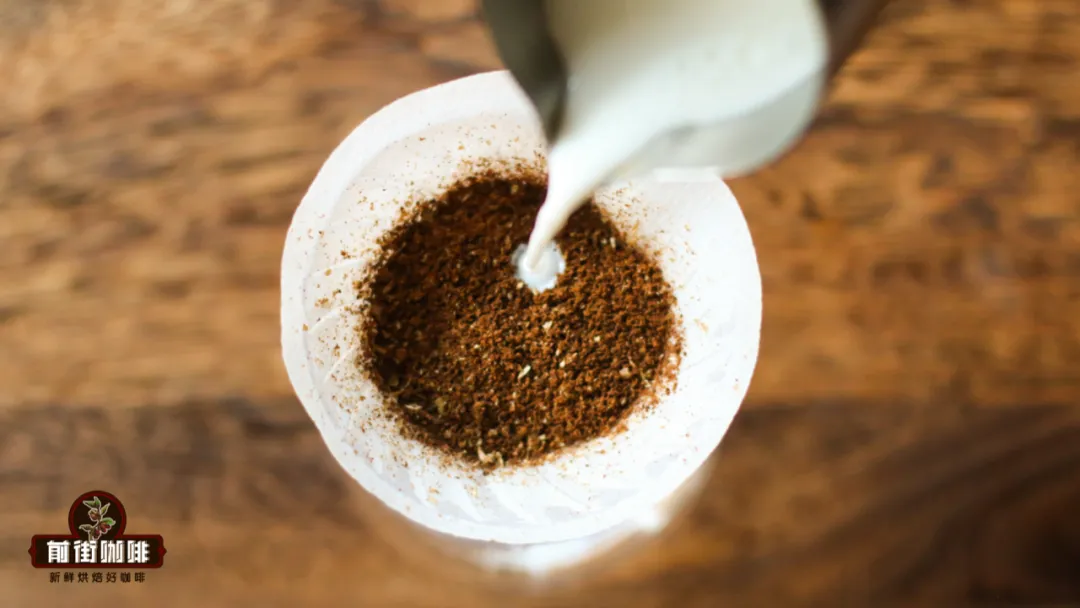
The reason is simple. The concentration of milk is too high, causing it to pass through the filter paper extremely slowly. At the time, Front Street used 225 milliliters of hot milk to brew 15 grams of coffee grounds. At first, the drip rate was still fairly normal, but from the second minute onward, the dripping speed slowed noticeably, turning into a drop-by-drop fall. By the 11th minute, it even took several seconds to drip out one drop of milk coffee. After persisting until the 30th minute, Front Street really did not have the patience to keep waiting, so it used a carving needle to poke a hole in the bottom filter paper, and only then did the milk coffee in the dripper flow down quickly. The cost was that it was easy to get grounds in the cup when tasting. Even so, the taste of the coffee was still hard to praise and completely unworthy of being called delicious.
The extremely slow filtration speed essentially turned drip extraction into immersion, which is no fundamentally different from directly soaking coffee in milk. If you want to increase the flow rate, the only way is to coarsen the grind to increase the gaps and let the milk pass through the coffee bed faster, but then the extraction efficiency will further decrease, and what is brewed will still just be coffee-flavored milk. That is why Front Street repeatedly emphasizes that milk is not suitable for brewing coffee. If you really want to extract a pot of rich and delicious milk coffee with milk, Front Street still recommends using the immersion method. At least the soaking time is long enough, and more thorough stirring can also be done, thereby more effectively dissolving the coffee flavor substances.
Finally, if you really cannot restrain your curiosity and want to give it a try, then when operating, it is best not to use a pour-over kettle to hold the milk, otherwise... whoever tries it will know~~
- END -
The above content is compiled by CoffeeHunters, a coffee news website.


