







How Does Washed Coffee Processing Shape the Final Cup?
Washed coffee processing, also called wet processing, removes the skin, pulp, and mucilage before drying, which produces a clean and delicate cup. The tradeoff is that the result can taste flat if brewing does not extract enough. A V60 four-pour method, demonstrated with a Kenyan double-washed coffee, brings out the layered acidity and juicy body that washed beans are known for.
The traditional washed sequence runs from removing defective cherries through mechanical depulping, tank fermentation, washing and rinsing, drying, hulling, and bagging. Kenya's double washing adds repeated soaking and washing to strip residual mucilage. Coffee quality drove the method's adoption, since it makes each batch stable and efficient to produce. Many beans, including Front Street Gu Ding Ding and Little Tomato, carry washed process information on their labels.
Many coffee enthusiasts feel that their home-brewed washed beans taste flat and lack complexity. In fact, the clean and delicate nature of the washed process itself requires an appropriate extraction approach to be fully expressed. This article starts from the confusion of a loyal washed-bean fan at Front Street's store, systematically sorts out the process characteristics of the washed method and its real difference from natural beans in acidity expression, and uses Front Street Little Tomato, a Kenyan double-washed coffee, as an example to break down in detail a set of V60 four-pour brewing parameters to help you brew a washed coffee with distinct layers and a solid juicy feel.
A while ago, a regular customer came to Front Street's store. He is a loyal fan of washed beans and has bought quite a few washed coffees, but no matter how he brewed them at home, he could not create complexity, so he came to ask Front Street whether there were any methods or suggestions. Taking this opportunity, today let's talk about brewing ideas for washed coffee.
What exactly is washed coffee?
The so-called "washed process" is written in English as "Washed process" and is also called "Wet process" in producing regions, that is, "wet processing."
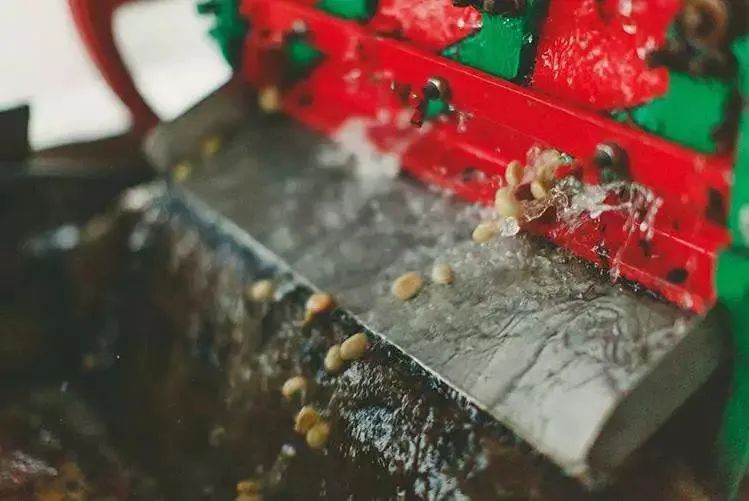
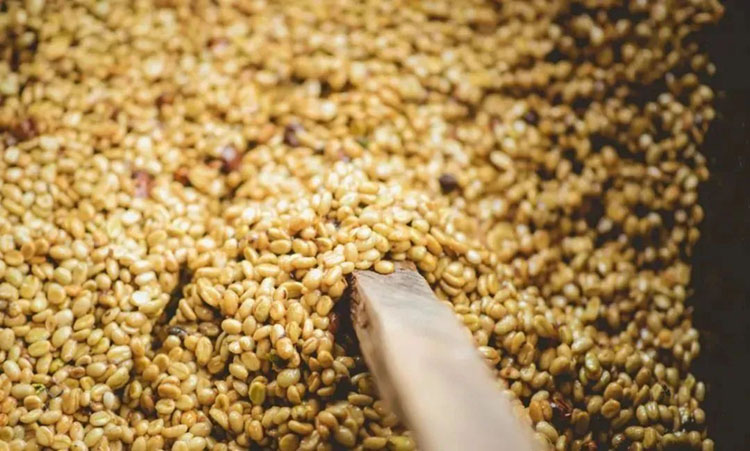
From the outside inward, a coffee cherry consists of skin, pulp, mucilage, parchment, and coffee bean. What we drink daily is precisely the innermost seed. The traditional "washed" procedure is relatively simple: remove defective cherries → mechanical depulping → tank fermentation → washing and rinsing → drying → hulling → bagging. Other washed branches adjust this process. For example, Kenya's double washing further removes residual mucilage through multiple soaking and washing cycles.
As a long-established method of green coffee processing, the washed method appeared precisely to improve coffee quality, making each batch of green coffee stable and efficient to produce, thereby achieving profitability. So to this day it remains one of the most common and favored processing methods in producing regions. You can see it in the information panels of many coffee beans, such as Front Street Gu Ding Ding, Front Street Little Tomato, Front Street Emerald Green Label, Front Street Kilimanjaro... all benefiting from the washed method.
What characteristics does washed coffee have?
During washing, the green beans are always soaked in water in a clean state for fermentation, and afterward the mucilage is thoroughly removed by rinsing. Therefore, compared with natural processing, it can better highlight the characteristics of the coffee seed itself, with almost no fermented feel, and naturally higher cleanliness.
In order to more clearly present the regional (or varietal) character of the coffee, roasters choose suitable roast levels for different washed beans, such as the bright citrus acidity of washed Gu Ding Ding, the tomato juice feel of washed Kenya, the white floral aroma and clean, quiet character of washed Panama Geisha... These are what make washed coffee so fascinating. But at the same time, many beginners fall into a misunderstanding, thinking that "washed coffee must be more acidic than natural coffee."
Front Street would like to correct this here: the acidity in the coffees mentioned above is mainly determined by roast level and has little to do with processing method. For example, if Front Street roasts Golden Mandheling, which is known for its mellow body, to first crack and drops it, it can still show high-intensity acidity. As for whether it tastes good, that varies from person to person.
Another reason we tend to think "washed beans are more acidic" is that natural coffee is dried together with the skin and pulp, making it easy to release complex fermented fruity aromas into the seed, allowing us to sense mellow notes such as tropical fruit, faint wine aroma, candied fruit, and brown sugar. Front Street once used washed Panama Geisha and natural Colombian Geisha, extracted with the same set of parameters for comparison, and found that the natural Geisha indeed smelled sweeter and more fragrant than the washed one, but after tasting, the acidity of the natural one was actually far higher than that of the washed one.
What kind of brewing plan is suitable for washed coffee beans?
As Front Street mentioned above, the reason many washed beans are loved so "deeply" mainly lies in their unique clean and quiet flavor, as well as the bright floral and fruity notes displayed under medium-light roasting. Therefore, if you want the coffee to taste layered and distinct, the brewing concentration should not be too high. Front Street chooses 1:16 for extraction.
In addition, under the same parameters, the lighter the roast, the lower the solubility of coffee grounds in water. At this time, to increase extraction yield, besides the finer grinding and higher water temperature that Front Street often mentions, you can also further control it by increasing the number of pours and raising the circling motion of the water flow.
Although they are all called washed processing, Front Street believes that coffees with fruity acidity can be roughly divided into two categories: one is the thick acidity like dark berries, classically represented by Kenya and Rwanda; the other is the fresh charm of white flowers and citrus, mostly found in washed coffee beans from Ethiopia, Panama, Peru, and Colombia.
Here we use Front Street Little Tomato, a Kenyan double-washed coffee. In order to highlight its full, juicy mouthfeel and rich layers, Front Street pairs it with a V60 for extraction. The spiral raised ribs allow the water flow to create a fuller "squeeze" on the coffee bed, satisfying the coffee particles' water absorption and expansion to the greatest extent.
Coffee beans: Front Street Kenya · Little Tomato
Dose: 15 grams
Coffee-to-water ratio: 1:16
Total water: 240g (40g+70g+70g+60g)
Grind size: EK43 setting 10 (80% passing through a No. 20 sieve / C40 grinder 25 clicks)
Water temperature: 93℃
Dripper: Hario V60#01
Pouring method: four-pour
First, pour 15g of coffee grounds into the V60 and gently tap level. For the first pour, use a small stream to circle from the inside outward and pour in 40g of water for a 30-second bloom. Be careful to wet all the coffee grounds so they can degas.
After 30 seconds, pour the second stage, vertically circling in 70g of hot water. You can raise the stream slightly so the coffee bed quickly rises to half the height of the dripper, allowing the flavors to unfold better.
When the coffee liquid drops to the point where the coffee bed is almost exposed, at 1 minute 09 seconds, begin pouring the third stage. The technique and water amount are the same as the previous stage. After pouring 70g of hot water, the liquid level will just become level with the previous stage. Compared with the bloom, these two pours are mainly responsible for releasing the fruity acidity and caramelized aroma of the washed beans, so be careful not to pour water onto the filter paper, as this can easily cause under-extraction.
When the liquid level drops to the halfway point, at about 1 minute 41 seconds, begin pouring the final 60g. It is mainly responsible for extracting the sweet aftertaste and mellow mouthfeel of the washed coffee, so there is no need for too strong a stream; just keep pouring at the center point.
Brewed this way, Little Tomato truly lives up to its name, with a dense tomato aroma. On the palate there is the rich berry acidity of blueberries and black grapes, along with a hint of caramel. As the temperature drops, soft light floral notes and snow pear flavors begin to become obvious. The juicy feel is solid, and both the layering and the lingering character are very rich.
- END -
The above content is compiled by CoffeeHunters, a coffee news website.


