







How Does the Rao Spin Work for a Coffee Enthusiast?
The Rao Spin is a pour-over technique popularized by coffee author Scott Rao, in which the dripper is lifted and gently shaken during brewing to level the coffee bed and improve extraction. It suits beans of any roast level, so a coffee enthusiast can try it with medium-dark or dark roasts, such as Indonesia Golden Mandheling, for a mellow, low-acidity cup.
A typical demonstration uses 15g of coffee and moves through blooming, stirring, pouring, and the shake itself. Rao shared the method but did not invent it, and the original source is unknown, which is why it carries his name. The spin is reliable judged by taste rather than strict rules.
In the world of pour-over coffee, there are always some distinctive brewing methods that catch your eye. The Rao Spin—the "Rao-style rotation method" shared and popularized by coffee guru Scott Rao—quickly went viral thanks to the unique move of picking up the dripper and shaking it during brewing. It looks casual, but behind it lies solid extraction principles. This article will introduce coffee lovers to the origins of the Rao Spin, the beans it suits, and equipment selection advice, and use 15g of Front Street Ethiopia·Huakui as an example to fully demonstrate the process from blooming, stirring, and pouring to shaking the dripper, helping you understand this fun and practical pour-over method.
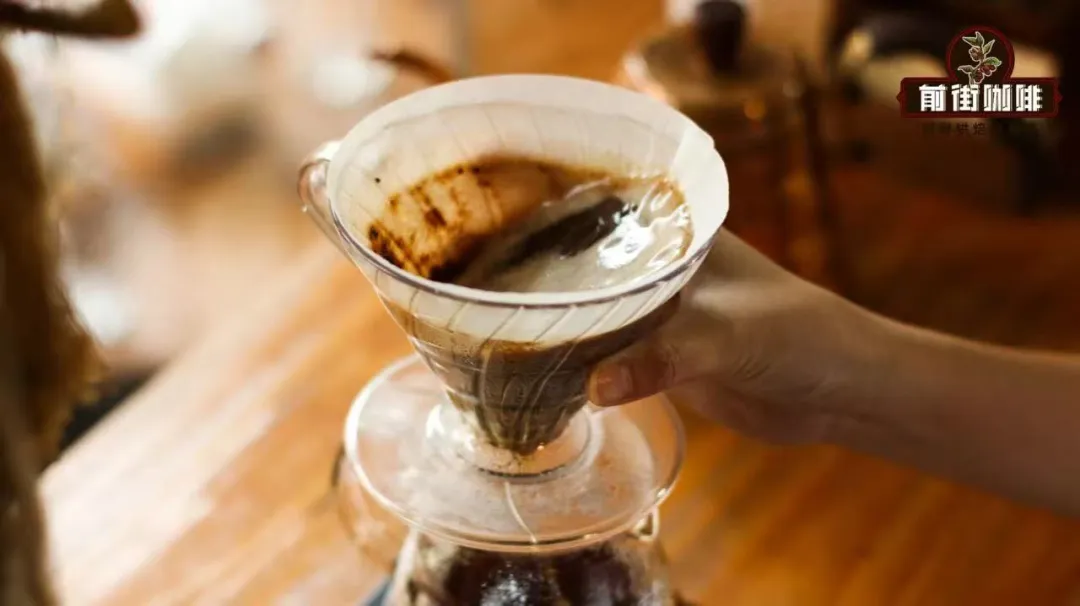
Just how unruly can it get? During brewing, we not only have to use a spoon to stir the coffee bed, but also pick up the dripper and shake it vigorously. This kind of operation is truly rare in the coffee world and counts as a rather unconventional brewing technique. It may seem casual and even a bit "improper," but it is not without method—there is actually a complete extraction logic behind it, so the finished coffee's performance should not be underestimated, and it is even more interesting than many conventional brewing methods. It is precisely this fun yet effective quality that made it quickly attract attention once shared and spread widely among coffee enthusiasts.
The person who shared this method with the public is the renowned Scott Rao in the coffee world. Some friends may not yet be familiar with this name, but he has written many professional coffee books, and people who often read coffee books have most likely read his works. For example, The Coffee Roaster's Companion, The Professional Barista's Handbook, and Everything but Espresso are all from his hand. This shows that this guru's brewing expertise is quite profound.
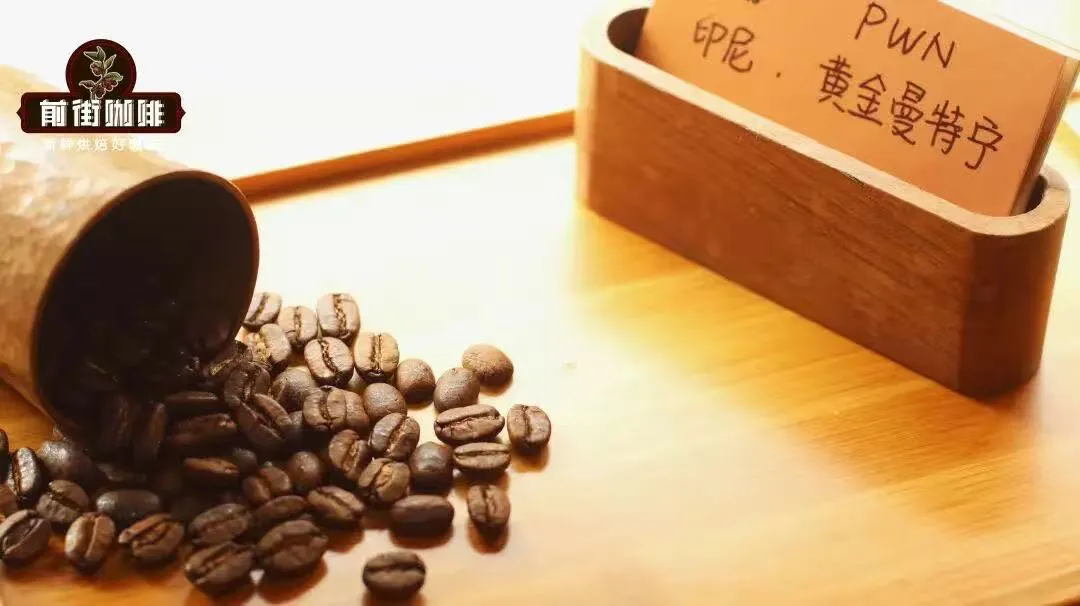
However, it should be noted that Rao only shared this method; he is not its inventor. He clearly stated on his blog that he was not the originator, and the true inventor can no longer be verified. It is only because it became widely known through his promotion that people habitually named it after him—"Rao Spin," which in Chinese can roughly be understood as "Rao-style rotation method." Like most brewing methods, this method is suitable for coffee beans of all roast levels, with no hard restrictions on bean selection—just follow personal taste. Friends who prefer a mellow, low-acidity taste can choose medium-dark or dark roasted beans, such as Front Street Indonesia·Golden Mandheling, Front Street Brazil·Queen's Estate, and Front Street Bird of Paradise from the Front Street bean list;
if you prefer a style with prominent fruitiness and obvious sweet-and-sour notes, then choose light or medium-light roasted coffee beans. For example, Front Street Finca La Divisa·Sidra, Front Street Ethiopia·Huakui, and Front Street Kenya·Little Tomato from the Front Street bean list. That is about it for the general introduction. Next, Front Street will talk with everyone about how exactly this Rao-style rotation method should "spin."

Brewing Sharing Since Scott Rao only shared the idea and method, without giving fixed parameters, actual brewing requires flexible adjustment according to your own equipment and beans. The beans used by Front Street this time are still Front Street Ethiopia·Huakui from the Front Street bean list, with the following parameters: Dose: 15g Coffee-to-water ratio: 1:15 Water temperature: 94°C Grind size: Ek43 setting 9, 80%~85% passing through a No. 20 sieve (slightly finer than daily brewing) Dripper: 02 size resin V60
There are two points to note in advance. The first is the choice of dripper. Front Street recommends using a larger 02 size dripper as much as possible. Because the brewing process requires pouring a large amount of hot water at once and also shaking manually, the dripper must have sufficiently high walls to prevent hot water from overflowing (01 size can also be used, but it is not as easy to handle). The second is that the dripper material is best chosen as the resin version. Compared with other materials, a resin dripper can reduce the risk of burns; even if you really do burn your hand, the dripper will not shatter from suddenly being flung away, making it very practical.
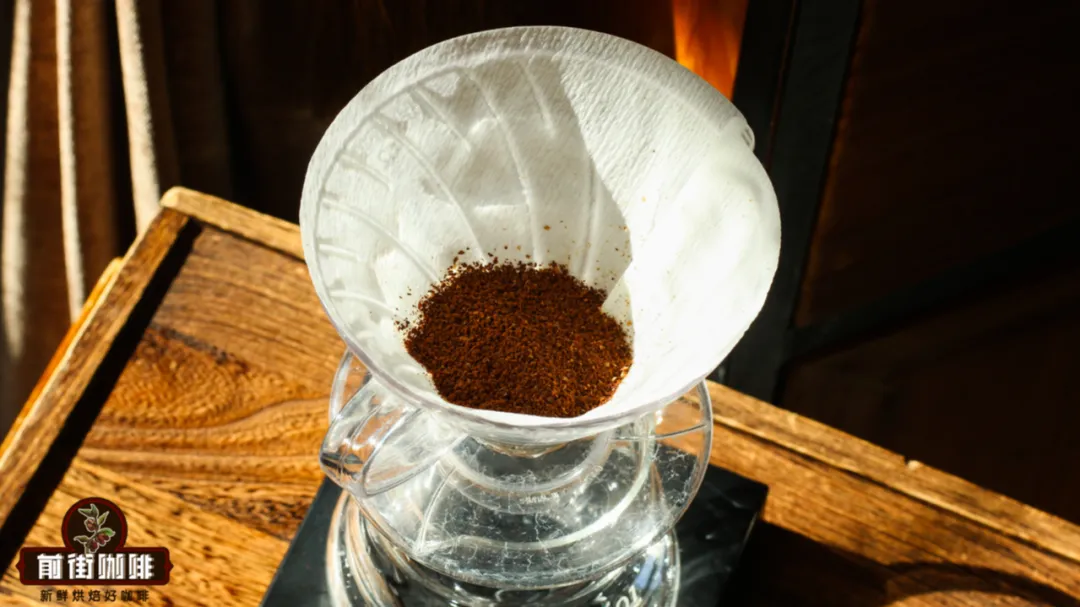
Another issue is the coffee grounds. If the grinder's grinding quality is average and produces too many fines, then before using this brewing method, it is best to first use a sieve to remove some of the fines. Otherwise, after shaking, the fines can easily clog the filter paper and affect extraction. Front Street encountered this situation many times when testing with a hand grinder. Without further ado, let's officially begin brewing. The first step of the Rao Spin is still blooming, pouring hot water at three times the coffee dose.
After the bloom water is poured, take out a spoon or any stirring tool and stir the coffee bed. The purpose is very direct: to let the water and coffee grounds contact more fully and allow degassing to be more thorough. The specific operation is, after pouring water, stir with a spoon a few times to ensure most of the coffee grounds are soaked, then let it sit for 30 seconds.

After blooming ends, pour the remaining target amount of water in one go in circular motions. Although the water volume is relatively large, it is best to keep the pouring stream appropriately small, as this can lengthen the extraction time. At the same time, be careful not to pour onto the dripper wall, to reduce bypass water.
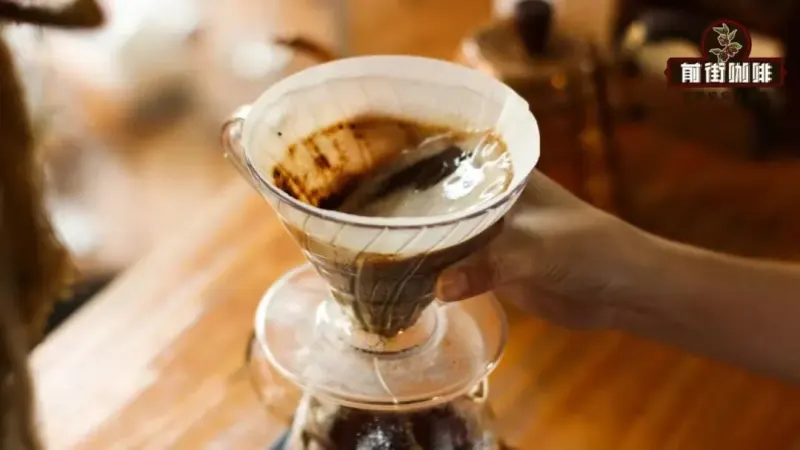
After all the hot water is poured, you can use a spoon to scrape down the coffee grounds stuck to the edge of the dripper. When the water level drops to half the height of the dripper, you can pick up the dripper and shake it, about 3~4 circles. The purpose of shaking is to improve the extraction efficiency of the later-stage hot water and let more flavor substances dissolve out. But the number of shakes should not be too many, otherwise it can easily cause clogging. After shaking, simply wait for the coffee liquid to finish dripping, remove the dripper, and extraction is complete.
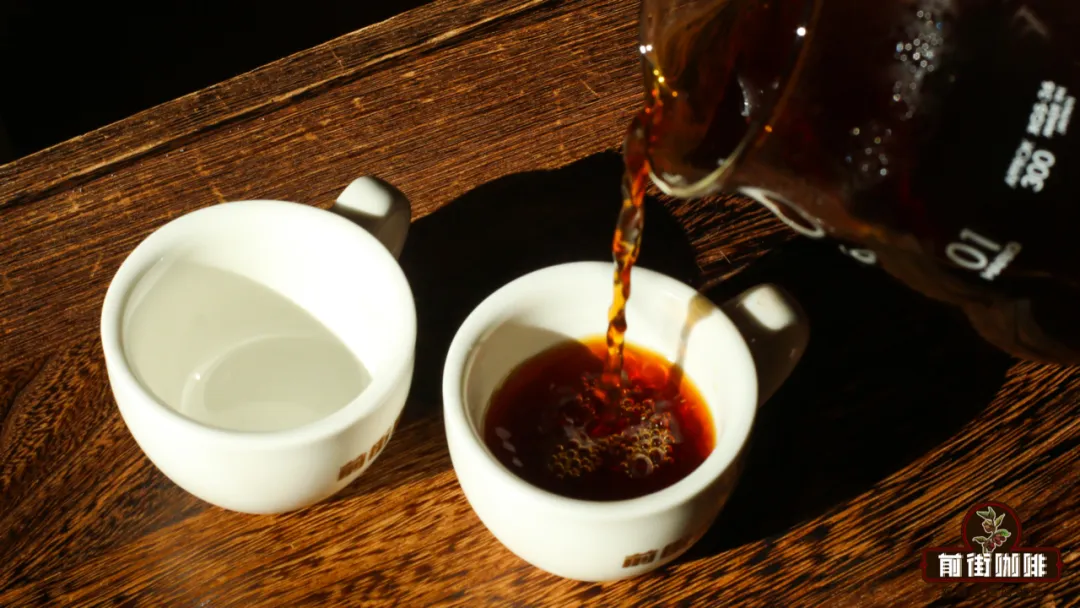
The total time is 2 minutes 15 seconds, similar to the time required for conventional brewing. The Huakui brewed this way tastes very balanced, with flavors of strawberry, citrus, cream, and floral notes, a long finish, and just the right body—not bad.
I have to say, this really is quite an interesting brewing method, and the coffee it produces is tasty enough. Everyone can give it a try when they have time. But remember, compared with how to stir and how to shake, as with all brewing methods, using the right parameters is the foundation of brewing a good cup of coffee. If the parameters are wrong, no matter how beautifully you shake, the coffee will hardly taste good. So when it comes to parameters, everyone should still pay more attention—the same principle applies to any brewing method.
- END -
The above content is compiled by CoffeeHunters, a coffee news website.


